

 > Blogs > Production Standards for Hookah: How Global Regulations Shape Quality and Export
Production Standards for Hookah: How Global Regulations Shape Quality and Export
Core keywords: production standards for hookah, hookah manufacturing quality, international shisha regulations
In the fast-evolving world of shisha culture, production standards for hookah are now more than just technical guidelines—they’re the foundation of product integrity, brand trust, and international competitiveness. As demand for high-end hookahs continues to rise worldwide, manufacturers from Egypt, Turkey, Germany, and China are aligning their practices with international shisha regulations to ensure consistent quality, safety, and performance.
Understanding Production Standards for Hookah: Global Regulations and Quality Control
The Evolution of Hookah Base Design Inspiration in Modern Shisha Culture

At their core, hookah production standards define the rules that govern how each component of a waterpipe is made, assembled, and certified. They establish clear parameters for material safety, mechanical stability, and hygienic durability—ensuring every hookah not only looks appealing but functions reliably.
Modern standards typically focus on:
Material Composition: Non-toxic, heat-resistant materials such as stainless steel, aluminum alloys, and medical-grade silicone are preferred. Paints and coatings must be lead-free and food-safe.
Design Safety: Components should connect securely to prevent leakage, while airways must maintain proper pressure balance for smooth smoke flow.
Durability Testing: Hookahs undergo corrosion and stress testing, simulating long-term exposure to heat, water, and cleaning agents.
In traditional production hubs like Egypt and Turkey, craftsmanship remains central. Skilled artisans follow inherited design methods but now incorporate standardized quality checks for leak-proof seals and heat resistance. In contrast, China’s mass production emphasizes precision engineering, where hookah manufacturing quality is ensured through ISO 9001 systems, SGS testing, and automated calibration. Meanwhile, Germany’s regulatory environment emphasizes environmental safety, precision welding, and CE compliance to meet EU consumer safety directives.
How International Shisha Regulations Are Enforced
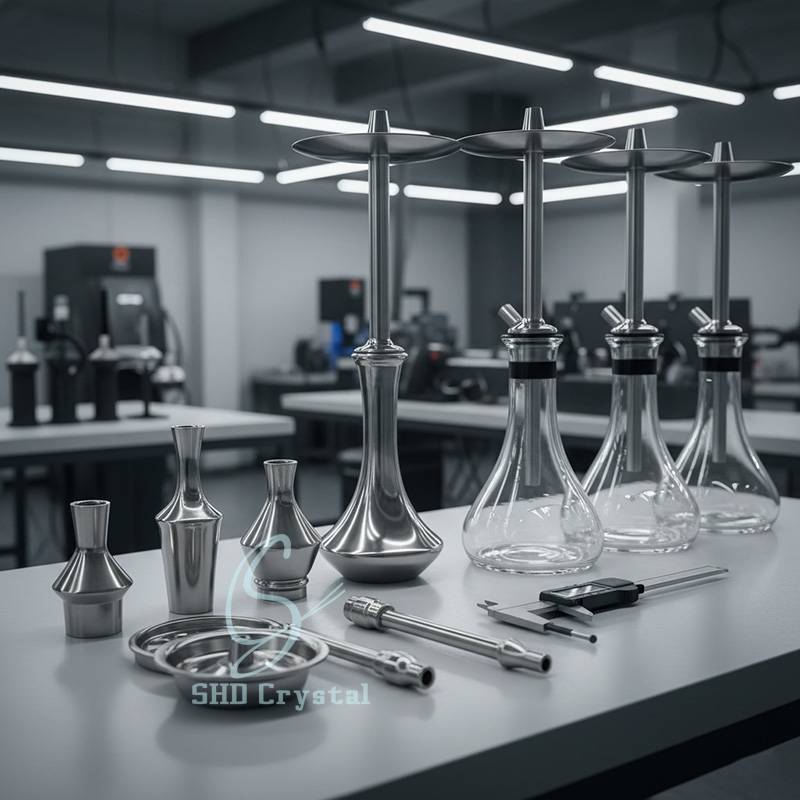
Compliance with international shisha regulations varies by market but generally involves third-party audits and laboratory testing. Before export, manufacturers must present documentation confirming that their materials are safe, durable, and compliant with destination-country laws.
Testing agencies often evaluate:
-Air-tightness and airflow stability
-Heat and pressure resistance of the bowl and stem
-Metal purity and absence of toxic elements (e.g., lead, cadmium)
-Durability of glass bases under thermal stress
For exporters, certification and traceability have become key elements of logistics. Many countries now require technical data sheets, conformity certificates, and inspection reports before shipments are cleared. In some cases, even packaging and labeling—such as country of origin, care instructions, and material composition—must follow international guidelines.
The Impact on Global Trade and Brand Trust
Maintaining strong production standards for hookah directly affects how smoothly a product moves through customs and distribution channels. Brands that meet recognized standards not only minimize rejection risks but also gain a stronger foothold in premium markets.
Retailers and distributors increasingly demand verified hookah manufacturing quality documentation. A certified hookah with CE or ISO approval signals reliability and builds trust with both business partners and end users. In markets such as Europe or North America, this credibility can determine whether a brand is seen as artisanal or unprofessional.
From a consumer standpoint, adherence to strict standards translates into safer, longer-lasting products. Buyers are now more conscious of what materials touch their smoke path, leading to greater scrutiny of unverified imports. Thus, production standards aren’t merely compliance—they’re a competitive advantage.
Challenges and Future Trends
As global sustainability standards tighten, manufacturers must also adapt to eco-friendly production methods. Many countries are phasing out toxic plating chemicals and adopting recyclable materials. Additionally, digital traceability—such as QR-coded certification—is emerging as a new requirement for high-value exports.
This shift indicates that production standards for hookah will continue evolving beyond safety alone, encompassing sustainability, transparency, and user experience. The hookah industry, long driven by tradition, is now entering a phase defined by technical excellence and ethical manufacturing.
Conclusion: Quality Is the New Identity
In today’s global market, the success of a hookah brand depends not just on aesthetics but on compliance, precision, and accountability. Robust production standards for hookah ensure that every piece meets the expectations of both regulators and enthusiasts.
As consumer awareness and international oversight continue to rise, manufacturers that prioritize hookah manufacturing quality and adhere to international shisha regulations will stand out as leaders of trust and craftsmanship.
At SHD Crystal, we believe that true artistry begins with integrity. Our mission is to elevate the global hookah experience through transparent sourcing, certified materials, and consistent quality—setting new benchmarks in modern shisha production.


