
Blogpost keywords: petal-shaped lampshade, blown crystal glass, lampshade processing
A petal-shaped lampshade rarely begins as a technical drawing alone. More often, it starts with an observation: how a flower opens toward light, how edges soften as they curve outward, how translucency creates depth rather than exposure. In decorative lighting, these quiet impressions guide form long before function is defined.
When illuminated, a petal-shaped lampshade does more than diffuse light. It frames it. The layered curves suggest movement even when the fixture is still, creating a visual rhythm that feels organic rather than engineered. This effect becomes especially pronounced when crystal is involved, where material transparency amplifies every contour.
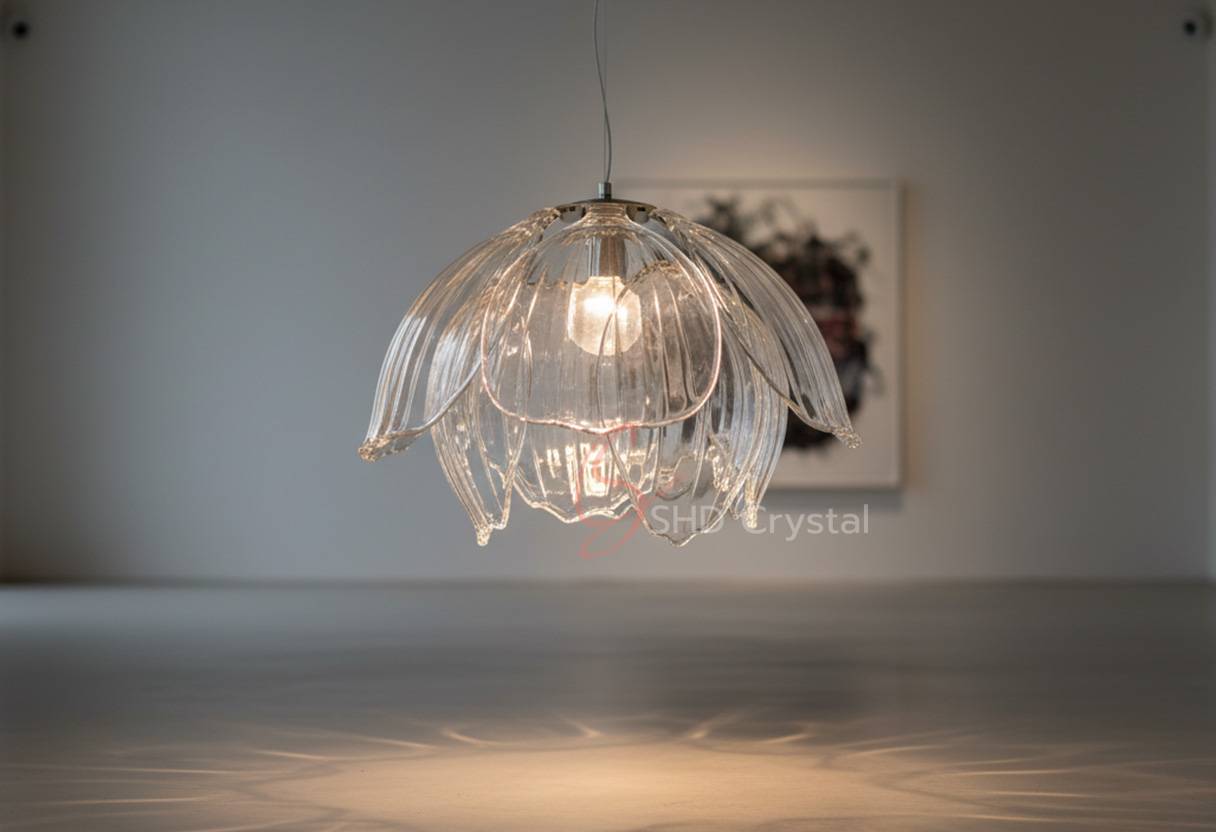
Petal-Shaped Lampshade and the Character of Blown Crystal Glass
The expressive quality of a petal-shaped lampshade depends heavily on blown crystal glass. Unlike flat or molded materials, blown crystal responds directly to breath, gravity, and rotation. Each expansion subtly alters thickness, edge tension, and curvature, all of which influence how light travels through the surface.
As molten glass opens under controlled air pressure, the petal form begins to emerge. Some areas stretch further, becoming thinner and more translucent, while others retain density. This natural variation gives blown crystal glass its depth, allowing the lampshade to glow rather than glare.
In finished lighting, these differences become visible only when the lamp is turned on. Light gathers along thicker folds and gently fades through thinner edges, echoing the way real petals interact with sunlight. This interplay cannot be replicated through uniform materials.
Lampshade Processing as a Balance of Control and Release
Behind the softness of the final form lies a demanding lampshade processing sequence. Timing is critical. Glass must be shaped while it remains responsive, yet stable enough to hold its outline. For petal forms, this window is narrow.
Artisans often rotate and reheat the glass multiple times, refining curves without collapsing structure. Each adjustment affects symmetry and balance. Too much correction can erase the natural flow created during blowing, while too little can leave the form unresolved.
This is where lampshade processing becomes less about correction and more about decision-making. Knowing when to stop is part of the craft. The goal is not perfect uniformity, but visual coherence that feels intentional.
Light, Space, and Everyday Presence
In interior spaces, a petal-shaped lampshade made from blown crystal glass adapts easily. It suits quiet living rooms, bedside settings, and layered hospitality interiors where lighting must feel present but not dominant. During the day, it reads as a sculptural object. At night, it transforms into atmosphere.
Because lampshade processing preserves subtle irregularities, no two pieces interact with light in exactly the same way. This gives even repeated designs a sense of individuality. The lamp becomes familiar without becoming invisible.
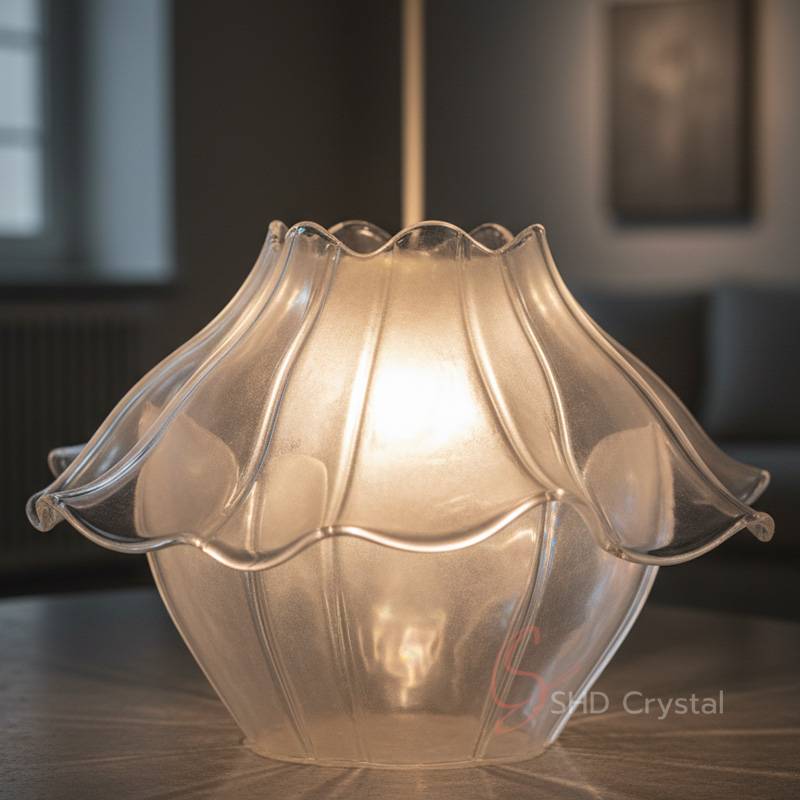
From Process to Lasting Object
The durability of a crystal lampshade depends on early processing choices. Wall thickness, cooling rhythm, and edge finishing all contribute to longevity. A well-made petal-shaped lampshade withstands daily use while retaining clarity and form.
Over time, it gathers meaning through use rather than novelty. It becomes part of routines, conversations, and quiet moments, valued not for trend, but for presence.
Conclusion
A petal-shaped lampshade crafted from blown crystal glass represents a meeting point between material behavior and human judgment. Through thoughtful lampshade processing, light is shaped into something expressive yet restrained, offering more than illumination.
Extending Lighting Concepts Through Crafted Glass
For designers and brands exploring lighting with emotional depth, a petal-shaped lampshade offers a compelling direction. When blown crystal glass and skilled lampshade processing work together, the result supports collaboration rooted in material understanding and long-term design value.