
Blogpost keywords: wine glass rim craftsmanship, manual polishing process, precision control
Wine glass rim craftsmanship plays a decisive role in how wine is perceived, yet it is often overlooked in favor of bowl shape or stem design. The rim is the point of direct contact between glass and lips, influencing comfort, flow, and even aroma delivery during tasting. In high quality glassware, this detail reflects not only aesthetic refinement but also technical mastery.
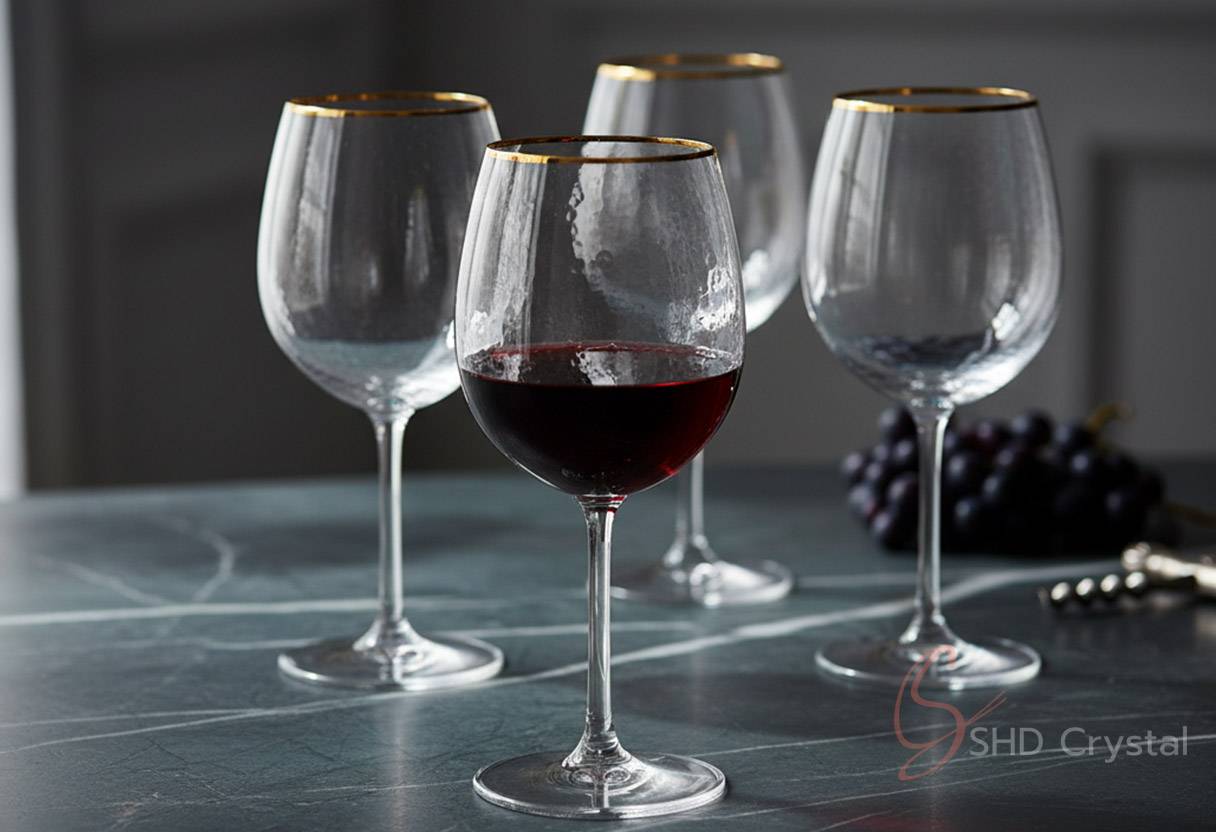
How Wine Glass Rim Craftsmanship Shapes Sensory Performance
True wine glass rim craftsmanship begins after the glass is fully formed. Rather than leaving the rim thick or mechanically cut, skilled artisans refine it to achieve a smooth, even edge. This process affects how wine enters the mouth, allowing controlled flow rather than abrupt contact.
In premium glassware production, the rim must appear visually thin while maintaining structural strength. Achieving this balance requires a careful manual polishing process supported by precision control at every stage.
The Role of the Manual Polishing Process
The manual polishing process is essential for transforming a raw cut rim into a refined drinking surface. Unlike automated polishing, manual work allows artisans to respond to subtle variations in thickness, shape, and tension within the glass. Each rim is gradually smoothed and rounded, reducing sharpness while preserving clarity.
This process demands consistency. Without proper precision control, over polishing can weaken the rim, while insufficient polishing results in uneven contact. For this reason, experienced workshops rely on trained hands rather than fully automated systems for high end wine glass production.
Precision Control in Production and Quality Assessment
Effective precision control ensures that wine glass rims remain consistent across production batches. This includes monitoring rim diameter, thickness tolerance, and edge smoothness during and after polishing. Visual inspection is often paired with tactile evaluation, as even minor irregularities can be detected by touch.
In practical terms, precision control supports reliability for hospitality and retail clients who expect uniform performance across large quantities. It also minimizes rejection rates without compromising craftsmanship standards.
Common Misconceptions About Thin Rims
A common misunderstanding is that thinner rims automatically indicate better quality. While thinness contributes to elegance, wine glass rim craftsmanship is about balance rather than extremes. Excessively thin rims may chip easily or feel fragile, particularly in commercial environments.
Another misconception is that machine polished rims offer equivalent comfort. In reality, the manual polishing process allows for micro adjustments that machines cannot replicate, especially when working with hand blown glass forms.
Practical Considerations for Buyers and Specifiers
When evaluating wine glasses, buyers should gently run a finger along the rim to assess smoothness and uniformity. A well executed rim should feel continuous, without abrupt transitions. Precision control also becomes evident when multiple glasses feel identical in hand and use.
For venues focused on long term usability, proper rim craftsmanship reduces customer complaints while enhancing the overall tasting experience.
Conclusion
Wine glass rim craftsmanship reflects the intersection of comfort, technique, and control. Through a disciplined manual polishing process supported by precision control, premium glassware achieves rims that feel natural, balanced, and refined, contributing directly to the enjoyment of wine.
For brands and professionals seeking dependable quality, understanding wine glass rim craftsmanship provides valuable insight into long term performance and user experience. Attention to manual polishing and precision control ensures that each glass supports both aesthetic standards and practical demands across different service environments.
SHD Crystal Expertise in Wine Glass Rim Finishing
With extensive experience in premium crystal glass manufacturing, SHD Crystal has developed specialized expertise in wine glass rim craftsmanship for high stemware collections. Each rim is refined through a controlled manual polishing process, ensuring smooth lip contact, consistent thickness, and structural balance. By applying precision control throughout inspection and finishing stages, SHD Crystal delivers crystal wine glasses that meet both aesthetic refinement and functional durability standards, supporting long term use across hospitality, retail, and custom project applications.