
Blogpost keywords: solid glass sculpture, static horse model, colored glaze technique
A solid glass sculpture represents one of the most demanding forms of glass artistry, where material control, temperature management, and sculptural accuracy must align precisely. When applied to a static horse model, the challenge increases further, as the form requires both anatomical clarity and structural stability. In colored glaze craft, these sculptures reflect a balance between expressive color and controlled mass.
Solid Glass Sculpture in Static Horse Model Creation
In colored glaze production, a solid glass sculpture differs fundamentally from hollow blown glass. The material mass is significantly thicker, requiring extended heating cycles and gradual cooling to prevent internal stress. When shaping a static horse model, artisans must carefully distribute weight to support legs, torso, and head without compromising visual proportion.
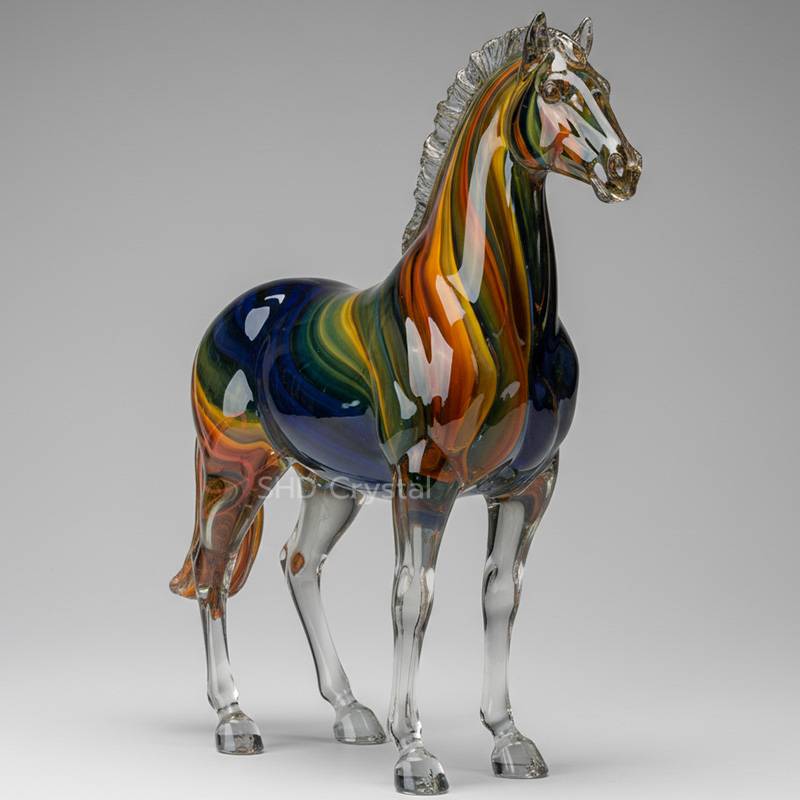
The static nature of the horse form allows emphasis on posture and contour rather than motion, making surface transitions and silhouette accuracy critical. Colored glaze technique enhances this process by introducing layered pigments that interact with light differently across the sculpture.
The Role of Colored Glaze Technique in Visual Depth
The colored glaze technique enables artisans to introduce depth and tonal variation within a single solid glass sculpture. Unlike surface coloring, pigments are integrated into the molten glass, creating internal color flow that becomes part of the structure itself.
For a static horse model, this technique helps define musculature, mane contours, and volume transitions without relying on external decoration. Subtle shifts in opacity and hue contribute to a refined, sculptural appearance rather than a painted effect.
Technical Challenges and Practical Solutions
One common challenge in solid glass sculpture production is managing thermal consistency. Uneven cooling can lead to fractures, especially in extended forms such as legs or necks. To address this, experienced workshops rely on staged annealing cycles and controlled mold release timing.
Another consideration is color stability. The colored glaze technique must be calibrated to maintain consistency across different thickness levels. Precision in material batching ensures that deeper sections do not appear overly dark or opaque compared to thinner areas.
Common Misconceptions About Solid Glass Figures
A frequent misconception is that heavier glass automatically implies higher quality. In reality, quality in a solid glass sculpture lies in internal clarity, absence of stress lines, and balanced weight distribution. Excessive mass without structural logic can compromise durability.
Another misunderstanding concerns realism. A static horse model does not aim for photographic realism but rather proportion, stance, and visual harmony. The colored glaze technique supports this by enhancing form rather than overpowering it with color.
Selection Criteria for Collectors and Designers
When evaluating a solid glass sculpture, buyers should observe internal transparency, smooth transitions, and base stability. For a static horse model, leg alignment and center of gravity are especially important. Proper use of colored glaze technique should appear integrated, not layered or artificial.
These factors indicate not only artistic quality but also long term structural reliability.
Conclusion
A solid glass sculpture crafted as a static horse model demonstrates the technical and artistic potential of colored glaze technique when applied with precision and restraint. Through controlled mass, balanced form, and integrated color, such pieces achieve lasting visual impact and material integrity.
Continuing the Language of Sculptural Glass
For designers, collectors, and architectural specifiers, understanding how a solid glass sculpture is formed provides insight into both its artistic value and technical durability. Static horse models created through colored glaze technique offer a refined expression of glass as a sculptural medium rather than a purely decorative surface.