
Blogpost keywords: glass vase supplier, glass vase manufacturer, custom glass vases
A glass vase supplier is often perceived as a sourcing intermediary, yet in practice, the role is far more structural. For retail brands, interior projects, and hospitality environments, supply reliability depends not only on manufacturing but on how production, quality, and delivery are coordinated.
Unlike one-time procurement, decorative glass sourcing is cyclical. Collections evolve, products are replenished, and consistency becomes a requirement rather than an advantage. In this context, a glass vase supplier functions as a control point between design intent and production reality.
Glass Vase Supplier as the Link Between Design and Production
A capable glass vase supplier operates at the intersection of creative specification and industrial feasibility. This is where coordination with a glass vase manufacturer becomes critical.
Designs that appear visually simple may introduce complexity during production. Proportions, wall thickness, and base stability must align with forming processes to ensure structural integrity. Suppliers who understand manufacturing constraints can identify these issues early, reducing adjustments after sampling.
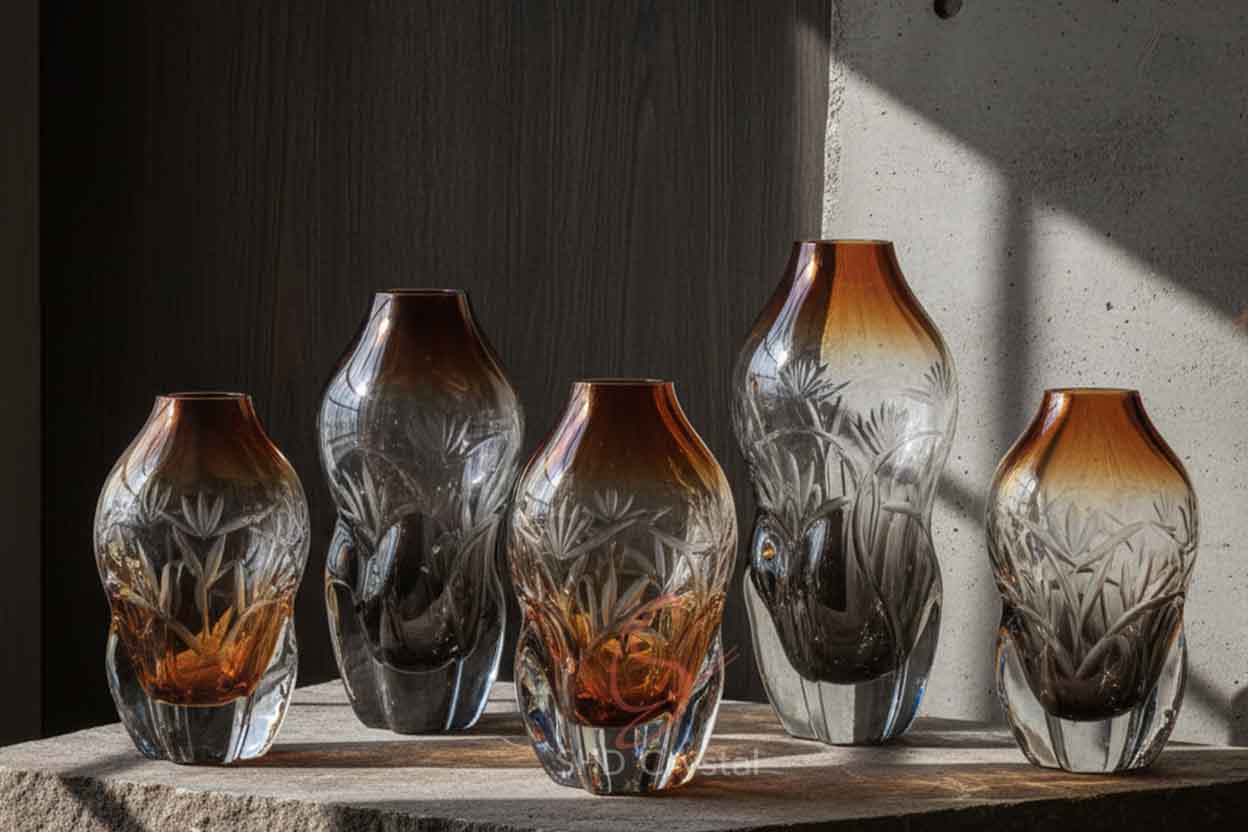
For projects involving custom glass vases, this coordination becomes even more important. Mold development, sample validation, and batch alignment must follow a structured path to prevent variation between initial prototypes and full production runs.
Why Consistency Is a Supply Chain Outcome, Not a Product Feature
A common assumption is that product consistency comes directly from the factory. In reality, consistency is the result of controlled communication and repeatable processes.
An experienced glass vase supplier ensures that specifications remain stable across production cycles. This includes maintaining reference samples, confirming tolerances, and aligning expectations with the glass vase manufacturer before each production run.
Without this layer of coordination, even technically capable factories may produce variation due to interpretation differences or process adjustments.
For custom glass vases, this risk is amplified. Small changes in mold wear, temperature control, or finishing can affect clarity and proportion. Suppliers who actively manage these variables help maintain continuity across batches.
Understanding Real-World Use Conditions
Glass vases are rarely static objects. In retail displays, they are frequently repositioned. In hospitality environments, they are cleaned, moved, and reused.
A knowledgeable glass vase supplier evaluates how products behave in these conditions. Recommendations related to base weight, rim finishing, and thickness distribution are often based on usage patterns rather than design preference alone.
Working closely with a glass vase manufacturer, the supplier can adjust structural details without altering the visual identity of the vase. This approach improves durability while maintaining design consistency.
Misconceptions Around Customization
Customization is often associated with uncertainty. Buyers may assume that custom glass vases introduce delays, inconsistencies, or higher risk.
In practice, these issues are usually linked to unclear processes rather than customization itself.
A structured glass vase supplier mitigates this by standardizing development steps. Established tooling strategies, defined approval stages, and consistent communication with the glass vase manufacturer reduce variability and shorten development cycles.
When properly managed, customization becomes a controlled extension of production rather than a disruption.
Evaluating Supplier Capability Beyond Price
Selecting a glass vase supplier based only on pricing often overlooks critical factors that affect long-term performance.
Reviewing samples from different production runs provides insight into consistency. A supplier who can demonstrate stable output over time is typically more reliable than one offering only initial prototypes.
Equally important is documentation. Clear drawings, tolerance definitions, and structured feedback loops between the supplier and the glass vase manufacturer help prevent misalignment during production.
Packaging should also be considered. For custom glass vases, protection strategies must match product geometry to reduce transit damage, particularly in international distribution.
Supporting Long-Term Product Planning
For brands developing collections, continuity is essential. A glass vase supplier contributes to this by maintaining consistent materials, finishes, and production partners over time.
This stability is particularly valuable when expanding product lines or reordering existing designs. Collaboration with the same glass vase manufacturer ensures that new and existing products remain aligned in quality and appearance.
In the context of custom glass vases, this long-term coordination allows brands to scale collections without introducing inconsistency between product variations.
Conclusion
A glass vase supplier provides more than access to production. Through coordination with a glass vase manufacturer and structured management of custom glass vases, suppliers enable consistent quality, repeatable output, and reliable sourcing across decorative and commercial applications.
Building Consistent Glass Vase Collections
For brands planning future collections, working with a glass vase supplier early in the process helps align design direction with manufacturing feasibility.
At SHD Crystal, collaboration begins with understanding how each design will be produced, not just how it will appear. By integrating glass forming expertise, mold development, and finishing control, the team supports the creation of custom glass vases that maintain consistency across production cycles.
As a partner working closely with experienced glass vase manufacturer networks, SHD Crystal ensures that each project balances design intent with repeatable production standards. This approach allows brands to develop collections that are not only visually cohesive but also stable in long-term supply.