
 > Blogs > Practical Quality Notes for Glass Hookah Base Forming
Table of Contents
Core keywords: glass hookah base forming, thick-walled glass base, annealing temperature control
In premium hookah production, the base is more than a container—it is the visual anchor, the stability core, and the part most exposed to impact and cleaning cycles. Getting glass hookah base forming right means balancing aesthetics with strength, repeatability, and safe usability. Many defects that look minor—uneven thickness, weak neck transitions, subtle tilt—can later become cracks, leaks, or unstable seating after repeated heat and water changes. That is why workshops that prioritize a thick-walled glass base and disciplined annealing temperature control typically deliver more consistent long-term results.
Key Control Points in Glass Hookah Base Forming
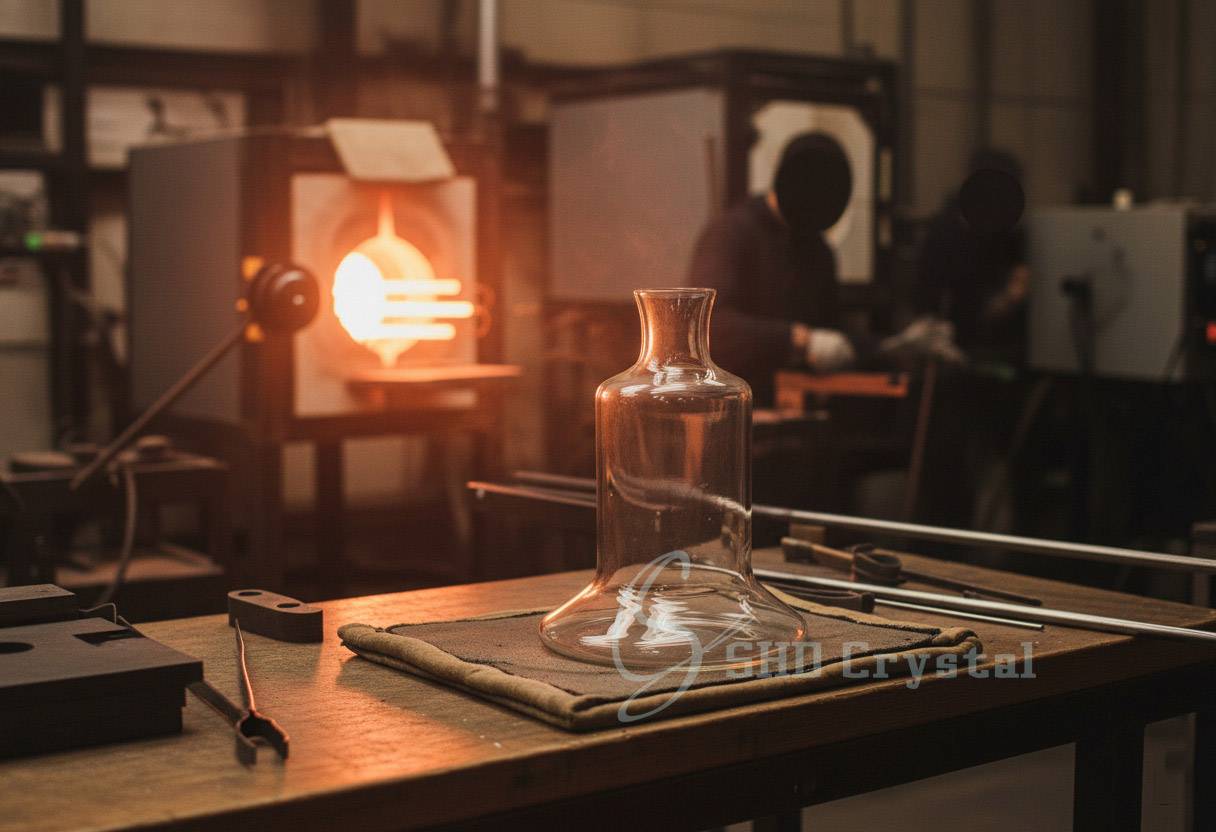
Successful glass hookah base forming starts with thickness discipline and shape consistency. A stable base needs even distribution through the belly and a reinforced collar zone near the neck, where stress concentrates during assembly and handling. For a thick-walled glass base, the goal is strength without “cold-heavy” distortion: walls should be robust, but still balanced so cooling remains uniform. This is exactly where annealing temperature control becomes part of planning from the first heating cycle, not just a final step.
Hot-Shaping Risks: Neck, Collar, and Seating Accuracy
The neck is the most failure-prone area because small inaccuracies multiply in real use. During glass hookah base forming, a tilted axis can cause wobble once the stem is installed. A thick-walled glass base also needs a clean, round neck opening with a stable lip profile so grommets seal well and fittings sit straight. Overheating the collar can create slump and ovality; underheating can force shaping and introduce micro-stress. Strong annealing temperature control reduces residual stress at the collar and helps preserve roundness after cooling.
Cooling Discipline: Why Annealing Defines Durability
Even if a base looks perfect to the naked eye, durability is largely determined during cooling. In glass hookah base forming, internal stress builds when the outer surface cools faster than the inner mass. Proper annealing temperature control slows cooling through the stress-relief zone so the structure settles evenly. This is especially important for a thick-walled glass base, where the extra material can trap heat and create uneven contraction if the cooling curve is rushed. When annealing is handled correctly, long-term cracking risk drops and clarity stays more stable.
Surface Finish and Post-Process Handling
Finishing should support both safety and presentation. During glass hookah base forming, smooth rim edges matter because users handle the base constantly and grommets need clean contact surfaces. A thick-walled glass base should not have sharp lips, weak transitions, or uneven rim thickness that can cause leaks or feel unsafe. In many workshops, annealing temperature control also helps prevent haze and distortion, supporting a clear, premium look. Packaging is another overlooked step: the neck and belly must be protected with firm supports to reduce shipping damage.
Production Reality: What Buyers and Brands Actually Inspect
Professional buyers often inspect bases under strong light and simple measurements. For glass hookah base forming, they check symmetry, weight balance, neck roundness, and thickness consistency across the belly and collar. Many prefer a thick-walled glass base for durability, but still expect a refined silhouette and repeatable specs across batches. They may also ask about annealing temperature control practices because reliable cooling is one of the most practical signals of long-term performance.
FAQ About Glass Hookah Base Forming (Steps & Cautions)
- What should be checked right after shaping is complete?
Confirm symmetry, neck alignment, and rim roundness before the piece fully cools and becomes difficult to correct.
- How do I prevent wobbling after assembly?
Keep the axis straight during shaping, and ensure the neck opening remains round and consistent for seals and adapters.
- What annealing mistake causes late-stage cracking most often?
Cooling too quickly through the stress-relief range; staged cooling is safer for long service life.
- What finish problems affect performance, not just looks?
Sharp rims can damage grommets and create leaks; uneven lips can cause unstable seating and inconsistent seals.
- What packaging detail reduces transport breakage?
Reinforce the neck and belly with rigid foam supports and isolate glass from direct impact zones in the carton.
Craft and Capacity With SHD Crystal
For brands that need reliable output without sacrificing premium aesthetics, SHD Crystal supports shaping, finishing, and decorative upgrades with consistent production standards. Their team focuses on stable glass hookah base forming, controlled wall thickness, and verified annealing temperature control to reduce breakage risk and maintain clarity. If you are refining a thick-walled glass baseline for lounge-grade durability or premium retail presentation, SHD Crystal can support custom silhouettes, batch consistency, and scalable manufacturing.
Contact us now to get the latest e-catalog of hookah products!


