
Blogpost keywords: custom ribbed glass lamp shades, fluted glass surfaces, layered light refraction
In decorative lighting, texture is often treated as surface decoration. Ribbed glass behaves differently. Once illuminated, the texture begins to reorganize light itself. Reflections fragment, highlights stretch across curved channels, and the bulb behind the glass becomes partially concealed rather than fully exposed.
This optical behavior is one reason custom ribbed glass lamp shades continue to appear in hospitality interiors, boutique residential projects, architectural sconces, and contemporary decorative lighting collections. The glass adds visual depth without requiring excessive fixture size or ornamental metalwork.
Instead of relying on complexity through structure, ribbed glass creates complexity through controlled light movement.
Fluted Glass Surfaces Alter Both Illumination and Spatial Rhythm
Smooth transparent glass usually reveals light directly. Ribbed glass interrupts that direct path. As light passes through fluted glass surfaces, each channel bends and redistributes illumination differently depending on rib depth, spacing, curvature, and wall thickness. This creates changing reflections across nearby walls, ceilings, and surrounding materials.
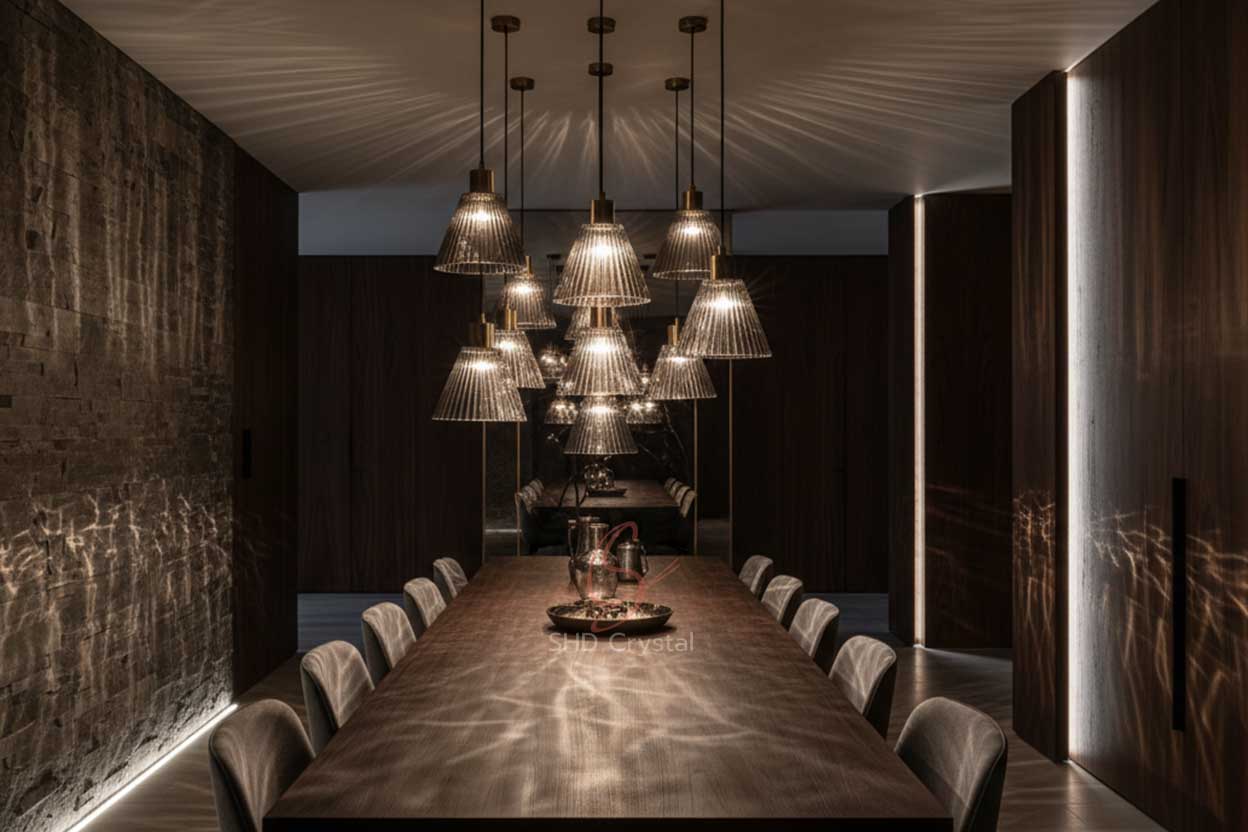
In darker interiors, the effect becomes even more noticeable. Warm lighting stretches across the rib pattern and creates layered shadow transitions that continue shifting as the viewing angle changes.
Because of this, many designers now use ribbed glass not only for decorative texture, but also as a method of softening architectural lighting environments that might otherwise feel visually flat.
Rib Geometry Determines the Character of the Fixture
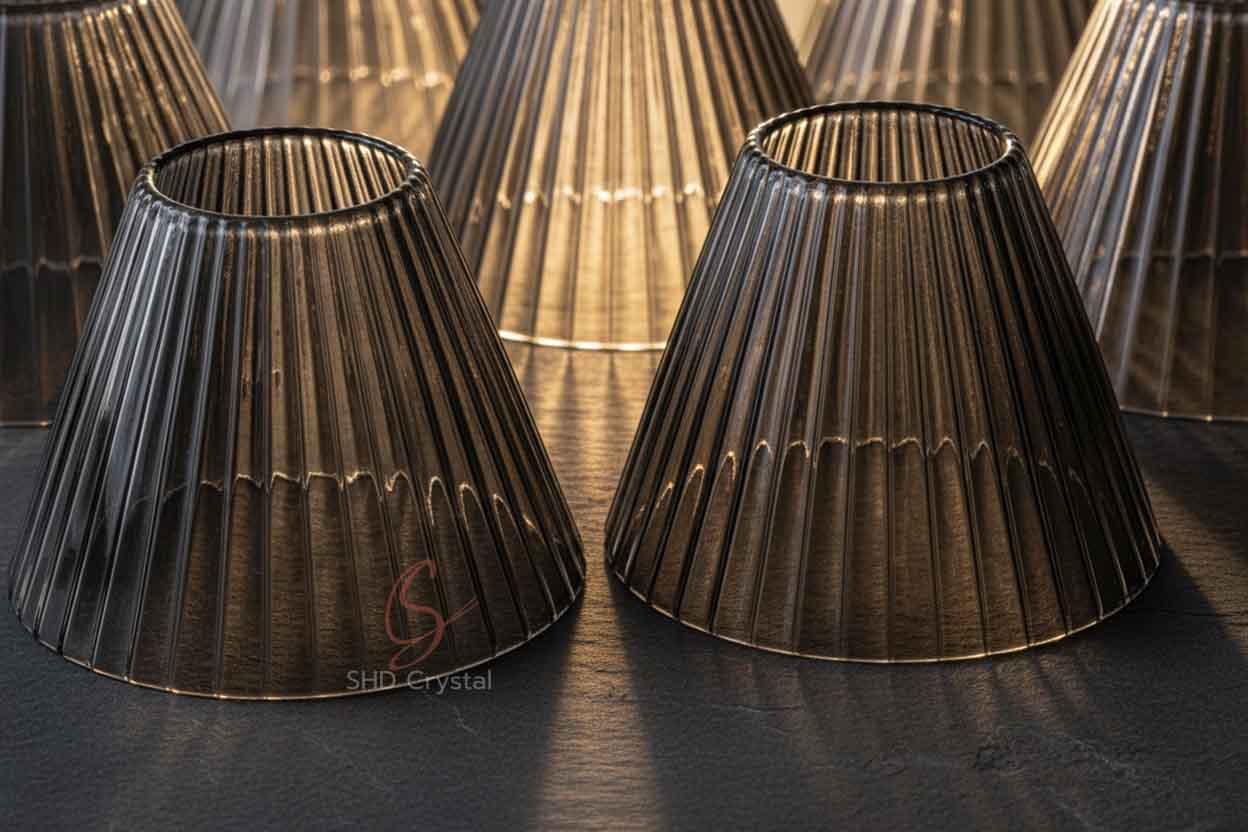
Not all ribbed glass behaves the same way under illumination. Fine narrow ribbing usually creates softer optical vibration and a more refined lighting atmosphere. Deep sculptural channels generate stronger contrast and heavier shadow movement. Rounded ribs diffuse highlights gradually, while sharper vertical fluting produces cleaner directional reflections.
These differences become highly visible once the fixture is installed within real interiors rather than photographed in isolation. For premium custom ribbed glass lamp shades, the rib profile therefore becomes part of the lighting language itself rather than a secondary decorative decision.
Layered Light Refraction Depends on Wall Consistency
One of the most difficult manufacturing challenges in ribbed glass production is maintaining stable wall thickness throughout textured areas. If glass distribution becomes uneven during blowing or pressing, the ribs may distort optical behavior unpredictably. Some areas may appear brighter, while others create muddy reflections or unstable transparency.
Reliable layered light refraction requires carefully controlled forming temperature, mold definition, cooling rhythm, and polishing balance. This is especially important in smoke-tinted, satin, or partially frosted finishes where light behavior becomes more sensitive to material inconsistency. In high-end lighting collections, these small production variables often determine whether the final fixture feels architectural or commercially generic.
Sharp Pattern Definition Requires Controlled Tooling
Ribbed glass loses much of its visual value when pattern definition becomes soft. Aggressive fire polishing can blur channels and flatten the texture. Poor mold finishing may create inconsistent rib spacing that becomes immediately visible once illuminated. Neck transitions and rim finishing are also critical because visual distortion near mounting hardware tends to attract attention quickly. For this reason, manufacturers producing premium fluted glass surfaces typically rely on more disciplined tooling maintenance and staged finishing inspection than ordinary smooth-glass production. The texture itself becomes the primary visual feature, so production inconsistency is far more difficult to hide.
Ribbed Glass Performs Especially Well in Layered Interior Lighting
One reason designers continue specifying ribbed lighting glass is its ability to interact naturally with architectural materials. Stone surfaces, brushed brass, dark wood, plaster walls, and textured fabrics all respond differently once refracted light begins moving through the space. The fixture no longer behaves as a single light source. Instead, it contributes secondary reflections and atmospheric depth around the surrounding environment.
This makes custom ribbed glass lamp shades especially effective in boutique hotels, luxury corridors, vanity lighting, sculptural pendants, and restaurant interiors where lighting must support mood rather than simply increase brightness.
Conclusion
Well-executed custom ribbed glass lamp shades transform decorative lighting through optical texture rather than ornamental excess. By combining controlled fluted glass surfaces, stable wall distribution, sharp rib definition, and carefully managed layered light refraction, ribbed lighting glass can create richer spatial atmosphere while maintaining restrained fixture forms.
Supporting Decorative Ribbed Glass Lighting Production
At SHD Crystal, decorative lighting glass production combines custom rib tooling, controlled blowing and pressing methods, precision mold finishing, satin and smoke surface treatments, and optical polishing refinement. For brands developing architectural lighting collections, our team supports OEM custom ribbed glass lamp shades designed to maintain sharp textured definition, stable light diffusion, and production-consistent decorative glass quality across multiple fixture categories.