
Blogpost Keywords: trace element crystal glass, lead crystal glass, crystal decorative bowls
Trace element crystal glass refers to a category of glass materials enhanced by the addition of specific mineral elements during the manufacturing process. These trace elements alter the optical, physical, and aesthetic properties of the glass, allowing it to achieve greater clarity, brilliance, and density than ordinary soda-lime glass. In decorative tableware and home accessories, trace element crystal glass has become especially valued for its ability to interact with light and elevate the visual presence of everyday objects.
Within the glass industry, this category includes several well-known subtypes, the most prominent being lead crystal glass. Other variations incorporate elements such as barium, potassium, or zinc to adjust performance characteristics. Each formulation influences how the glass refracts light, how it feels in hand, and how suitable it is for specific household applications.
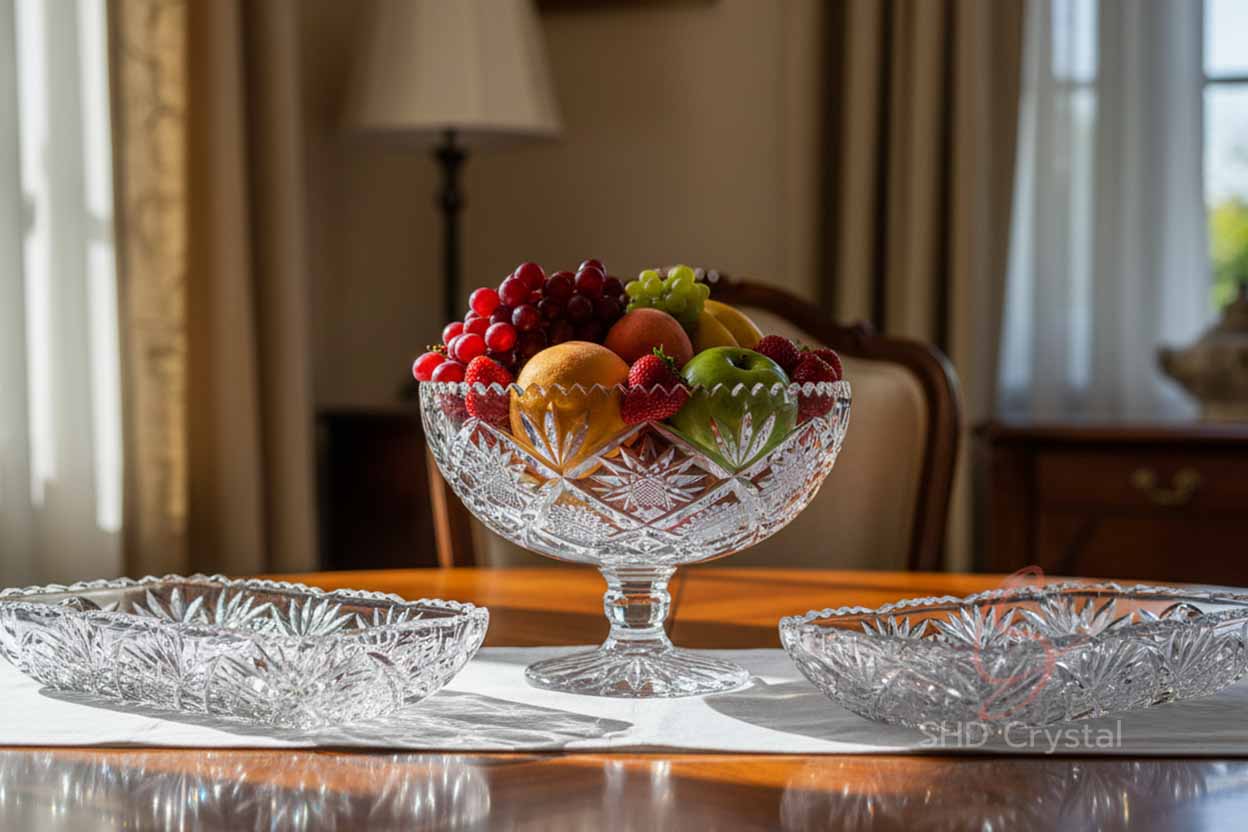
What Defines Trace Element Crystal Glass
The defining feature of trace element crystal glass is the controlled addition of metal oxides or mineral compounds into the glass melt. These elements are introduced during the melting stage and become integrated into the molecular structure of the finished material.
Compared with standard glass, trace element crystal glass typically demonstrates:
- higher refractive index and optical brilliance
- greater density and perceived weight
- improved sound resonance when gently tapped
- enhanced suitability for precision cutting and engraving
These qualities make crystal glass particularly attractive for decorative household objects such as fruit bowls, serving dishes, and ornamental tableware.
Major Types of Trace Element Crystal Glass
Several compositions fall within the broader classification of trace element crystal glass. The most common include the following.
Lead Crystal Glass
Lead crystal glass is historically the most recognized form of decorative crystal. It is produced by incorporating lead oxide into the glass composition, which significantly increases the refractive index of the material. As a result, lead crystal glass exhibits a distinctive brilliance and light dispersion that is difficult to achieve with ordinary glass.
This optical quality makes lead crystal especially suitable for finely cut decorative pieces. The material’s density also allows craftsmen to produce deep cuts and intricate patterns without compromising structural integrity.
Because of these characteristics, lead crystal glass is widely used in premium household items such as:
- crystal fruit bowls
- decorative serving dishes
- crystal vases and centerpieces
- luxury tableware and dining accessories
When placed in natural or artificial light, the facets of lead crystal can create sparkling reflections that enhance the visual atmosphere of a dining or living space.
Barium and Zinc Crystal Glass
In more recent decades, manufacturers have also developed crystal formulations that replace lead oxide with other trace elements such as barium oxide or zinc oxide. These alternatives maintain many of the optical qualities associated with crystal while offering different mechanical or environmental characteristics.
Although these formulations may appear similar to lead crystal glass in clarity, they are often used in products that require lighter weight or slightly different durability profiles.
Why Lead Crystal Glass Remains Popular in Decorative Tableware
Despite the availability of alternative formulations, lead crystal glass continues to occupy a distinctive place in decorative household design. One reason is its exceptional optical brilliance. The material’s ability to refract light produces the signature sparkle commonly associated with high-end crystal products.
Another factor is workability. Lead crystal glass can be cut and polished with remarkable precision, allowing artisans to create intricate geometric patterns or floral motifs on bowls and serving dishes. These engraved surfaces interact with light in ways that emphasize depth and texture.
In home interiors, crystal decorative bowls made from lead crystal often serve dual purposes. They can function as practical containers for fruit or snacks while also acting as visual centerpieces on dining tables, kitchen islands, or display cabinets.
Household Applications: Fruit Bowls and Decorative Tableware
Among the many uses of trace element crystal glass, decorative fruit bowls represent one of the most recognizable examples. The combination of weight, clarity, and light refraction makes crystal bowls particularly suited for tabletop display.
In modern homes, crystal decorative bowls are frequently used in several ways:
-as fruit bowls placed on kitchen counters or dining tables
-as centerpiece vessels for flowers or decorative objects
-as elegant serving dishes during formal meals
-as display pieces in glass cabinets or open shelving
Because lead crystal glass produces vivid reflections, these bowls often become focal points in interior spaces. Even when empty, the sculptural qualities of cut crystal allow the object itself to function as decorative art.
Similarly, crystal serving trays, candy dishes, and small decorative containers continue to appear in both contemporary and traditional dining environments.
The Continuing Appeal of Crystal Craftsmanship
Trace element crystal glass represents a long tradition of combining material science with decorative craftsmanship. Whether produced through classic lead crystal formulations or alternative mineral compositions, the defining goal remains the same: to create glass that interacts beautifully with light while maintaining durability for everyday use.
For household tableware and decorative bowls, the qualities of lead crystal glass continue to offer a distinctive balance between practicality and aesthetic refinement. Its brilliance, weight, and compatibility with intricate cutting techniques ensure that crystal objects remain valued components of decorative dining and interior design.
As a result, trace element crystal glass continues to play a significant role in the production of premium household glassware, particularly in fruit bowls, serving dishes, and other decorative tableware that combine functional use with visual elegance.