
Blogpost keywords: mascot crystal sculpture, World-Cup glass souvenirs, One-of-a-Kind gifts
A mascot crystal sculpture is not simply a decorative object. It represents identity, emotion, and recognition in physical form.
In large-scale events and brand campaigns, visual symbols carry meaning that must be immediately understood. This is why World-Cup glass souvenirs and commemorative objects often rely on sculptural interpretation rather than flat graphics. A well-executed crystal piece captures not only the outline of a mascot but also its character and presence.
At the same time, demand for One-of-a-Kind gifts continues to grow in both commercial and private markets. People increasingly value objects that feel specific, intentional, and visually distinctive rather than standardized.
Mascot Crystal Sculpture Requires Structural Translation of Design
A successful mascot crystal sculpture begins with translating a two-dimensional concept into a stable three-dimensional form.
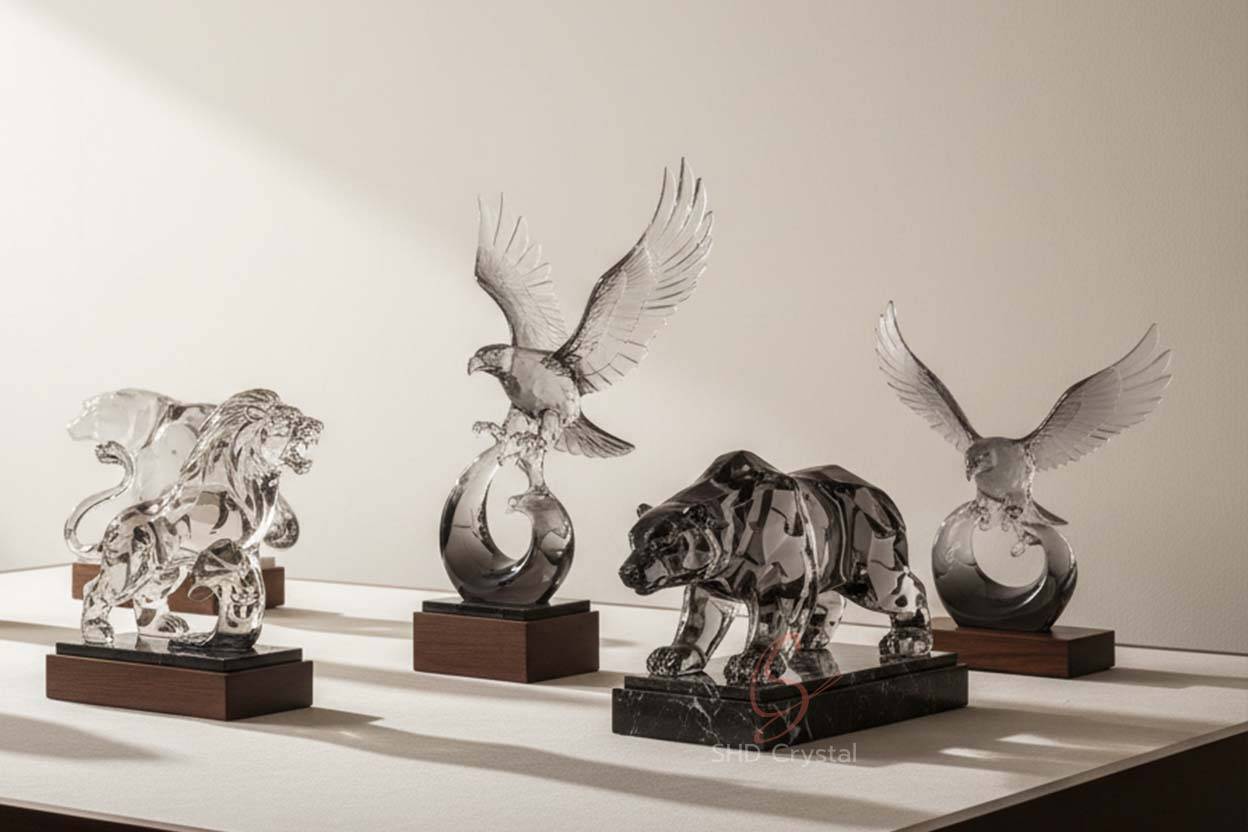
This process involves more than scaling or modeling. Proportions must be adjusted to ensure balance, while fine details need to remain visible after shaping and polishing. Elements such as facial features, limbs, or accessories must be reinterpreted so they can be produced without distortion.
For World-Cup glass souvenirs, this translation becomes even more critical. The final piece must maintain recognizable features while remaining structurally sound during production and handling.
Similarly, for One-of-a-Kind gifts, sculptural accuracy defines perceived value. Subtle differences in proportion or surface detail can significantly influence how the piece is received.
How Material Clarity Enhances Visual Impact
Crystal differs from standard materials because it interacts with light.
In a mascot crystal sculpture, clarity determines how internal reflections and edges define the shape. A highly transparent structure allows light to pass through and emphasize depth, while controlled surface finishing creates contrast.
This is particularly important for World-Cup glass souvenirs, where visual impact must remain strong under different lighting conditions, including retail displays and indoor environments.
For One-of-a-Kind gifts, clarity also contributes to perceived quality. A well-finished surface combined with internal transparency creates a sense of precision and refinement.
Key Factors That Influence Sculptural Quality
-Dimensional accuracy to preserve recognizable mascot features
-Controlled polishing to enhance surface smoothness
-Balanced thickness to support structural stability
-Light interaction that highlights form and detail
-Consistent finishing across multiple pieces
For World-Cup glass souvenirs, these factors ensure that each piece maintains visual consistency across production batches; For One-of-a-Kind gifts, they define how unique and refined the final object appears.
Common Mistakes in Mascot Crystal Sculpture Development
One common issue is attempting to replicate a digital design without adjusting for material behavior. Fine details that look clear on screen may become unclear or distorted after shaping.
Another mistake is overcomplicating the structure. Excessively intricate elements can weaken the form or create inconsistencies during production.
In some cases, insufficient polishing leads to dull surfaces that reduce light interaction. A mascot crystal sculpture relies on clarity and finish to achieve its intended visual effect.
For World-Cup glass souvenirs, inconsistency between pieces can affect brand perception. For One-of-a-Kind gifts, lack of precision reduces uniqueness.
Practical Considerations for Custom Production
When developing a mascot crystal sculpture, reviewing prototypes is essential. Small adjustments in proportion or edge definition can significantly improve the final result.
It is also important to evaluate how the sculpture behaves under real lighting conditions. Observing reflections and transparency helps determine whether the design achieves the intended effect.
For World-Cup glass souvenirs, production planning should focus on maintaining consistency across volume; For One-of-a-Kind gifts, attention should be given to detailing and finishing to ensure each piece stands out.
Clear communication between designers and manufacturers helps align expectations and reduce variation during production.
Where Mascot Crystal Sculptures Are Most Effective
Sculptural crystal pieces are widely used in commemorative and branding contexts.
In international events, World-Cup glass souvenirs often feature mascot-based designs that serve as collectible items. These pieces must combine visual identity with durability and clarity.
In private or corporate settings, One-of-a-Kind gifts are used to mark special occasions or achievements. A personalized sculpture can carry symbolic meaning that extends beyond decoration.
A well-crafted mascot crystal sculpture bridges these two applications by combining recognizability with material refinement.
Conclusion
A mascot crystal sculpture transforms symbolic design into a physical object that communicates identity and value. Through controlled shaping, precise detailing, and careful finishing, manufacturers support both World-Cup glass souvenirs and One-of-a-Kind gifts that require clarity, consistency, and visual impact.
Creating Distinctive Crystal Mascot Projects
For brands and designers, working with an experienced mascot crystal sculpture partner ensures that concept designs are translated into stable and visually refined products.
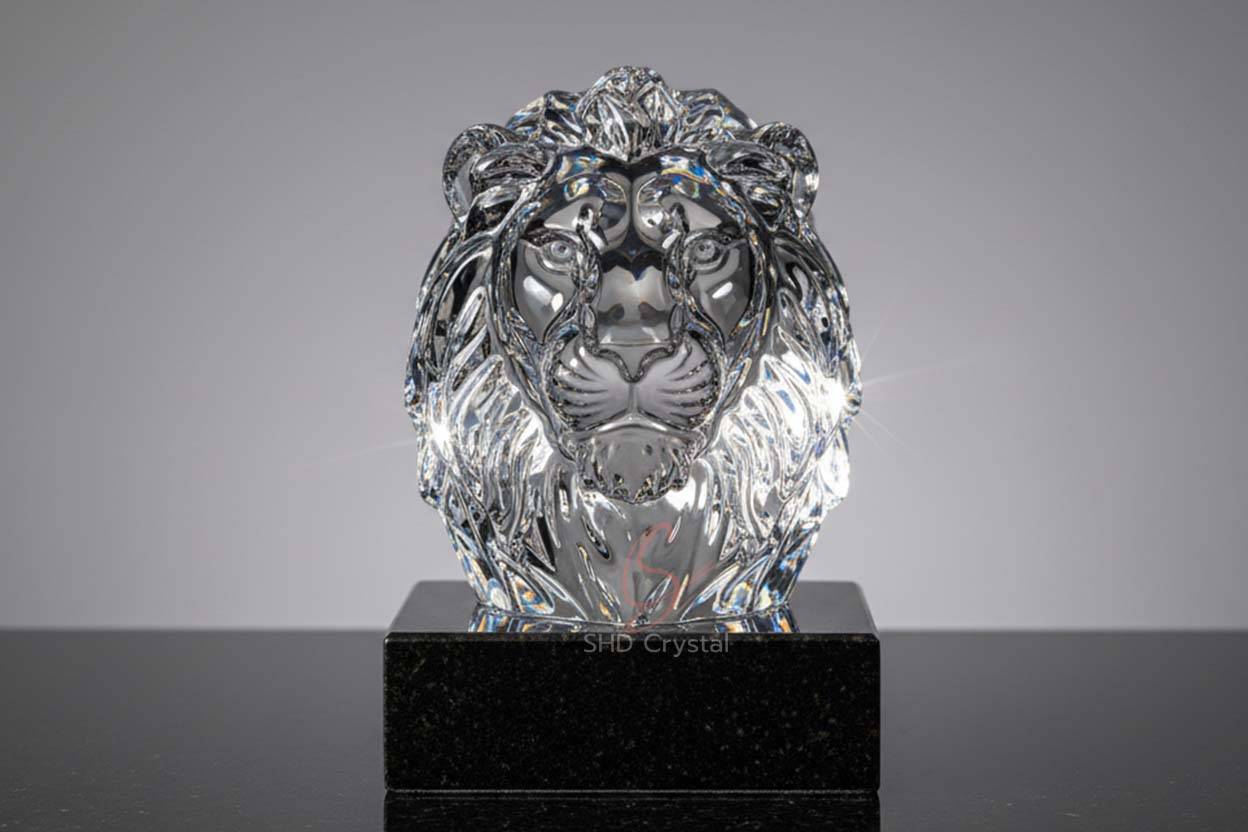
At SHD Crystal, production focuses on converting complex mascot forms into manufacturable structures while preserving character and proportion. Through precise forming, multi-stage polishing, and controlled finishing, the team supports high-quality output for World-Cup glass souvenirs and detailed One-of-a-Kind gifts.
This approach allows each sculpture to maintain clarity, structural balance, and consistent visual identity across both limited editions and larger production runs.