
Blogpost keywords: glass bowls manufacturer, hand blown glass bowls, custom glass bowls
A glass bowls manufacturer is often judged by the final product sitting on a table, but the real work happens long before that moment. In production, every glass bowl represents a series of controlled decisions, from how the molten glass is gathered to how the rim is finished. Especially when producing hand blown glass bowls, the challenge is not only shaping the material, but controlling variation without removing the character that makes each piece visually appealing.
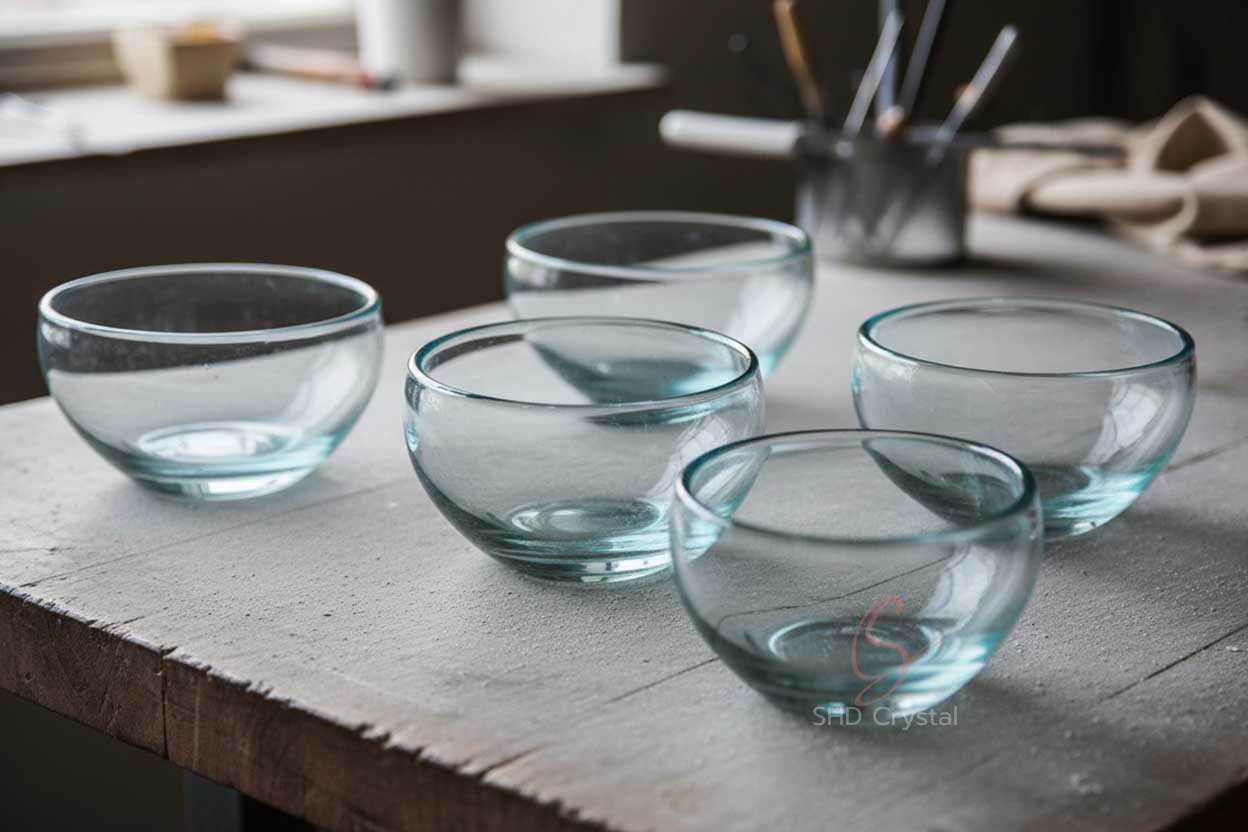
For projects involving custom glass bowls, this balance becomes even more critical. What looks simple in a design sketch often involves multiple technical adjustments once it enters production.
How A Glass Bowls Manufacturer Aligns Design Intent With Real Workshop Conditions
In a workshop environment, design drawings rarely translate directly into finished products without modification. A glass bowls manufacturer first evaluates whether the intended shape can maintain stability during forming. For hand blown glass bowls, factors such as wall thickness and base weight are adjusted in real time based on how the glass behaves during shaping.
There is always a moment during forming when the material decides the limit of the design. Experienced craftsmen understand how far the shape can be stretched before losing balance. This is where production knowledge becomes more important than visual intent.
For custom glass bowls, mold-assisted forming may be introduced to improve consistency, but even then, manual control remains essential. Each piece must pass through annealing, where temperature is gradually reduced to relieve internal stress. Without this step, even a visually perfect bowl may fail in long-term use.
What Happens When Glass Bowls Enter Real Use Environments
A glass bowls manufacturer does not design in isolation. The final product must survive real usage conditions, not just look good in controlled lighting.
In hospitality environments, hand blown glass bowls are handled repeatedly, washed frequently, and exposed to temperature changes. Slight differences in rim smoothness or thickness can affect durability and user experience. This is why many manufacturers adjust finishing techniques depending on the intended application.
For retail collections, custom glass bowls often need to appear consistent when displayed together. Even minor color variations become noticeable under store lighting. A glass bowls manufacturer must therefore control not only shape, but also tone and transparency across batches.
Misunderstandings That Often Appear In Early Discussions
One common assumption is that handcrafted products cannot be consistent. In reality, experienced teams develop internal references for hand blown glass bowls, allowing them to reproduce similar proportions and finishes across production runs.
Another misunderstanding is that customization always increases complexity. For custom glass bowls, structured production planning often simplifies the process by defining clear parameters from the beginning.
There is also a tendency to focus only on appearance. A glass bowls manufacturer, however, pays equal attention to how the product feels in hand, how it sits on a surface, and how it behaves after repeated use.
Practical Observations From The Production Floor
From an OEM perspective, the most successful projects are those where expectations are aligned early. When clients share how the bowl will be used rather than just how it should look, production decisions become more accurate.
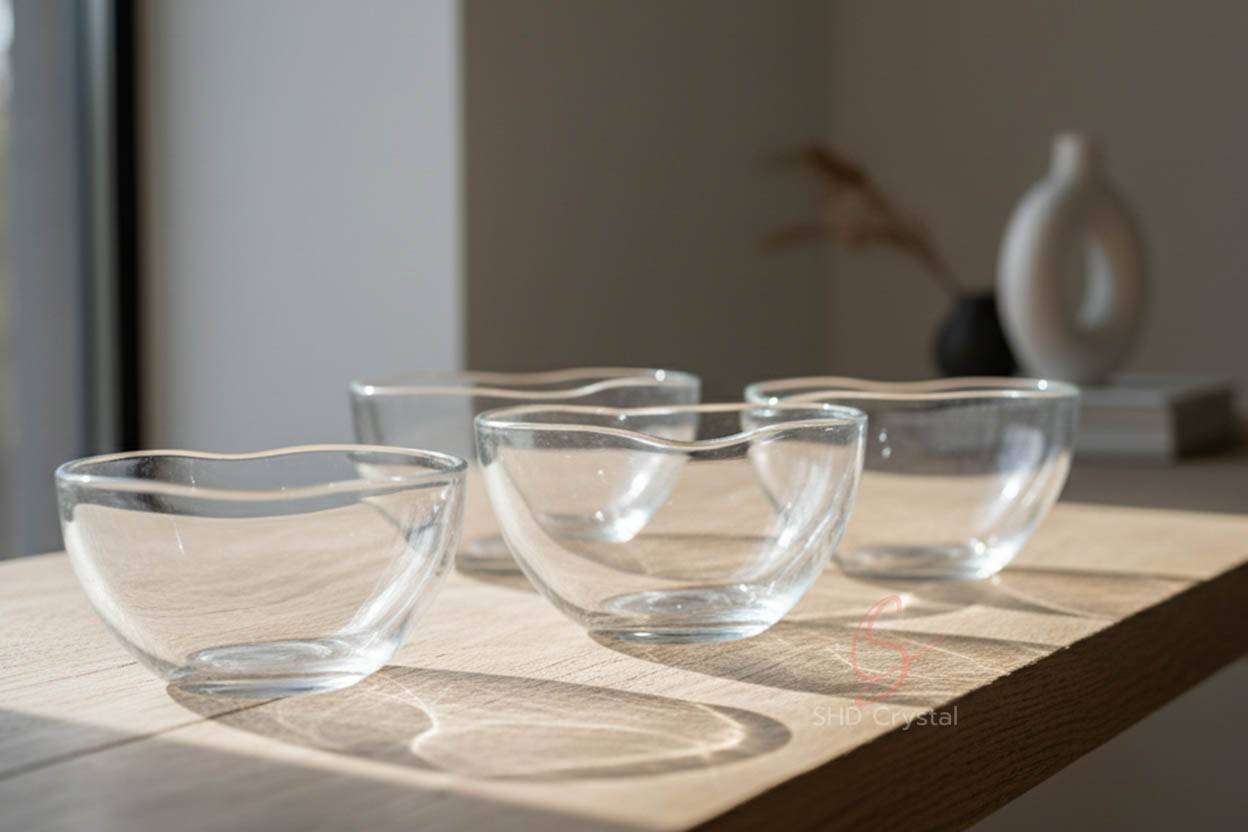
Sampling plays a key role here. Reviewing hand blown glass bowls in physical form often reveals details that are not obvious in drawings, such as weight distribution or edge comfort.
For custom glass bowls, maintaining consistency across batches is usually the final challenge. Slight adjustments in furnace temperature or forming rhythm can affect results, which is why experienced manufacturers rely on controlled processes rather than assumptions.
Conclusion
A glass bowls manufacturer operates between craft and control, ensuring that hand blown glass bowls and custom glass bowls meet both visual expectations and real-world performance requirements. Through careful coordination of material behavior and production processes, manufacturers turn design concepts into reliable products.
Building Reliable Glass Bowl Collections With OEM Expertise
Working with a glass bowls manufacturer that understands both workshop realities and commercial requirements can significantly improve product outcomes. At SHD Crystal, we support the development of hand blown glass bowls and custom glass bowls by combining controlled production with practical design adjustments, helping clients move from concept to consistent, production-ready results.