
Blogpost keywords: custom glass vessel basin, optimized bowl depth ratios, surface texture engineering
A custom glass vessel basin is fundamentally different from standard bathroom fixtures. Unlike concealed sinks, it is fully exposed—every contour, thickness variation, and surface detail becomes part of the space. From a manufacturing perspective, this makes it one of the most demanding glass products to execute consistently.
In real projects, whether residential or hospitality, the challenge is not only visual refinement but how the basin performs under daily use. This is where controlled processes and handcrafted adjustment, supported by surface texture engineering, begin to define the true value of the product.
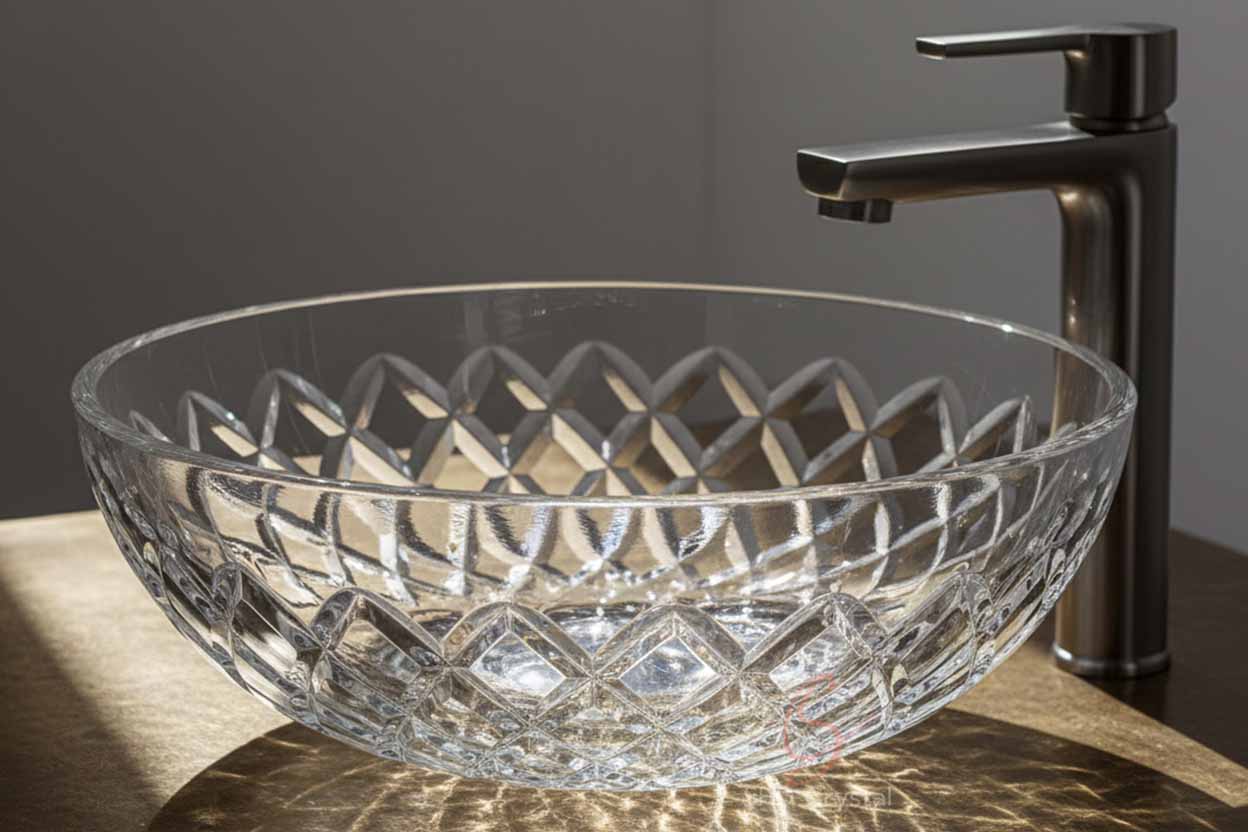
Why Custom Glass Vessel Basin Requires Higher Craftsmanship
The difficulty of producing a custom glass vessel basin lies in balancing form, structure, and usability at the same time. Glass behaves differently from ceramic or stone—it is sensitive to thickness variation, internal stress, and thermal processing.
In handcrafted production, each forming step influences the final geometry. Applying optimized bowl depth ratios becomes essential to ensure water flow remains controlled while maintaining a visually clean profile. Unlike rigid mold-only production, manual refinement allows subtle corrections that improve both ergonomics and performance.
Balancing Geometry, Depth, And Water Behavior
One of the most critical aspects of a custom glass vessel basin is how depth and diameter interact. A visually appealing basin may still perform poorly if internal proportions are not properly engineered.
Through optimized bowl depth ratios, manufacturers can guide water movement—reducing splashing and improving drainage efficiency. At the same time, surface texture engineering affects how water spreads across the glass surface, influencing both usability and maintenance.
The Broad Audience Behind Custom Glass Vessel Basin Demand
The appeal of a custom glass vessel basin extends across multiple industries.
Interior designers use these basins to introduce transparency and light interaction into bathroom spaces. Hospitality projects depend on optimized bowl depth ratios to ensure performance under frequent use. Meanwhile, high-end residential clients increasingly value handcrafted glass elements that reflect individuality.
In all cases, surface texture engineering plays a role not only in appearance but also in how the basin feels and performs in daily use.
Common Misunderstandings About Glass Vessel Basins
A common misconception is that glass basins are purely decorative. In practice, a well-engineered custom glass vessel basin can perform as reliably as traditional materials when production is properly controlled.
Another mistake is focusing only on external form. Without correct optimized bowl depth ratios, even visually striking designs may lead to splashing or inefficient drainage.
Overly complex textures can also become a problem. While surface texture engineering enhances design, excessive detailing often complicates cleaning and maintenance.
Practical Considerations For Design And Production
When developing a custom glass vessel basin, early-stage collaboration is essential. Installation height, faucet positioning, and user ergonomics must all be aligned with the basin geometry.
Prototype testing is particularly important. Observing water behavior helps validate whether optimized bowl depth ratios are correctly applied.
Additionally, transportation must be considered as part of the design process. Glass basins require specialized packaging systems to ensure safe delivery, especially for international projects.
Where Handcraft Meets Controlled Glass Manufacturing
In high-end projects, the distinction between ordinary and premium basins lies in execution. At SHD Crystal, a custom glass vessel basin is developed through a combination of controlled forming techniques and manual refinement, allowing precise adjustments in curvature and thickness.
Strict raw material selection ensures clarity and structural stability, while calibrated thermal processes support consistent optimized bowl depth ratios across batches. Through disciplined surface texture engineering, each basin achieves a balance between visual elegance and functional performance.
Conclusion
A custom glass vessel basin represents the convergence of craftsmanship, engineering, and design intent. When properly executed, a custom glass vessel basin delivers both aesthetic refinement and reliable performance, making it a defining element in modern bathroom spaces.
Designing With Transparency And Precision
Choosing a custom glass vessel basin allows designers to work with light, form, and material in a more expressive way. With the right production partner, optimized bowl depth ratios and surface texture engineering can be translated into solutions that are both visually distinctive and practically reliable.