
Blogpost keywords: crystal vase carving, decorative glass vase, glass engraving techniques
Crystal vase carving transforms a decorative glass vase from a simple container into a surface of controlled light and texture. What appears as delicate patterning is in fact the result of precise material removal, timing, and pressure control. Through advanced glass engraving techniques, each cut becomes part of a larger visual system that defines how the object interacts with light and space.
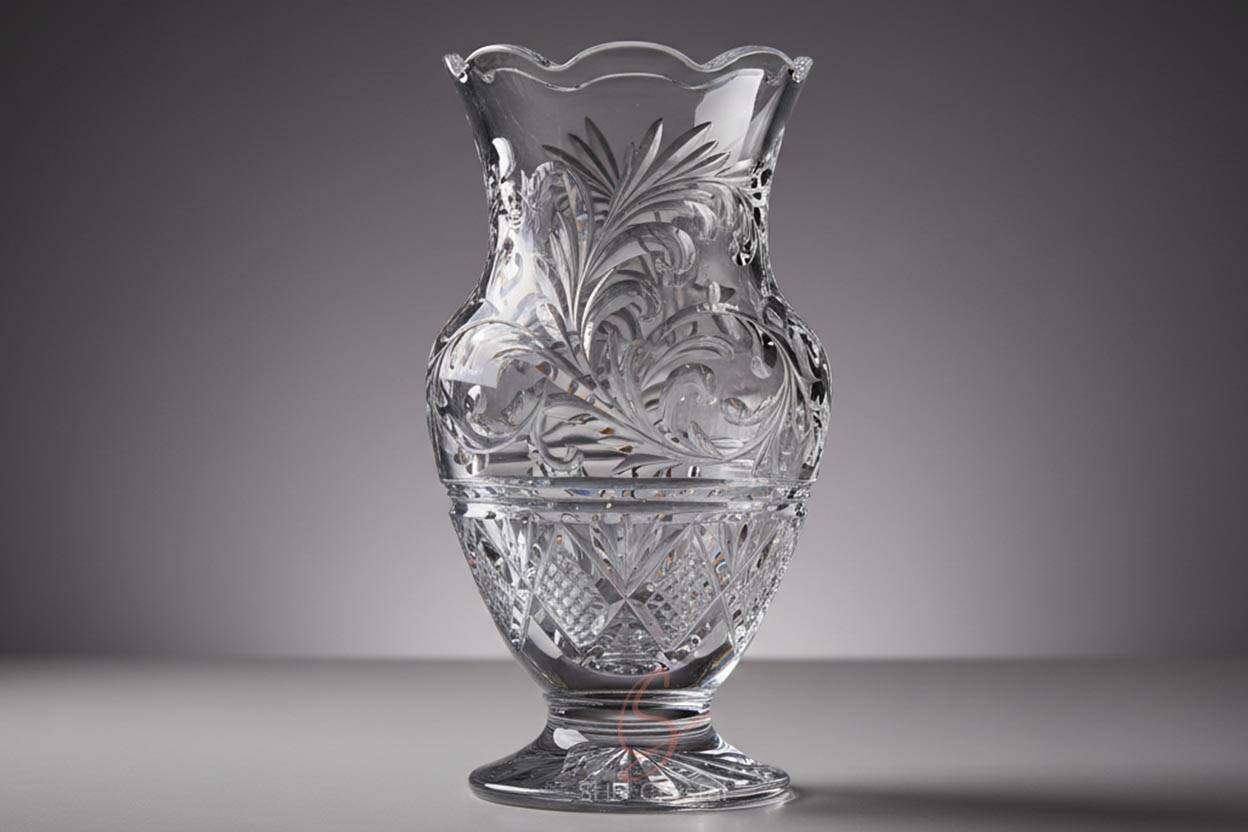
How Crystal Vase Carving Shapes Light and Perception in a Decorative Glass Vase
Crystal vase carving is not only about adding patterns. It is about shaping how light travels through the material. When glass engraving techniques are applied with precision, they create multiple surfaces that reflect and refract light at different angles.
In a decorative glass vase, this effect becomes especially visible under natural or directional lighting. Instead of a flat reflection, the surface produces layered highlights and shadows, giving the object depth and movement.
In real interior settings, this is why carved glass is often used as a focal point. A well-proportioned decorative glass vase with crystal vase carving can remain visually engaging even without additional decoration, simply through its interaction with light.
Inside the Craft: A Carver‘s Perspective
To understand the real nature of crystal vase carving, it helps to hear directly from the workshop.
“When you start cutting, you are not just following a pattern,” a senior craftsman explains. “You are reading the glass.”
He describes how glass engraving techniques require continuous adjustment. “Every piece reacts slightly differently. The wheel touches the surface, and you feel resistance. Too much pressure, and you lose clarity. Too little, and the cut has no definition.”
For a decorative glass vase, consistency is one of the biggest challenges. “People think carving is about decoration. But the real work is keeping balance. Every line must relate to the others. If one cut is deeper, the whole surface feels uneven.”
This insight reflects the true nature of crystal vase carving. It is not only technical execution, but also visual judgment developed through experience.
The Hidden Difficulty Behind Glass Engraving Techniques
From a manufacturing perspective, glass engraving techniques introduce a level of complexity that goes beyond standard forming processes.
One key challenge is material thickness. Crystal vase carving requires sufficient depth to create visible texture, but excessive cutting can weaken the structure of the decorative glass vase.
Another factor is alignment. Patterns must remain consistent around curved surfaces, which is significantly more difficult than working on flat materials. Even slight deviations become noticeable once light passes through the glass.
Polishing is equally critical. After carving, surfaces must be refined to restore clarity without softening the edges of the pattern. This step directly affects how effectively the crystal vase carving interacts with light.
These combined factors define the technical demands of high-quality glass engraving techniques.
Common Misconceptions About Carved Glass
A common assumption is that more intricate patterns automatically increase value. In reality, effective crystal vase carving depends on balance. Overly dense designs can reduce transparency and diminish the elegance of a decorative glass vase.
Another misconception is that carved glass is fragile. When executed properly, glass engraving techniques maintain structural integrity, provided that thickness and stress distribution are well controlled.
Some buyers also overlook the importance of lighting. A carved decorative glass vase may appear subtle in flat lighting but becomes significantly more expressive under directional light.
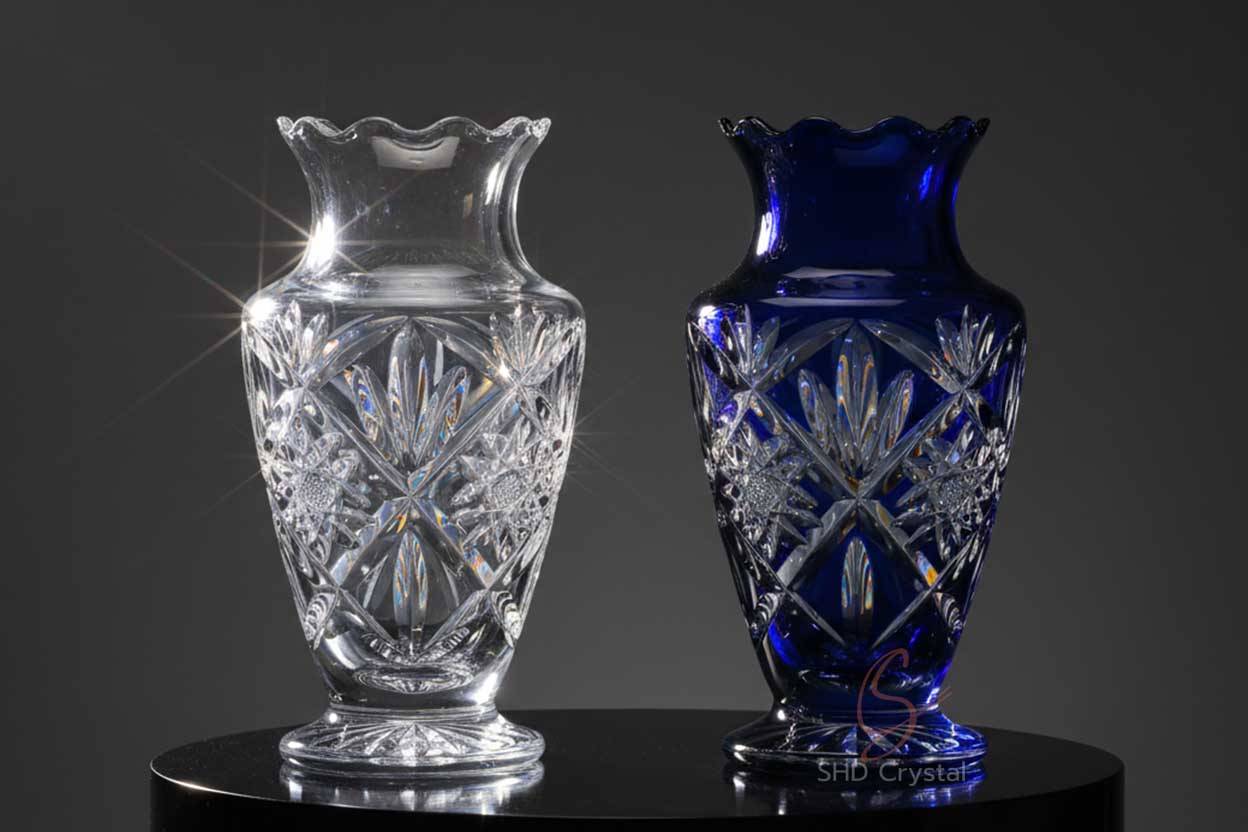
Practical Insights for Designers and Buyers
When selecting products featuring crystal vase carving, it is important to evaluate both visual and technical quality. The sharpness of the cuts, the consistency of the pattern, and the clarity of the material all contribute to the final result.
For a decorative glass vase, proportion is equally important. The scale of the carving should match the overall form, ensuring that the design enhances rather than overwhelms the object.
From a sourcing perspective, reviewing samples is essential. This allows buyers to assess how glass engraving techniques translate into real-world performance and visual effect.
Conclusion
Crystal vase carving represents a precise balance between material control and artistic expression. Through carefully executed glass engraving techniques, a decorative glass vase becomes more than a functional object, evolving into a piece that interacts dynamically with light and space.
Case Insight: Crystal Vase Carving in Premium Interior Projects
In a recent interior project, crystal vase carving was applied to a series of decorative glass vase pieces designed for a high-end hospitality environment. The goal was to create a consistent visual identity across multiple spaces while maintaining individuality in each piece.
Using controlled glass engraving techniques, the carving depth and pattern spacing were carefully adjusted to ensure that each decorative glass vase produced similar light reflections under warm ambient lighting. At the same time, slight variations were preserved to avoid a mass-produced appearance.
This project highlighted how crystal vase carving can bridge artistic detail and scalable production, allowing decorative elements to function both as design features and as part of a cohesive interior system.
From Surface Design to Scalable Glass Craft Production
For brands developing premium collections, crystal vase carving offers a way to introduce depth and differentiation into product lines.
At SHD Crystal, decorative glass vase development integrates advanced glass engraving techniques with controlled production processes. From pattern design to finishing refinement, each stage is managed to ensure clarity, consistency, and repeatability.
By aligning craftsmanship with manufacturing precision, SHD Crystal enables crystal vase carving to move beyond individual artistry into reliable OEM production suitable for hospitality, retail, and interior design applications.