
Blogpost keywords: freeform glass shaping, glass in the fire, hand-shaped glass
Freeform glass shaping is one of the most expressive techniques in glassmaking, allowing artisans to transform molten material into fluid, unpredictable forms that resemble movement frozen in time. Unlike standardized production, this approach emphasizes intuition, timing, and direct interaction with glass in the fire, resulting in unique hand-shaped glass sculptures that cannot be exactly replicated.
How Freeform Glass Shaping Translates Motion Into Solid Form
At the core of freeform glass shaping is the ability to control a material that is constantly changing. When glass is heated, it enters a semi-liquid state where gravity, temperature, and movement all influence the final form. This stage, often described as glass in the fire, is where the shaping process truly begins.
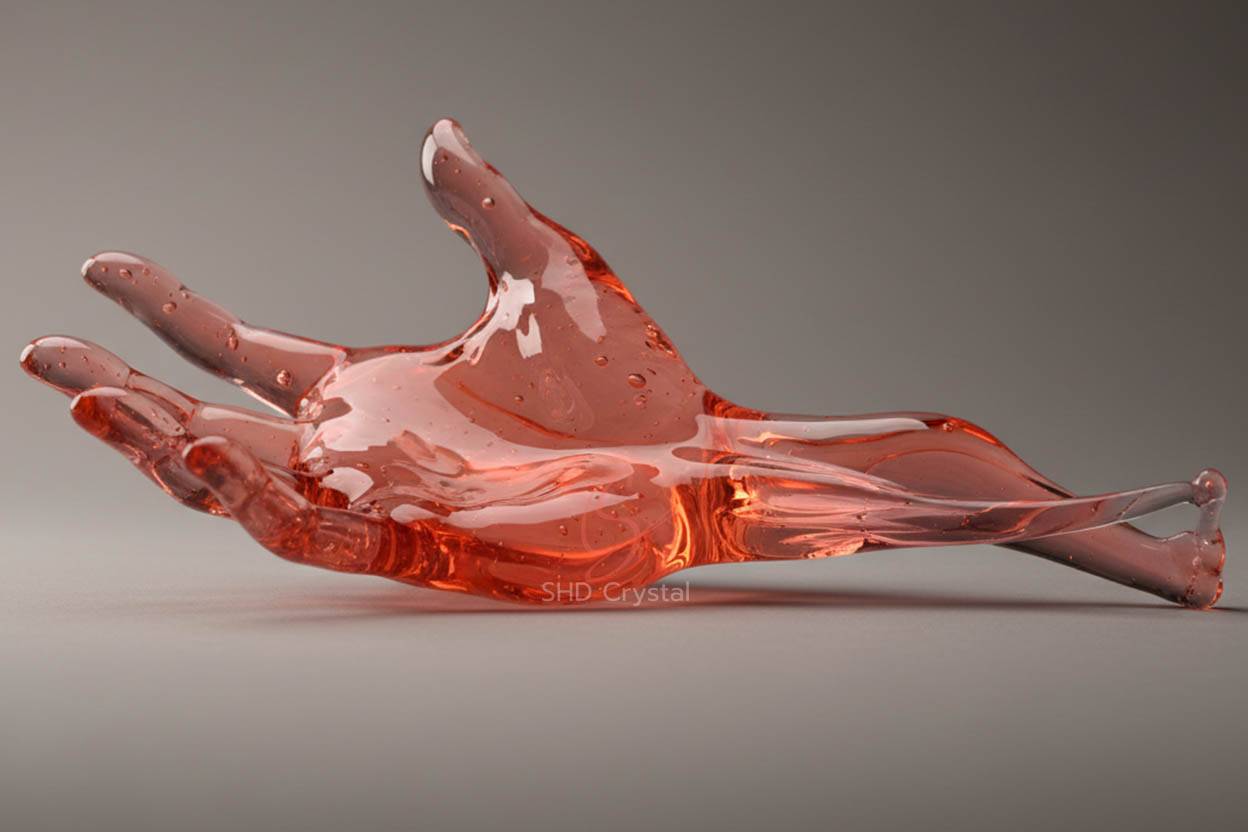
In this environment, artisans use tools, rotation, and controlled airflow to guide the glass rather than force it into a fixed mold. The result is hand-shaped glass that captures curves, stretches, and organic silhouettes that feel almost alive.
In real studio practice, an artisan may begin with a simple molten gather, then gradually pull, twist, or expand the material. Each movement must be timed precisely, as the glass cools quickly and becomes less workable. This balance between flexibility and resistance defines the essence of freeform glass shaping.
The Role of Heat, Gravity, and Timing
Unlike industrial glass production, freeform glass shaping depends heavily on environmental control and physical awareness. Glass in the fire responds instantly to heat fluctuations. A slight temperature change can determine whether the material flows smoothly or resists shaping.
Gravity also plays a central role. When creating hand-shaped glass sculptures, artisans often allow the material to stretch downward, forming elongated or asymmetrical shapes. This natural pull contributes to the organic quality that distinguishes freeform work.
Timing is equally critical. If shaping begins too early, the glass may collapse. If too late, it becomes rigid and difficult to manipulate. Mastering freeform glass shaping therefore requires a deep understanding of how glass behaves at different stages of heat.
Common Misconceptions About Freeform Glass
One common misconception is that freeform glass shaping lacks structure or technical discipline. In reality, creating stable hand-shaped glass requires precise control over thickness distribution and internal stress.
Another misunderstanding is that glass in the fire can be shaped indefinitely. While it appears fluid, the working window is limited. Skilled artisans must anticipate how the material will move and adjust their actions accordingly.
Some viewers also assume that irregular forms are easier to produce than symmetrical ones. In practice, maintaining balance and proportion in freeform glass shaping is often more challenging because there are no fixed reference points.
Practical Insights for Designers and Buyers
For designers interested in incorporating hand-shaped glass into projects, understanding variation is essential. Each piece created through freeform glass shaping will have subtle differences, which should be seen as part of its value rather than a defect.
When sourcing products, it is helpful to review samples or prototypes. Observing how glass in the fire has been translated into final form can reveal the level of craftsmanship involved.
In application scenarios such as interior decor or art installations, hand-shaped glass sculptures can serve as focal points. Their irregular geometry interacts with light in unpredictable ways, adding depth and visual interest to a space.
Conclusion
Freeform glass shaping represents a unique intersection of material behavior and human creativity. Through direct interaction with glass in the fire, artisans produce hand-shaped glass forms that capture motion, balance, and individuality in solid form.
Where Craft Meets Custom Glass Possibilities
For brands and designers exploring expressive glass forms, working with experienced manufacturers can help translate creative ideas into production-ready outcomes.
At SHD Crystal, freeform glass shaping is supported by controlled workshop environments and skilled artisans who understand the behavior of glass in the fire. From artistic hand-shaped glass sculptures to customized decorative pieces, the focus remains on balancing creative freedom with structural reliability.
By combining traditional techniques with production expertise, SHD Crystal enables freeform glass shaping to move beyond studio art into scalable, high-quality OEM applications.