
Blogpost keywords: custom crystal glass, branded drinkware design, bulk crystal glassware production
custom crystal glass has evolved beyond decorative tableware into a material-driven solution for brands seeking both visual refinement and functional consistency. In hospitality, retail, and promotional applications, the choice of crystal formulation directly influences clarity, weight, durability, and overall user experience.
Unlike standard soda-lime glass, custom crystal glass allows for controlled variation in composition. This enables manufacturers to tailor performance characteristics to match specific use cases—whether prioritizing brilliance, strength, or compliance with regional regulations.
For businesses investing in branded drinkware design, understanding the relationship between material formulation and final application has become increasingly important.
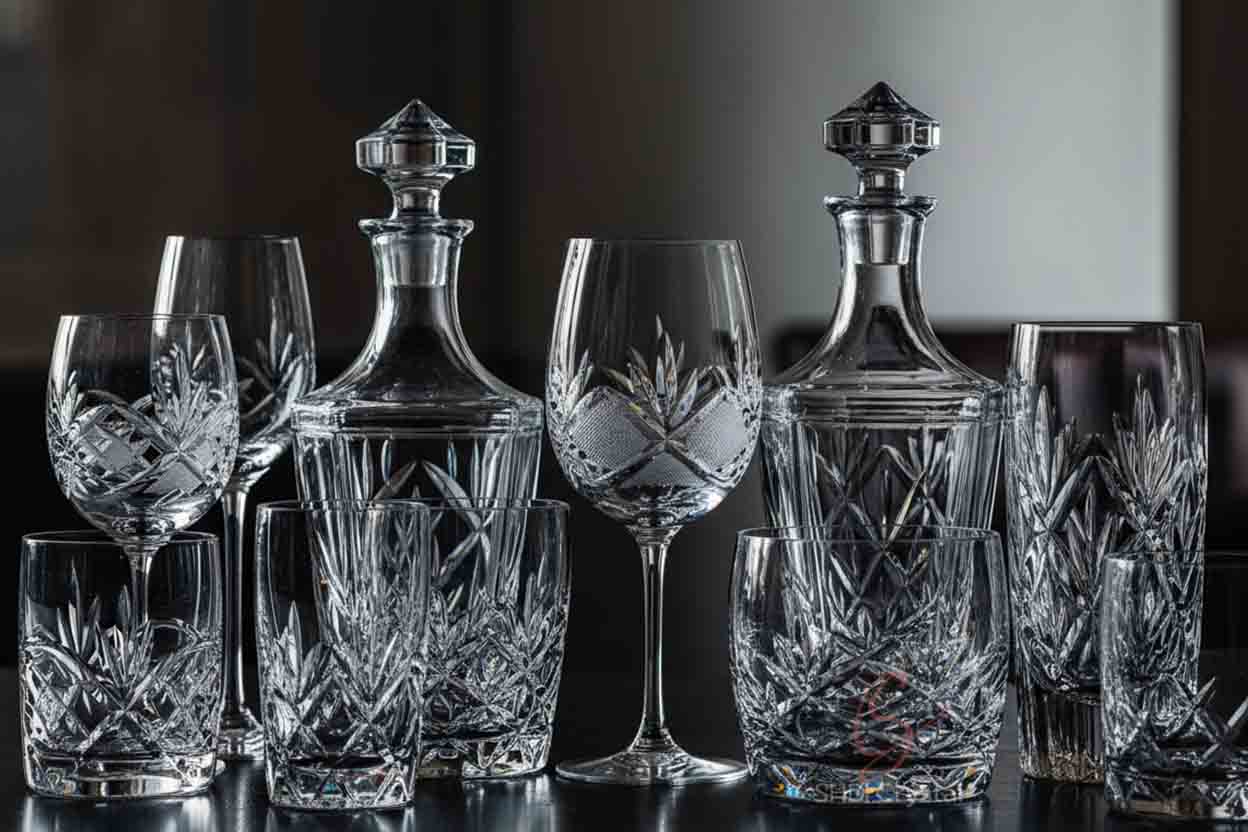
Custom Crystal Glass and Leaded vs Lead-Free Formulation Strategy
A defining aspect of custom crystal glass lies in the selection between leaded and lead-free formulations.
Leaded crystal typically incorporates lead oxide, which enhances refractive index and creates the distinctive brilliance associated with traditional crystal. This makes it particularly suitable for applications where optical richness and weight are key design priorities.
In contrast, lead-free crystal replaces lead with alternative compounds such as barium, zinc, or potassium. This approach maintains high clarity while improving chemical stability and meeting modern safety standards.
For branded drinkware design, the choice between these formulations is not purely aesthetic. It reflects a balance between visual effect, regulatory requirements, and target market positioning. In large-scale bulk crystal glassware production, consistency of formulation becomes critical to maintaining uniform performance across batches.
Formulation Impact on Design and Performance
Material composition directly influences how custom crystal glass behaves in real-world use.
Leaded crystal offers:
-Higher refractive brilliance
-Heavier tactile feel
-Enhanced light dispersion
Lead-free crystal provides:
-Improved durability and resistance
-Greater compatibility with food safety regulations
-More stable performance under temperature variation
These differences affect not only appearance but also how the glass performs during washing, handling, and long-term use. For projects involving bulk crystal glassware production, selecting the appropriate formulation ensures that the product meets both aesthetic and operational expectations.
Customization Beyond Surface Decoration
A common misconception is that customization in custom crystal glass is limited to engraving or branding.
In practice, branded drinkware design often begins at the material and structural level. Parameters such as wall thickness, rim profile, and weight distribution are adjusted in conjunction with the chosen formulation.
For example, leaded crystal may allow thinner walls while maintaining visual brilliance, whereas lead-free crystal may require slightly adjusted proportions to achieve similar optical effects.
During bulk crystal glassware production, these design decisions must remain consistent across all units. This requires precise coordination between formulation, mold development, and finishing processes.
Production Control and Quality Consistency
Scaling custom crystal glass from prototype to production introduces additional complexity.
Maintaining uniform clarity, weight, and structural balance across large batches requires strict control over raw material composition and forming conditions. Reliable manufacturers implement multi-stage inspection processes to ensure that each piece meets specification.
For branded drinkware design, even minor inconsistencies can affect brand perception. Therefore, stability in bulk crystal glassware production is not only a technical requirement but also a commercial one.
Packaging and logistics also play a role. Proper protection ensures that the visual and structural quality achieved during production is preserved through delivery.
Application-Driven Material Selection
Different applications require different approaches to custom crystal glass. In fine dining and luxury hospitality, leaded crystal may be selected for its visual depth and premium feel. In contrast, lead-free crystal is often preferred for markets with strict regulatory standards or for high-frequency usage environments.
For retail and promotional programs, branded drinkware design must balance cost, durability, and visual appeal. Selecting the appropriate formulation early in development supports smoother bulk crystal glassware production and reduces the need for later adjustments.
Conclusion
custom crystal glass represents a combination of material science and design flexibility. By selecting between leaded and lead-free formulations, businesses can tailor glassware to meet specific aesthetic, functional, and regulatory requirements.
Through structured branded drinkware design and controlled bulk crystal glassware production, manufacturers can deliver products that balance clarity, durability, and consistency across applications.
SHD Crystal: Custom Crystal Glass OEM Capability
In advanced glassware development, the ability to control formulation is as important as shaping and finishing. SHD Crystal supports custom crystal glass production with both leaded and lead-free material systems, allowing clients to select compositions aligned with their market and application requirements.
Our manufacturing process integrates formulation control, precision forming, and finishing consistency to ensure that branded drinkware design translates accurately into production. Whether prioritizing optical brilliance or structural durability, each project is aligned with its intended use scenario.
For scalable bulk crystal glassware production, SHD Crystal maintains strict quality control across batches, ensuring uniform clarity, weight balance, and dimensional accuracy. This enables brands to deliver glassware that reflects both material integrity and design intent.