
Blogpost keywords: maintenance of glass washbasins, washbasin cleaning, care of crystalware
Glass washbasins are valued for their clarity, light interaction, and refined surface quality. However, their performance over time depends heavily on proper maintenance of glass washbasins. Unlike ceramic or stone, glass surfaces respond more visibly to water residue, improper cleaning, and physical impact. Daily care is therefore not only a matter of hygiene but also of preserving visual integrity and structural reliability.
Maintenance of Glass Washbasins Across Different Surface Conditions
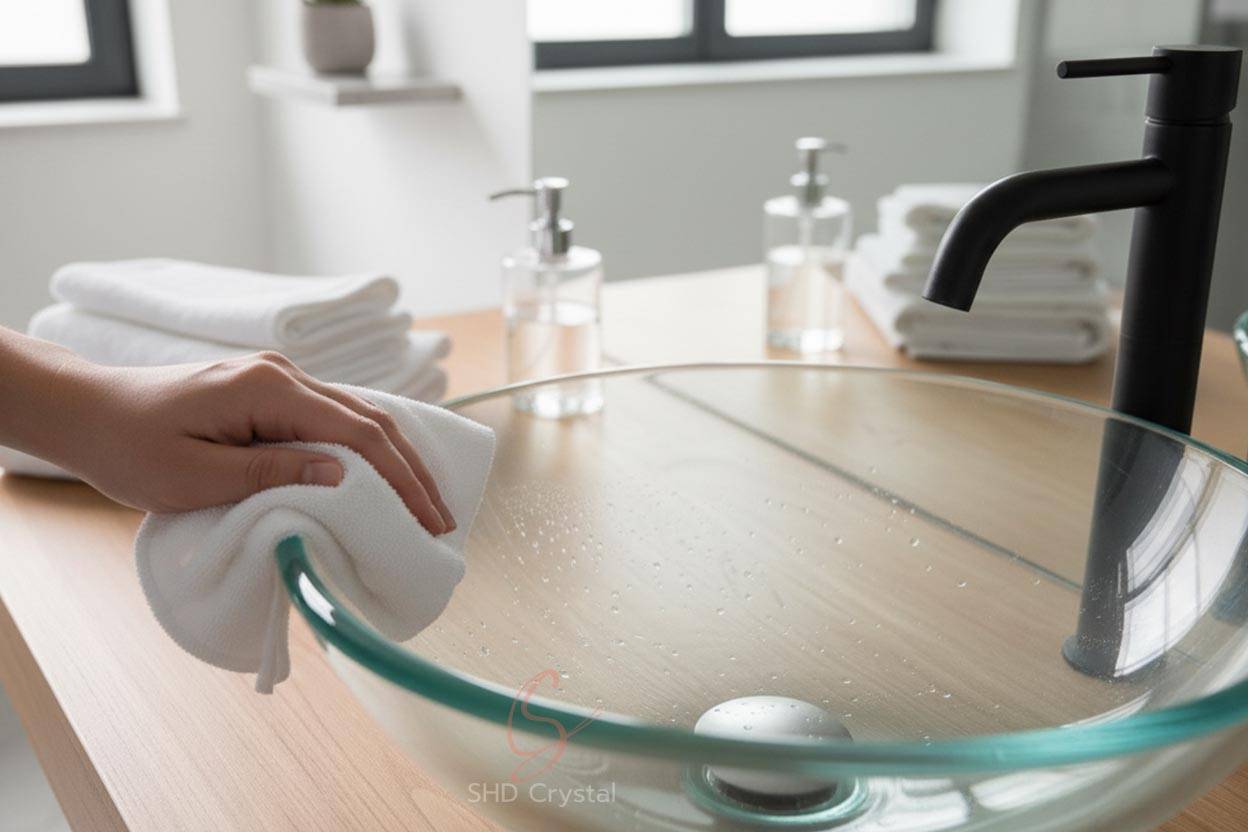
The approach to maintenance of glass washbasins varies depending on surface treatment. Smooth glass surfaces require consistent but gentle washbasin cleaning to prevent water marks from accumulating. Using a soft cloth and neutral cleaning solution helps maintain transparency without introducing micro-scratches. In daily use, wiping the surface dry after rinsing significantly reduces mineral buildup.
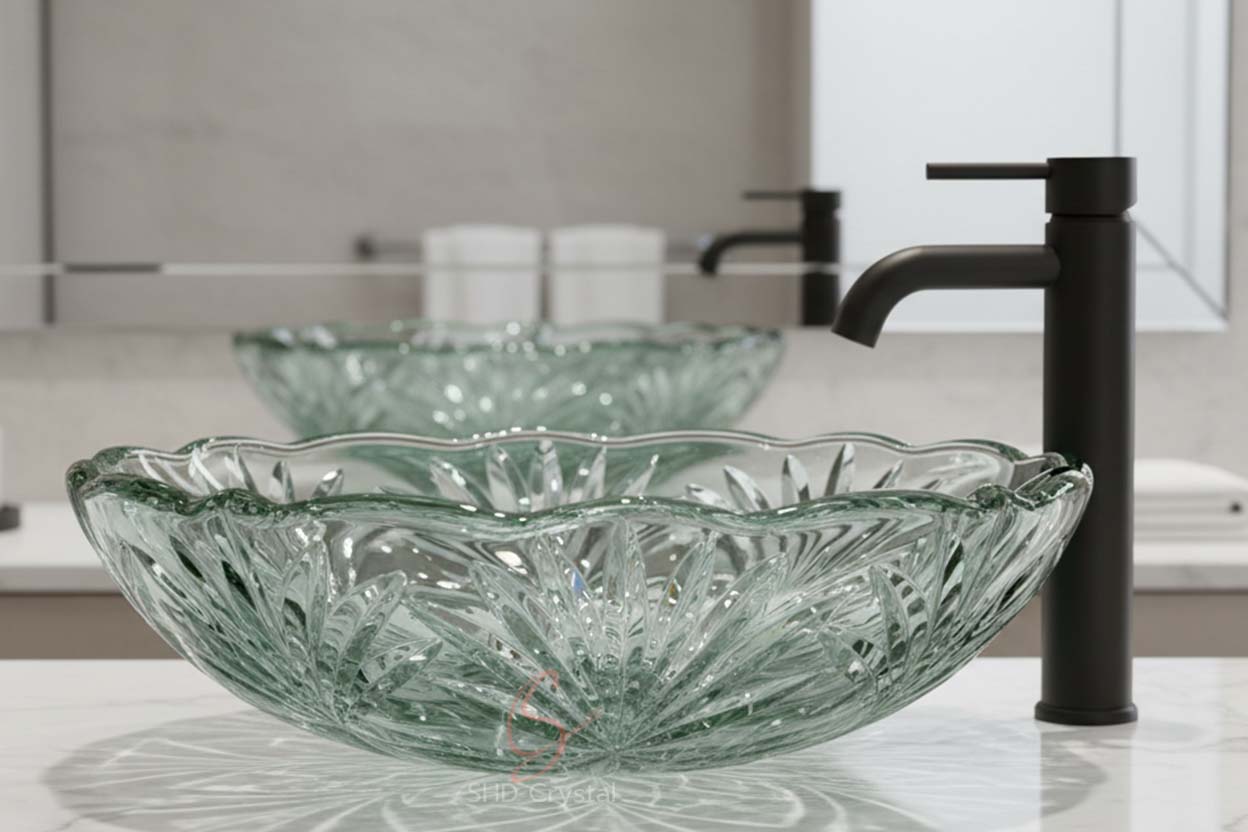
Etched or carved surfaces require a more controlled approach. While these textures enhance visual depth, they also trap fine residues. For such designs, the care of crystalware principles become relevant—soft brushes and diluted cleaning agents can reach into patterned areas without damaging the surface. Aggressive scrubbing should be avoided, as it may dull the etched finish over time.
Rim, Base, and Structural Contact Areas
In practical use, the rim and base are often overlooked in the maintenance of glass washbasins, yet they are critical to long-term stability.
The rim area is frequently exposed to contact from hands, accessories, and cleaning tools. Repeated friction can gradually affect edge clarity if not handled carefully. Gentle washbasin cleaning around the rim using non-abrasive materials helps maintain smoothness and reduces the risk of micro-chipping.
The base, particularly where the basin contacts the countertop, is more sensitive to stress. Moisture trapped underneath can lead to staining or uneven pressure distribution. Periodic drying and inspection are recommended as part of proper care of crystalware, ensuring that the basin remains stable and free from concealed residue buildup.
Drain Area and Residue Management
The drain opening is one of the most active zones in daily use and requires focused attention in the maintenance of glass washbasins.
Soap residue, mineral deposits, and organic debris tend to accumulate around the drain and sealing components. Over time, this not only affects hygiene but can also disrupt water flow. Regular washbasin cleaning in this area, using mild solutions and soft tools, helps maintain both function and appearance.
From a care of crystalware perspective, avoiding harsh chemical cleaners is essential. Strong acids or alkalis can affect both the glass surface and the sealing materials around the drain, leading to long-term degradation.
Preventing Impact and Surface Damage
Glass, even when thick and well-formed, remains sensitive to sudden impact. Preventive handling is therefore a core part of maintenance of glass washbasins.
Placing heavy objects directly into the basin should be avoided. Items such as metal containers or tools can cause localized stress points. In daily routines, controlled placement rather than dropping objects into the basin significantly reduces risk.
Users often report that the visual clarity of the basin encourages more careful use. This behavioral adjustment becomes part of the care of crystalware, where awareness of material properties naturally leads to better handling habits.
User Experience and Long-Term Observation
From real user feedback, the most noticeable difference over time lies in surface clarity. Basins that receive consistent washbasin cleaning and proper drying retain their transparency and reflective quality. In contrast, neglect often results in a gradual dulling effect rather than immediate damage.
Users also observe that carved or textured basins require slightly more attention but offer a richer visual effect under lighting. With appropriate maintenance of glass washbasins, these designs maintain their depth without becoming difficult to manage.
In hospitality environments, maintenance routines are often standardized. Staff trained in care of crystalware techniques tend to preserve both appearance and structural condition more effectively, even under frequent use.
Conclusion
Effective maintenance of glass washbasins combines routine cleaning, careful handling, and attention to structural details. By adapting washbasin cleaning methods to different surface types and applying principles from care of crystalware, users can preserve both the visual clarity and functional reliability of glass basins over time.