
Blogpost keywords: glass lamp shades, light diffusion glass, glare control lighting
Glass lamp shades are often seen as a finishing component, but in practice, they define how light behaves within a space. A well-designed shade does not simply cover a light source—it shapes brightness, softens contrast, and determines how illumination integrates into its surroundings.
Across residential interiors, hospitality environments, and commercial projects, glass lamp shades remain a preferred choice because they offer both material stability and optical control. Their ability to function as light diffusion glass while maintaining structural reliability makes them adaptable across a wide range of lighting applications.
How Glass Lamp Shades Shape Light Diffusion and Glare Control in Real Use
The primary function of glass lamp shades is not decorative—it is optical.
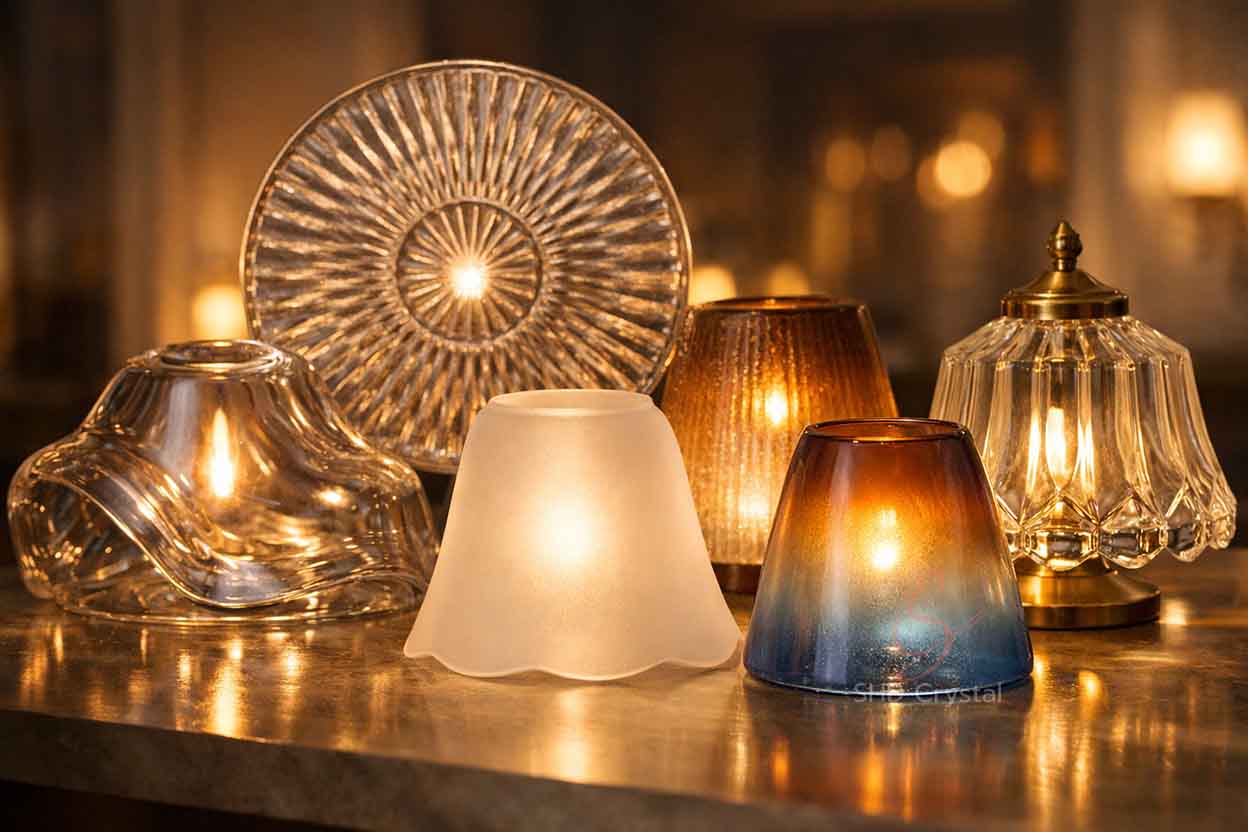
Light passing through glass is filtered, redirected, and softened depending on thickness, surface treatment, and geometry. This is where light diffusion glass becomes a practical design tool rather than a theoretical concept.
Frosted surfaces scatter light to reduce harsh brightness, while lightly textured finishes maintain clarity with controlled softness. At the same time, proper shaping supports glare control lighting, preventing direct exposure to high-intensity light sources.
The result is not just illumination, but a stable and comfortable lighting experience.
Material Precision Behind Effective Light Diffusion Glass
For glass lamp shades to perform consistently, material precision is essential. Wall thickness, internal uniformity, and edge finishing all influence how light is transmitted and diffused.
Inconsistent thickness can create uneven brightness, while poorly finished edges may introduce visual distortion. High-quality light diffusion glass ensures that illumination remains balanced across the entire surface.
This level of control allows designers to predict how lighting will behave in real environments, rather than relying on trial and error.
Common Misconceptions About Glare Control Lighting
A frequent misconception is that glare reduction is only dependent on the light source. In reality, glass lamp shades play an equally important role in achieving effective glare control lighting.
Two shades with similar shapes may produce completely different results depending on their surface finish and thickness. Smooth clear glass may allow stronger direct light, while diffused surfaces soften output and improve visual comfort.
Understanding this relationship helps avoid mismatches between lighting fixtures and intended environments.
Selecting Glass Lamp Shades for Consistent Performance
When evaluating glass lamp shades, observing them under real lighting conditions is essential. The interaction between glass and light cannot be fully understood through specifications alone.
Testing different finishes reveals how light diffusion glass performs in specific environments. At the same time, comparing multiple samples ensures consistency, especially in projects requiring uniform appearance across multiple fixtures.
Attention to packaging and handling is also important. Proper protection preserves both structural integrity and surface quality during transportation and installation.
Glass Lamp Shades in Evolving Lighting Trends
As lighting design evolves, the role of glass lamp shades continues to expand. Designers increasingly use light diffusion glass not just to soften light, but to shape atmosphere.
Subtle textures, balanced forms, and controlled transparency allow glass to adapt to different interior styles. At the same time, glare control lighting remains a consistent requirement, especially in hospitality and workspace environments.
This combination of adaptability and function keeps glass relevant across changing design trends.
Conclusion
Glass lamp shades continue to define how light is experienced rather than simply how fixtures appear. Through the integration of light diffusion glass and glare control lighting, they provide a balance between visual comfort and functional performance.
When developed with attention to material precision and real-world application, glass lamp shades support lighting solutions that remain effective across diverse environments.
Aligning Light Behavior with Real Space Use
In lighting design, the success of a fixture is ultimately measured in use. A concept may appear balanced in drawings, but its true performance depends on how light interacts with materials in a real environment.
By carefully selecting glass lamp shades that enhance light diffusion glass behavior while supporting glare control lighting, designers can ensure that lighting remains both comfortable and visually coherent across different spaces.
Crafting Light Through Glass
At SHD Crystal, glass lamp shade Manufacturing combines technical precision with handmade craftsmanship. The production process integrates blowing glass techniques that allow flexible shaping, controlled thickness, and refined surface finishes suited for different lighting effects.
Each piece is formed with attention to how light will pass through the material, ensuring that handmade glass lamp shades achieve balanced diffusion and stable performance in real use. From simple frosted forms to more sculptural designs, blowing glass enables subtle variations that enhance both function and visual character.
With established Manufacturing experience and a strong focus on consistency, SHD Crystal supports lighting OEM projects that require reliable quality, adaptable customization, and well-executed handmade glass solutions for long-term application.