
Blogpost keywords: pedestal glass washbasin, freestanding washstand, transparent glass bathroom fixtures
A pedestal glass washbasin is no longer just a functional fixture—it has become a sculptural element within modern bathroom spaces.
Unlike conventional ceramic basins, glass introduces light interaction, depth, and texture. When combined with a freestanding washstand, the structure shifts from a hidden installation to a visible centerpiece. The result is not simply a sink, but a composition of material, reflection, and form.
Pedestal Glass Washbasin as a Freestanding Washstand Statement
One of the defining characteristics of a pedestal glass washbasin is its independence from traditional cabinetry. A freestanding washstand allows the basin and base to be perceived as a single integrated object. The vertical structure creates visual continuity, guiding the eye from the base to the bowl.
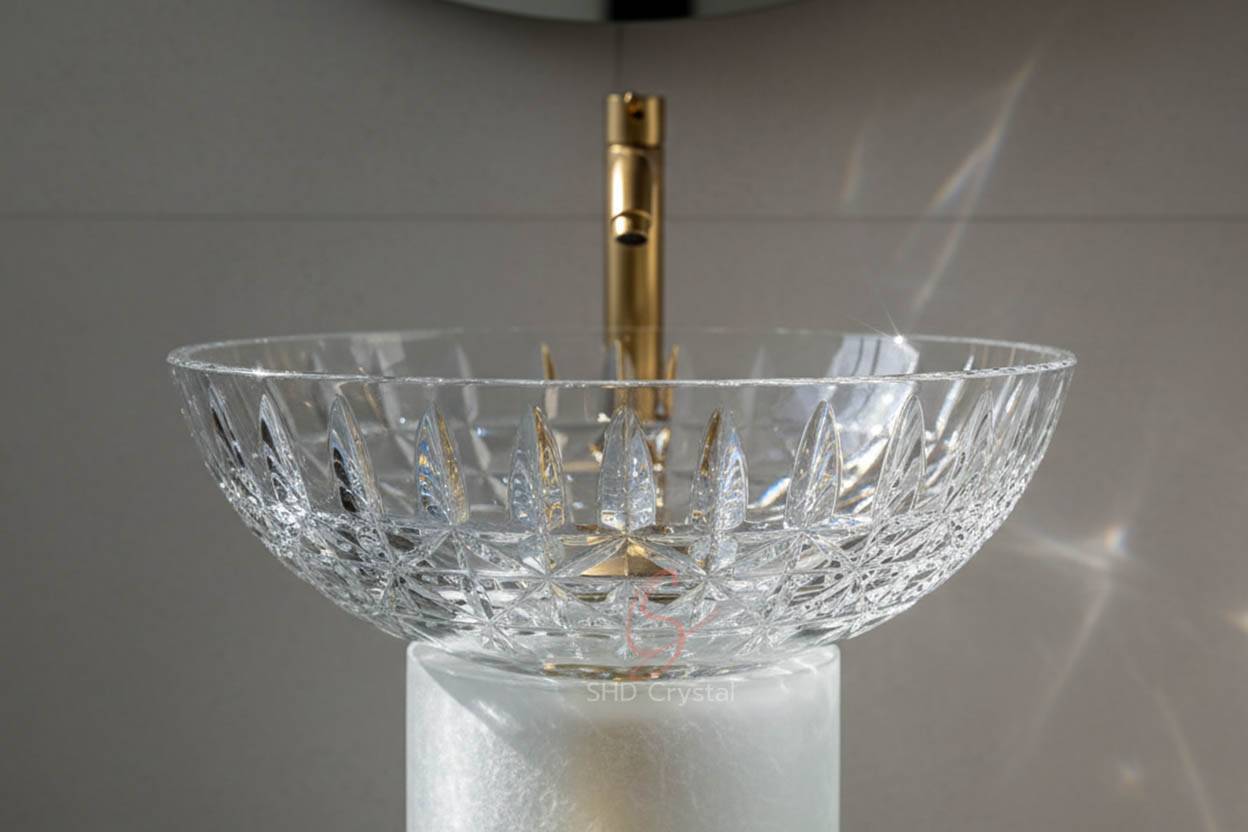
In the reference design, the textured pedestal contrasts with the intricately cut basin surface. This combination enhances both stability and visual layering, making the fixture feel grounded yet refined.
Transparent Glass Bathroom Fixtures and Light Interaction
Glass behaves differently from opaque materials. As part of transparent glass bathroom fixtures, the basin interacts with surrounding light rather than blocking it.
Cut or engraved surfaces scatter reflections, producing subtle prism-like effects. Depending on lighting conditions, the basin may shift between soft diffusion and sharp brilliance. This dynamic quality makes a pedestal glass washbasin particularly effective in spaces where lighting plays a central role, such as high-end residential bathrooms or boutique hospitality environments.
Surface Craftsmanship and Tactile Detail
The visual impact of a pedestal glass washbasin is largely defined by its surface treatment.
In the reference piece, the upper bowl features dense geometric cutting, while the pedestal adopts a more diffused, textured finish. This contrast creates depth without relying on additional materials. Such detailing is not purely decorative. It also influences how water, light, and reflections behave across the surface—an important factor in transparent glass bathroom fixtures.
Balancing Transparency and Structural Presence
One challenge in designing a pedestal glass washbasin is maintaining structural stability while preserving visual lightness.
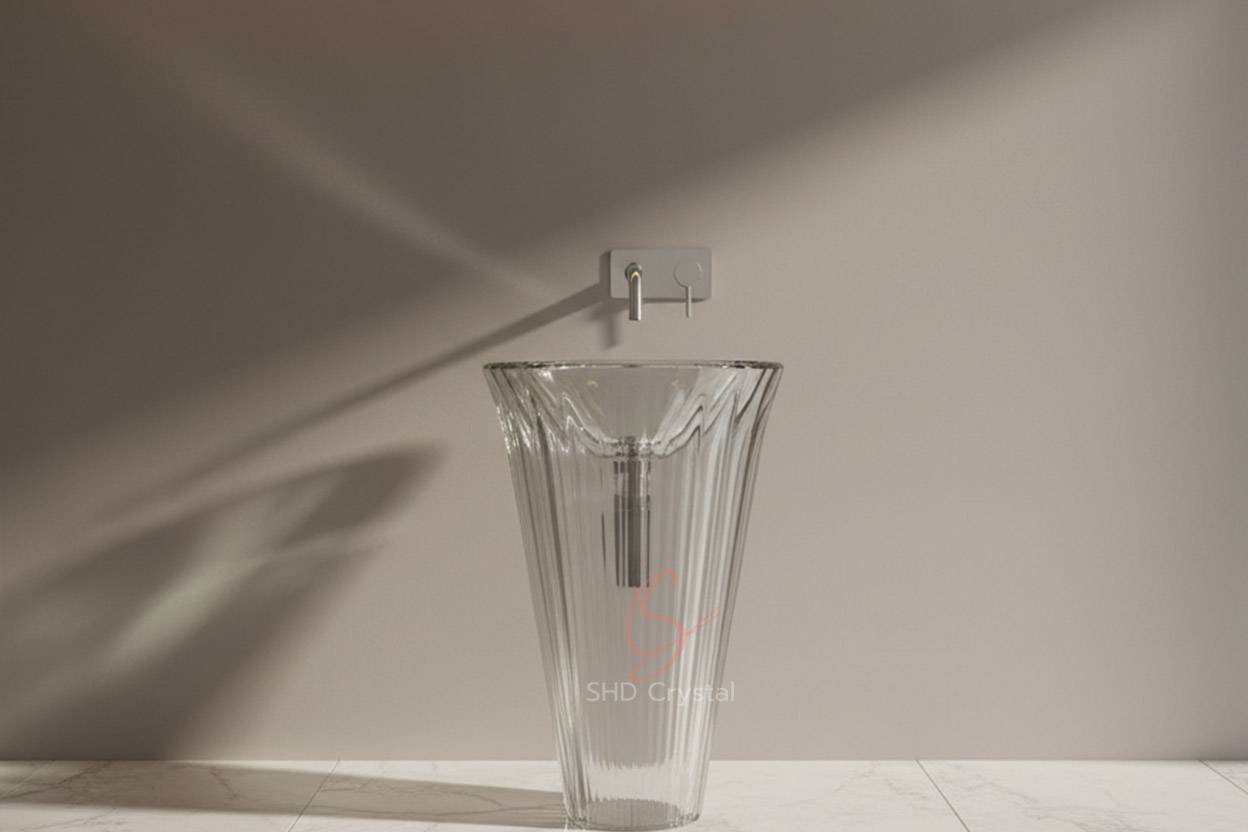
Glass thickness must be carefully controlled. Too thin, and the structure may feel fragile. Too thick, and the transparency becomes visually heavy. A well-designed freestanding washstand achieves this balance by distributing weight through the pedestal while keeping the basin visually open and refined.
Where Pedestal Glass Washbasins Work Best
A pedestal glass washbasin is most effective in environments where the fixture is meant to be seen rather than concealed.
Typical applications include:
- Feature bathrooms in luxury residences
- Boutique hotel suites
- High-end powder rooms
- Design-forward retail or showroom spaces
In these settings, transparent glass bathroom fixtures contribute to a sense of openness and material sophistication.
Conclusion
The appeal of a pedestal glass washbasin lies in its ability to combine function with visual expression. Through the integration of a freestanding washstand structure and the material qualities of transparent glass bathroom fixtures, it transforms a utilitarian object into a design feature.
Rather than blending into the background, it defines the space around it.
Considering Glass as a Structural Design Element
When selecting bathroom fixtures, glass offers a different design language compared to traditional materials.
A pedestal glass washbasin demonstrates how transparency, texture, and form can work together to create a balanced object. By combining structural clarity with refined surface detailing, freestanding washstand designs can introduce both function and visual depth into modern interiors.
Bringing Glass Washbasin Designs Into Manufacturing
For projects involving glass washbasins, translating design into production requires precise control over forming, thickness, and surface treatment. At SHD Crystal, Manufacturing focuses on achieving both structural stability and visual clarity in glass basin production.
The process includes handmade forming and blowing glass techniques for complex shapes, as well as pressing methods for consistent geometry across batches. Surface treatments such as cutting, engraving, and frosting are applied with attention to how light, water flow, and daily use interact with the material.
Material standards are carefully managed to ensure strength, transparency, and long-term durability. With experience in producing transparent glass bathroom fixtures, SHD Crystal supports washbasin OEM projects that require reliable quality, refined detailing, and consistency in glass washbasin Manufacturing.