
Blogpost keywords: care for lead crystal tableware, tips for cleaning glassware, dishwasher safe
Care for lead crystal tableware requires more than routine cleaning—it demands an understanding of how crystal behaves under heat, pressure, and chemical exposure. Unlike standard glass, lead crystal is softer, more refractive, and more sensitive to environmental conditions.
This sensitivity is what gives crystal its brilliance, but it also makes improper handling a common cause of dulling, scratching, or structural damage. For collectors, hospitality professionals, and households investing in fine crystal, adopting the right care practices ensures that both clarity and craftsmanship are preserved over time.
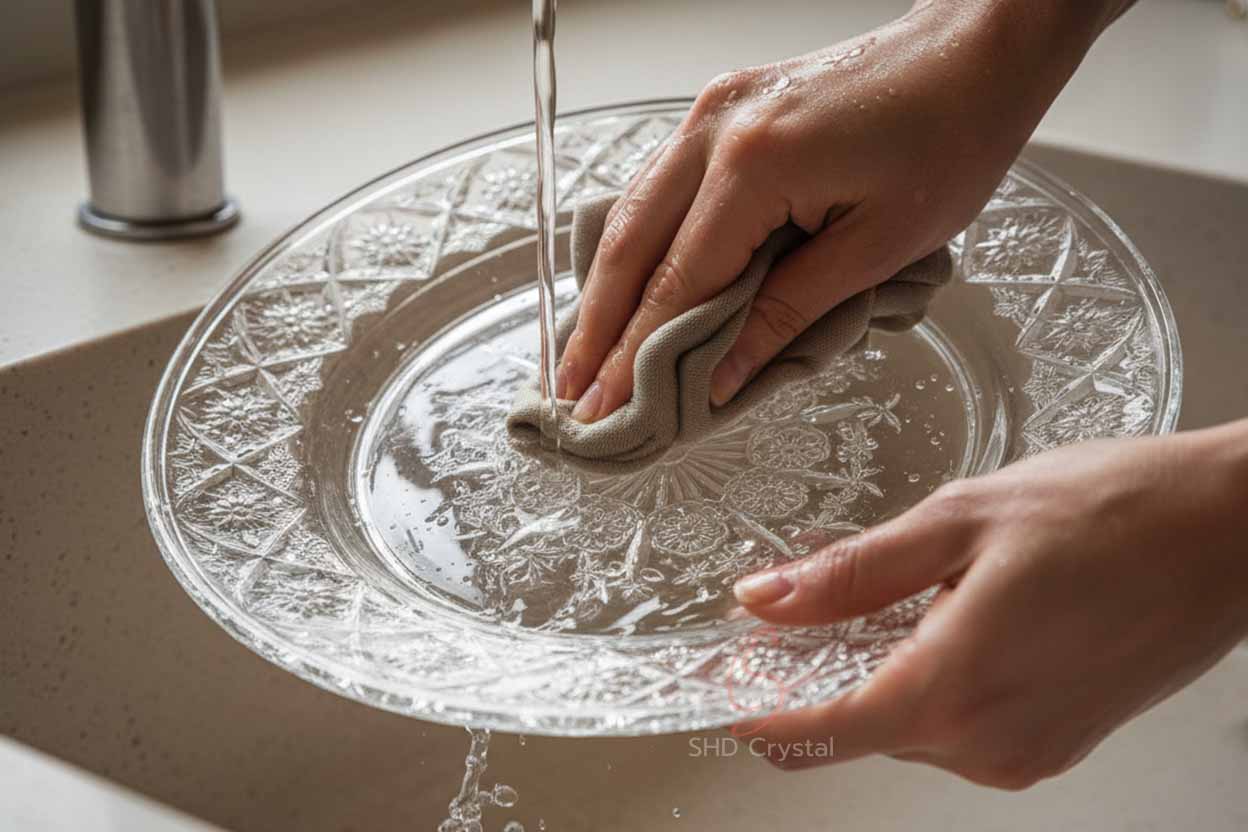
Why Care for Lead Crystal Tableware Requires Gentle Handling
To properly care for lead crystal tableware, it is essential to recognize that its surface is more delicate than ordinary glass. The same composition that enhances light refraction also increases susceptibility to abrasion and chemical interaction.
This is why most professional tips for cleaning glassware emphasize manual washing over automated processes. The idea of a dishwasher safe approach may be convenient, but for lead crystal, it introduces risks such as surface clouding, micro-scratches, and thermal stress.
Treating crystal as a functional artwork rather than disposable tableware changes how it should be handled at every stage of use.
Handwashing as the Foundation of Crystal Maintenance
The most reliable way to care for lead crystal tableware is through careful handwashing. Each piece should be cleaned individually using warm water and a mild, fragrance-free detergent. A soft sponge or cloth helps prevent surface abrasion while removing residue effectively.
Placing a towel or rubber mat at the bottom of the sink adds an extra layer of protection against accidental impact. Water temperature should remain moderate, as sudden changes can cause stress fractures.
While some may search for dishwasher safe alternatives, consistent manual cleaning remains the only method that fully preserves the optical clarity of crystal.
Managing Cloudiness and Residue Without Damage
Over time, even well-maintained crystal may develop water spots or mineral deposits. Addressing this requires a controlled approach rather than aggressive cleaning.
A mixture of white vinegar and warm water is widely recommended among tips for cleaning glassware because it dissolves mineral buildup without harming the surface. After soaking briefly, gentle wiping restores clarity without introducing scratches.
Avoid abrasive pads or strong chemical cleaners, as they can permanently alter the polished finish. In crystal care, restoration should always be as gentle as preservation.
Understanding the Limits of “Dishwasher Safe“ Claims
The question of whether crystal is dishwasher safe often arises, especially with modern tableware. While some products may claim compatibility, traditional lead crystal should not be exposed to dishwasher conditions.
High temperatures, strong detergents, and mechanical movement inside a dishwasher can degrade the surface over time. The result is often irreversible clouding or loss of brilliance.
To truly care for lead crystal tableware, it is important to separate convenience from preservation. Manual care may require more effort, but it ensures long-term quality.
Common Mistakes That Reduce Crystal Lifespan
A frequent mistake is treating crystal like ordinary glassware. Using abrasive sponges or strong detergents can quickly dull the surface.
Another issue is relying on dishwasher safe assumptions without verifying material composition. Even occasional dishwasher use can lead to gradual damage that becomes visible over time.
Improper drying techniques, such as twisting the stem of a glass, also contribute to breakage. Additionally, storing beverages in crystal for extended periods increases the risk of lead leaching, which is both a safety and quality concern.
Practical Considerations for Safe Use and Storage
To care for lead crystal tableware properly, usage habits are just as important as cleaning methods. Crystal is best used for serving rather than long-term storage of food or beverages.
New crystal pieces can be pre-treated by soaking in a diluted vinegar solution to reduce potential residue from production. For storage, items should be kept upright, as the rim is the most fragile part. Decanters should be stored with stoppers removed to prevent trapped odors.
Following consistent tips for cleaning glassware and handling ensures both safety and longevity.
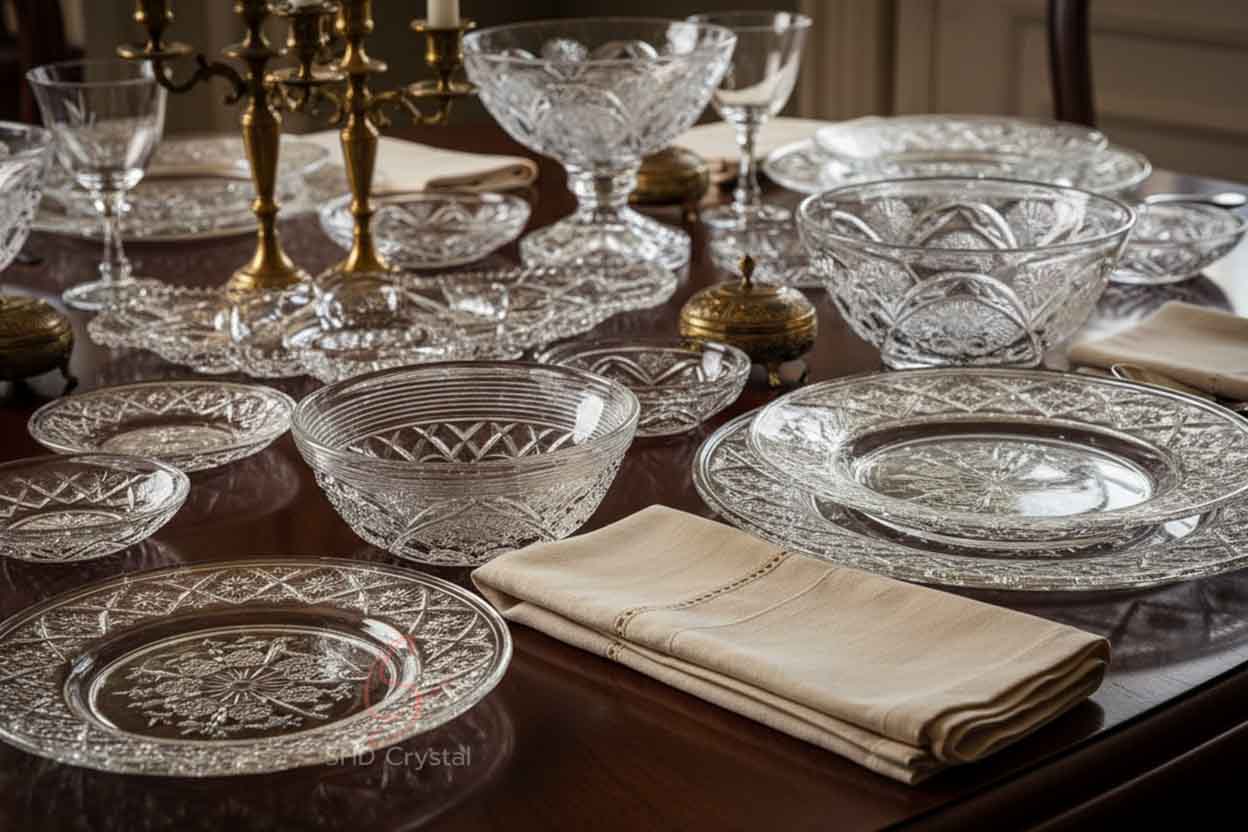
Conclusion
Care for lead crystal tableware is ultimately about balancing beauty with responsibility. Through gentle cleaning methods, careful handling, and an understanding of material limitations, crystal can retain its brilliance for years.
Avoiding dishwasher safe shortcuts and following proven tips for cleaning glassware ensures that each piece continues to reflect both light and craftsmanship at its highest level.
Supporting Long-Term Crystal Care with Manufacturing Insight
At SHD Crystal, we approach glassware not only as finished products but as materials shaped by process and precision.
Our experience in producing fine crystal tableware informs how we advise clients to care for lead crystal tableware in real-world use. By understanding how surface finishing, polishing, and material composition interact, we help ensure that proper maintenance aligns with how the product was originally crafted.
From luxury crystal tableware to textured glass bowls, preserving clarity and structure begins with informed care—bridging craftsmanship and everyday use.