
Blogpost keywords: textured glass goblet, faceted vintage-style drinkware, luxury crystal wineware
A textured glass goblet represents more than a drinking vessel; it reflects how material, light, and craftsmanship converge to create a refined sensory experience. In high-end tableware, especially within vintage-inspired settings, the textured glass goblet stands out for its ability to transform simple wine service into a visual and tactile ritual.
Unlike smooth glassware, where clarity alone defines quality, crystal-based goblets rely on surface articulation. Through faceted vintage-style drinkware techniques and controlled cutting patterns, each goblet becomes a structured object that interacts dynamically with light, elevating both presentation and perceived value.
How Textured Glass Goblet Craftsmanship Shapes Material Expression
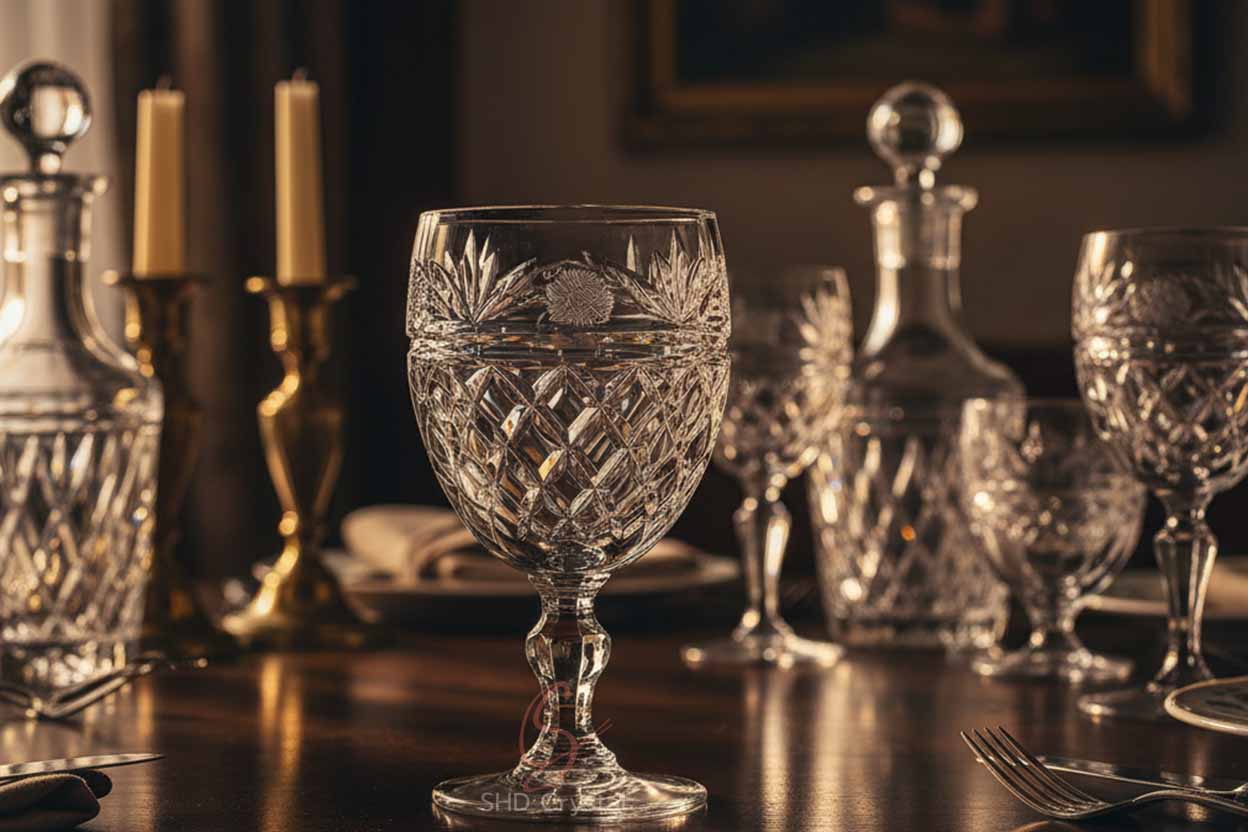
The defining feature of a textured glass goblet lies in how its surface is constructed. In crystal glass production, texture is not applied superficially but developed through deliberate processes such as mold-assisted forming, hand engraving, and diamond cutting.
These techniques allow the goblet to maintain structural clarity while introducing layered surface geometry. Faceted vintage-style drinkware often features prism-like cuts that break and refract light, creating depth and movement even when the object is static. This interplay between transparency and texture is what distinguishes luxury crystal wineware from standard glass products.
Faceted Surfaces and the Visual Language of Vintage Design
Vintage aesthetics in glassware are closely tied to the presence of faceted detailing. A textured glass goblet with geometric cuts or engraved motifs evokes historical craftsmanship traditions while maintaining relevance in modern interiors.
Faceted vintage-style drinkware typically incorporates symmetrical patterns that wrap around the bowl, creating rhythm and balance. These patterns are not merely decorative; they enhance the way light travels through the crystal. As a result, the goblet produces subtle reflections and highlights that contribute to a more immersive table setting.
Material Weight, Clarity, and Structural Balance
A well-crafted textured glass goblet must balance visual richness with functional usability. Crystal glass provides the density and clarity required for deep cutting without compromising structural integrity.
Luxury crystal wineware often features thicker walls compared to standard glass, allowing for pronounced texture while maintaining durability. At the same time, careful proportioning ensures that the goblet remains comfortable to hold. The weight distribution between bowl, stem, and base plays a crucial role in achieving this balance, reinforcing both elegance and practicality.
Common Mistakes in Vintage-Style Glassware Selection
A frequent mistake is equating visual complexity with quality. Some products mimic faceted vintage-style drinkware through shallow or molded textures that lack depth, resulting in weak light interaction and reduced perceived value.
Another issue is poor material selection. Without true crystal composition, the glass cannot support deep cuts or achieve the same level of brilliance. This often leads to dull surfaces and limited refractive performance.
Additionally, inconsistent finishing—especially around the rim—can negatively affect the drinking experience, even if the goblet appears visually appealing.
Practical Considerations for Designers and Buyers
When selecting a textured glass goblet for commercial or hospitality use, it is important to evaluate both aesthetic and technical factors. Buyers should examine how the surface interacts with light under real conditions, rather than relying solely on static images.
Faceted vintage-style drinkware should demonstrate consistent pattern depth and alignment across multiple units. In luxury crystal wineware, repeatability is as important as craftsmanship, particularly for large-scale applications such as hotels or fine dining environments.
Working with experienced manufacturers ensures that both design intent and production feasibility are aligned from the outset.
Applications in Vintage and Luxury Table Settings
The textured glass goblet is widely used in environments where atmosphere and detail are essential. In fine dining, it enhances the visual layering of the table. In boutique hospitality spaces, it reinforces a curated, vintage-inspired identity.
Luxury crystal wineware also plays a role in private residences, where it contributes to elevated everyday rituals. Through faceted vintage-style drinkware design, these goblets bridge the gap between decorative object and functional glassware.
Conclusion
A textured glass goblet embodies the integration of material precision and artistic detailing. Through faceted vintage-style drinkware techniques and the inherent clarity of luxury crystal wineware, it delivers both visual richness and functional performance.
The value of such glassware lies not only in its appearance but in the craftsmanship that defines its interaction with light, touch, and use.
Refining Crystal Craftsmanship for Scalable Luxury Production
At SHD Crystal, we approach crystal glassware manufacturing as a balance between artisanal detailing and controlled production systems.
For textured glass goblet development, we combine hand-finishing techniques such as engraving and diamond cutting with stable forming processes to ensure both visual depth and batch consistency. This allows faceted vintage-style drinkware to maintain its structural clarity and refined texture across large-scale production.
Our expertise in luxury crystal wineware supports projects that require high-end aesthetics without compromising manufacturability, helping brands bring vintage-inspired designs into reliable OEM production.