
Blogpost keywords: glass sink processing, viscosity gradient steering, edge cooling modulation
At SHD Crystal, we do not treat glass sink processing as a fixed sequence of steps. Instead, we see it as a continuous control of how glass behaves—how it flows, cools, and stabilizes over time.
Unlike rigid materials, glass cannot be forced into shape without consequence. Every adjustment in temperature or timing affects how the material distributes itself. This is why, in our production environment, we focus on guiding the process rather than controlling it mechanically.
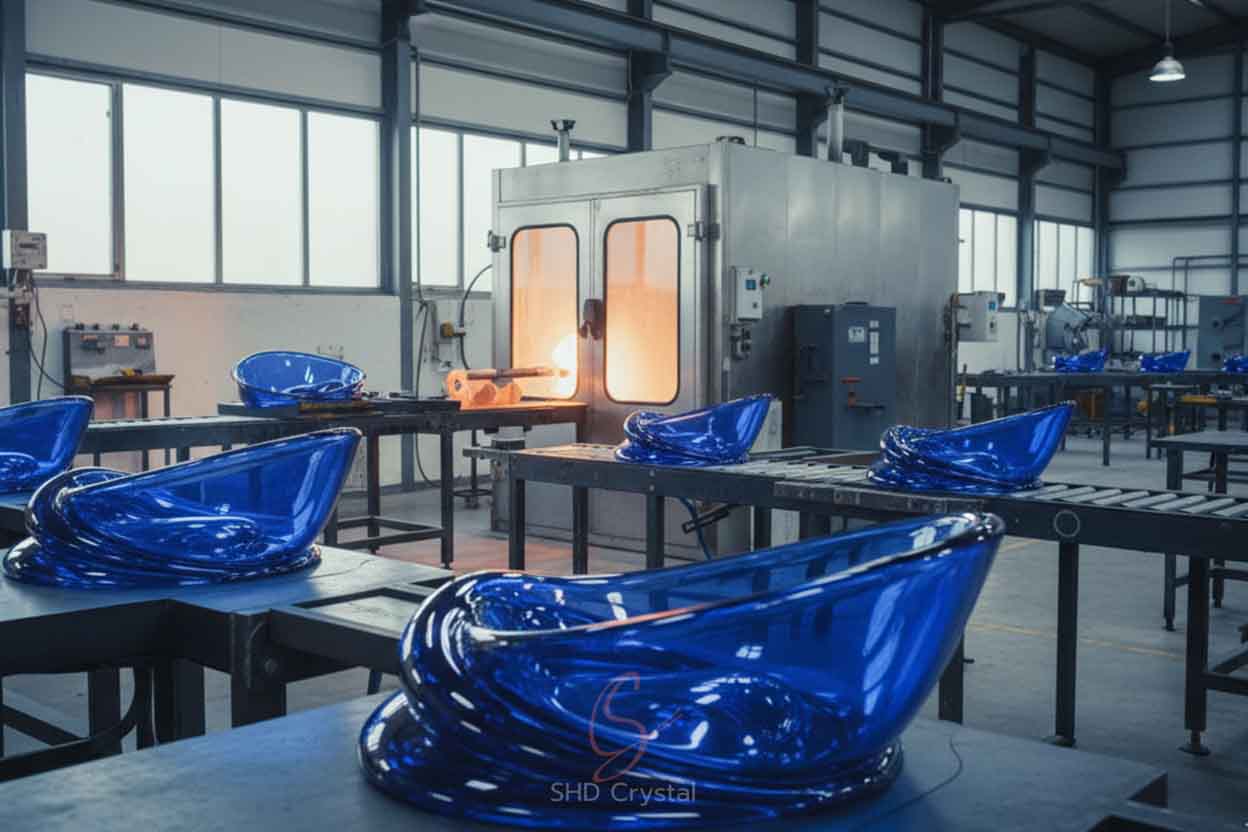
By applying viscosity gradient steering and edge cooling modulation, we ensure that each sink achieves both structural balance and long-term reliability.
How We Guide Material Flow During Forming
When molten glass is shaped into a sink, it does not move uniformly. Different areas respond differently depending on temperature and thickness.
In our factory, we use viscosity gradient steering to control this behavior. By maintaining slightly different temperature zones, we allow certain areas of the glass to remain more fluid while others provide resistance.
This controlled imbalance helps us guide the material into its intended geometry. Without it, the glass would spread unpredictably, making it difficult to achieve consistent wall thickness or stable form.
From our perspective, successful glass sink processing begins with understanding how to direct movement rather than restrict it.
How We Stabilize Edges During Cooling
Once shaping is complete, the challenge shifts from movement to stability. Edges cool faster than the rest of the structure, which makes them particularly sensitive.
Through edge cooling modulation, we carefully control how quickly these areas lose heat. If cooling happens too quickly, internal stress may develop. If it is too slow, the shape may shift before stabilization.
In our experience, maintaining alignment between edges and the main body is essential. This is not always visible immediately, but it directly affects durability over time.
For us, glass sink processing is not finished at forming—it continues until the entire structure reaches a stable state.
Why Flow And Cooling Must Work Together
One of the most important lessons in glass sink production is that forming and cooling cannot be treated separately.
We often see issues when these two stages are not aligned. A sink may appear correct during shaping, but lose its geometry during cooling.
By combining viscosity gradient steering with edge cooling modulation, we ensure that the shape created during forming is preserved during stabilization.
At SHD Crystal, we approach this as a single system rather than two independent processes. This allows us to maintain consistency across different production batches.
How Internal Geometry Affects Real Use
Beyond appearance, the internal shape of a sink determines how it performs. Water flow, drainage efficiency, and ease of cleaning all depend on internal contours.
By controlling material flow during forming, we create smooth transitions that guide water naturally toward the drain. This reduces residue buildup and improves daily usability.
At the same time, stable edge cooling ensures that these transitions remain consistent after production.
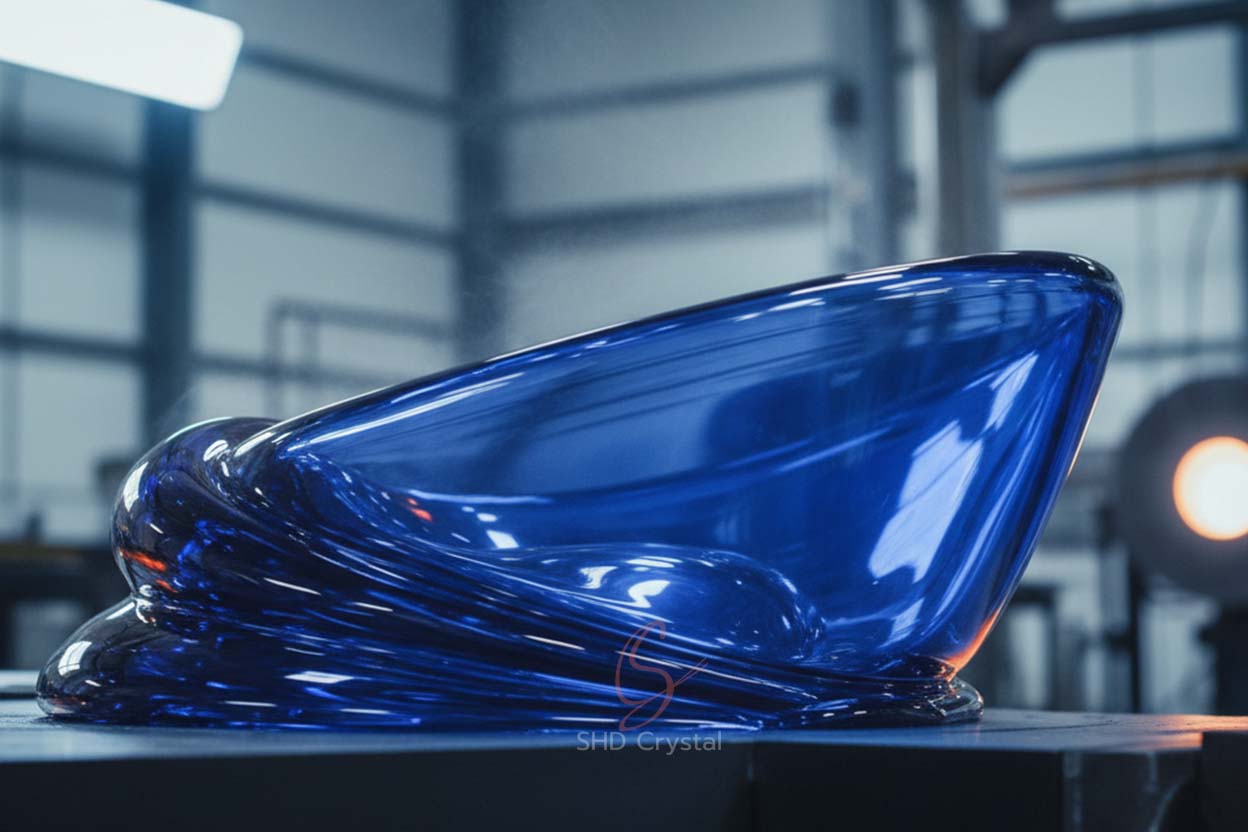
From our perspective, glass sink processing is not only about shape—it is about how the product behaves in real use.
Managing Variability In Daily Production
Glass is sensitive to small changes. Even minor variations in temperature or timing can affect the final result.
In our production environment, we continuously monitor these conditions. Without viscosity gradient steering, material distribution may become uneven. Without proper edge cooling modulation, edges may behave differently from the rest of the structure.
Maintaining consistency is not about eliminating variation completely—it is about controlling it within predictable limits.
This is what allows us to deliver stable results across multiple production cycles.
Conclusion
At SHD Crystal, glass sink processing is defined by how well we manage material behavior across forming and cooling stages. By combining viscosity gradient steering with edge cooling modulation, we are able to produce glass sinks that maintain both structural integrity and functional performance over time.
Turning Process Control Into Reliable Production
For projects that require both design precision and long-term durability, SHD Crystal approaches glass sink processing as a controlled system rather than a simple workflow.
With an experienced team in glass forming, shaping, and thermal control, we align viscosity gradient steering and edge cooling modulation within a unified production process. This allows us to support customized designs while ensuring consistent quality across batches, making our glass sinks suitable for both residential and commercial applications.