
Blogpost keywords: long-neck crystal vase, seamlessly hand-blown, glass-forming craftsmanship
A long-neck crystal vase represents one of the most technically demanding expressions of glass artistry, where proportion, balance, and surface purity must align without compromise. Unlike standard decorative vessels, this elongated form magnifies every flaw, making seamlessly hand-blown techniques essential. The absence of mold seams is not simply aesthetic—it reflects a deeper level of glass-forming craftsmanship, where molten material is guided entirely by human control.
Why Long-Neck Crystal Vase Demands Seamless Precision
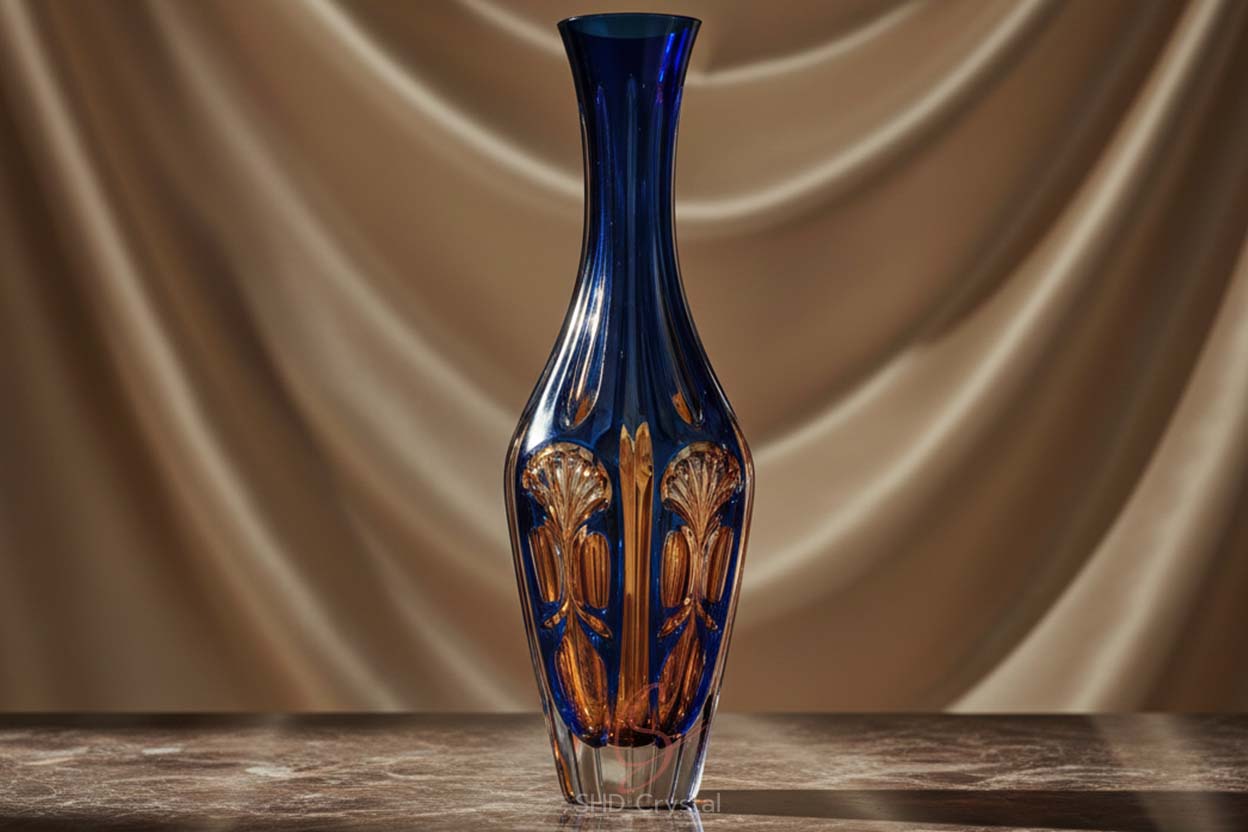
The long-neck crystal vase structure introduces a unique engineering challenge: maintaining uniform wall thickness while stretching molten glass vertically. In seamlessly hand-blown production, artisans rely on lung power and rotational control to expand glass evenly, avoiding collapse or distortion. This is where glass-forming craftsmanship becomes critical, as the material must remain stable while being continuously elongated.
Unlike mold-based production, no external constraint defines the shape. Instead, the craftsman’s timing, breath control, and heat management determine the final silhouette. The result is a smooth, uninterrupted surface—free from vertical seams—that enhances optical clarity and elevates the vase into a sculptural object.
How Seamlessly Hand-Blown Techniques Shape the Form
The process begins with gathering molten crystal on a blowpipe, followed by controlled inflation and rotation. In seamlessly hand-blown production, the artisan gradually pulls the glass upward while maintaining internal air pressure. This creates the signature elongated neck without introducing structural stress.
A defining feature is the pontil mark at the base, indicating where the piece was detached. In high-end glass-forming craftsmanship, this mark is carefully polished rather than hidden, serving as proof of manual creation. The absence of seams allows light to travel fluidly across the surface, enhancing brilliance and depth.
This method also allows subtle variations—slight asymmetry, gentle curvature—that distinguish each piece as unique rather than mechanically replicated.
Applications Where Craftsmanship Becomes Visible
The visual impact of a long-neck crystal vase extends beyond decoration. In interior styling, the elongated profile creates vertical emphasis, making it ideal for minimalist spaces or floral arrangements with long stems.
Because it is seamlessly hand-blown, the surface reflects light without interruption, enhancing clarity under both natural and artificial lighting. This quality is also valued in lighting components and high-end drinkware, where smooth transitions and tactile comfort matter.
The integration of glass-forming craftsmanship ensures that the vase is not only visually refined but structurally reliable, capable of maintaining its form over time without stress fractures.
Common Mistakes When Evaluating Hand-Blown Vases
One frequent misconception is assuming all clear glass vases are equivalent. In reality, mold-blown products often feature faint vertical seams that disrupt light flow. Another mistake is overlooking weight distribution—poorly made elongated vases may appear elegant but lack stability.
Buyers also tend to ignore the pontil mark, mistaking it for a defect rather than a hallmark of authenticity. In true seamlessly hand-blown pieces, this detail is refined and intentional. Additionally, inconsistent thickness along the neck can indicate weak glass-forming craftsmanship, leading to long-term durability issues. Recognizing these factors is essential when selecting a high-quality piece.
Practical Considerations for Sourcing Quality Pieces
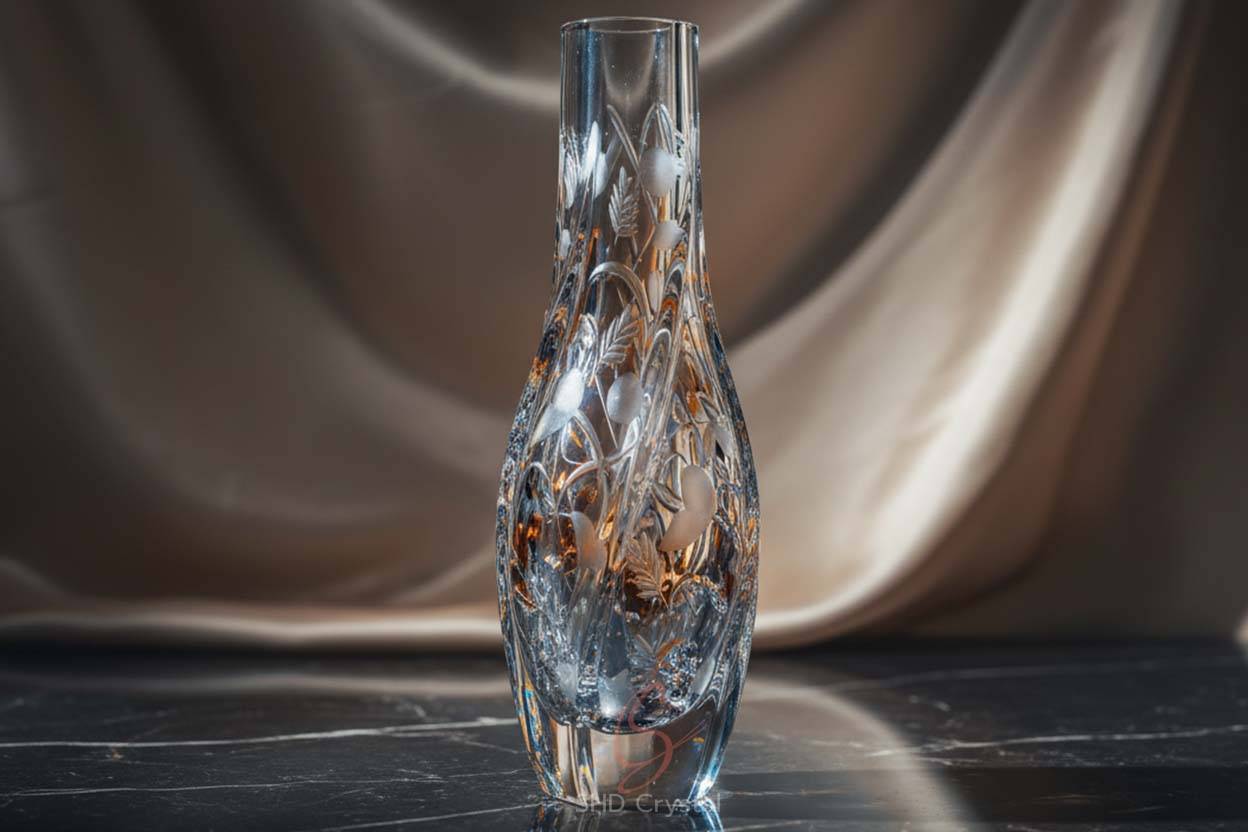
When sourcing a long-neck crystal vase, it is important to evaluate both visual and structural indicators. Look for uninterrupted surfaces, balanced proportions, and smooth transitions from body to neck. These reflect genuine seamlessly hand-blown production.
Equally important is understanding the manufacturer’s control over glass-forming craftsmanship. Consistent annealing, precision shaping, and finishing techniques ensure durability and clarity. For B2B buyers, verifying production capability—rather than relying solely on appearance—helps avoid inconsistencies across batches.
Attention to these details ensures that the final product meets both aesthetic and functional expectations, especially in high-end interior or hospitality applications.
Conclusion
A long-neck crystal vase is more than a decorative object; it is a direct expression of seamlessly hand-blown expertise and advanced glass-forming craftsmanship. Its seamless surface, refined proportions, and structural integrity demonstrate why manual glass forming remains unmatched in precision and artistry.
When Craftsmanship Solves What Machines Cannot
For brands seeking consistency without sacrificing artistry, working with a manufacturer(such as SHD Crystal) skilled in long-neck crystal vase production ensures both design integrity and scalable quality. Advanced glass-forming craftsmanship allows complex forms to be reproduced with control, while preserving the unique character of seamlessly hand-blown glass—bridging the gap between artisanal value and industrial reliability.