
Blogpost keywords: glass blowing manufacturers, hand blown glass, glass blowing process
Inside the workshop of glass blowing manufacturers, production does not begin with machines—it begins with heat.
Furnaces remain active throughout the day, holding molten material at a temperature where it can be shaped, stretched, and controlled. This is where the glass blowing process starts to take form. Every piece of hand blown glass originates from this continuously moving environment.
Rather than a fixed sequence, daily production follows a rhythm. Gathering, blowing, shaping, reheating, and cooling repeat in cycles, allowing glass blowing manufacturers to maintain both flow and consistency.
How Glass Blowing Manufacturers Move Through Each Stage Of The Glass Blowing Process
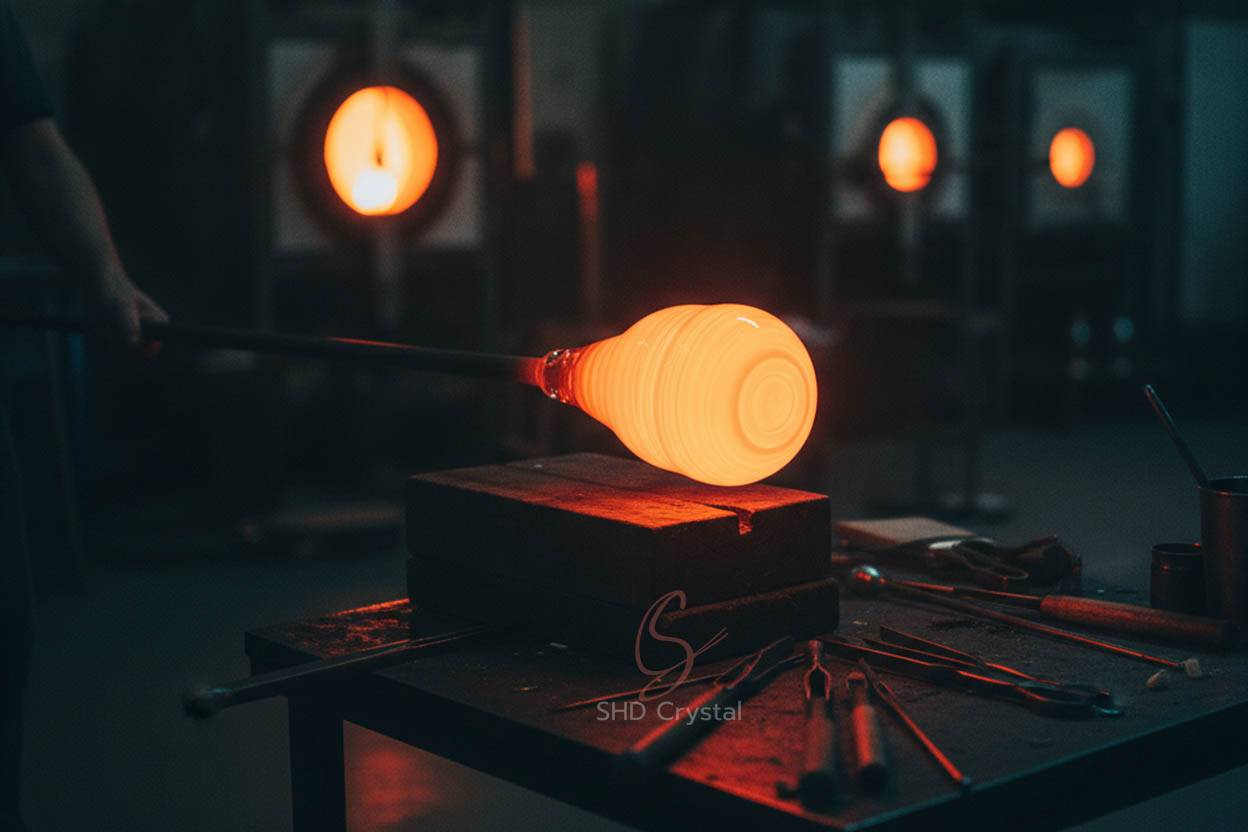
The glass blowing process unfolds in stages that are closely linked in time. A gather of molten glass is first collected onto a blowpipe. The material glows, soft and responsive. As air is introduced, it expands into a controlled volume. Tools are then used to guide form while rotation prevents collapse.
This stage is highly sensitive. Even small changes in timing or temperature affect thickness and structure. For glass blowing manufacturers, maintaining control here is essential to producing reliable hand blown glass at scale. Reheating is frequently required. As the material cools, it must be returned to the furnace to regain flexibility before shaping continues.
How Daily Work Balances Craft And Repetition
In practice, glass blowing manufacturers operate between repetition and variation. Each worker repeats similar motions throughout the day, yet no two pieces of hand blown glass are entirely identical. This balance defines the character of the glass blowing process.
To support commercial production, structured workflows are introduced. Tools, molds, and measurement references help stabilize proportions. However, final shaping still depends on human control. This is how glass blowing manufacturers maintain consistency without eliminating the organic qualities that define hand blown glass.
Real World Applications Seen From The Production Floor
From the factory perspective, finished products are already connected to their end use. Lighting components, decorative vessels, and functional containers move through the same glass blowing process, but are shaped with different structural priorities.
In hospitality environments, durability becomes critical. In decorative installations, visual clarity and form take priority. Glass blowing manufacturers adjust thickness, curvature, and finishing accordingly.
These decisions are made during production, not afterward. This is where the value of experienced handling becomes visible in every piece of hand blown glass.
Common Misconceptions About Glass Blowing Work
A common assumption is that handcrafted production cannot be consistent. In reality, glass blowing manufacturers rely on controlled environments and repeated workflows to stabilize results. The glass blowing process is not random—it is guided by experience and technical understanding.
Another misconception is that production is slow and unstructured. While each piece requires attention, coordinated teams allow multiple stages to operate simultaneously. This makes it possible for hand blown glass to meet commercial timelines without losing its defining characteristics.
Practical Considerations In Daily Production
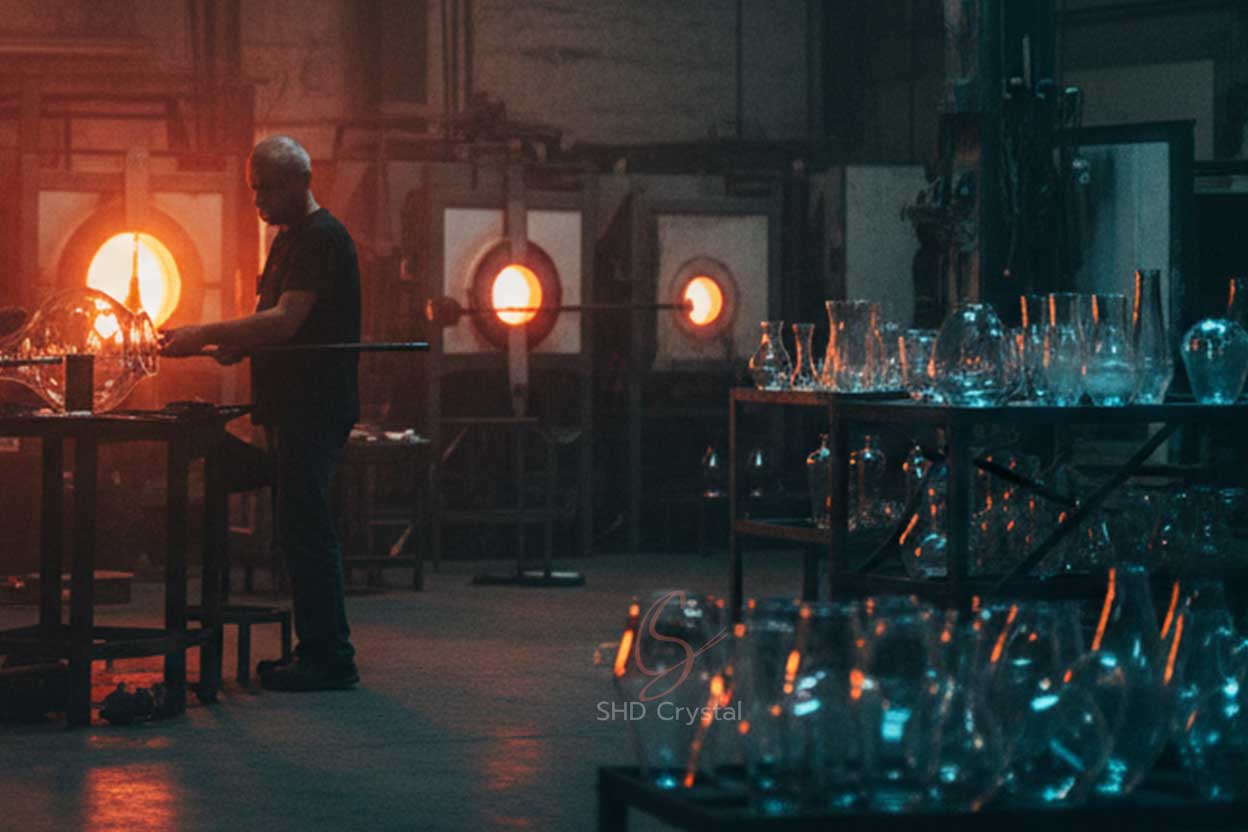
From a manufacturing standpoint, planning is essential. Material preparation, furnace stability, and team coordination all influence output. Glass blowing manufacturers must ensure that each stage flows into the next without interruption.
Sampling plays a key role in this process. Early-stage samples help confirm proportion, clarity, and structural strength before full production begins. In the glass blowing process, adjustments made early prevent inconsistencies later. This is why experienced manufacturers emphasize preparation as much as execution.
Operational Details That Define Long Term Quality
Beyond shaping, cooling is equally important. Annealing allows hand blown glass to release internal stress. Without proper cooling, even well-formed pieces may become fragile over time. Glass blowing manufacturers monitor this stage carefully. Controlled temperature reduction ensures that finished products remain stable during use and transportation.
Edge finishing and compatibility with fittings are also addressed before completion. These final steps ensure that the glass performs reliably beyond the factory floor.
Conclusion
Glass blowing manufacturers transform molten material into structured products through a continuous glass blowing process. By balancing heat, timing, and controlled repetition, they produce hand blown glass that combines individuality with commercial reliability.
Understanding The Rhythm Behind Production
Behind every finished product lies a sequence of repeated actions refined over time.
For projects involving hand blown glass, understanding how glass blowing manufacturers manage the glass blowing process can help align design expectations with production reality. This connection between concept and execution is what allows glass to move from fluid material to stable form.