> Blogs > The Legacy of Ancient Indian Hookah Craftsmanship: From Tradition to Modern Innovation
The Legacy of Ancient Indian Hookah Craftsmanship: From Tradition to Modern Innovation
Core keywords: ancient Indian hookah craftsmanship, traditional hookah design, handcrafted hookah accessories
Among the many cultural treasures of the subcontinent, ancient Indian hookah craftsmanship is renowned for its seamless blend of art, ritual, and engineering. Rooted in the Mughal courts of the 16th century, the Indian hookah—then called “Huqqa“—was more than a smoking instrument; it was a symbol of prestige, intellect, and hospitality.
According to historical tradition, Hakim Abul-Fath Gilani, a physician at Emperor Akbar’s court, is believed to have developed an early form of water-filtered smoking apparatus intended to cool and purify tobacco smoke. Though direct evidence is limited, this account marks the widely accepted origin of ancient Indian hookah craftsmanship. Over the following centuries, the idea spread from imperial workshops in Delhi to the merchant houses of Bengal, where artisans refined the hookah’s form and function into a true symbol of cultural identity.
Materials and Craft: The Soul of Traditional Hookah Design
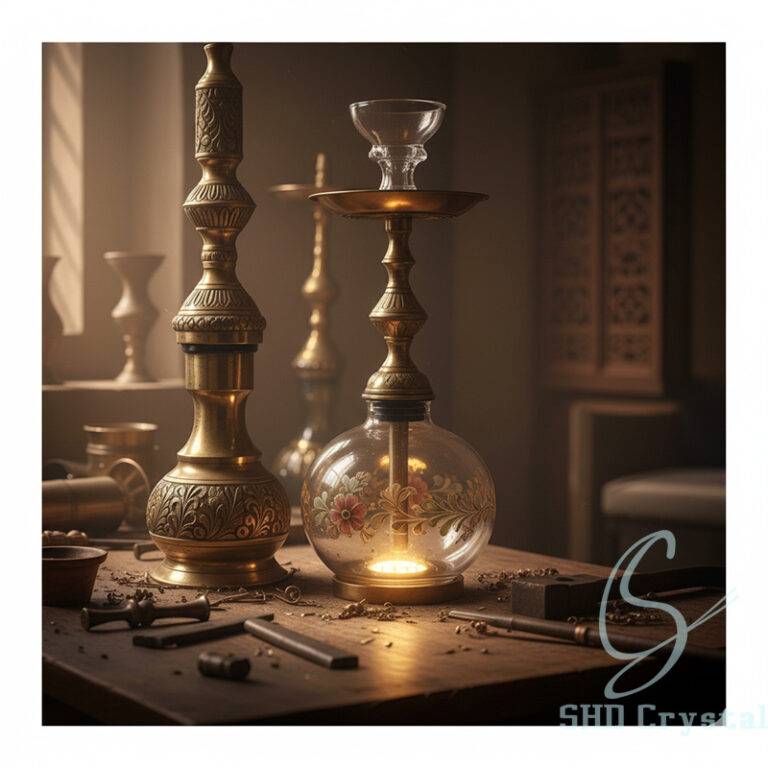
Early Indian artisans displayed extraordinary ingenuity in material selection. The first prototypes used coconut shells, bamboo stems, and brass fittings, later evolving into elaborate silver, copper, and glass combinations. This transition defined what scholars now recognize as ancient Indian hookah craftsmanship—the merging of locally sourced materials with advanced metalwork and glass artistry.
![]()
The traditional hookah design of the Mughal period incorporated floral motifs, inlay work, and repoussé metal patterns that mirrored architectural styles of the era. As smoking spread beyond royal circles, craftsmen adapted these designs using regional materials like teakwood, terracotta, and blown glass. Each region—from Rajasthan’s ornate silver bases to Bengal’s engraved brass bowls—reflected unique expressions of ancient Indian hookah craftsmanship.
In her paper ‘The Hookah: The Indian Waterpipe,’ published in the Indian Journal of History of Science (Vol. 44, No. 3, 2009, pp. 399–408), Dr. Cecily S. Ray notes that the hookah ‘was a mark of prestige; its refinement often reflected the refinement of its owner.’ Her research situates the object within India’s social hierarchy, showing how craftsmanship and class were intertwined in daily life. This perspective underscores the sophistication of traditional hookah design, where every joint, seal, and curvature was meticulously shaped to balance aesthetic grace with functional performance—an ethos that remains central to ancient Indian hookah craftsmanship today.
Symbolism and Style: Hookah as Art and Identity
In ancient India, the hookah served as both a ritual object and a status symbol. The opulent forms of ancient Indian hookah craftsmanship embodied power, grace, and continuity. Silver-plated bowls, carved ivory handles, and gemstone inlays turned these smoking devices into living sculptures. (Ivory use was historical; modern craftsmanship avoids restricted materials.)
Scholars such as Arup K. Chatterjee describe the Indian hookah as “an emblem of imperial leisure and a marker of cultural sophistication.” Its aesthetics extended beyond practicality—they expressed the ideals of balance and serenity. The traditional hookah design symbolized dialogue and mindfulness; the smoke was thought to carry both flavor and contemplation.
Everyday Traditions: Hookah in Bengal

In eastern India, particularly in Bengal, the hookah has long been a household fixture rather than a luxury reserved for elites. Rural families and village elders traditionally shared a single clay or brass hookah during communal gatherings or evening discussions, a practice known locally as hukkā porā. These simpler forms of waterpipes were handmade by local potters and metal artisans who followed the principles of ancient Indian hookah craftsmanship—prioritizing smooth airflow, balanced structure, and durability over ornamentation. Even today, in parts of West Bengal and Bangladesh’s border regions, such traditional hookahs remain a cultural symbol of social harmony and generational continuity. This living custom shows how the artistry and practicality of India’s waterpipe heritage continue to shape daily life far beyond royal courts or luxury lounges.
Evolution Through Time: From Artisan Workshops to Modern Lounges
As centuries passed, ancient Indian hookah craftsmanship evolved while retaining its artistic essence. During the British colonial era, Indian artisans adapted their skills to new markets. Hookahs began featuring imported glass bases and European-style stems while preserving their handcrafted elegance.
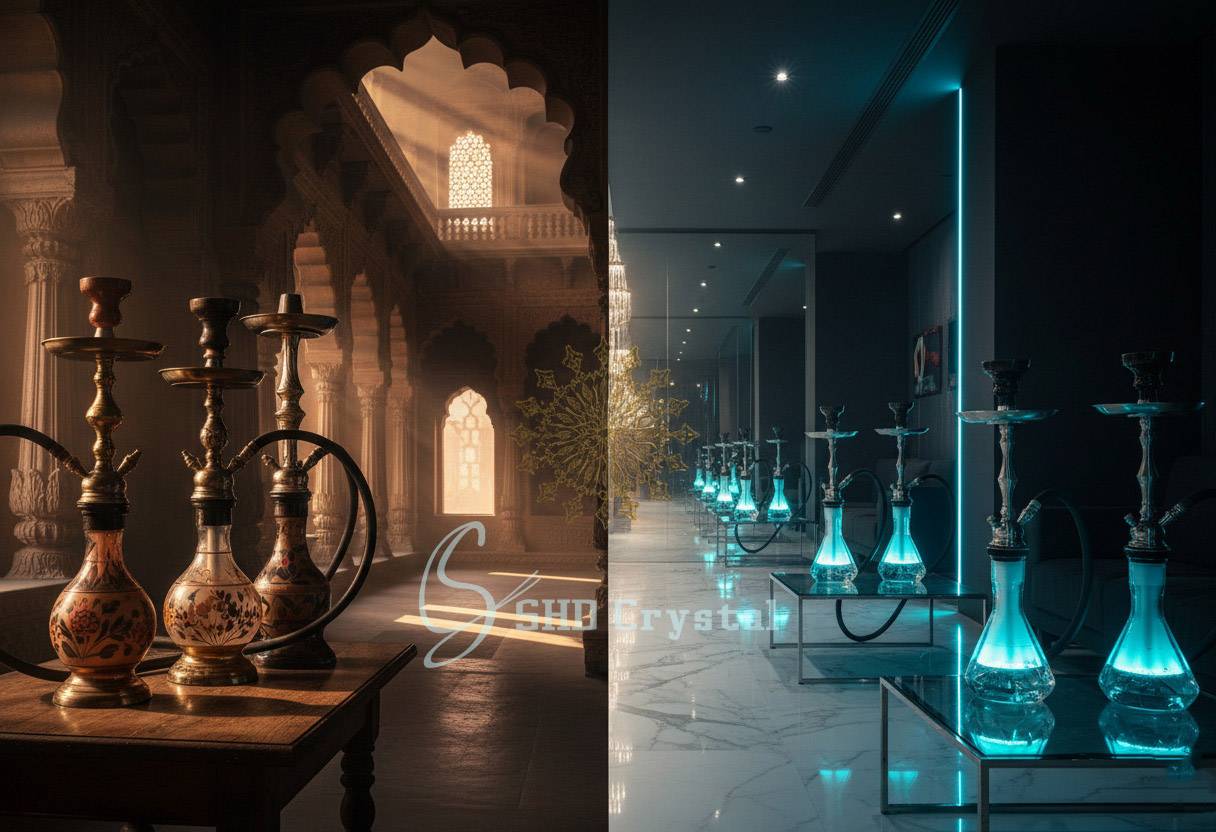
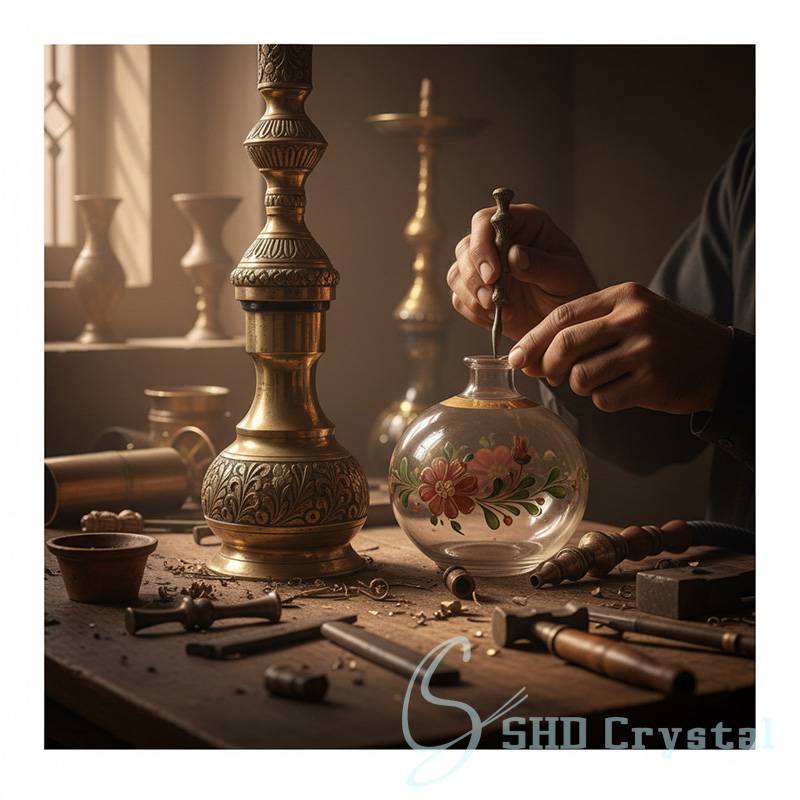
Today, this artistry survives through modern makers who continue to create handcrafted hookah accessories inspired by the past. These artisans combine ancestral techniques—hammering, engraving, casting—with modern materials such as borosilicate glass and medical-grade steel. The result is a new generation of products that keep ancient Indian hookah craftsmanship alive in the contemporary world.
Modern boutique brands in Mumbai and Jaipur now collaborate with glass studios and metalworkers to revive historic motifs while introducing temperature control and ambient lighting. These innovations prove that ancient Indian hookah craftsmanship is not frozen in time but continually reinterpreted through design and technology.
Artisans and Scholars: Voices Preserving the Legacy
The academic community has also contributed to the revival of this tradition. Dr. Ray and historian Arup K. Chatterjee both highlight how the hookah bridged colonial and cultural divides—uniting art, ritual, and conversation. According to Chatterjee, “Over the course of its Anglo-Indian career, the hookah symbolized both adaptation and endurance.”
In contemporary exhibitions, museums display vintage pipes alongside modern handcrafted hookah accessories, showing how design continuity persists across centuries. These exhibitions honor ancient Indian hookah craftsmanship as a living tradition—a dialogue between artisans and history.
The intricate metalwork and hand-blown glass of antique hookahs are mirrored in the smooth finishes and modular joints of new models. Each innovation in handcrafted hookah accessories pays tribute to generations of makers who understood that beauty and performance could coexist.
Where Tradition Lives On: Visit India's Cultural Hookah Heritage
For travelers seeking to experience authentic ancient Indian hookah craftsmanship, visit:
Old Door Cafe Lounge and Hooka – Dwarka, New Delhi
Location: Palam Extension area, near Ramphal Chowk Road, Sector 7, Dwarka, New Delhi, India
This cozy urban lounge offers a modern take on traditional waterpipe culture. Its brass and glass decor elements evoke Mughal aesthetics while presenting contemporary hospitality. Visitors can enjoy a relaxed environment that bridges India’s rich past and modern lifestyle.
Custom Hookah Components by SHD Crystal
If you’re inspired by the legacy of ancient Indian hookah craftsmanship, SHD Crystal offers bespoke services to design and produce handcrafted hookah accessories—from precision-cut crystal bases to engraved metal stems and modular glass components—helping brands and collectors honor tradition while embracing modern engineering.
For Europe’s shisha enthusiasts, this is more than a passing trend—it’s a revolution glowing through glass, merging centuries-old rituals with the brilliance of 21st-century engineering.
For travelers eager to experience both sides of the Shisha world, Russia offers some of the most distinctive lounges in Europe. For example:
- : info@shdcrystal.com
- : +86-755-2335 8353
- : No. 68 Shasong Road, Shajing Street, Bao'an District, Shenzhen, Guangdong Province
Follow us