
Blogpost keywords: handmade decorative items, high-difficulty craftsmanship, glass drawing and shaping
Handmade decorative items often begin with an idea rather than a product specification. In the world of glass art, that idea is frequently embodied in a small sculptural figure, a mascot-like form that carries symbolism, warmth, and personality. Unlike industrial objects, such a glass sculpture does not aim for anonymity. It exists to be seen, remembered, and interpreted.
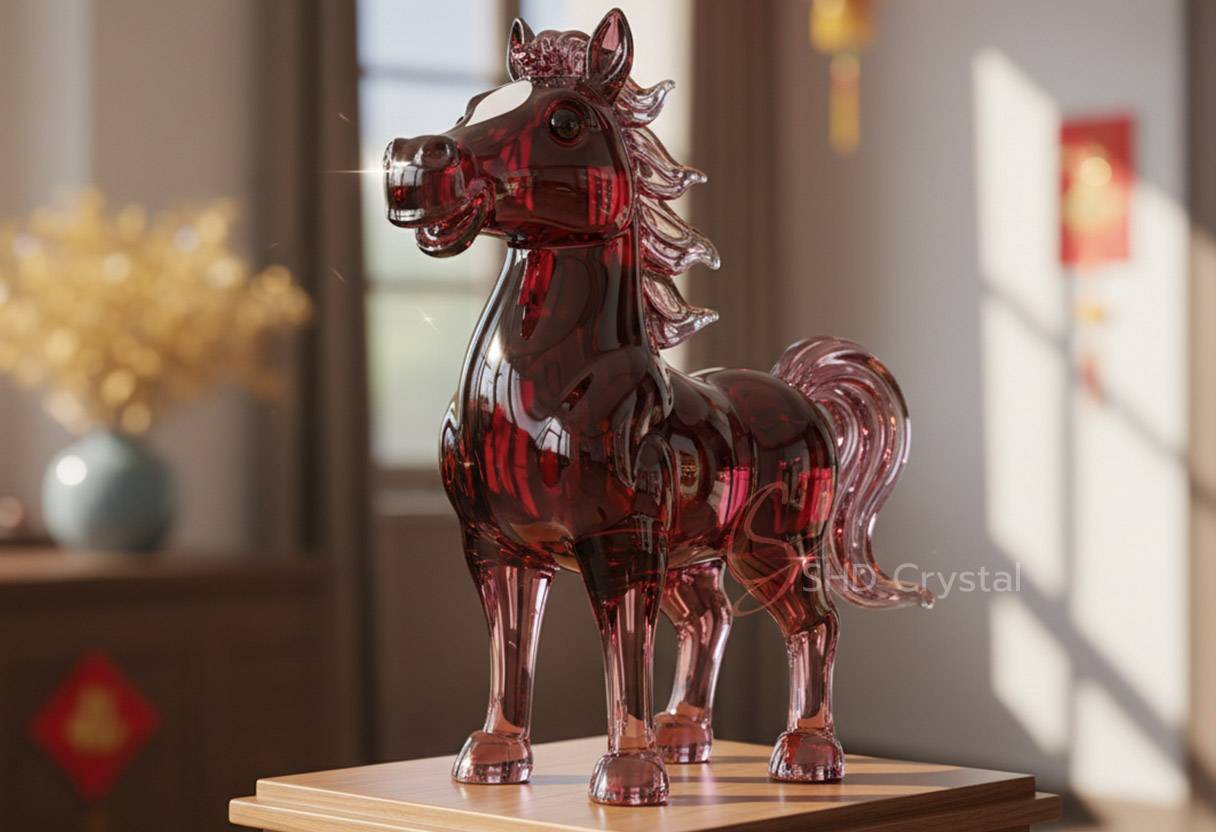
At the heart of these objects is process. The journey from molten glass to finished form is shaped by timing, hand movement, and material sensitivity. For handmade decorative items, the value lies not only in the final appearance, but in the visible trace of how the object came to be.
Handmade Decorative Items and the Language of Glass Drawing and Shaping
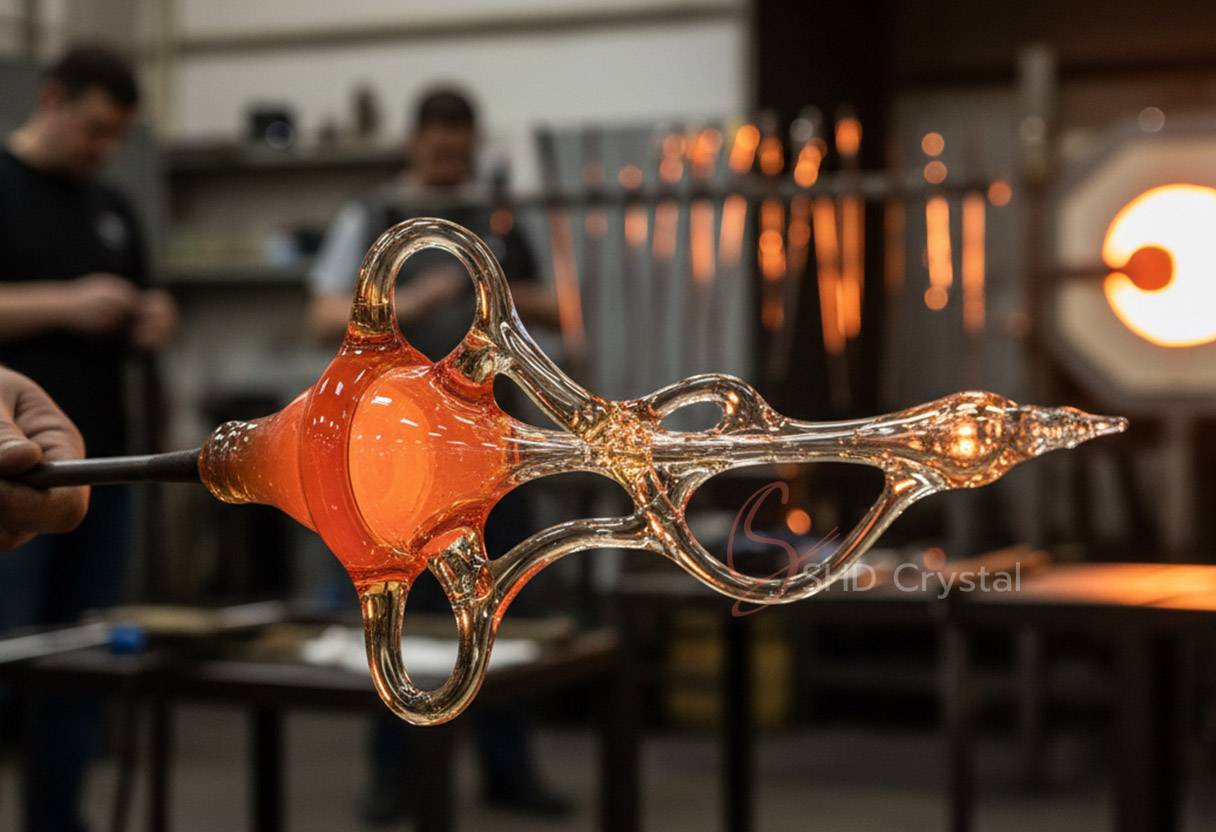
The creation of a glass mascot sculpture often starts with glass drawing and shaping, a process that requires the maker to pull, stretch, and guide softened glass while it remains responsive. This stage defines proportion and gesture. A slight variation in pull length or angle can alter posture, expression, or balance.
Unlike cutting or casting, glass drawing and shaping is continuous and irreversible. The artisan must anticipate how the material will move seconds ahead of time. This immediacy is what gives handmade decorative items their sense of vitality. Even when forms are repeated, no two pieces are identical, because no two moments in the workshop are the same.
For sculptural figures, drawing techniques are often used to define limbs, tails, or flowing contours. Shaping follows, refining mass and stabilizing the form before cooling begins. Together, these actions translate intention directly from hand to material.
High-Difficulty Craftsmanship Behind Small Glass Sculptures
There is a common assumption that small decorative objects are simpler to make. In glasswork, the opposite is often true. Compact forms demand precision. Heat dissipates faster, margins for correction narrow, and structural balance becomes critical.
This is where high-difficulty craftsmanship becomes essential. Maintaining clarity while shaping fine details requires careful temperature control and practiced restraint. Excessive manipulation risks clouding the glass, while insufficient shaping can leave forms unresolved.
In mascot-style sculptures, facial features or symbolic gestures are often suggested rather than fully defined. This restraint is intentional. Skilled artisans know when to stop, allowing light and transparency to complete the expression. Such decisions distinguish high-difficulty craftsmanship from mere technical execution.
Narrative Value in Decorative Glass Objects
Handmade decorative items gain meaning through context. A glass mascot placed on a shelf, desk, or entry console quietly interacts with its surroundings. Light shifts across its surface throughout the day, revealing new internal reflections and subtle distortions.
These objects are rarely static in perception. Their presence evolves with use and placement. This quality makes them suitable for gifting, collection, or interior accents where emotional resonance matters as much as visual appeal.
Because glass drawing and shaping preserves traces of motion, the finished sculpture often feels animated, even at rest. This sense of life is not added afterward. It is embedded during formation.
From Workshop Process to Lasting Object
The durability of handmade decorative items depends on decisions made early in production. Wall thickness, internal stress management, and cooling schedules all influence longevity. High-difficulty craftsmanship ensures that expressive forms remain structurally sound over time.
For makers, each finished piece carries memory of the process itself. For owners, it becomes a quiet companion object, valued not for perfection, but for presence.
Conclusion
Handmade decorative items shaped through glass drawing and shaping reflect a form of high-difficulty craftsmanship that prioritizes sensitivity over repetition. From a single mascot sculpture to a small series, these objects embody the dialogue between material, movement, and intent, offering lasting value beyond decoration.
For those drawn to handmade decorative items that emphasize process as much as form, handcrafted glass sculptures offer a meaningful starting point. They invite closer attention, reward patience, and create space for collaboration between design vision and skilled making.
Working With Glass Artisans Who Master Form and Motion
SHD Crystal develops handmade decorative items with a strong emphasis on glass drawing and shaping, where precise pulling, controlled heat, and disciplined hand movement determine proportion, balance, and clarity. Our team is skilled at translating mascot-style concepts into stable sculptural forms, using high-difficulty craftsmanship to achieve clean contours, refined transparency, and consistent finishing across small series. If you are exploring custom figurative pieces or developing a new decorative line, SHD Crystal can support a collaborative process from early shape studies to finished production-ready sculptures.