
Blogpost keywords: glass hot press forming, molten glass shaping, artificial crystal
Glass hot press forming is a controlled production method used to shape molten material into precise and repeatable forms, particularly in artificial crystal applications. Unlike free-form techniques, this process relies on pressure, mold accuracy, and timing to achieve consistent geometry, surface detail, and structural stability.
Glass Hot Press Forming As A Controlled System
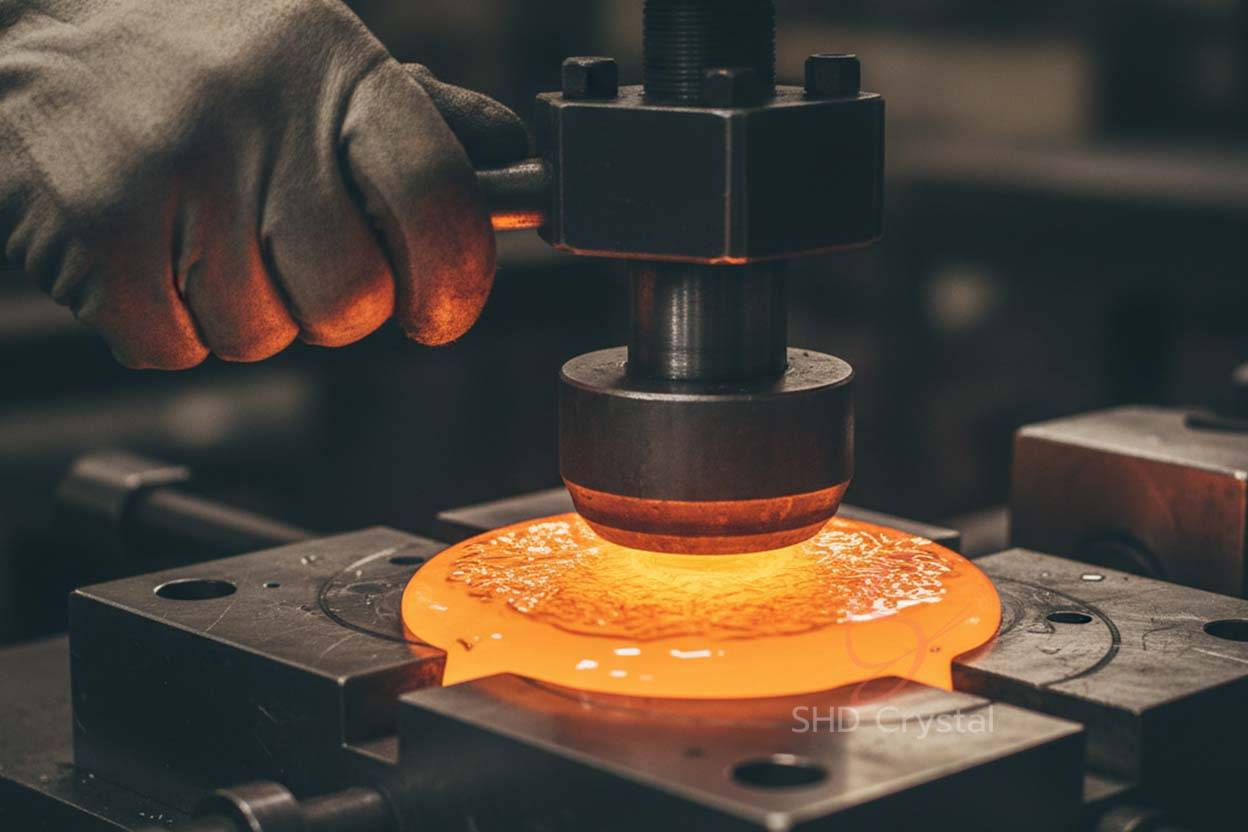
In glass hot press forming, molten glass shaping begins when heated material is delivered into a pre-engineered mold. Instead of relying on airflow or manual expansion, the shape is defined by mechanical pressing, allowing the material to conform to exact dimensions.
This approach is widely used in artificial crystal production where repeatability is essential. Decorative components, lighting elements, and tableware parts often require consistent curvature, thickness, and surface quality across large batches.
The advantage of glass hot press forming lies in its ability to control variation. Each cycle is designed to reproduce the same form while maintaining optical clarity and structural balance.
Understanding Molten Glass Behavior During Pressing
Molten glass shaping in a pressing process is highly sensitive to temperature and timing. At the correct working range, the material behaves like a dense fluid, capable of filling detailed mold cavities without introducing stress points.
If the temperature is too high, the glass becomes overly fluid and may lose definition. If too low, it cannot fully conform to the mold, leading to incomplete surfaces or internal stress.
Experienced operators often describe this stage as “reading the glass.” The flow, resistance, and response to pressure indicate whether conditions are correct. In artificial crystal production, this level of control directly affects clarity and surface precision.
Mold Design And Structural Accuracy
The mold is central to glass hot press forming. Its design determines not only the external shape but also how pressure is distributed during forming.
In artificial crystal applications, molds must account for:
-Shrinkage during cooling
-Uniform thickness distribution
-Release angles for clean demolding
Molten glass shaping depends on how evenly the material spreads within the mold cavity. Poor mold design can lead to distortion, uneven thickness, or optical defects.
For high-end products, molds are often refined through multiple iterations to achieve the desired balance between detail and structural integrity.
Surface Detail And Optical Performance
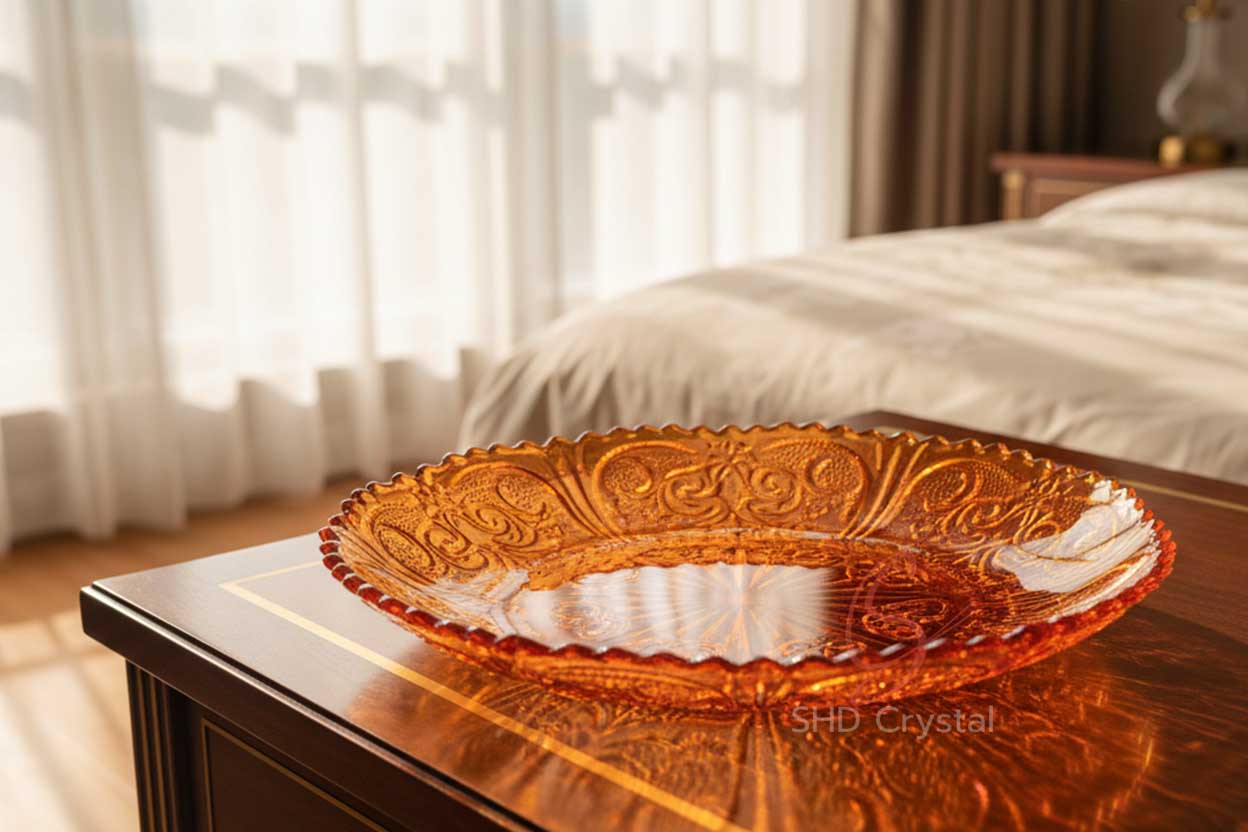
One of the strengths of glass hot press forming is its ability to capture fine surface details. Textures, patterns, and decorative cuts can be transferred directly from the mold to the glass surface.
In artificial crystal, this is particularly important because light interaction defines visual quality. Even minor inconsistencies can affect how reflections appear across the surface.
Molten glass shaping under controlled pressure ensures that patterns remain sharp while maintaining overall clarity. This is why pressed crystal components are often used in decorative lighting and architectural glass elements.
Workshop Insight From Production Experience
In many workshops, experienced technicians emphasize that glass hot press forming is less about force and more about timing.
A senior operator form SHD Crystal once described it simply:
“The mold gives the shape, but timing gives the quality.“
Actually, during molten glass shaping, pressing too early can trap air or create incomplete forms. Pressing too late may cause surface wrinkles or loss of definition. The correct moment is often determined through experience rather than measurement alone.
In artificial crystal production, this practical understanding is what separates stable output from inconsistent results.
Where Press Forming Fits In Modern Production
Glass hot press forming is often positioned between fully manual processes and automated production systems. It allows manufacturers to achieve both precision and efficiency.
For artificial crystal components, this method provides:
- Consistent shape across large volumes
- Controlled surface detail
- Reduced reliance on manual variation
Molten glass shaping in this context becomes a repeatable process rather than an unpredictable one, making it suitable for both decorative and functional applications.
Conclusion
Glass hot press forming combines mold precision, temperature control, and process timing to shape molten glass shaping into repeatable forms, making it a key method in artificial crystal production for achieving clarity, structure, and consistent decorative quality.
Translating Controlled Forming Into Production Stability
For projects involving artificial crystal components, SHD Crystal applies glass hot press forming with controlled molten glass shaping processes and refined mold engineering to achieve stable quality, consistent detail, and scalable OEM production across decorative and functional glass applications.