
SHD Crystal
24 PbO Crystal: Material Meaning, Craftsmanship, and OEM Glass Manufacturing
From optical brilliance to hand-finished crystal craftsmanship, 24 PbO crystal remains one of the defining materials behind luxury crystal glass manufacturing and high-end lead crystal glassware.
 > RESOURCES > Crystal Topics > 24 PbO Crystal Craftsmanship
Getting to Know 24 PbO Crystal
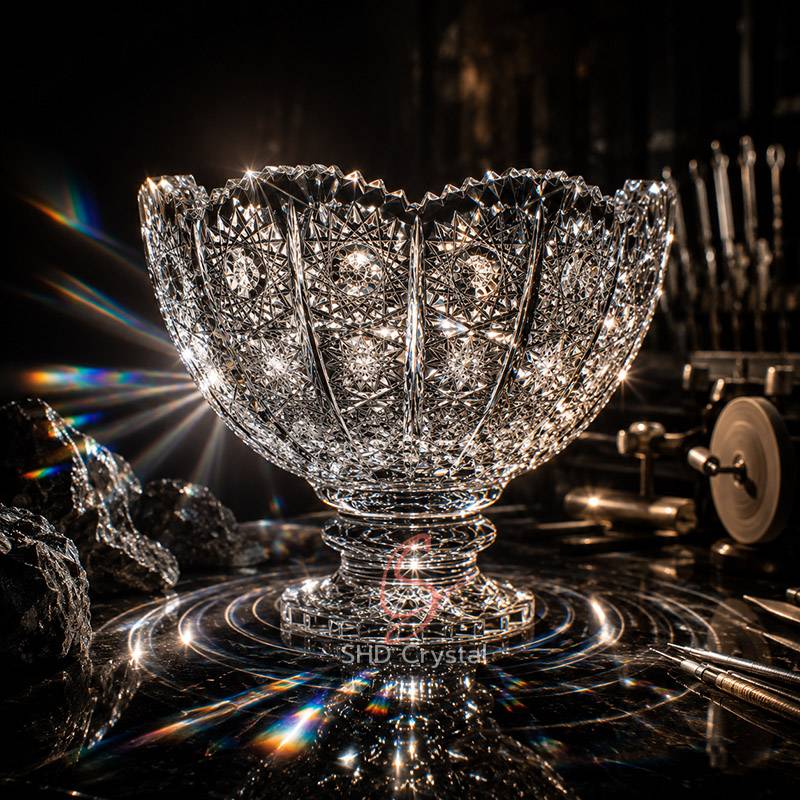
Definition
24 PbO crystal refers to crystal glass containing at least 24% lead oxide within its composition — a threshold traditionally recognized in the crystal industry as the standard for genuine lead crystal. The addition of lead oxide changes how the material behaves during melting, forming, cutting, and light refraction, giving lead crystal its characteristic brilliance, density, and resonant acoustic quality.
Unlike ordinary soda-lime glass, high-lead crystal is valued not only for transparency, but for the way it interacts with light, craftsmanship, and surface finishing in luxury crystal production.
Industry Standards
In traditional crystal manufacturing, glass containing 24% or more lead oxide is commonly classified as lead crystal, while compositions exceeding 30% are often described as full lead crystal due to their enhanced optical performance and density.
The 24% threshold became widely adopted in European crystalmaking because it provides a balance between brilliance, workability, weight, and structural stability. This composition allows artisans to execute deep cutting, detailed engraving, and refined polishing techniques that are difficult to achieve with ordinary glass materials.
Today, some luxury lead-free crystal formulations use potassium-based alternatives to achieve similar clarity, though the tactile weight and acoustic resonance remain distinct characteristics of traditional PbO crystal.
Core Characteristics
-Exceptional Optical Brilliance
The high refractive index created by lead oxide allows light to disperse into vivid spectral reflections, producing the intense sparkle traditionally associated with fine crystal.
-Dense and Substantial Weight
Compared with standard glass or many lead-free alternatives, 24 PbO crystal possesses a noticeably heavier and more stable tactile presence.
-Bell-Like Resonance
When gently tapped, lead crystal produces a crisp metallic tone with a lingering echo caused by the material’s density and vibrational behavior.
-Superior Cutting & Engraving Performance
The relatively softer body of lead crystal responds exceptionally well to hand-cutting, deep engraving, and polishing processes, enabling intricate decorative craftsmanship.
Comparative Analysis
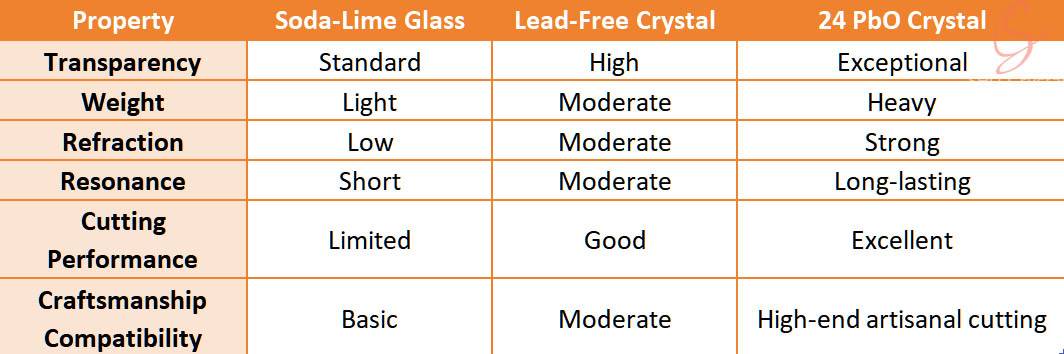
While modern lead-free crystal formulations continue to improve in clarity and sustainability, traditional 24 PbO crystal remains distinct for its combination of optical brilliance, tactile density, acoustic resonance, and compatibility with deep hand-cut craftsmanship.
For this reason, high-lead crystal continues to be associated with collectible glassware, decorative crystal artistry, and luxury handcrafted production.
24 PbO Crystal Glass—A Historical Advancement in Traditional Glass Manufacturing
The high refractive index created by lead oxide allows light to travel through the crystal with exceptional depth and brilliance. Under directional lighting, 24 PbO crystal produces vivid spectral reflections and sharp optical highlights that distinguish it from ordinary glass.
Compared with standard glass, lead crystal possesses a noticeably heavier and more stable tactile presence. Its density contributes not only to physical weight, but also to the premium hand feel traditionally associated with luxury crystalware.
<>br The density and internal structure of high-lead crystal create a crisp metallic resonance when gently tapped. This lingering bell-like tone has long been recognized as one of the defining sensory characteristics of fine crystal glassware.
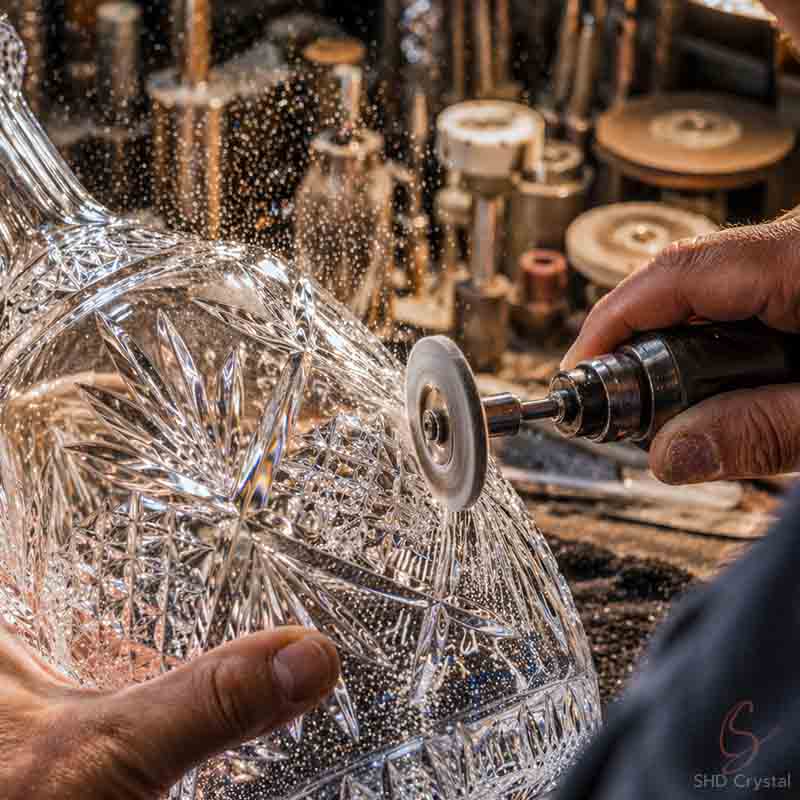
The relatively softer body of lead crystal responds exceptionally well to cutting, engraving, and polishing processes. This allows artisans to create deep decorative patterns, sharp optical textures, and refined surface craftsmanship difficult to achieve with ordinary glass.
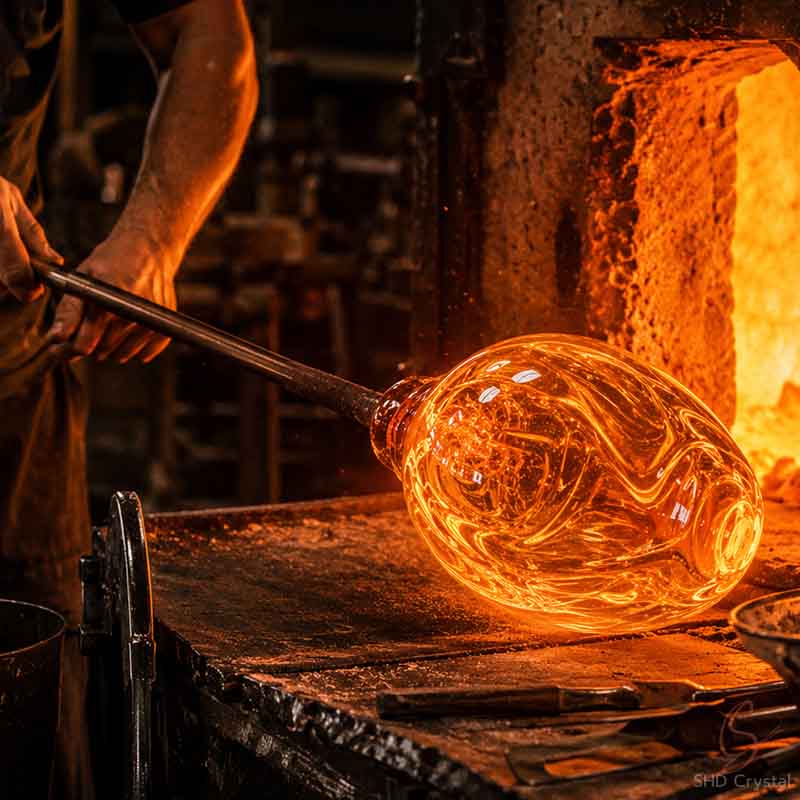
Lead oxide lowers the melting temperature of crystal glass, allowing the molten material to remain more fluid and responsive during forming. This thermal behavior improves shaping control during blowing, molding, and detailed handcrafted production.
From Molten Minerals to Handcrafted Crystals: Creating High-End Lead Crystal Glassware
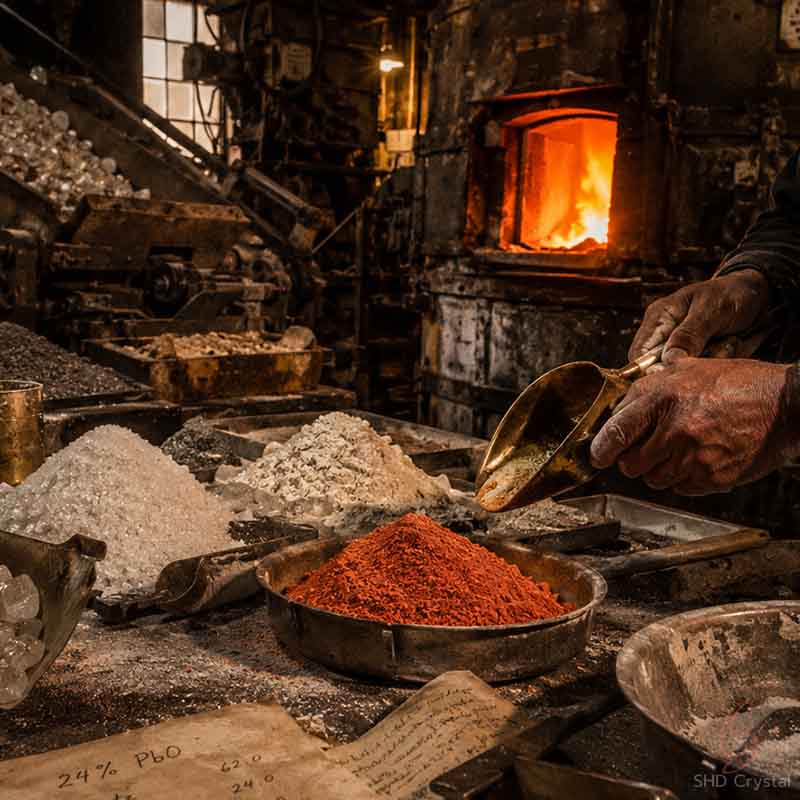
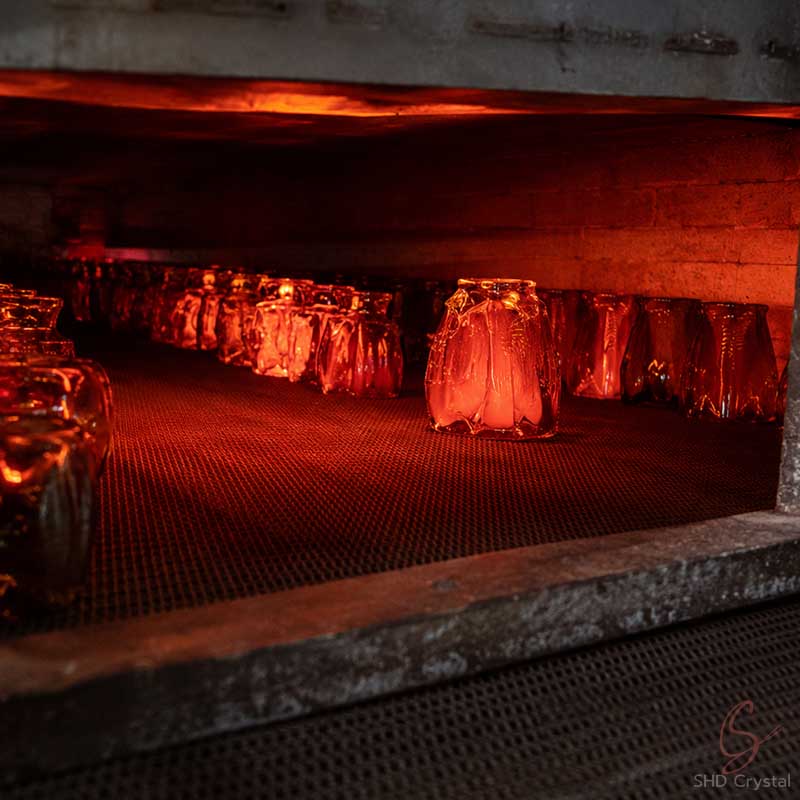
Lead crystalware begins long before its finished brilliance becomes visible. Behind every reflective surface lies a carefully controlled sequence of heat, mineral composition, timing, and handcrafted refinement developed through generations of crystal-making tradition. From raw material batching and furnace melting to hand-blown shaping, controlled annealing, deep cutting, and optical polishing, each stage within luxury crystal glass manufacturing contributes directly to the character of handcrafted lead crystal glassware and 24 PbO crystal craftsmanship.
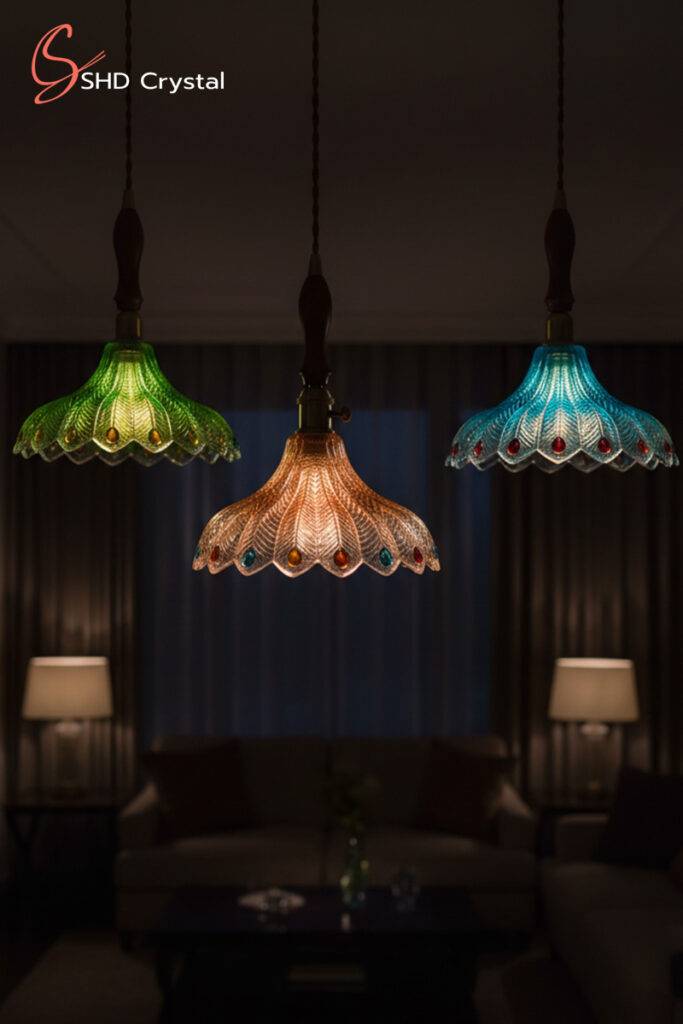
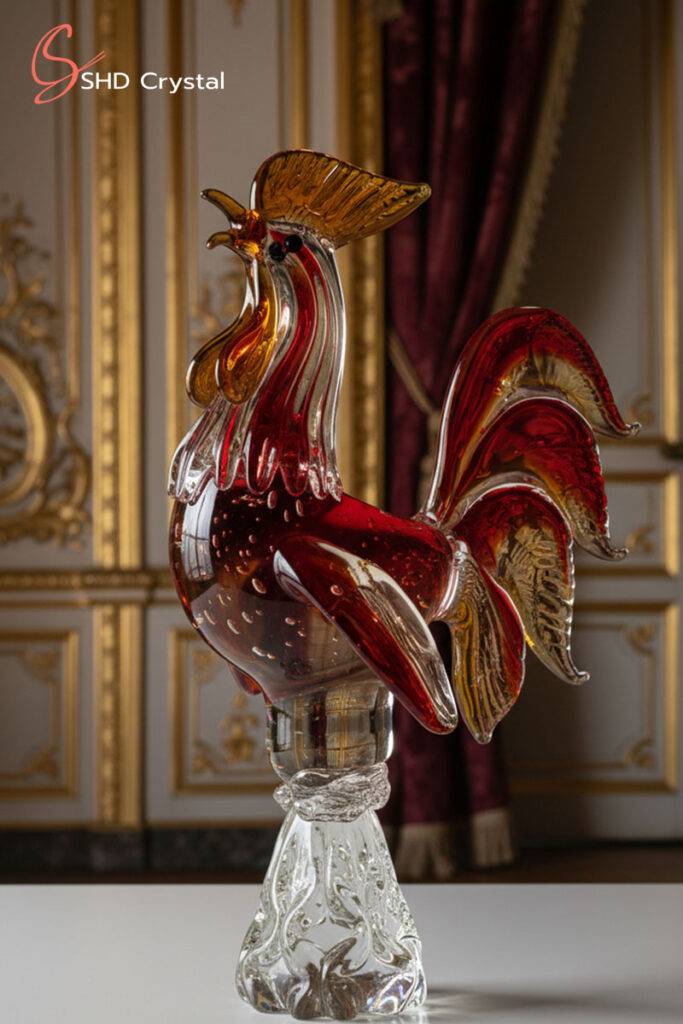
Applying Lead Crystal Craftsmanship Across Custom Glass Projects
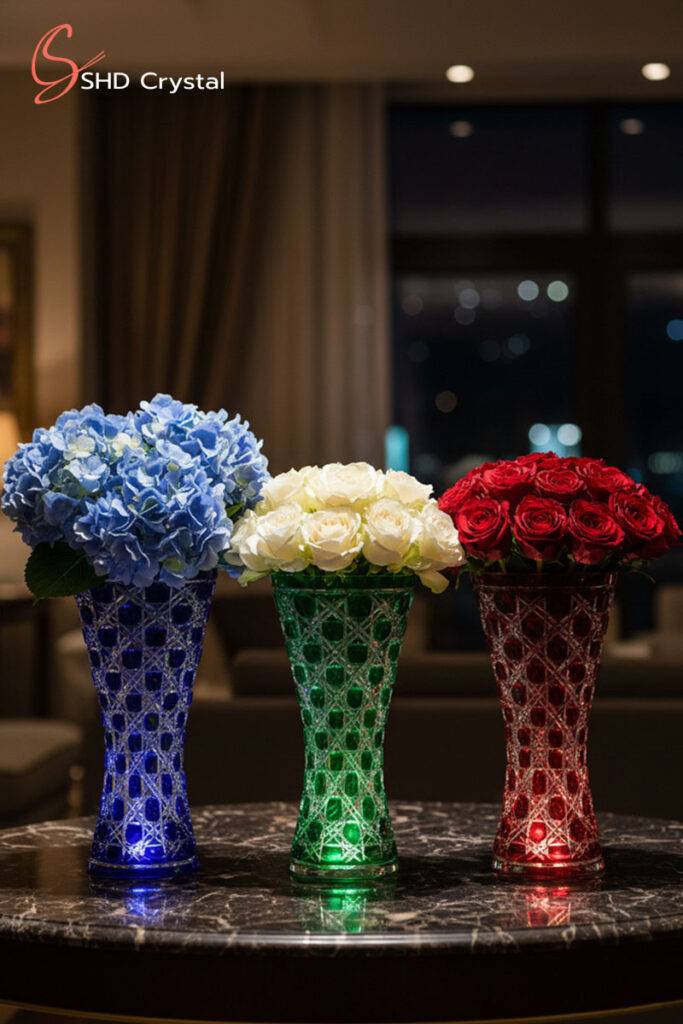
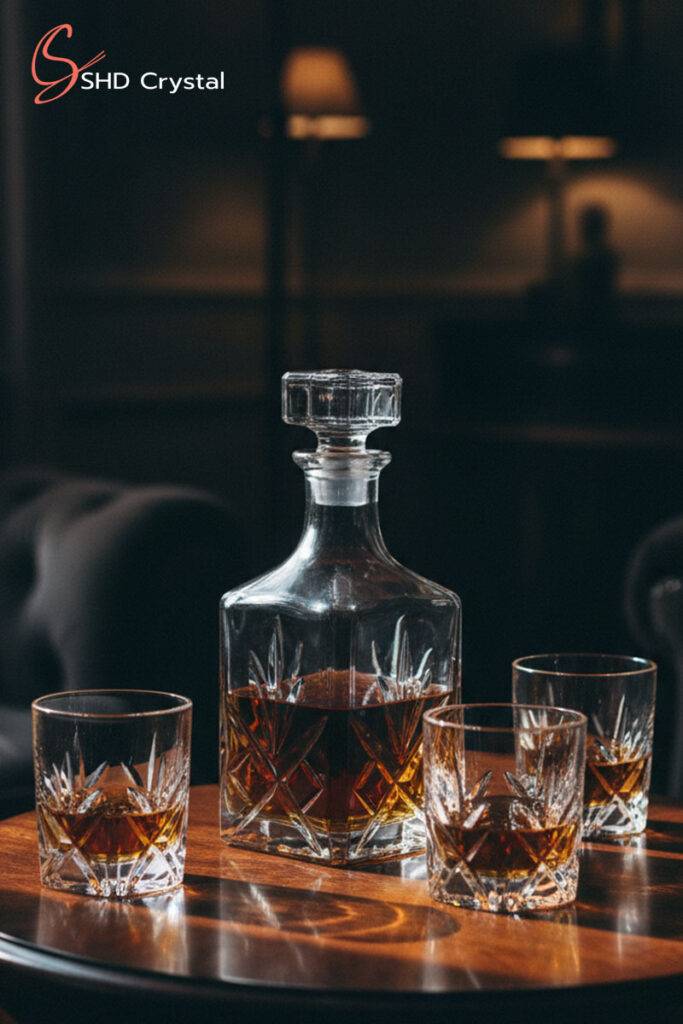
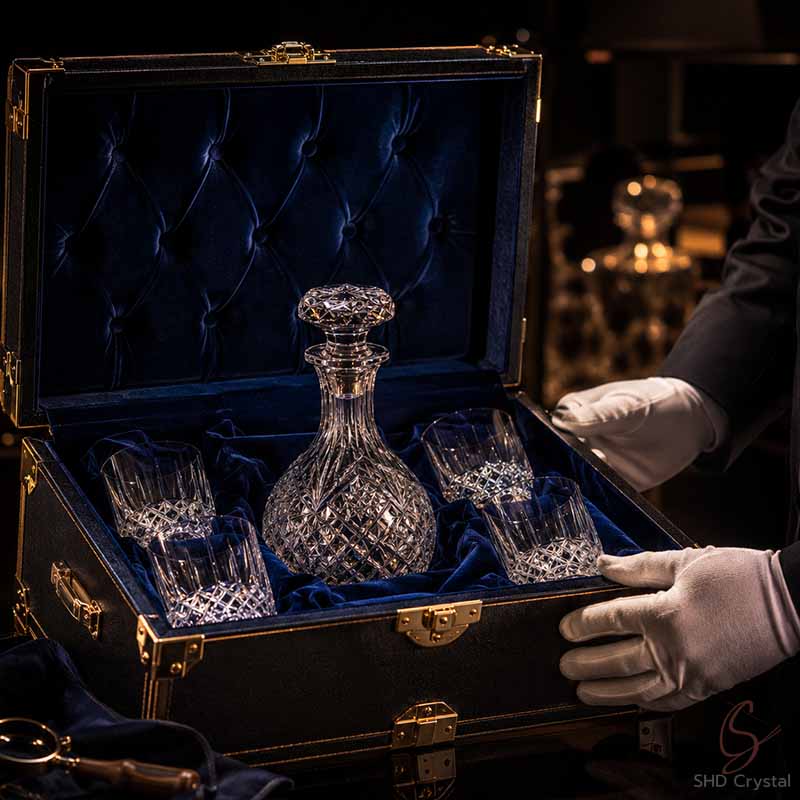
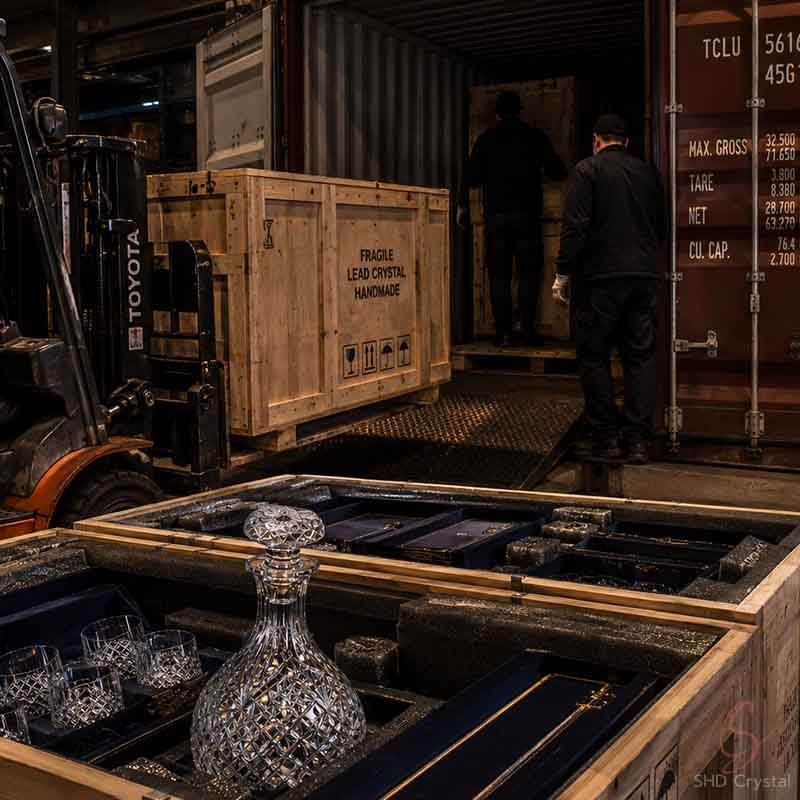
Each category requires a different balance of optical clarity, forming control, structural stability, and handcrafted surface refinement.

Practical Questions About Lead Crystal Projects
Related Glass Manufacturing Topics
Glass Forming Processes
Bespoke Crystal Glass Manufacturing
Custom Glass Liquid Containers
Further Reading on Crystal Craftsmanship
Further reading on 24 PbO crystal explores the relationship between lead crystal glassware, crystal glass craftsmanship, and luxury crystal glass manufacturing across decorative, hospitality, and handcrafted applications. These articles examine topics ranging from 24 PbO meaning and lead crystal safe usage considerations to traditional glass forming process techniques, hand-blown glass manufacturer practices, and the evolving role of custom crystal glass OEM development within high-end crystal production.
Understanding Lead Crystal 24 PBO: What 24% PbO Means for Luxury Glassware
Is 24% PbO Lead Crystal Safe? Key Safety Tips for Enjoying Luxury Glassware
How 24% Lead Crystal Champagne Flute Manufacturers Shape Sound Through Crystal Structure
A Custom 24 PBO Lead Crystal Vase That Holds Light Rather Than Color
24% Lead Crystal Champagne Flute Factory Defines Clarity And Rim Precision Standards
The Meaning of 24 Lead Crystal Content in Premium Glassware
Discuss Custom Crystal Projects
Custom 24 PbO crystal projects often begin long before production itself — through discussions surrounding optical behavior, material density, forming compatibility, and handcrafted surface refinement. From lead crystal glassware and decorative vessels to lighting components and sculptural crystal artworks, each category within luxury crystal glass manufacturing requires a different balance between artisanal craftsmanship and production feasibility.
SHD Crystal supports the development of custom crystal projects through material evaluation, sampling, forming selection, engraving refinement, and presentation-oriented finishing tailored to luxury glass applications.