
SHD Crystal
Bespoke Crystal Glass Manufacturing for Custom Crystal Glass OEM Projects
Bespoke crystal glass manufacturing is not limited to creating a custom shape or applying a decorative logo. It involves material selection, forming method evaluation, dimensional control, surface finishing, annealing, inspection, and packaging decisions that influence how custom crystal glass products look, perform, and remain consistent in production.
 > RESOURCES > Crystal Topics > Bespoke Crystal Glass Manufacturing
What Bespoke Crystal Glass Manufacturing Really Includes
Bespoke crystal glass manufacturing is not simply the process of changing an existing product shape or adding a decorative logo to standard glassware. In a real manufacturing context, it refers to a complete development process in which design intent, material behavior, forming method, mold structure, dimensional tolerance, surface craftsmanship, and production feasibility must be considered together before a custom glass product can move from concept to finished sample.
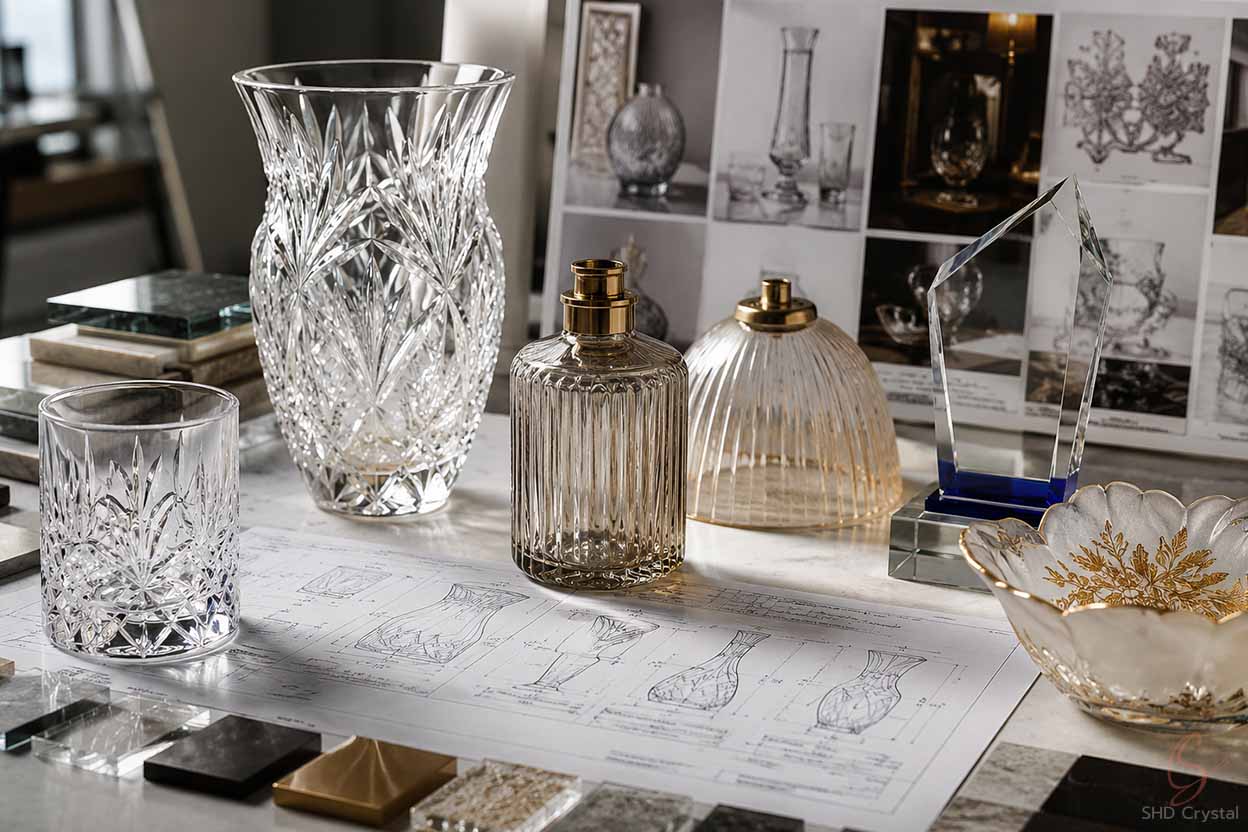
This is why bespoke crystal glass manufacturing usually begins before the mold is made. A hand sketch or reference image may define the visual direction, but engineering drawings translate that idea into height, diameter, wall thickness, section structure, and tolerance targets. A 3D printed prototype can help evaluate proportion, grip, volume, silhouette, and decorative rhythm before molten glass is involved. When the project requires repeatable production, a dedicated glass mold is then developed to support formal glass sampling and later batch production. Each step reduces uncertainty and helps the final crystal glass sample remain faithful to the original design while becoming practical for manufacturing.
For bespoke oem glassware and premium crystal decor projects, the first question is rarely only about appearance. A vase, tumbler, bottle, lampshade, or decorative vessel may look visually simple in a sketch, but its final production quality depends on many technical details. Wall thickness affects weight, clarity, cooling behavior, and hand feel. The mouth opening influences polishing, assembly, packaging, and possible accessory fitting. The base structure affects stability, mold release, grinding, and long-term display performance. Even a small change in angle, curve, rib, or cut-texture detail can influence whether the design is more suitable for hand-blown glass, pressed crystal glass, mold-blown production, or another forming method.
Material selection is another essential part of the bespoke process. Crystal glass, lead-free crystal glass, soda-lime glass, and borosilicate glass do not behave in the same way during forming, annealing, cutting, polishing, or decoration. A material that works well for a thick decorative vase may not be the best choice for a thin functional bottle. A glass composition that provides excellent brilliance and weight may require different handling during forming and finishing. For custom crystal glass OEM projects, material decisions must therefore be made according to product use, appearance expectations, safety requirements, forming complexity, and production quantity.
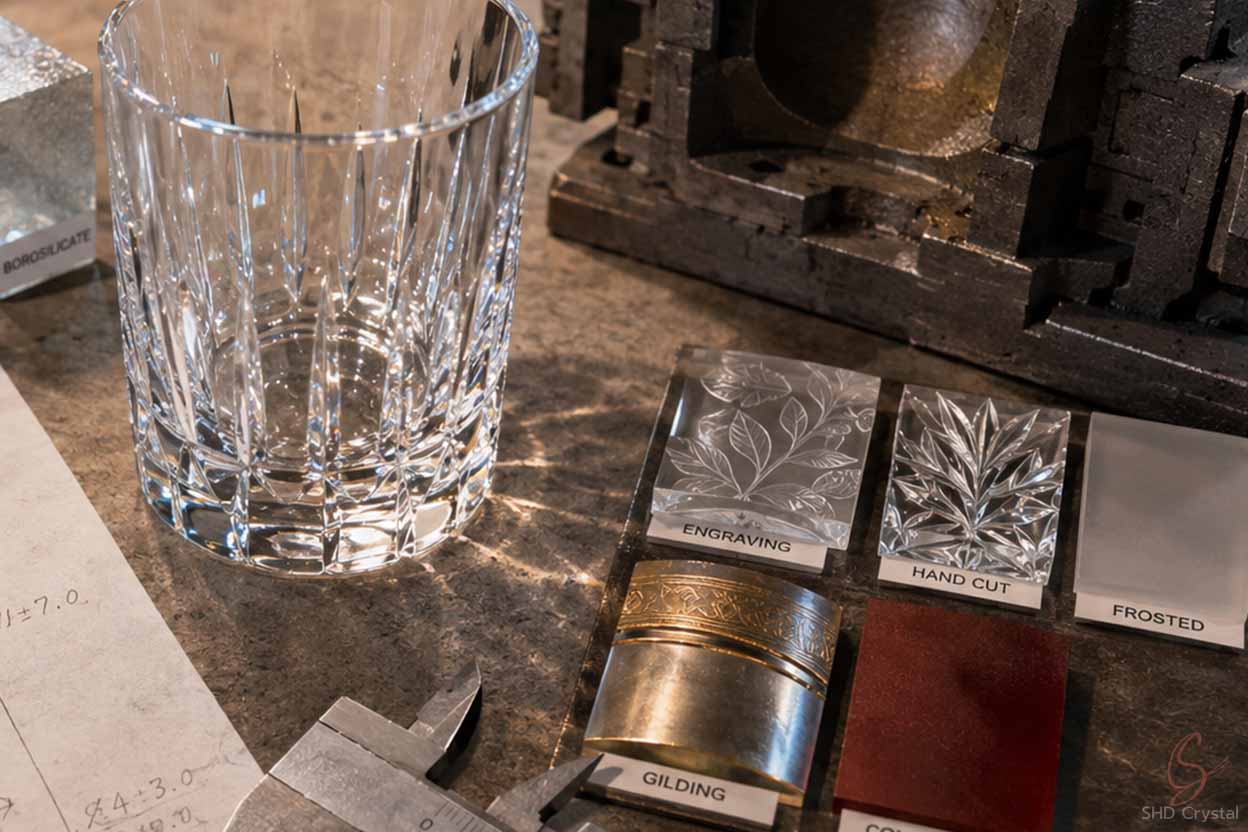
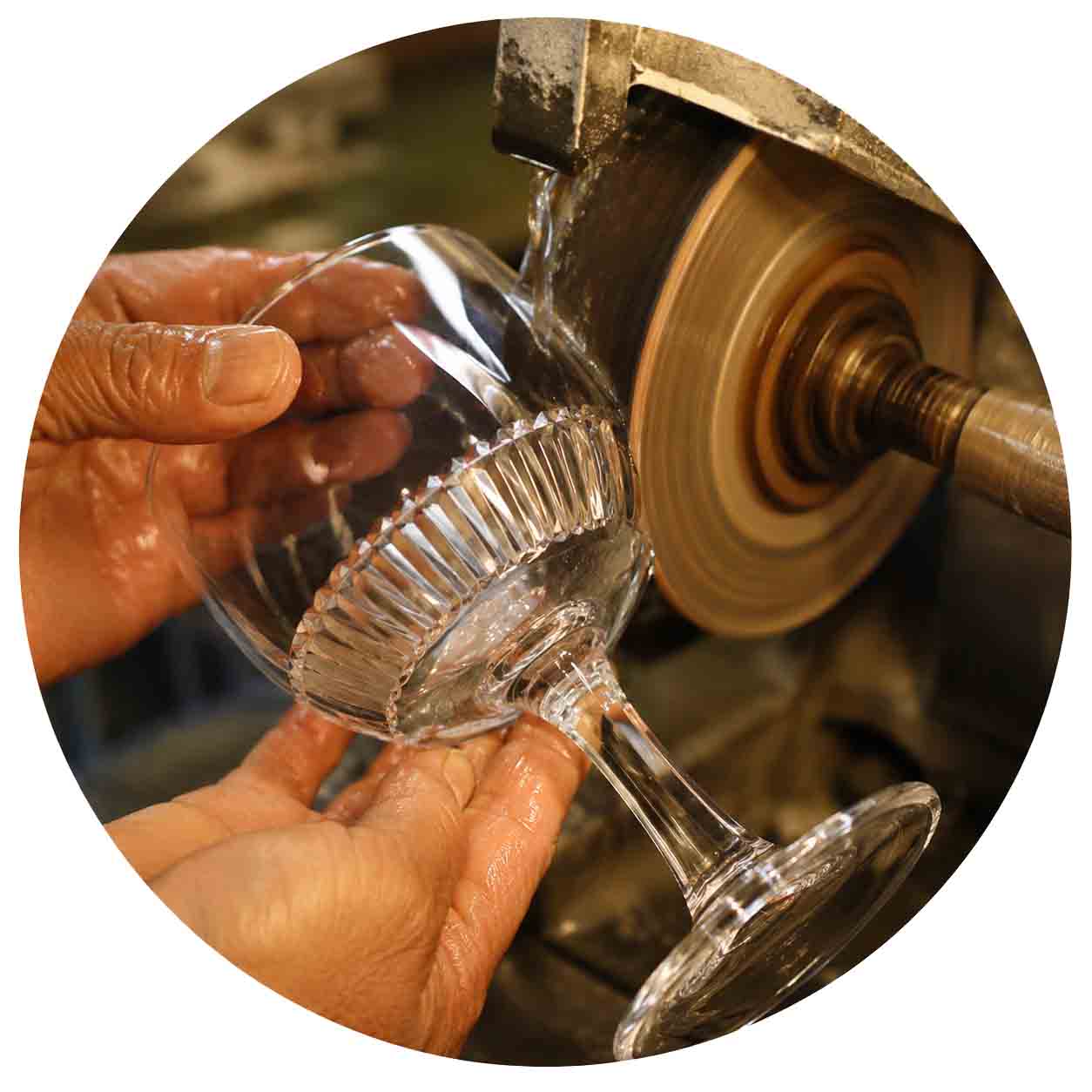
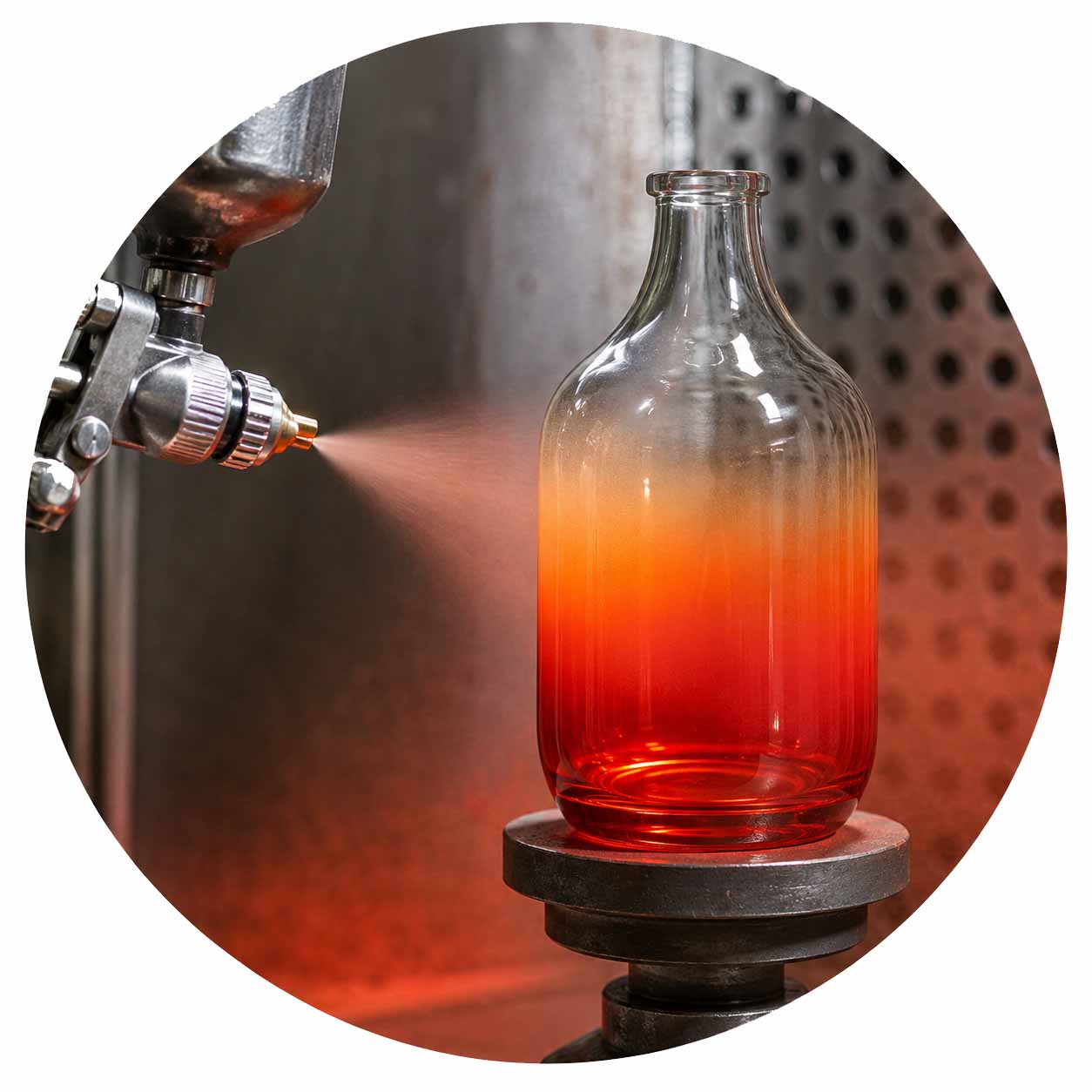
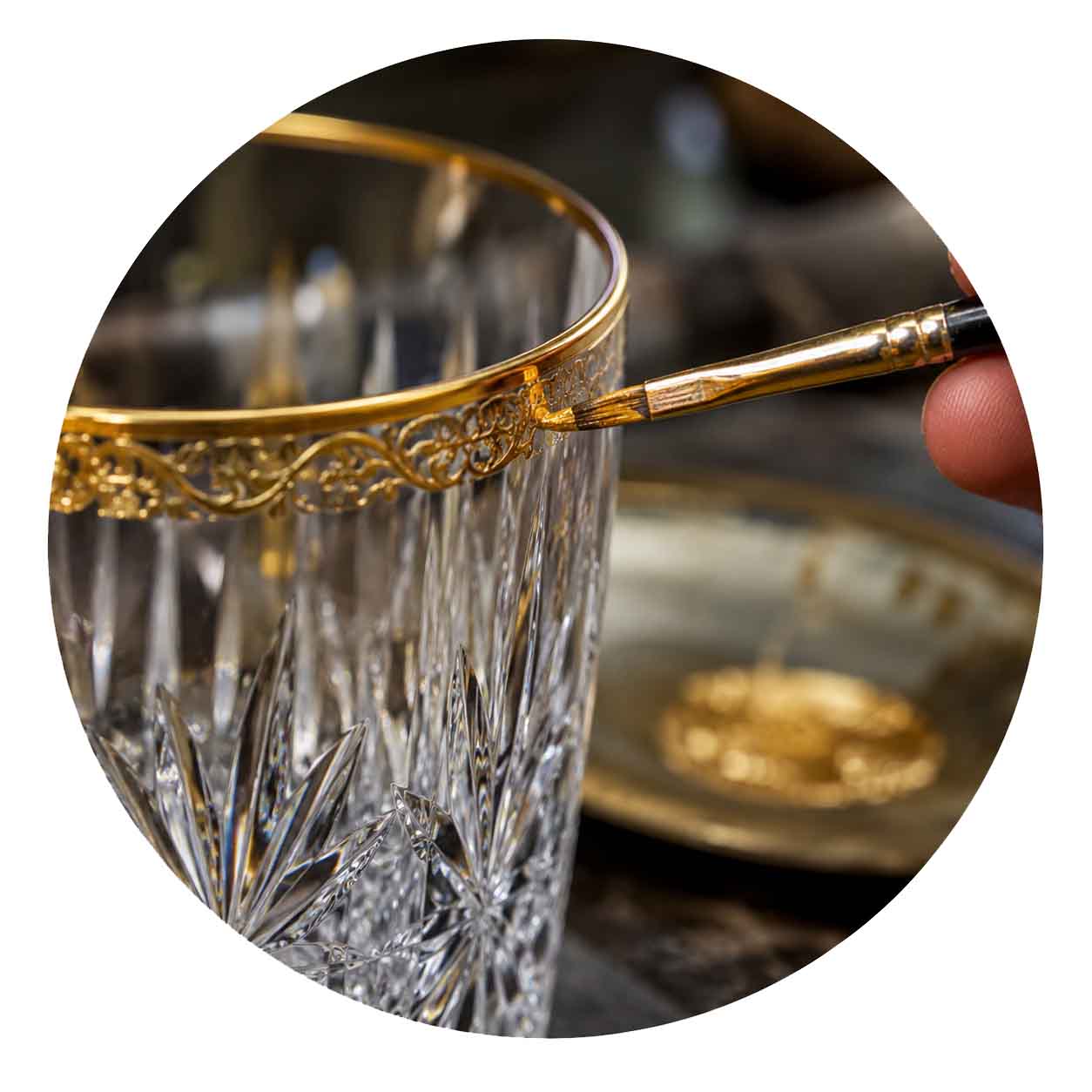
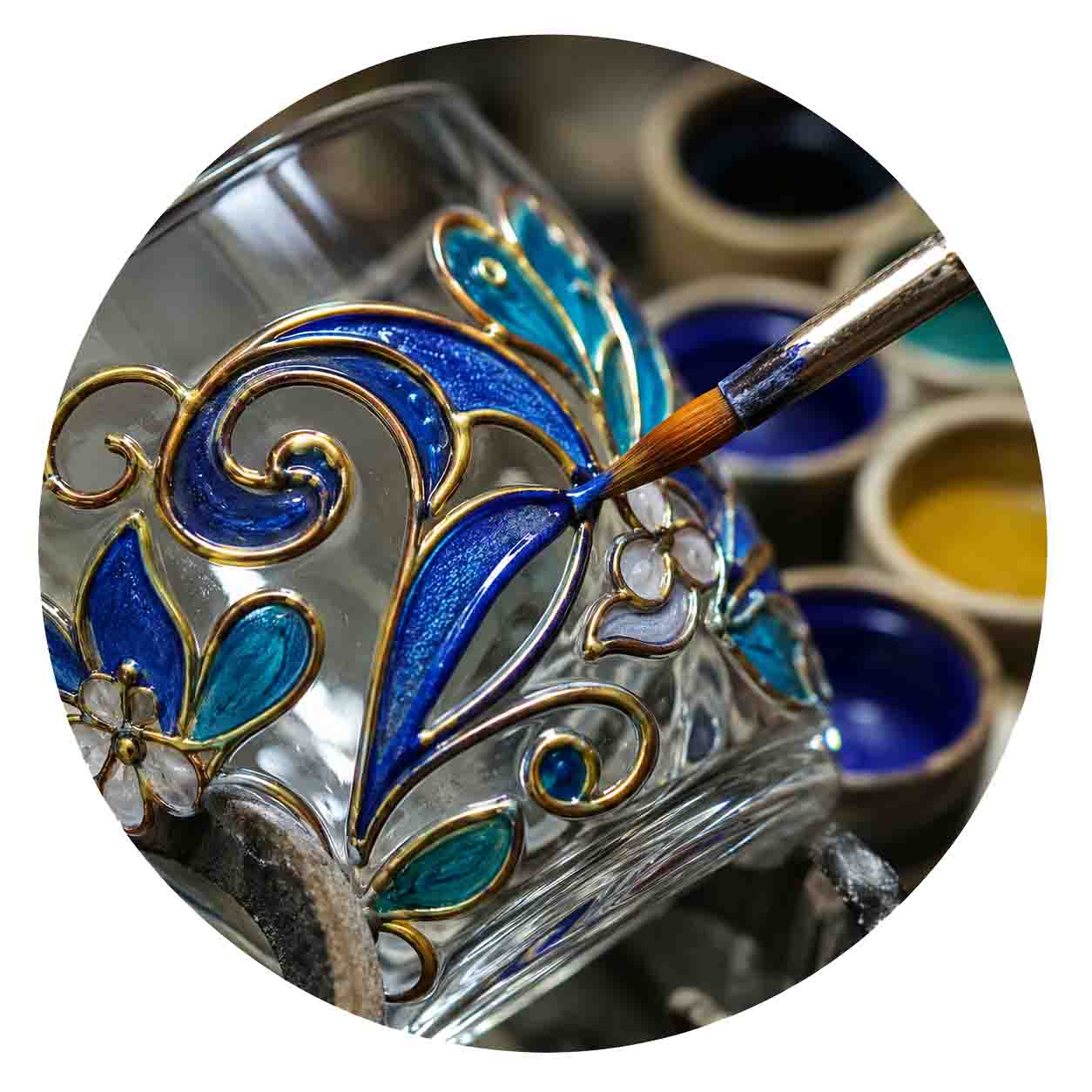
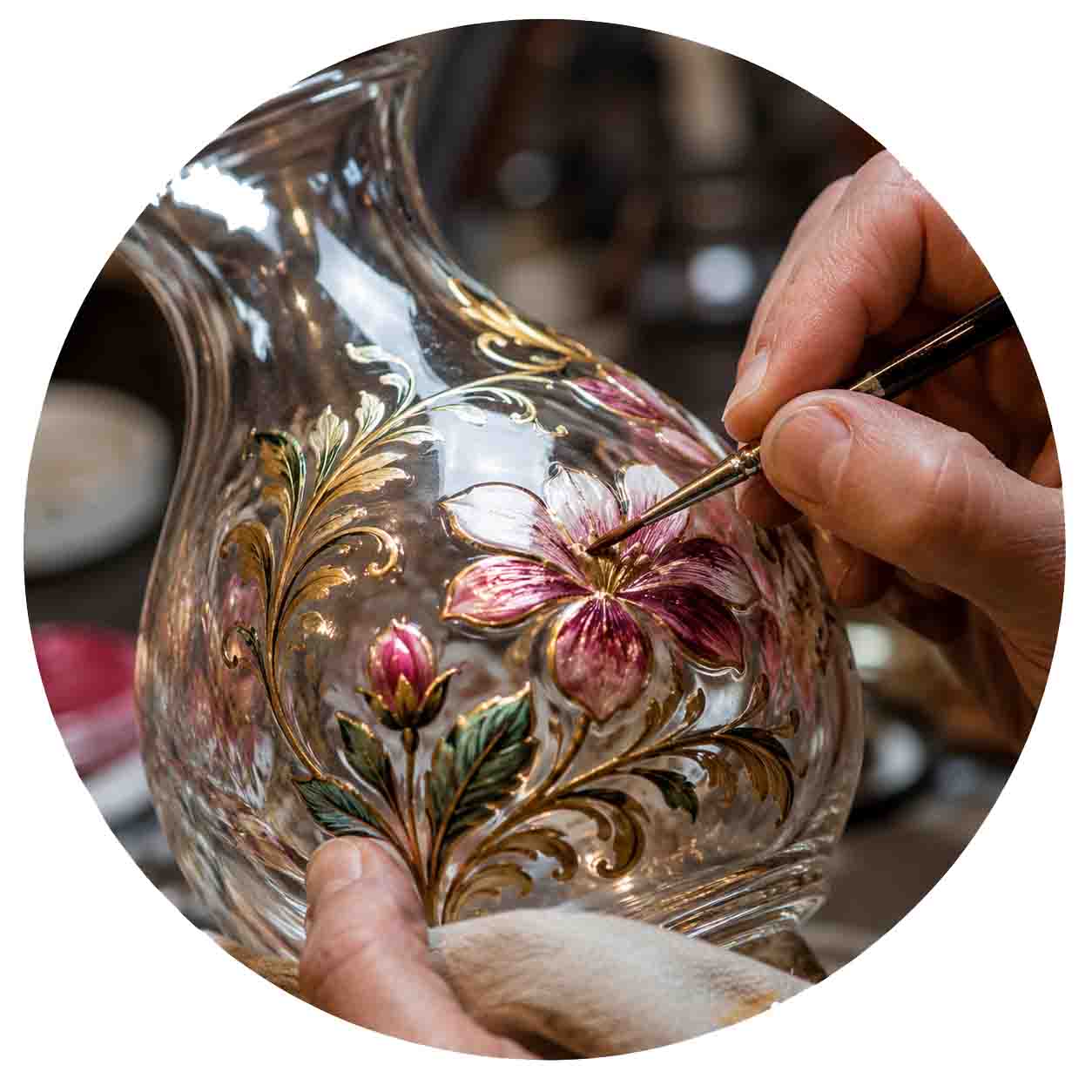
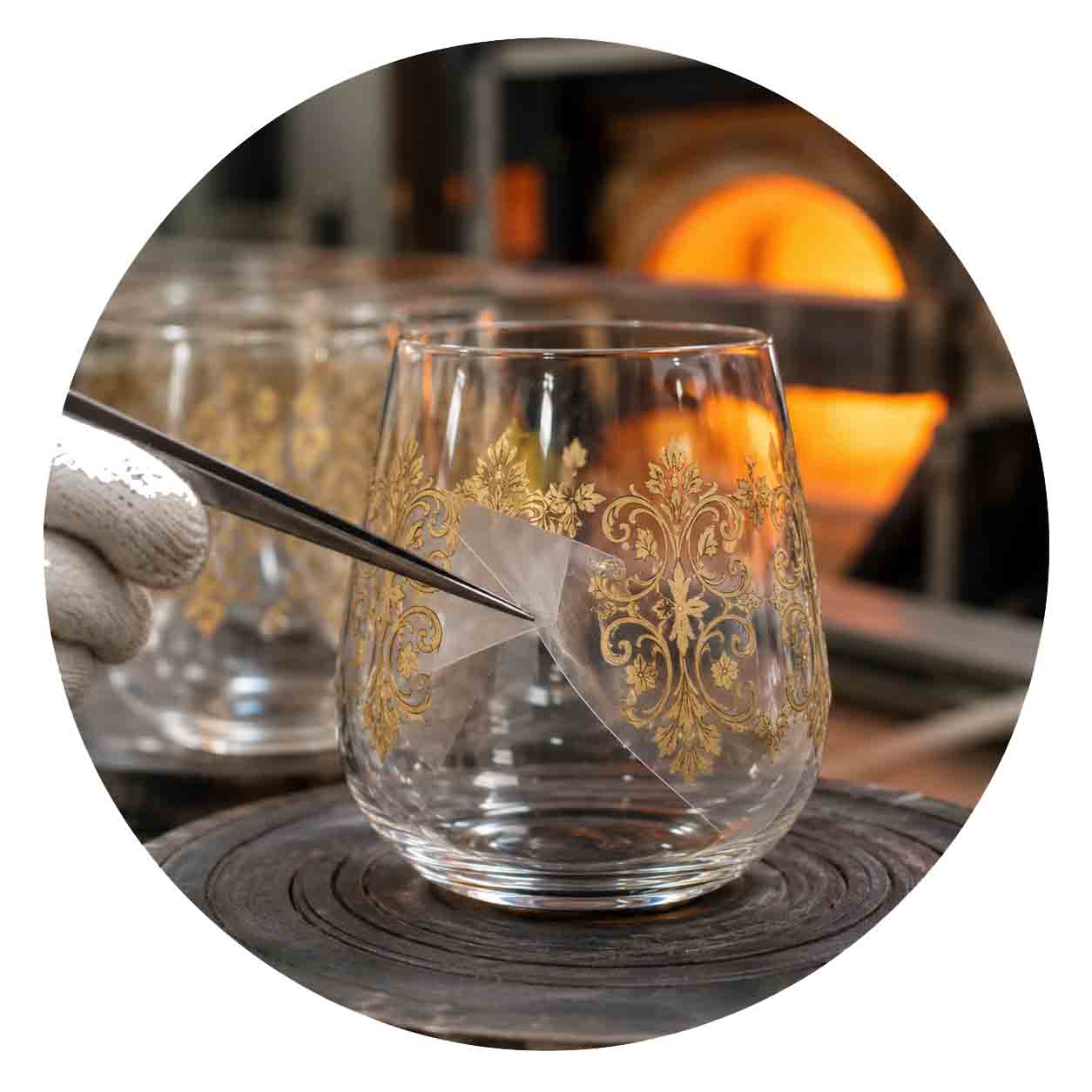
Surface treatment also belongs to the manufacturing decision, not just the decoration stage. Engraving, hand cutting, drilling, polishing, frosting, color spraying, gilding, hand-painted decoration, enamel decoration, and decal firing all interact with the base shape, glass material, wall thickness, and intended use. A deeply faceted design may require enough body thickness to support cutting and later polishing. A drilled glass component needs suitable thickness, hole position, and stress control. A gilded, enamel, or hand-painted surface may require a stable working area, suitable curing or firing conditions, and clear usage expectations. For premium crystal decor, custom glass craftsmanship becomes most valuable when decoration is planned together with structure, rather than added after the product has already been formed.
In this sense, bespoke crystal glass manufacturing is a coordinated technical path. It connects creative design with engineering definition, prototype validation, mold preparation, glass forming, annealing, finishing, inspection, and packaging. The goal is not only to make a custom glass object look attractive, but to make it manufacturable, repeatable, and suitable for its intended use. For bespoke crystal decor, luxury glassware, and custom decorative vessels, this full-chain thinking is what separates a developed manufacturing project from a simple product modification.
How Material Choice Changes the Manufacturing Result
Material selection is one of the earliest decisions in bespoke crystal glass manufacturing, because different glass compositions do not behave the same way during forming, cooling, cutting, polishing, decoration, or long-term use. A custom glass design may appear complete in a sketch or 3D model, but the selected material will determine how the product feels in the hand, how clearly it refracts light, how stable it remains during annealing, and how suitable it is for later surface craftsmanship.
The same vase, bottle, tumbler, lampshade, or decorative vessel can change significantly when produced in different materials. A thick crystal vase may feel weighty and luminous, while the same form in soda-lime glass may appear more practical and cost-controlled. A thin vessel in borosilicate glass may perform better under thermal stress, but it may not create the same visual depth as crystal glass. This is why material evaluation should happen before mold development, not after sampling has already begun.
In bespoke crystal glass manufacturing, 24 PbO crystal is especially valuable when the design depends on thick walls, polished edges, deep facets, engraving, or diamond-cut texture. The material can support a strong luxury presence because it interacts with light differently from ordinary glass. When properly formed and finished, it gives custom glass products a heavier, clearer, and more refined appearance.
For bespoke oem glassware, lead-free crystal glass can also provide a balanced choice between appearance, market acceptance, and practical use. It may not always create the same density or refractive depth as 24 PbO crystal, but it allows many brands to maintain an elegant crystal-style presentation while meeting broader product positioning needs.
In bespoke crystal glass manufacturing discussions, soda-lime glass should not be treated as a lower-value material by default. Its advantage lies in production practicality. For some custom glass designs, especially those involving everyday use, packaging compatibility, larger order quantities, or common forming methods, soda-lime glass may be the most realistic material option.
However, borosilicate glass is not automatically the best material for every bespoke crystal decor or thick decorative glass project. When a design requires heavy wall thickness, deep cutting, rich refraction, or a luxury crystal-like presence, borosilicate glass may not create the same visual and tactile result. A product may be technically strong in borosilicate glass but still fail to express the desired premium crystal character.
Main Glass Forming Methods for Bespoke Projects
In bespoke crystal glass manufacturing, the forming method should be selected according to product geometry, material behavior, wall thickness, surface detail, tolerance expectations, and production quantity. A custom vase, bottle, tumbler, lampshade, decorative vessel, or sculptural object may begin with a visual concept, but its final manufacturing route depends on how the glass can realistically be shaped.
Different choices in the glass forming process create different results. Some are better for hollow forms and handmade variation. Some are more suitable for repeated texture and batch consistency. Others support thick sculptural volume for premium crystal decor or automated production efficiency. Choosing the right process early helps reduce mold risks, uneven thickness, poor surface definition, unstable dimensions, and unnecessary sampling adjustments.
Blown Glass Forming
- Free-blown glass is useful for artistic vases, lampshades, decorative vessels, and forms where handmade rhythm and slight variation are acceptable.
- Mold-blown glass is better when the product needs a more stable exterior silhouette, defined volume, repeated outline, or closer consistency to the approved sample.
- This process is often considered for custom glass vases, bottles, jars, lampshades, decorative containers, and hollow bespoke glass forms.
- Key evaluation points include mouth diameter, shoulder angle, wall thickness distribution, mold seam position, annealing behavior, and later polishing or decoration.
- For bespoke oem glassware, blown glass forming should be reviewed carefully when the design requires lid fitting, accessory assembly, tight packaging control, or strict dimensional tolerance.
Pressed Glass Forming
- Commonly used for crystal tumblers, bowls, plates, candle holders, textured vases, decorative blocks, and patterned glassware.
- Suitable for ribbed patterns, geometric relief, thick bases, diamond-cut style surfaces, and repeated decorative structures.
- Can support stronger consistency than many free-form methods when the design is suitable for pressing.
- Requires careful mold design to avoid difficult release, deep undercuts, uneven cooling, or excessive post-processing.
- Often useful for custom crystal glass OEM projects where the product identity depends on stable texture, repeatable shape, and controlled production.
Glass Casting Forming
- Suitable for bespoke crystal decor, awards, hotel display pieces, art glass objects, sculptural forms, and heavy decorative components.
- Allows thicker glass bodies, stronger dimensional presence, and more artistic volume than many vessel-based forming methods.
- Requires careful control of cooling, annealing, grinding, polishing, internal stress, and surface finishing.
- Usually involves a longer development cycle and stricter inspection because thick glass sections are more sensitive to stress and finishing defects.
- Best used when the design purpose justifies higher production complexity and when visual weight is part of the product value.
Automated Machine Forming
- Suitable for higher-volume glassware, containers, bottles, cups, jars, and repeatable custom glass products with stable geometry.
- Helps improve production efficiency, dimensional consistency, and output control when the design is compatible with automated equipment.
- Requires clearer drawings, stronger tooling preparation, stable material behavior, and more defined inspection standards before production begins.
- Less flexible for highly artistic, irregular, or small-batch sculptural designs, but valuable when repeatability and efficiency are priorities.
- For bespoke crystal glass manufacturing, automated machine forming should be evaluated when the project has enough quantity, consistent structure, and a clear need for controlled batch production.
Dimensional Control Matters in Custom Glass Manufacturing
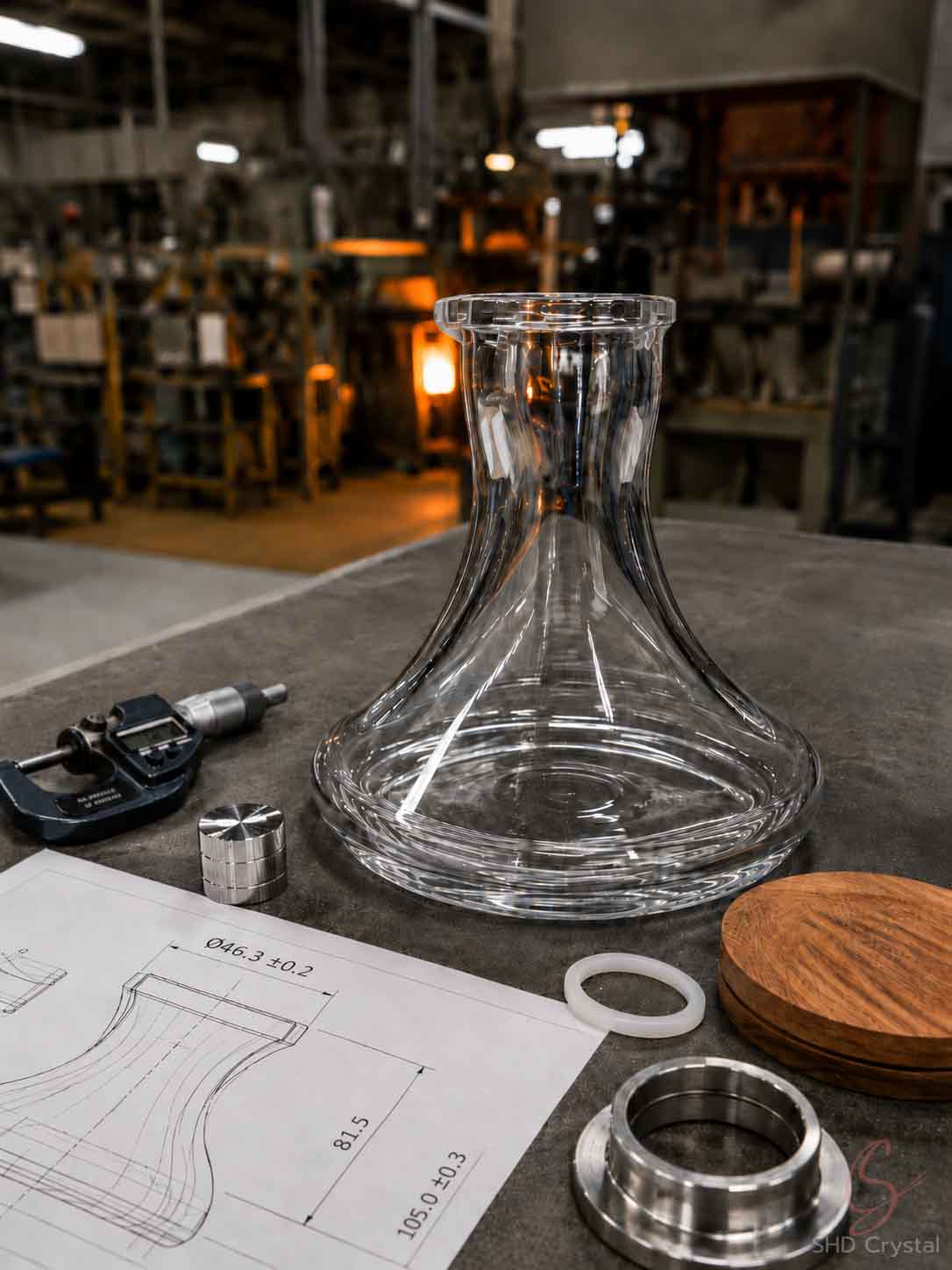
Dimensional control is a practical concern in bespoke crystal glass manufacturing because glass does not behave like machined metal or plastic. During forming, annealing, cutting, polishing, and inspection, dimensions such as height, mouth diameter, wall thickness, base flatness, and weight can all be affected by heat, gravity, mold condition, material behavior, and finishing work.
For decorative glass products, small dimensional variation may be acceptable when it does not affect appearance, stability, or packaging. However, when a custom glass product must work with another component, tolerance becomes much more important. Bottles may need to match caps, pumps, corks, or silicone seals. Lampshades may need to connect with metal fittings. Vessels may need wooden lids, brass bases, or other accessories. In these cases, the critical dimensions should be defined before mold development and formal sampling.
The most important areas usually include:
- Mouth diameter and rim thickness
- Wall thickness and weight balance
- Base flatness and standing stability
- Fitting points for caps, lids, stoppers, or hardware
- Decoration alignment after cutting, engraving, spraying, or gilding
- Packaging dimensions and transport protection
How Custom Glass Craftsmanship Affects Final Appearance
Hand Cutting
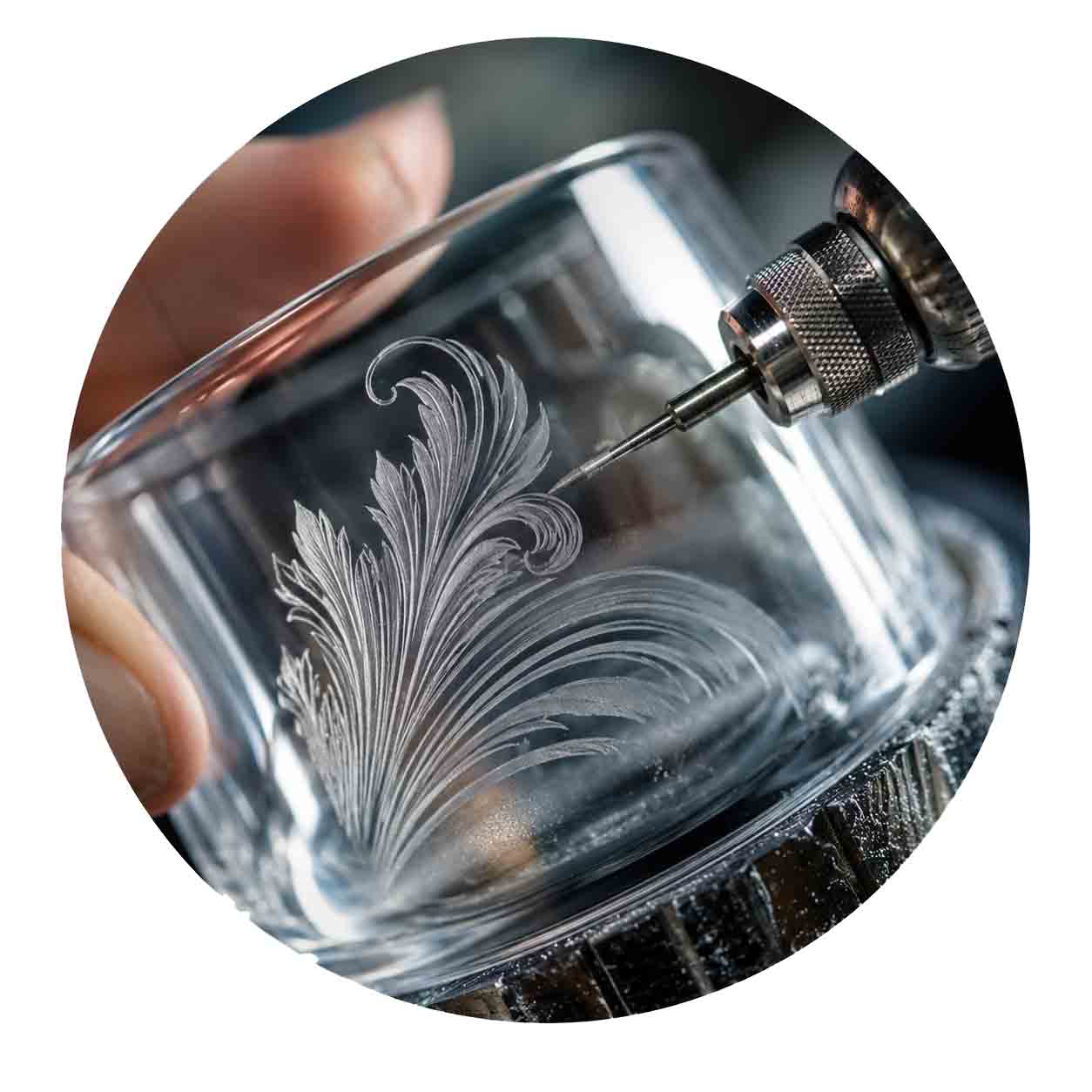
Hand-Engraving
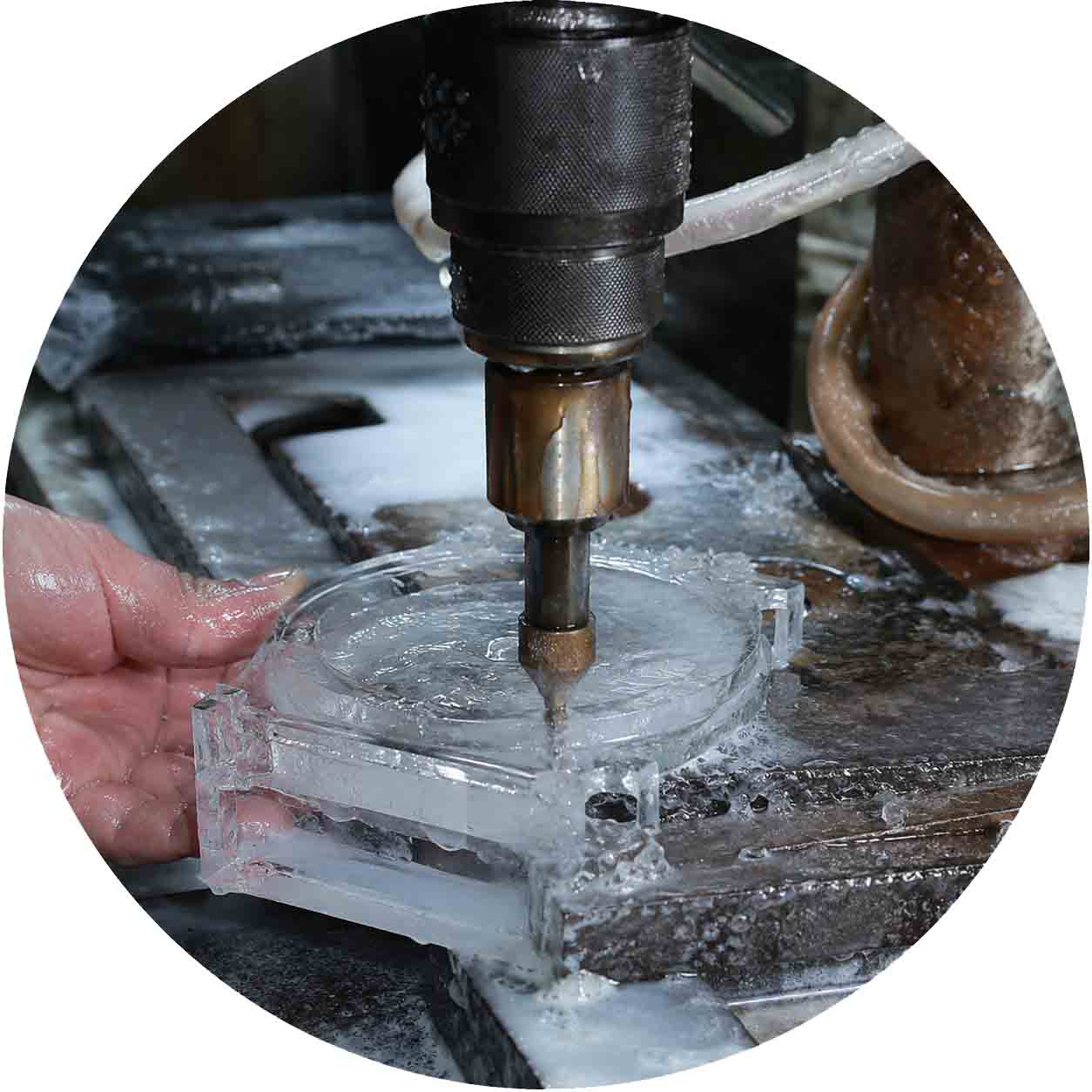
Drilling
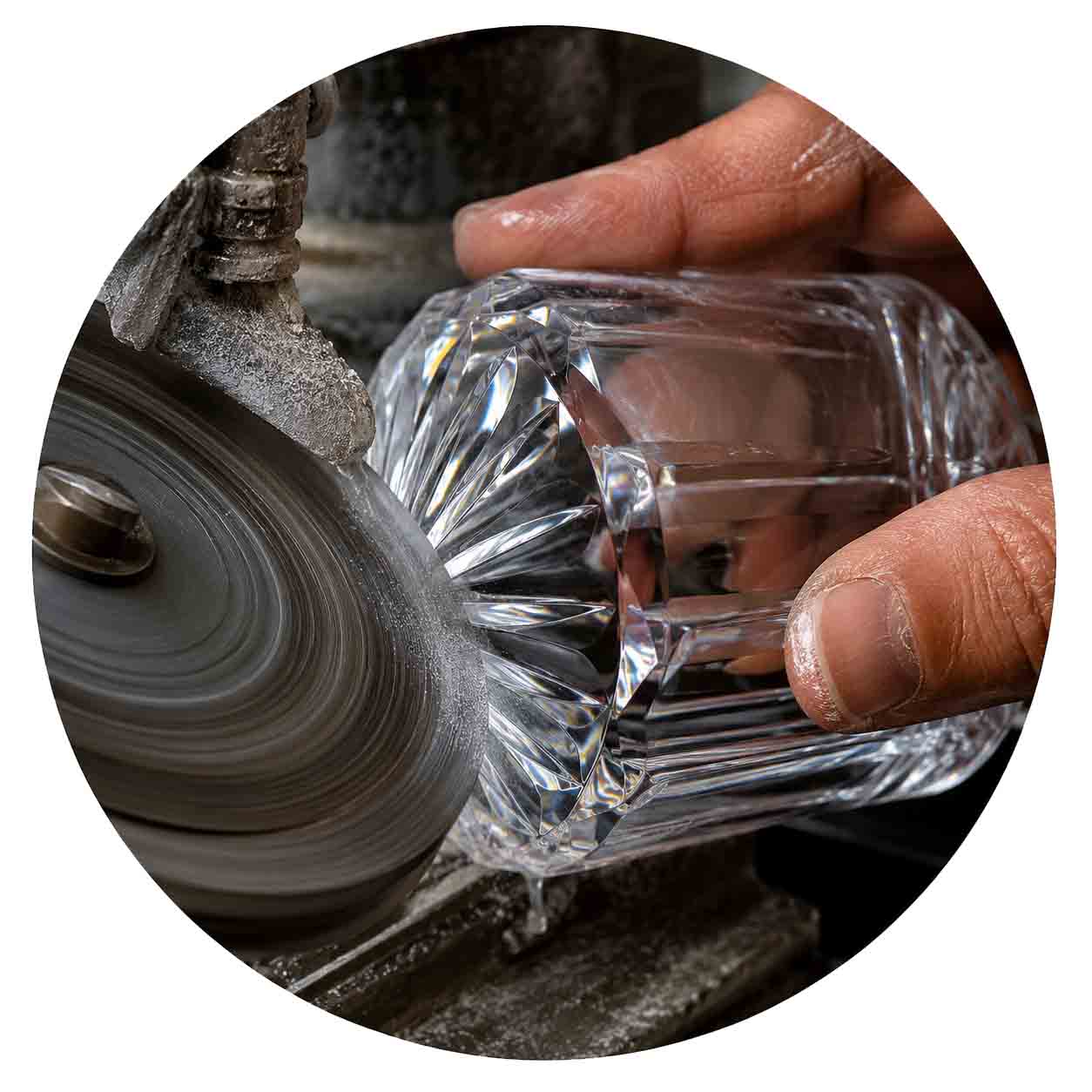
Polishing
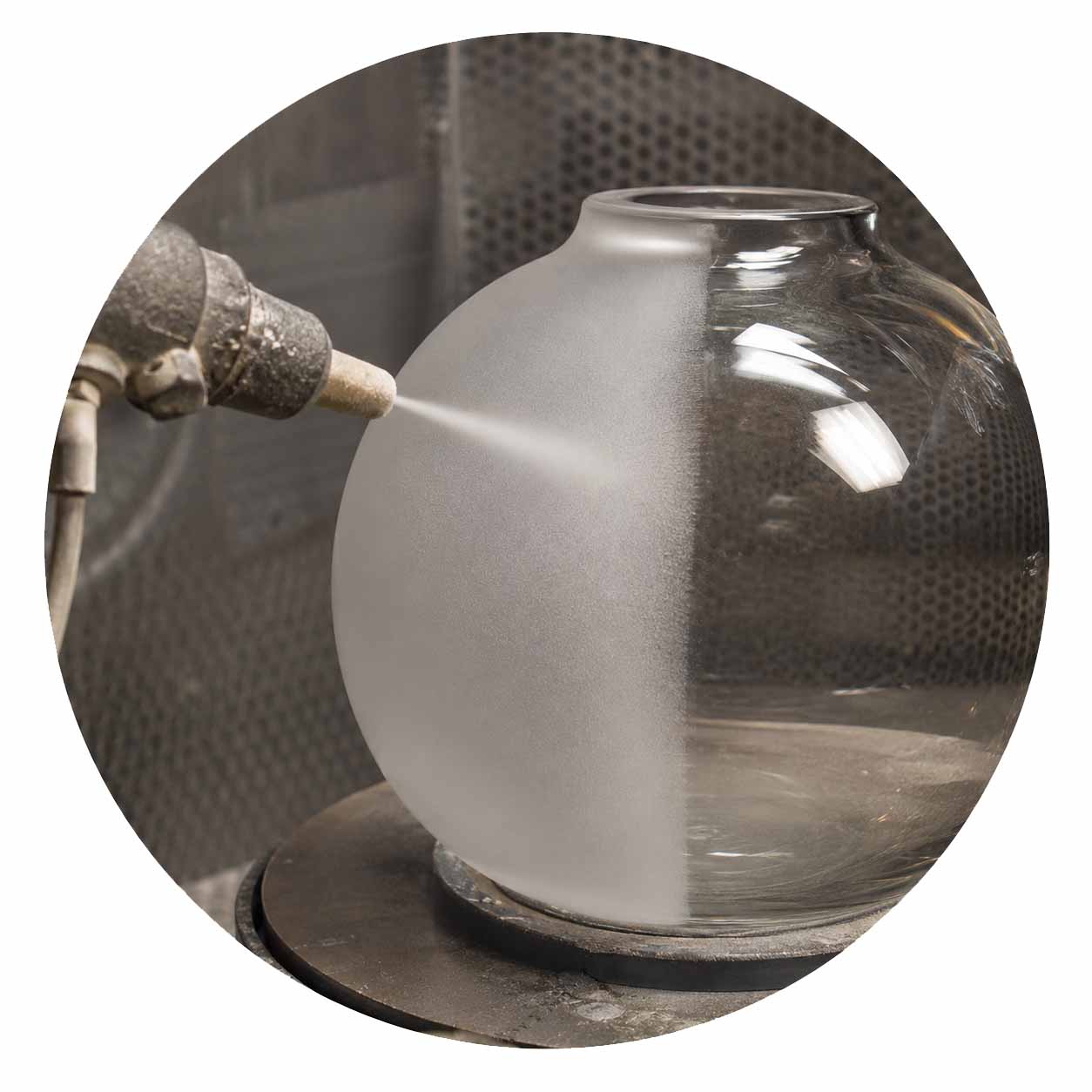
Frosted Finish
Color Spraying
Hand-Gilding
Hand-Painted Decoration
Enamel Decoration
Decal Firing
Different Bespoke Projects Require Different Manufacturing Priorities
Bespoke crystal glass manufacturing should be evaluated according to the product’s final use, not only its appearance. A crystal tumbler, decorative vase, fragrance vessel, lampshade, award piece, and hotel display object may all belong to custom glass production, but each project requires a different balance of material, forming method, tolerance, surface treatment, inspection, and packaging.
In custom crystal glass OEM development, the right manufacturing plan begins by identifying the product’s real priority. Some projects need brilliance and decoration for premium crystal decor. Some need functional fitting. Some need batch consistency. Others need sculptural presence or packaging safety. When these priorities are defined early, the bespoke glass project becomes easier to develop, sample, inspect, and produce.
Sampling Is Essential Before Bespoke Crystal Glass Production
Sampling is essential before bespoke crystal glass production because a drawing or 3D model can define the design intention, but only a real sample can reveal how the material, forming method, wall thickness, mold structure, surface craftsmanship, and dimensional tolerance work together. During sampling, the project team can evaluate the approved shape, mouth opening, base stability, weight balance, optical clarity, cutting or engraving effect, fitting compatibility, and packaging protection before batch production begins. For bespoke oem glassware, bespoke crystal decor, and custom crystal glass OEM projects, this stage helps reduce production risk, confirm realistic quality standards, and ensure that the final glass product can remain faithful to the original concept while still being practical for repeatable manufacturing.
Quality Points to Check in Bespoke Crystal Glass Manufacturing
- material clarity
- bubbles and inclusions
- cracks and stress marks
- rim and edge smoothness
- dimensional tolerance
- mouth diameter
- base stability
- wall thickness
- decoration alignment
- color consistency
- polishing quality
- packaging protection
FAQ
Related Knowledge and Internal Links
Related Topic Pages
24 PbO Crystal Craftsmanship
Glass Forming Processes
Custom Glass Liquid Containers
Developing a Bespoke Crystal Glass Project
For brands, designers, and project teams evaluating bespoke crystal glass manufacturing, SHD Crystal, as a crystal glassware manufacturer, can help review material choice, forming feasibility, surface craftsmanship, sampling direction, and production requirements before a project moves into formal development.