
SHD Crystal
Glass Forming Processes for Custom Crystal and Glass Manufacturing
Explore how SHD Crystal evaluates glass forming processes for custom crystal and glass OEM projects, helping brands connect handmade glass production, mold planning, wall thickness, tolerance, and finishing before sampling.
 > RESOURCES > Crystal Topics > Glass Forming Processes
What Are Glass Forming Processes?
Glass forming processes refer to the methods used to shape molten or softened glass into a controlled product form. In custom crystal and glass OEM projects, forming is not only about creating an outline. It directly affects the product’s shape, wall thickness, structural stability, dimensional tolerance, mold planning, surface detail, and production feasibility.
Different glass products require different forming decisions. A hand-blown vase may need natural movement and organic variation. A pressed glass bowl may require a clear geometric pattern and stable thickness. A custom glass bottle may depend on mouth accuracy, mold consistency, and later cap fitting. A thick crystal object may need casting, annealing control, and extensive polishing after forming.
For this reason, selecting the right forming method is one of the earliest and most important steps in glass product development. Before sampling, SHD Crystal reviews the product shape, material choice, usage scenario, mold direction, finishing requirements, and expected production quantity. This helps determine whether handmade glass production, traditional glass forming methods, or automated glass forming will better support the project.
A suitable forming process can reduce unnecessary sample adjustments, improve production consistency, and help the final product match both design expectations and practical manufacturing requirements.
From Molten Glass to Controlled Product Form
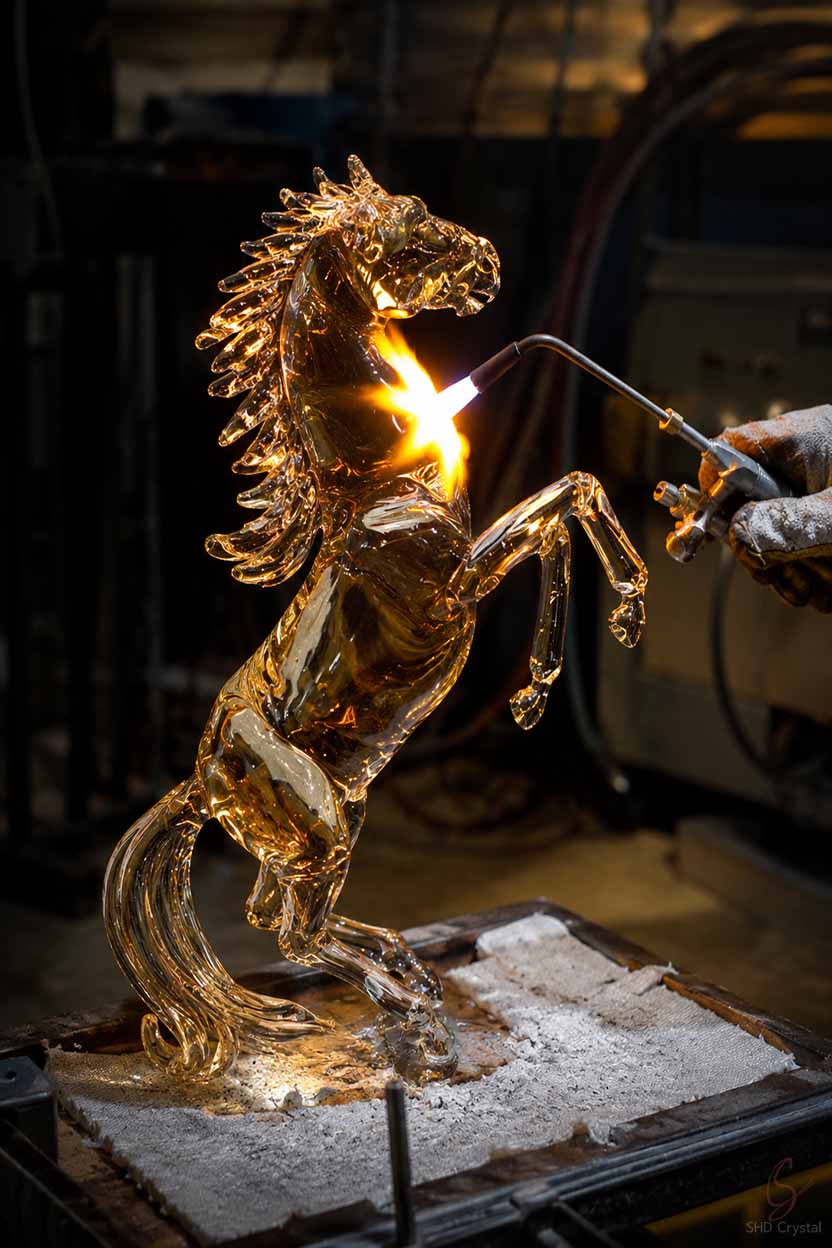
Glass forming processes shape the foundation of every custom glass project, influencing appearance, structure, tolerance, finishing, and production planning.
Why Forming Method Selection Matters Before Sampling
Choosing the right forming method before sampling is a critical step in custom glass product development. A design drawing may show the expected appearance, but the final result depends on how the glass can actually be shaped, cooled, finished, and controlled during production.
For OEM projects, the forming method also affects mold planning, sampling cost, production consistency, and finishing feasibility. If the wrong process is selected too early, problems may appear later, such as unstable dimensions, uneven wall thickness, unclear texture, difficult polishing, poor lid fitting, or extra sample adjustments.
Different glass forming processes create different results. Handmade forming may support organic curves, artistic movement, and irregular glass shapes, but it also brings natural variation in size and wall thickness. Pressed glass forming can create clearer geometric glass shapes and repeated surface patterns, but the mold structure, release angle, and thickness distribution must be reviewed before production. Mold blown glass is suitable for many hollow vessels and bottles, but mouth opening accuracy, wall thickness, and fitting points need to be checked carefully during sampling.
At SHD Crystal, the forming method is reviewed together with the product’s shape, material, function, order quantity, surface finishing, and expected tolerance. This allows the project team to decide whether handmade glass production, traditional glass forming methods, or automated glass forming is more suitable before moving into sample development.
Key Factors Reviewed Before Sampling
Product Shape
Organic, irregular, geometric, hollow, thick, or open forms may require different forming directions.
Mold Planning
A custom glass mold must support the product outline, release angle, texture detail, and production repeatability.
Wall Thickness
Glass wall thickness control affects product weight, strength, transparency, cooling behavior, and finishing work.
Dimensional Tolerance
Mouth diameter, base flatness, fitting points, and assembly areas need tolerance review before sampling.
Surface Finishing
Cutting, engraving, polishing, frosting, spraying, gilding, or painting may depend on the basic formed structure.
Major Glass Forming Processes Used in Custom Glass Projects
Different glass forming processes create different results in shape, texture, wall thickness, dimensional control, and production consistency. The following methods are commonly used in custom crystal and glass manufacturing.
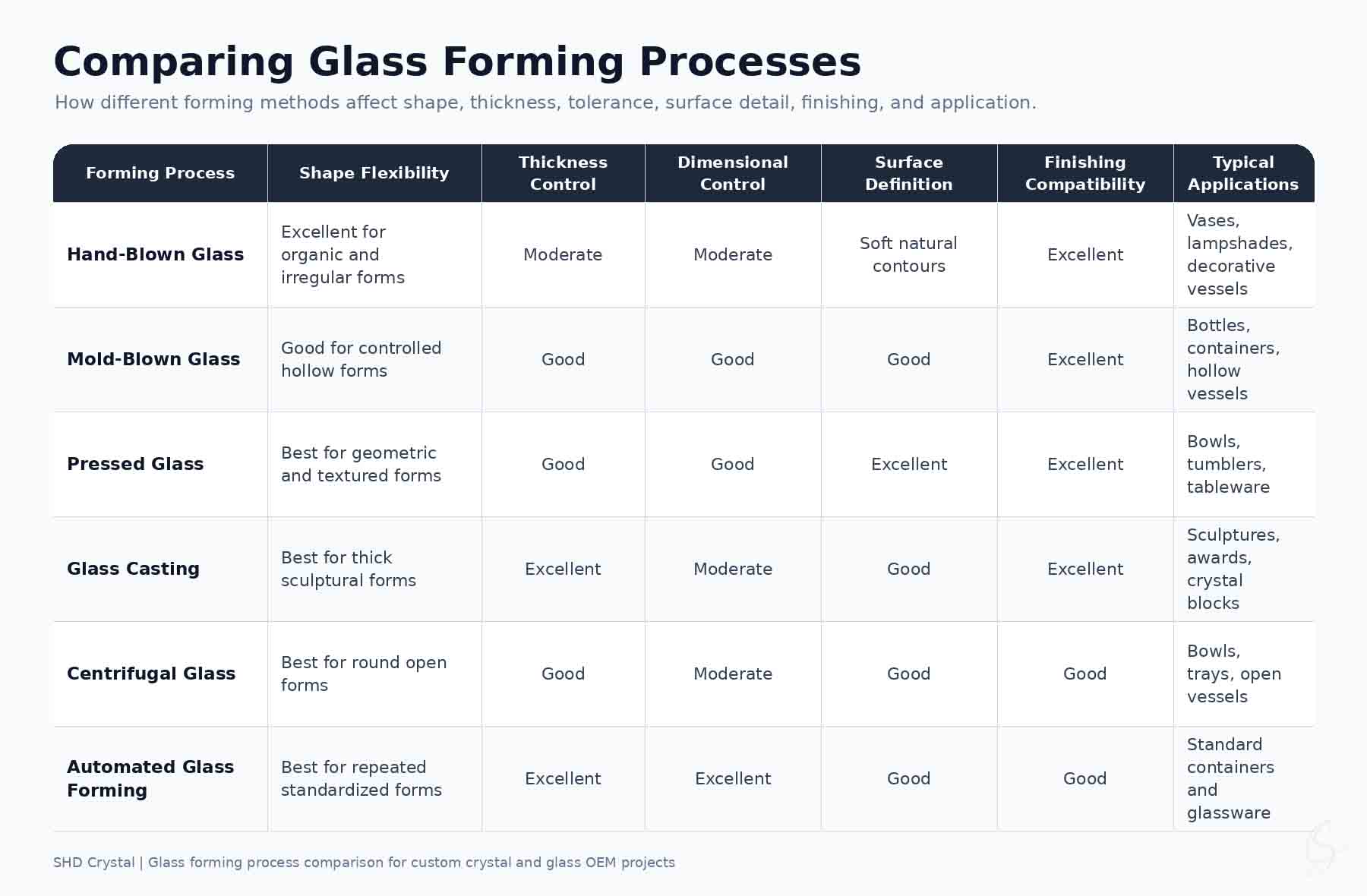
How Different Glass Forming Processes Affect Product Shape
Product shape is often the first factor that influences forming method selection. Some glass forming processes support organic and irregular forms, while others are better suited for geometric structures, hollow vessels, thick sculptural objects, or highly repeatable production shapes. Understanding this relationship helps reduce design revisions and improves manufacturing feasibility before sampling, especially when balancing the flexibility of handmade glass production with the consistency requirements of larger-scale manufacturing.
For projects requiring irregular glass shapes and expressive visual movement, hand-blown forming and free-form glass shaping often provide greater design flexibility. These methods allow craftsmen to adjust shape during forming, making them suitable for products that prioritize artistic character over strict dimensional repetition.
Suitable processes:
-Hand-Blown Glass Forming
-Free-Form Glass Shaping
Pressed glass forming and machine-assisted molding are often selected when geometric glass shapes, decorative textures, or repeated product structures are required.
Suitable processes:
-Pressed Glass Forming
-Machine Pressed Glass
Mold blown glass is widely used for hollow forms because it combines controlled external shape with practical production repeatability.
Suitable processes:
-Mold-Blown Glass
-Automated Glass Forming
Glass casting processes are commonly used for thick forms because they allow molten glass to occupy a larger volume while supporting later cutting, polishing, and finishing operations.
Suitable processes:
-Glass Casting Process
Centrifugal glass forming is particularly suitable for round open forms where symmetry and circular flow are important design characteristics.
Suitable processes:
-Centrifugal Glass Forming
Automated glass forming is commonly selected for products that require consistent dimensions, controlled wall thickness, and reliable production repetition.
Suitable processes:
-Automated Glass Forming
How Different Glass Forming Processes Affect Thickness and Dimensional Control
Wall thickness and dimensional control influence much more than product appearance. They affect weight, stability, fitting accuracy, production consistency, and finishing feasibility. Different glass forming processes provide different levels of control, making process selection an important factor in custom glass product development.
Wall Thickness Distribution
·Affects product weight and hand feel
·Influences transparency and light refraction
·Impacts cooling stability and annealing control
·Determines later cutting, polishing, or finishing difficulty
Mouth Opening Accuracy
·Important for bottles, containers, and lampshades
·Affects caps, seals, metal fittings, or assembly parts
·Requires tolerance review before sampling
·Often depends on mold accuracy and forming control
Base Stability and Flatness
·Helps products stand evenly and safely
·Important for vases, bottles, bowls, and lighting parts
·Affects visual balance and practical use
·May require grinding, polishing, or base adjustment after forming
Production Consistency
·Keeps shape, wall thickness, and dimensions repeatable
·Reduces sample-to-production variation
·Supports stable OEM quality control
·Depends on forming method, mold condition, and inspection standards
Glass Forming Processes Create the Base for Surface Finishing
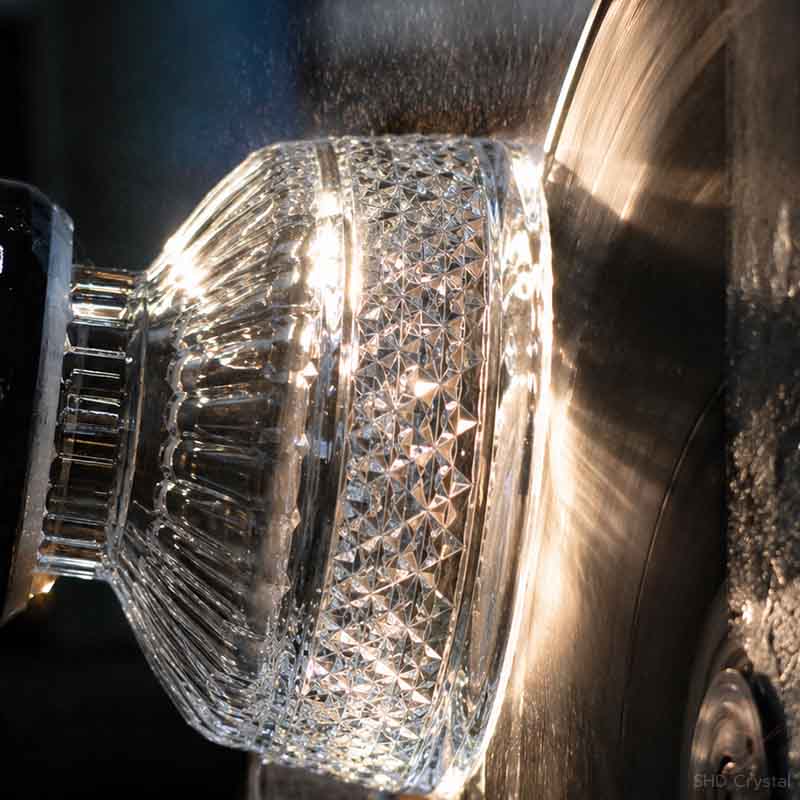
Cutting and Polishing
·Adds facets, edges, and optical brilliance ·Works better on stable and thicker glass forms ·Common for crystal glassware, vases, blocks, and decorative pieces
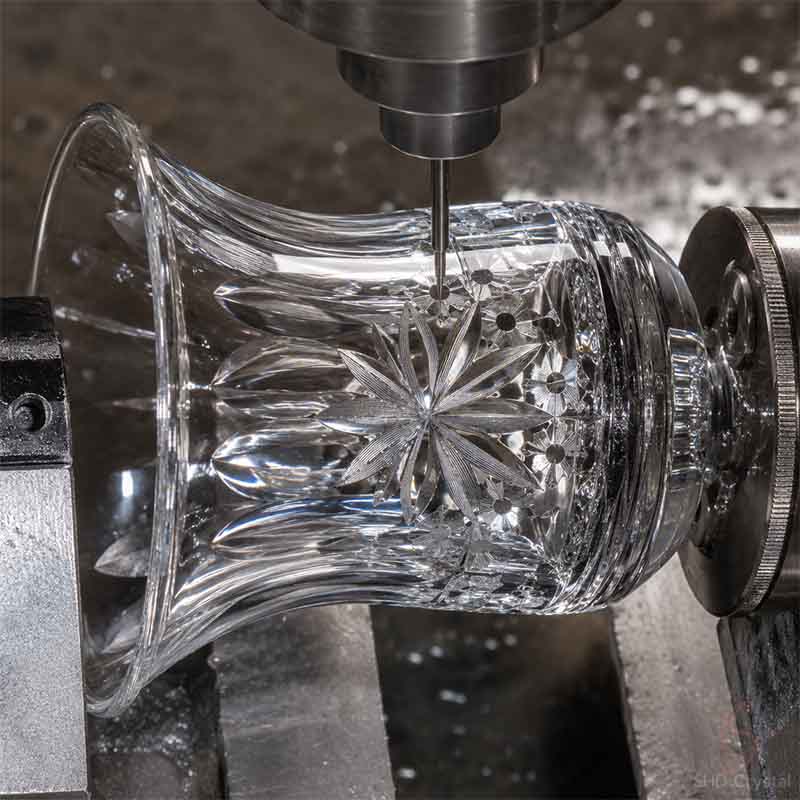
Engraving and Drilling
·Adds logos, patterns, holes, or fitting points ·Requires suitable wall thickness and stress control ·Common for OEM glass products, lighting parts, and assembled designs
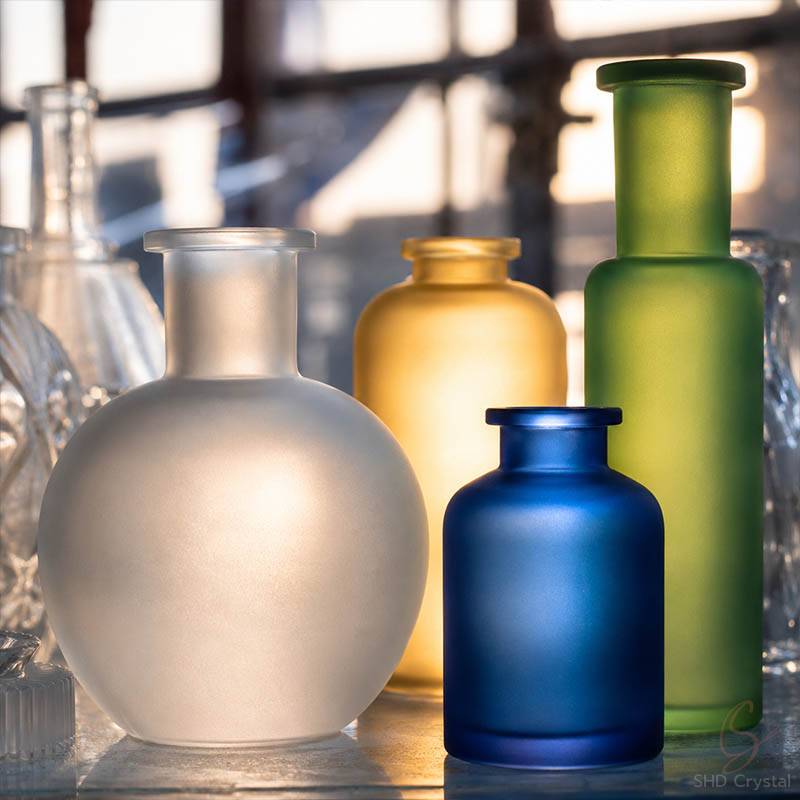
Frosting and Color Spraying
·Creates matte, translucent, or colored surface effects ·Requires clean and even formed surfaces ·Common for bottles, vessels, lampshades, and decorative containers
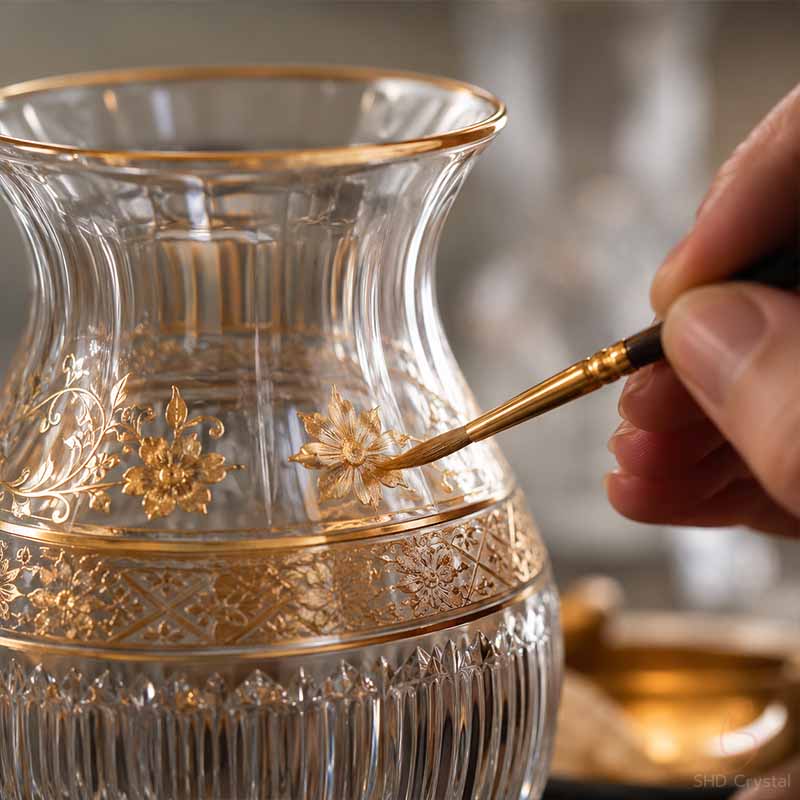
Gilding and Hand-Painted Decoration
·Adds luxury metallic or artistic details ·Depends on stable outlines and clean surface areas ·Common for vases, ornaments, tableware, and giftware
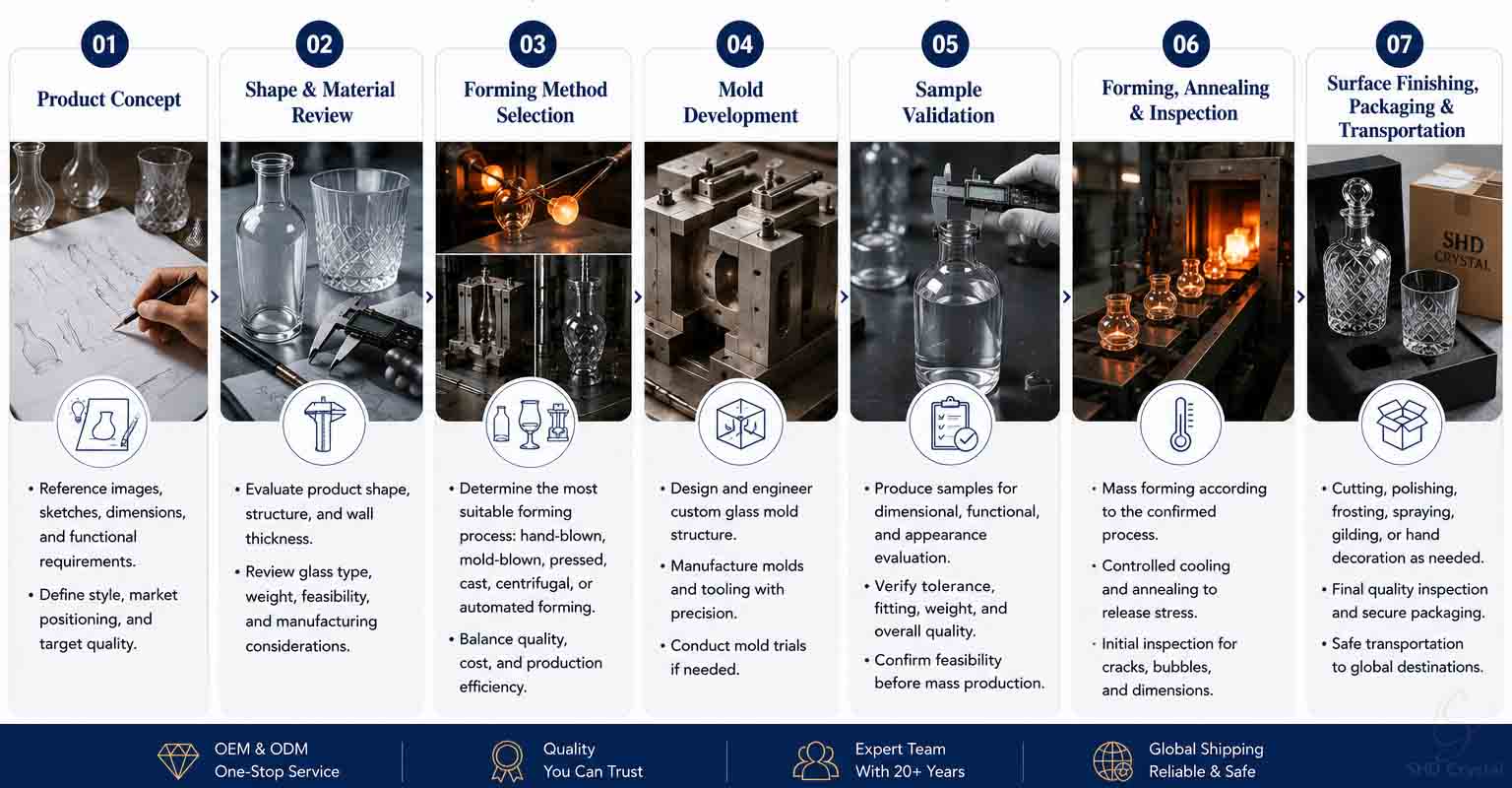
Glass Forming Process Development Workflow
Every custom glass project begins long before production starts. Product shape, material selection, forming feasibility, mold planning, dimensional control, and finishing requirements are reviewed together to establish a suitable glass forming direction before sampling.
Frequently Asked Questions About Glass Forming Processes
Related Glass Manufacturing Topics
24 PbO Crystal Craftsmanship
Custom Glass Liquid Containers
Bespoke Crystal Glass Manufacturing
Review Your Glass Forming Direction Before Sampling
A custom glass project becomes easier to control when the forming direction is reviewed early. SHD Crystal can help evaluate product shape, material behavior, mold planning, wall thickness, dimensional tolerance, surface finishing, packaging, and transportation before formal sampling begins.