
Blogpost keywords: crystal glass casting, glass casting process, cast crystal glass technique
Crystal glass casting is one of the most technically demanding forming methods in glass manufacturing. Unlike blowing or pressing, it involves shaping molten or softened glass within a mold to achieve controlled thickness, complex geometry, and high material density. In practice, this method is often used when standard forming techniques cannot deliver the required structural depth or sculptural detail.
How Crystal Glass Casting Works In Practice
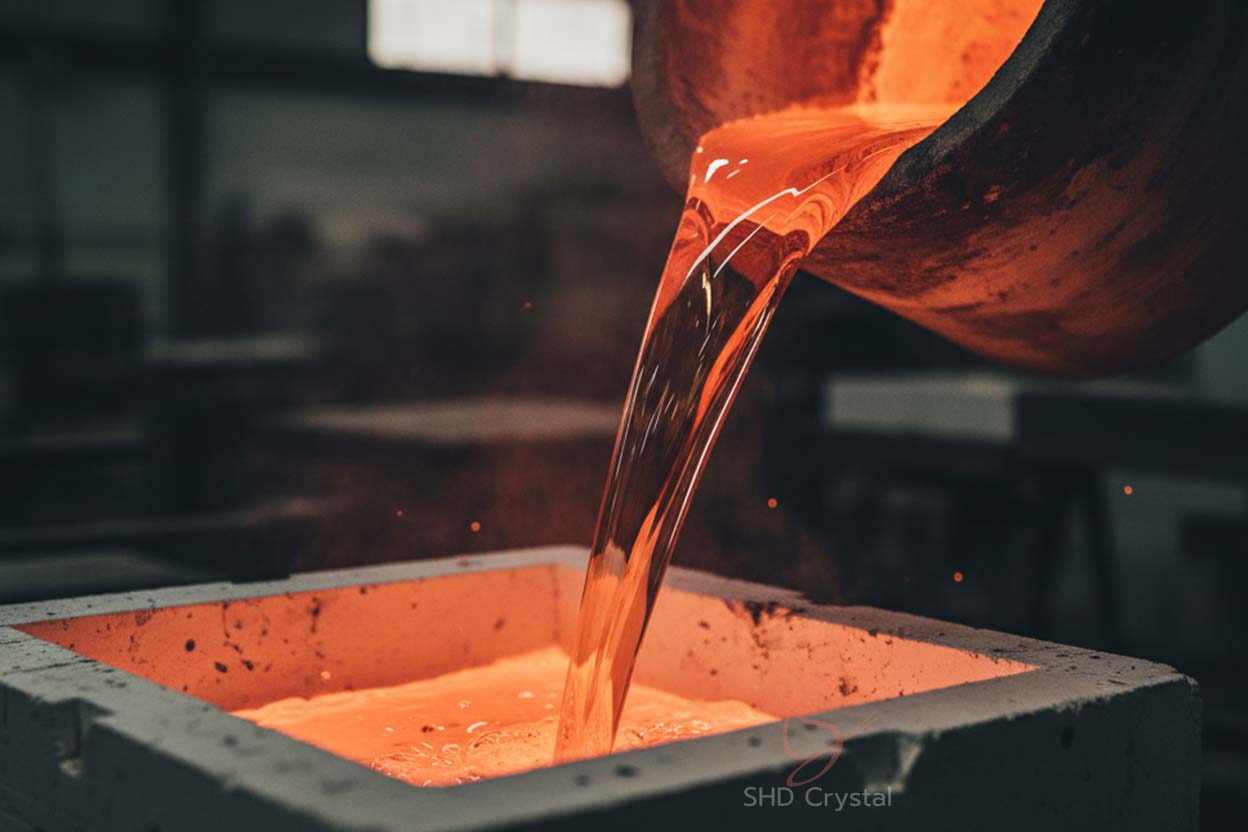
At its core, crystal glass casting relies on gravity and thermal control rather than force. Molten glass is introduced into a mold—typically made of refractory materials—where it gradually fills the cavity.
The glass casting process is intentionally slow. Controlled heating and cooling cycles ensure that the glass flows evenly and solidifies without internal defects. In advanced applications, the cast crystal glass technique allows manufacturers to create thick, sculptural forms that retain optical clarity while maintaining structural integrity.
Why Crystal Glass Casting Is Technically Challenging
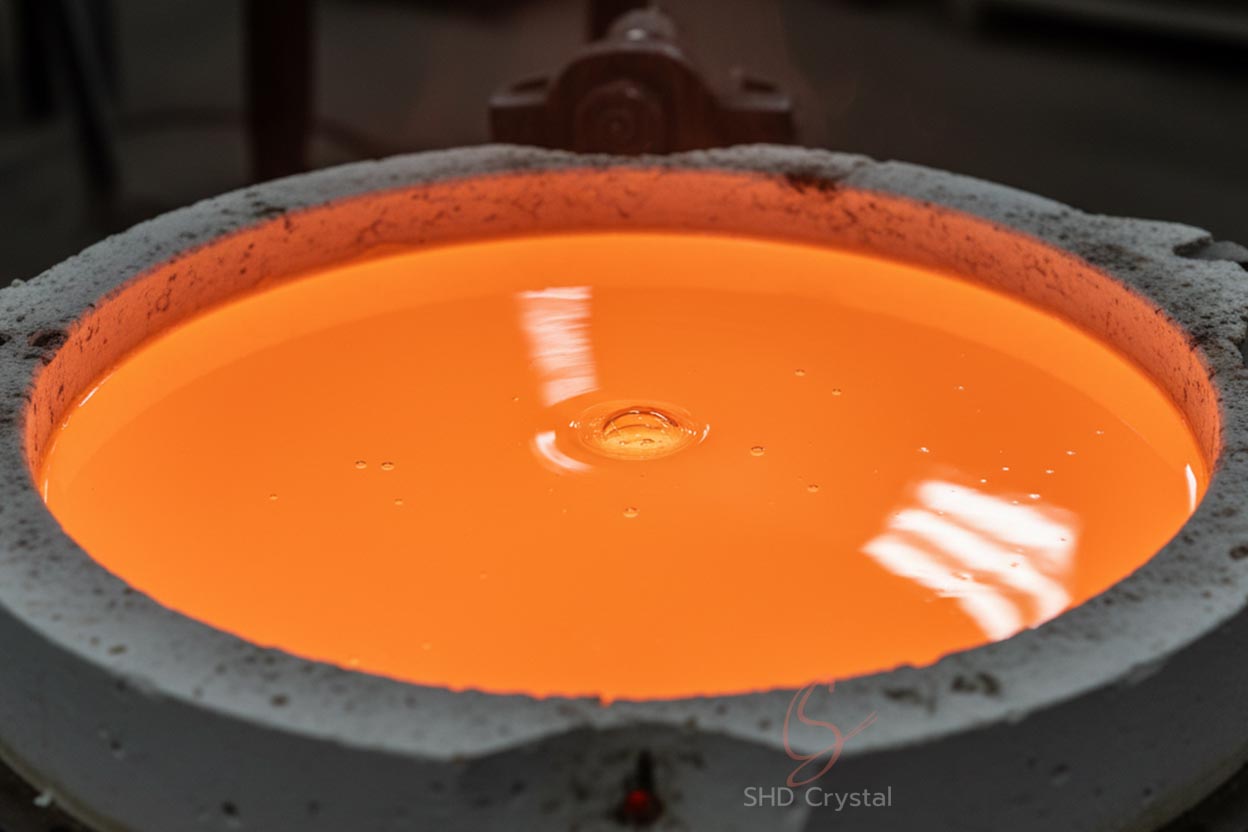
The difficulty of crystal glass casting lies in managing temperature and viscosity over time. Glass must remain fluid enough to fill the mold completely, yet stable enough to avoid deformation.
During the glass casting process, even minor temperature fluctuations can lead to trapped air bubbles, uneven thickness, or internal stress. The cast crystal glass technique requires precise furnace control and extended annealing cycles to prevent cracking after cooling.
Key Factors That Determine Casting Quality
- Temperature stability throughout the heating cycle
- Controlled flow behavior within the mold cavity
- Proper mold design for thickness distribution
- Extended annealing to eliminate internal stress
- Surface finishing and post-processing accuracy
These factors define whether crystal glass casting results in a structurally sound and visually consistent piece. In professional environments, the glass casting process is carefully monitored at each stage to ensure repeatable outcomes.
Common Misunderstandings About Glass Casting
One common misconception is that casting is simply pouring glass into a mold. In reality, crystal glass casting is a highly controlled thermal process that requires precise timing and environmental stability.
Another misunderstanding is that casting always produces flawless transparency. While the cast crystal glass technique can achieve high clarity, it also depends on raw material quality and cooling control. Improper execution in the glass casting process often results in inclusions or surface distortion.
Practical Applications Of Crystal Glass Casting
Crystal glass casting is widely used in applications where thickness and form complexity are essential. These include architectural glass elements, decorative sculptures, and high-end lighting components.
The glass casting process allows designers to create forms that would be impossible with blown glass, such as solid volumes or deeply textured surfaces. Through the cast crystal glass technique, manufacturers can also integrate fine details directly into the mold, reducing the need for excessive post-processing.
Material Behavior And Structural Performance
Glass behaves differently under casting conditions compared to other forming methods. In crystal glass casting, cooling speed directly affects internal structure and long-term durability.
A properly controlled glass casting process ensures that internal stress is minimized, allowing the final piece to withstand environmental changes. The cast crystal glass technique also supports higher density, which contributes to both weight and perceived quality.
Where Craft Meets Controlled Casting Technology
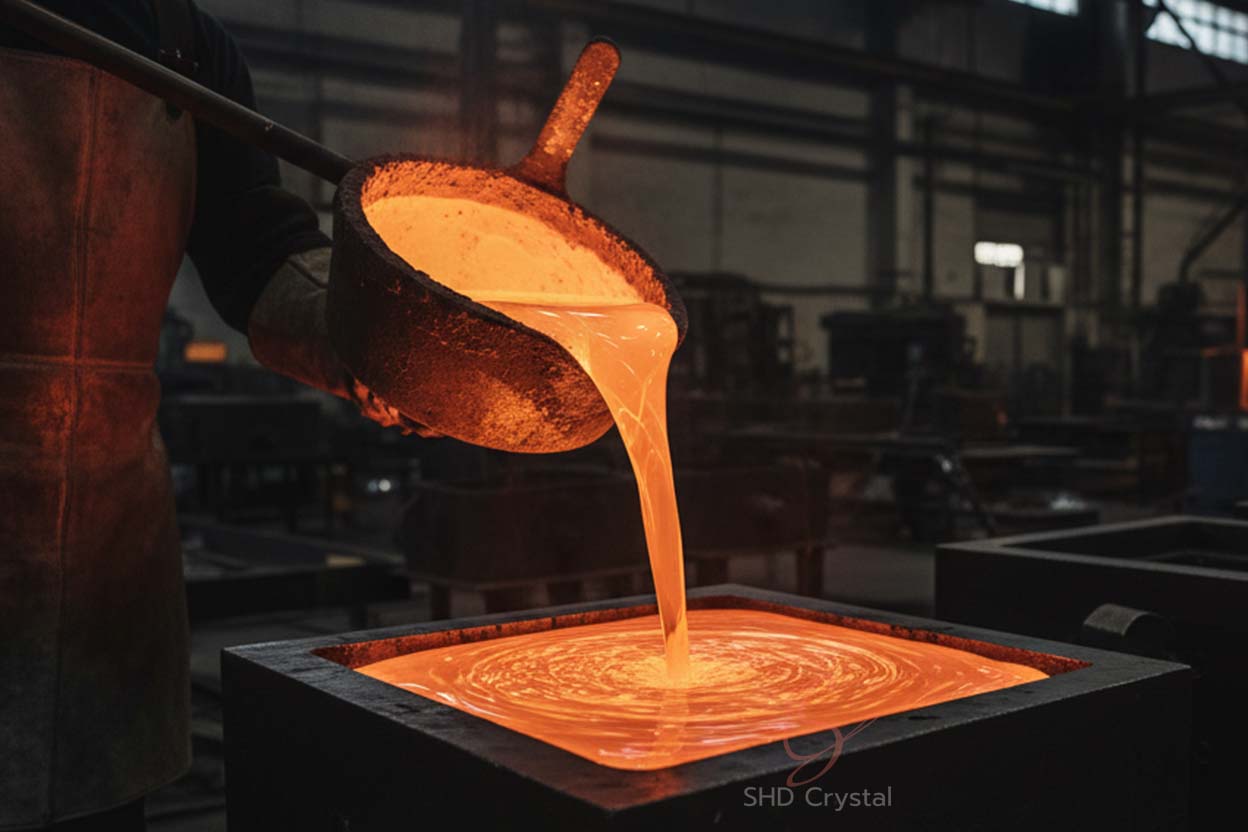
In advanced manufacturing, crystal glass casting combines traditional craftsmanship with modern thermal control systems. At SHD Crystal, casting processes are managed through calibrated furnace cycles and precision mold development, allowing complex forms to be produced with consistent clarity.
By refining each stage of the glass casting process, from material preparation to annealing, and applying disciplined cast crystal glass technique, the result is a balance between sculptural expression and structural reliability.
Conclusion
Crystal glass casting represents one of the most precise and versatile methods in glass forming. Through controlled processes and technical expertise, crystal glass casting enables the creation of complex, high-quality glass forms that meet both aesthetic and functional requirements.
Understanding The Value Of Glass Casting In Design
Working with crystal glass casting allows designers and developers to explore forms that go beyond conventional limitations. With a well-controlled glass casting process and refined cast crystal glass technique, complex ideas can be translated into durable and visually striking glass solutions.