
Blogpost keywords: pressed crystal washbasins, molded reflective surfaces, sculptural glass basin craftsmanship
People often associate glass washbasins with transparency alone. What interests us more is reflection. Before a pressed crystal basin enters a bathroom interior, before water moves across its surface, and before surrounding stone or metal materials begin interacting with the glass, the object already contains a visual structure hidden inside the molded crystal itself. Light does not behave passively once it reaches embossed surfaces. It fragments, softens, sharpens, and shifts continuously depending on depth, texture, and viewing angle.
This optical behavior is what gives pressed crystal washbasins their sculptural presence.
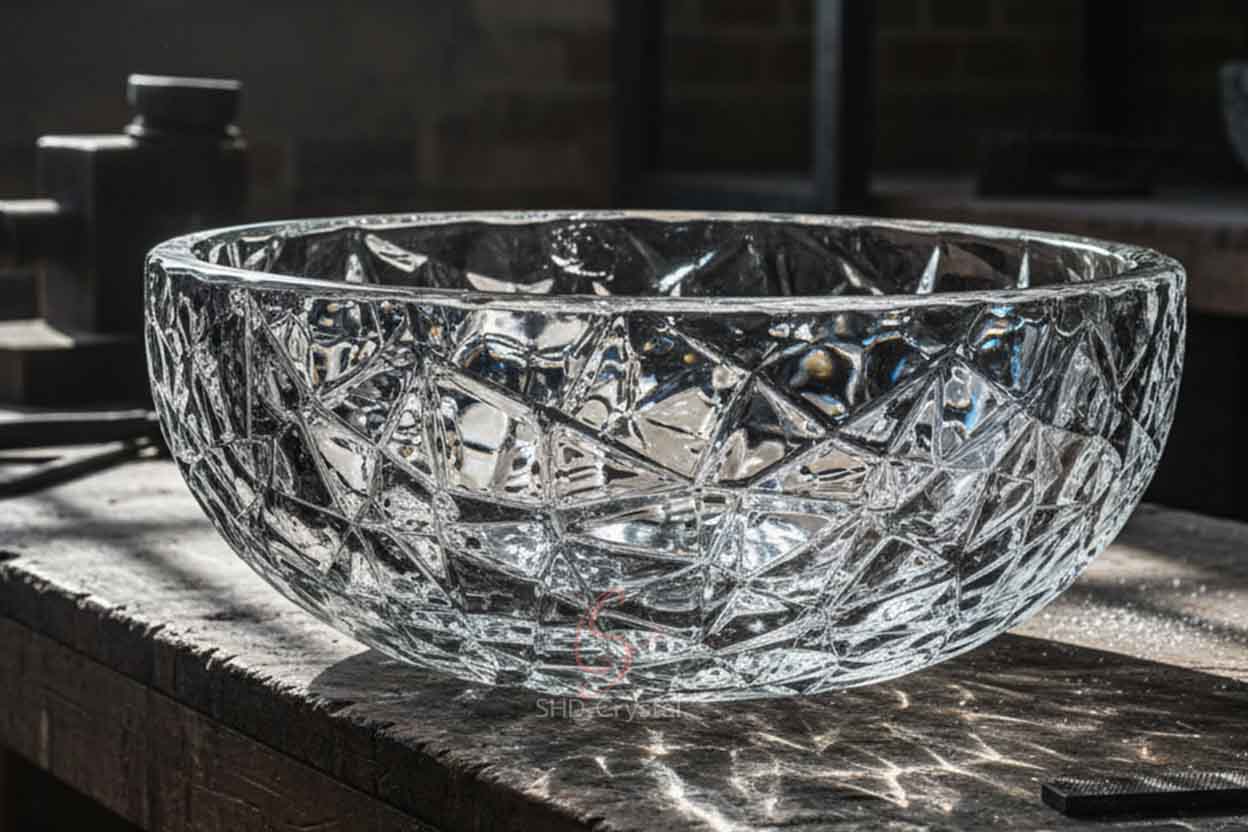
Unlike flat modern basins designed to disappear quietly into minimalist interiors, molded crystal surfaces actively shape atmosphere throughout the room. Reflections spread outward across marble. Water movement alters geometric highlights. Faceted textures create changing layers of brightness that continue evolving throughout the day. For us, sculptural glass basin craftsmanship begins long before decorative finishing. It begins the moment molten crystal enters the mold and starts becoming reflective structure instead of liquid material.
Molded Reflective Surfaces Create Architectural Depth
Pressed crystal behaves differently from hand-blown glass. Blown glass often feels fluid and atmospheric, while molded reflective surfaces introduce rhythm, structure, and directional light behavior. Once heated crystal compresses into geometric cavities, every embossed contour begins controlling how reflections travel later through the finished basin.
This is why pressed crystal washbasins often feel more architectural than ordinary decorative glass objects. Sharp transitions create stronger jewel-like fragmentation. Softer geometric depressions allow calmer transparency and more diffused reflective movement. Even slight variations in embossed depth can dramatically change how the basin reacts beneath hospitality lighting or natural daylight. The mold ultimately determines whether the final object feels aggressive, restrained, luminous, or heavy.
Pressed Crystal Changes the Emotional Weight of the Bathroom
A smooth white basin usually behaves as a functional object. Pressed crystal introduces visual tension instead. Once geometric reflections begin interacting with surrounding surfaces, the washbasin stops behaving like ordinary sanitaryware and starts functioning more like integrated sculptural décor. Water movement becomes part of the reflective composition. Architectural lighting gains additional depth through crystal refraction. Even shadows become sharper once they pass across faceted surfaces.
This layered interaction is one reason pressed crystal washbasins continue appearing in collector-inspired hospitality interiors and luxury residential bathrooms where reflective materials are used to shape atmosphere rather than simply provide utility. The basin becomes part of the room’s visual rhythm.
Sculptural Glass Basin Craftsmanship Depends on Surface Balance
Many people assume stronger embossing automatically creates stronger luxury effect. In reality, excessive faceting can overwhelm the space surprisingly quickly. If reflections become too fragmented, the basin loses visual calmness and begins competing aggressively with surrounding materials.
For this reason, sculptural glass basin craftsmanship depends heavily on balance rather than decorative density alone. Certain projects require softer molded reflective surfaces that behave almost like glowing crystal beneath warm lighting. Others benefit from sharper diamond-like geometry capable of producing stronger optical contrast across darker interiors.
The reflective structure must ultimately support the emotional atmosphere of the space rather than dominate it.
Crystal Thickness Controls Optical Density
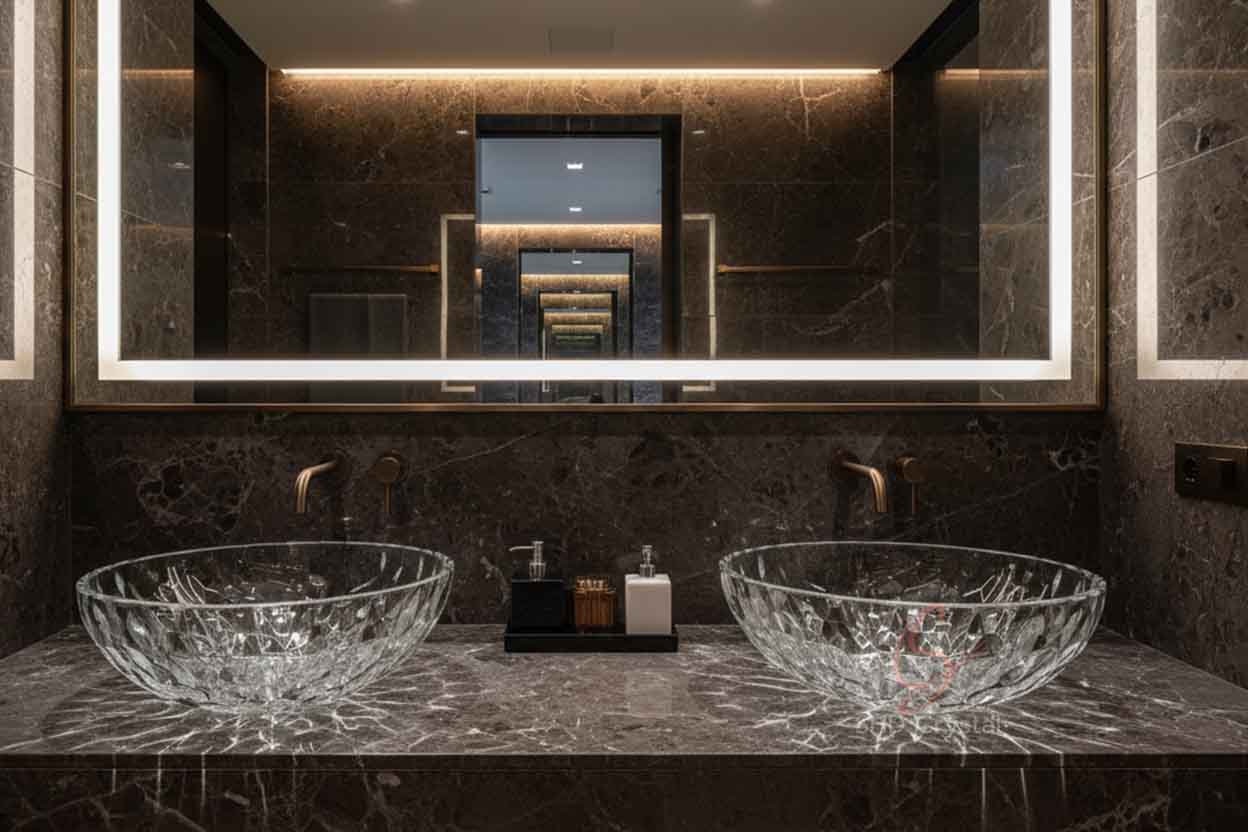
Pressed crystal is visually sensitive to thickness variation. Thin crystal sections allow brighter transparency and lighter reflections, while thicker molded areas deepen optical density and create slower reflective movement inside the basin itself. This contrast becomes especially important once water enters the surface geometry.
As reflections move across embossed crystal textures, the basin develops layered optical behavior similar to carved gemstone surfaces. Some areas glow softly beneath light. Others remain darker and more architectural.
This shifting visual depth is central to the appeal of molded reflective surfaces. The basin continues changing throughout the day depending on illumination, surrounding materials, and water movement.
Why Pressed Crystal Feels More Permanent
One reason collectors and designers increasingly favor pressed crystal washbasins is their sense of permanence. Smooth minimalist surfaces often rely heavily on trend cycles. Geometric crystal textures feel more materially rooted. The basin develops identity through light behavior and sculptural structure rather than temporary decorative styling.
This gives pressed crystal washbasins a stronger relationship with architectural interiors designed around longevity, tactile richness, and reflective atmosphere. The object feels integrated into the space rather than added afterward.
Conclusion
Pressed crystal washbasins achieve their strongest visual presence through molded reflective surfaces, sculptural glass basin craftsmanship, and carefully balanced crystal geometry rather than transparency alone. Through embossed structure, reflective layering, and controlled optical depth, pressed crystal basins continue transforming functional bathroom fixtures into architectural objects with collectible decorative presence.
Pressed Crystal Basins Developed Through Reflective Geometry and Sculptural Surface Control
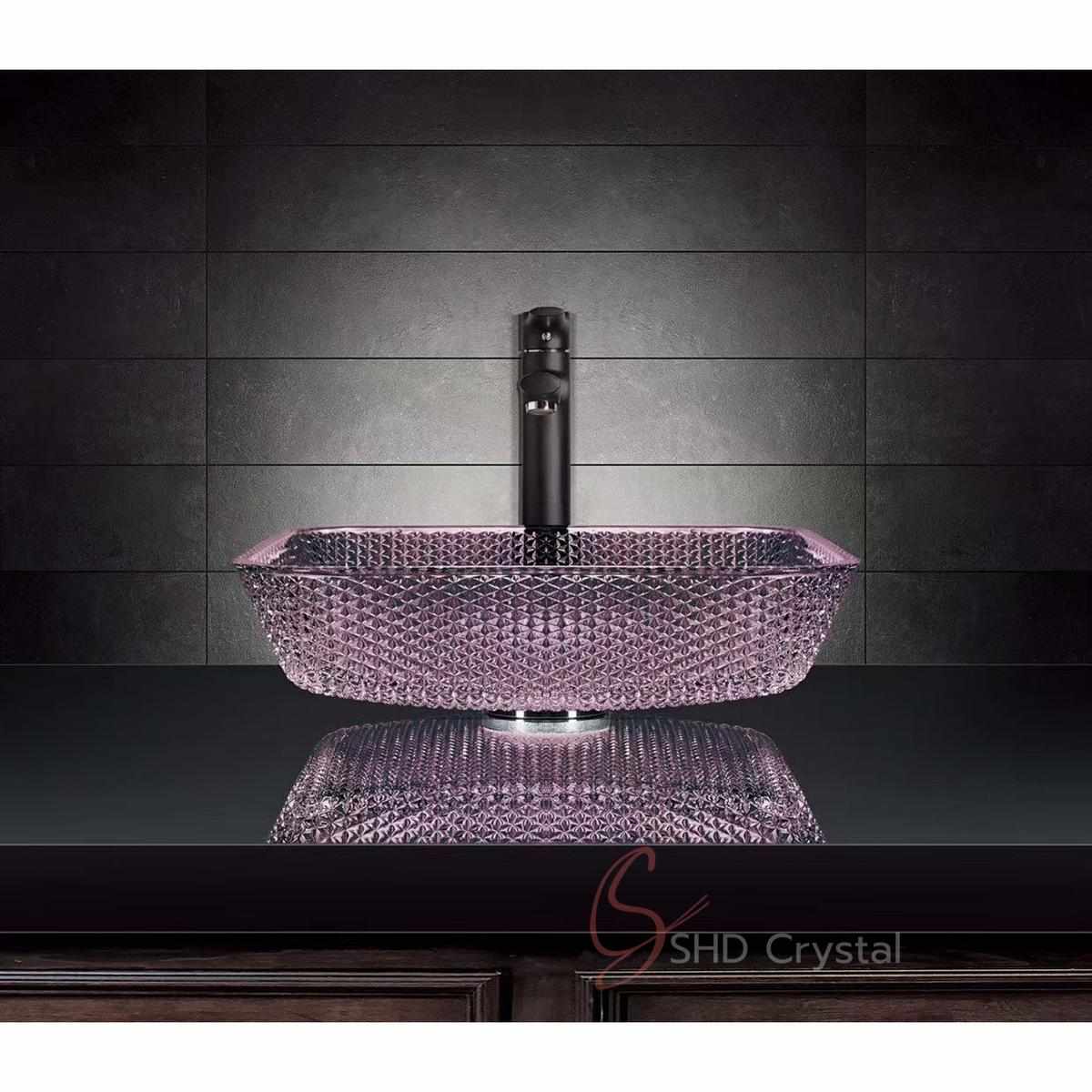
At SHD Crystal, we approach pressed crystal washbasins through molded reflective surfaces, geometric optical layering, and sculptural glass basin craftsmanship rather than standard sanitaryware production alone. Our pressed crystal development process focuses on embossed contour refinement, reflective density balance, and structural crystal depth to preserve strong architectural atmosphere across luxury interiors.
Through faceted crystal shaping, molded surface adjustment, reflective geometry refinement, and sculptural texture control, we support hospitality and residential projects seeking pressed crystal washbasins with long-term decorative presence and collectible visual identity.