
Blogpost keywords: bordeaux wine glass factory, large bowl wine glasses, crystal red wine glasses
A professional bordeaux wine glass factory does far more than manufacture oversized stemware. The shape, wall distribution, bowl depth, and rim transition of a Bordeaux glass directly affect how structured red wines behave during service. Once wine enters the bowl, oxygen interaction, aroma concentration, and liquid movement all begin responding to the geometry of the glass itself.
This is one reason Bordeaux-style stemware remains widely used in fine dining, winery hospitality, tasting events, and luxury retail collections. The larger bowl profile allows fuller-bodied wines to open gradually while preserving visual elegance at the table.
Large Bowl Wine Glasses Require Controlled Structural Proportion
The defining characteristic of large bowl wine glasses is not simply size. The relationship between bowl width, shoulder curve, rim diameter, and stem height must remain carefully balanced. If the bowl becomes too wide without sufficient vertical lift, the glass may feel visually heavy and unstable during use. If the opening narrows too aggressively, aromas can become overly concentrated and disrupt tasting balance. Experienced stemware manufacturers therefore pay close attention to how the bowl expands and tapers throughout the forming process. Small changes in curvature can noticeably affect swirling behavior, liquid aeration, and perceived refinement during service.
Thin Rims Depend on Stable Annealing
One of the visual markers of premium crystal red wine glasses is the thin polished rim. However, thinner edges also create greater production sensitivity during cooling.
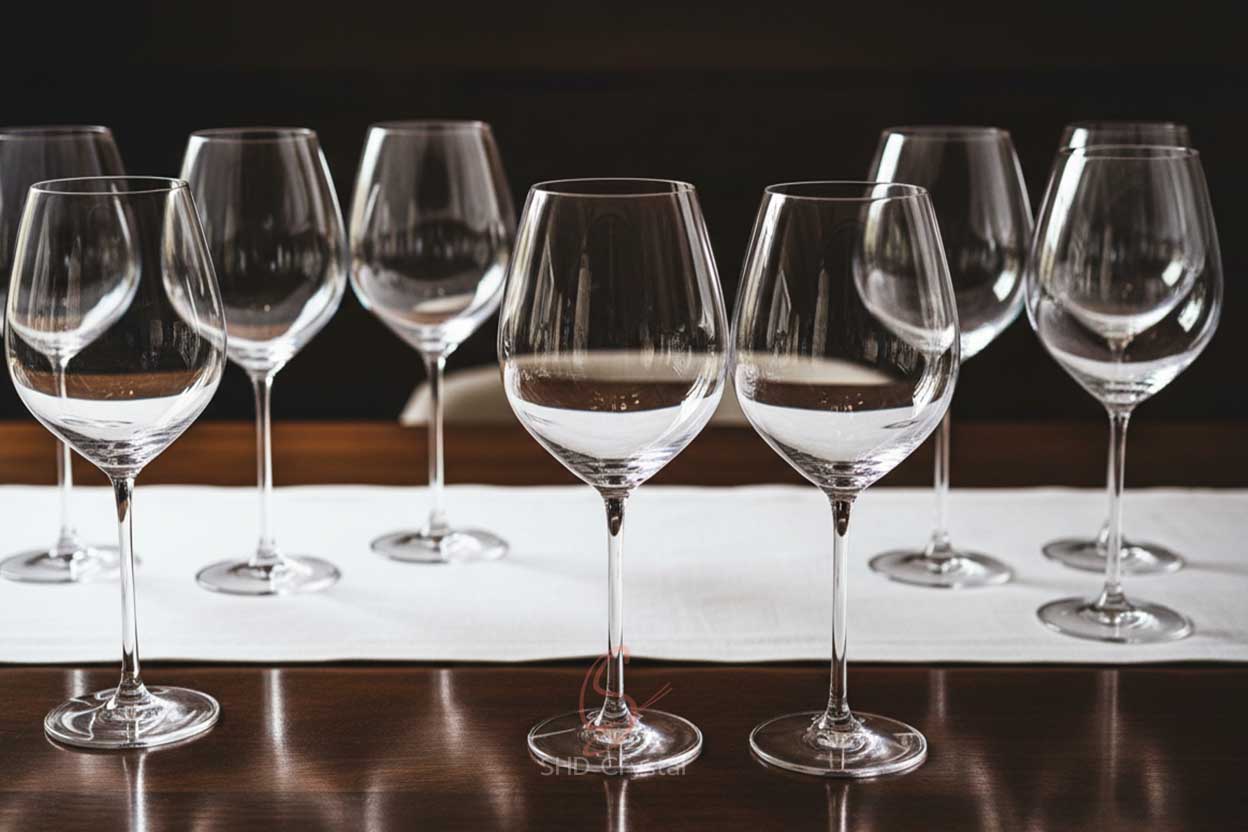
Without controlled annealing, stress may remain trapped near the upper edge of the bowl, increasing the risk of micro-fracture or inconsistent resonance between pieces. Reliable stemware production therefore depends heavily on stable cooling transitions after forming. This becomes especially important in hospitality environments where repeated washing cycles and constant handling place additional stress on the glass.
Optical Clarity Changes the Wine Presentation
Crystal stemware behaves differently from ordinary soda-lime glass because higher optical clarity allows deeper visual interaction with the wine itself. In well-produced crystal red wine glasses, reflections remain cleaner, color layering becomes more visible, and the wine appears more luminous under restaurant lighting. These details may seem subtle individually, but together they strongly influence perceived quality during tasting service.
Because of this, professional buyers often inspect stemware under multiple lighting conditions rather than relying solely on showroom photography.
Weight Distribution Influences Tactile Perception
A common misconception is that heavier stemware automatically feels more luxurious. In reality, excessive base weight can make the glass feel rigid and uncomfortable during long service periods. Premium large bowl wine glasses usually rely on balanced distribution instead of raw mass. The stem should feel stable without overpowering the bowl, while the lower section must support smooth swirling movement without creating visual bulk.
In hand-finished production, even slight differences in wall thickness can affect how the glass feels when lifted or rotated during tasting.
Batch Consistency Matters in Hospitality Service
Single-glass quality is only part of the manufacturing challenge. Consistency across larger production runs is equally important. Restaurants, hotels, and event programs often require dozens or hundreds of matching pieces displayed together within the same environment. Variations in bowl height, stem proportion, or optical clarity quickly become noticeable during service. A reliable bordeaux wine glass factory therefore focuses heavily on dimensional repeatability, rim consistency, and stable polishing quality across production batches.
Common Procurement Mistakes Buyers Should Avoid
One common issue is selecting oversized stemware without considering table spacing or service practicality. Extremely large bowls may look impressive in photography but become difficult to manage during real restaurant operation. Another mistake is evaluating crystal red wine glasses only while empty. Once wine is added, bowl proportion and clarity behave differently under lighting conditions. Sample review should therefore include actual service testing whenever possible.
Packaging protection also deserves attention. Taller stemware structures remain highly sensitive to transit vibration and stacking pressure during export shipment.
Conclusion
A well-managed bordeaux wine glass factory combines precision bowl shaping, stable annealing control, optical clarity management, and balanced stemware proportion to support refined wine presentation. Through carefully produced large bowl wine glasses and high-quality crystal red wine glasses, manufacturers help hospitality brands and wine programs create more controlled and visually elevated tasting experiences.
Supporting Premium Bordeaux Stemware Production
At SHD Crystal, Bordeaux stemware production combines precision bowl forming, thin-rim finishing, optical polishing, balanced stem proportion control, and export-oriented packaging engineering for hospitality and retail wine programs. For brands developing premium wine service collections, our team supports OEM large bowl wine glasses and crystal red wine glasses designed for stable production consistency and refined tasting presentation.