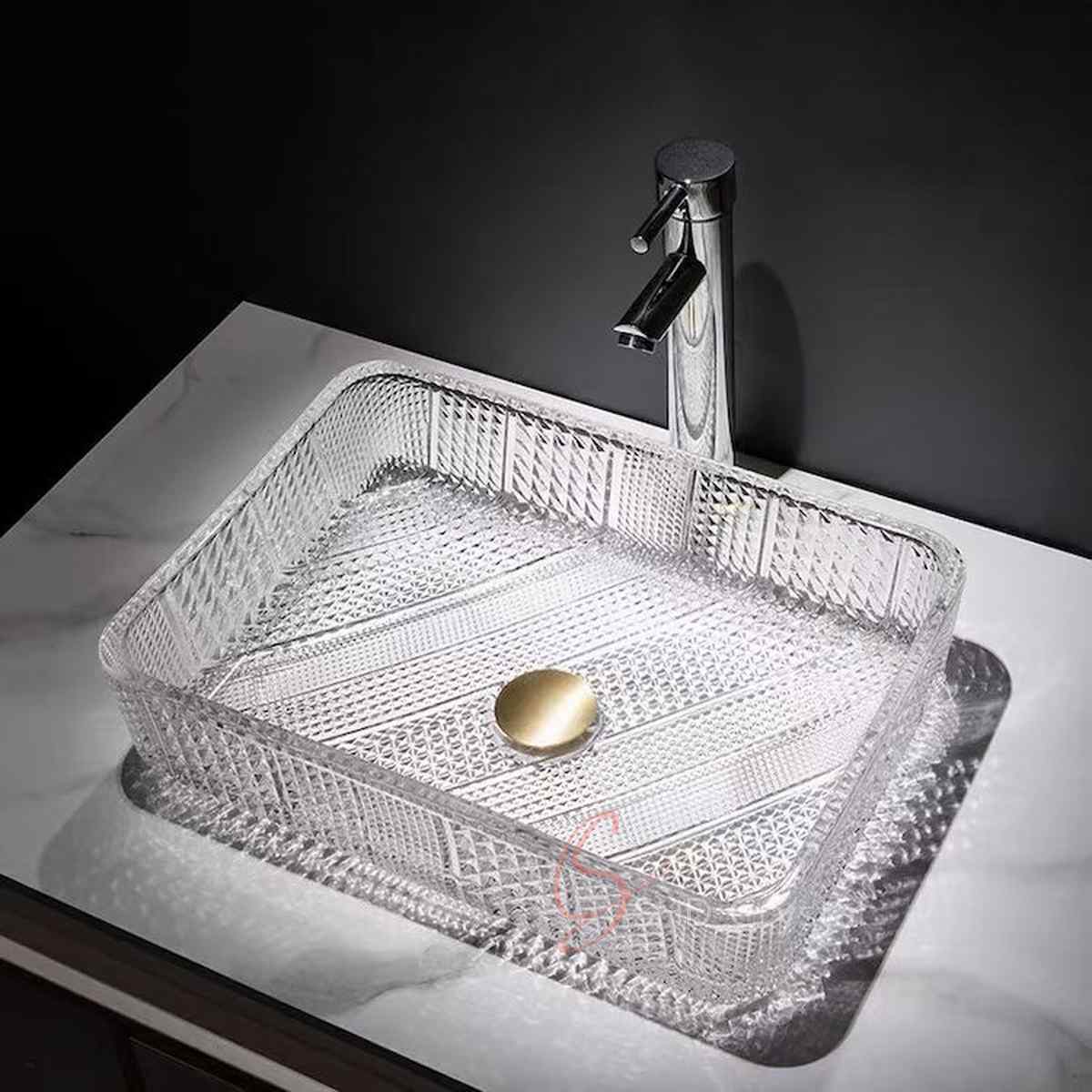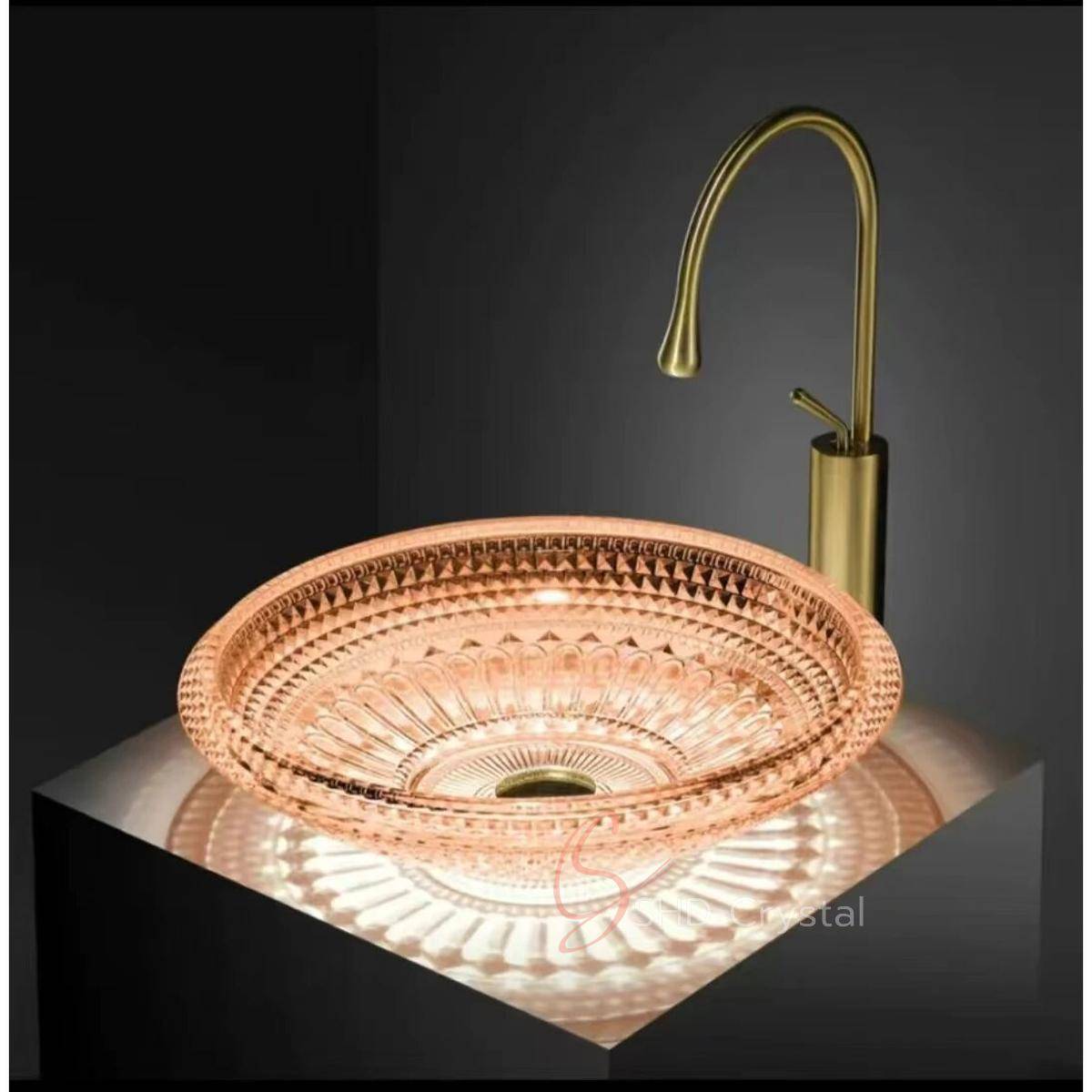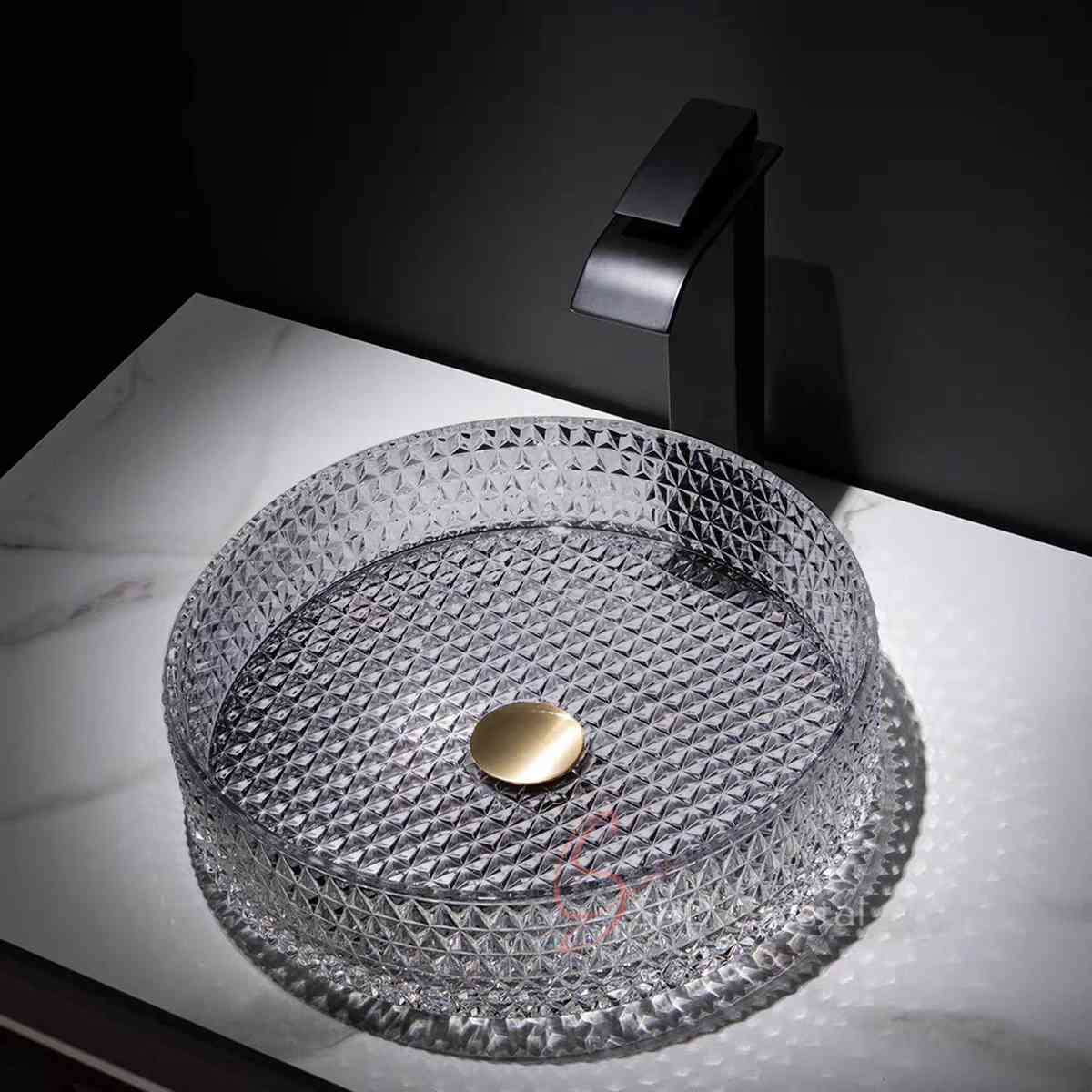
Blogpost keywords: crystal wash basin factory, annealing stability control, precision cutting alignment
Not every glass manufacturer is capable of producing crystal wash basins consistently at a project level. A basin may appear visually acceptable in photography while still containing unstable internal stress, uneven edge geometry, or dimensional variation that creates installation problems later. This gap between appearance and production reliability is one of the main reasons sourcing crystal bathroom products remains challenging for developers, hospitality buyers, and private-label brands.
A professional crystal wash basin factory is usually defined less by decorative capability and more by process control. The critical difference often appears in how the factory manages cooling stability, edge precision, polishing transitions, and batch consistency across larger production runs.
Why Annealing Stability Control Determines Long-Term Product Reliability
Crystal behaves differently from standard soda-lime glass because the material reacts more sensitively to temperature variation during cooling. Large wash basin structures make this even more difficult because wall thickness changes across curves, drainage zones, and reinforced mounting areas.

Without proper annealing stability control, internal stress can remain trapped inside the basin body even when the surface appears perfectly finished. These stress points may later contribute to cracking during transport, installation, or temperature fluctuation in real usage environments. This is one reason experienced buyers increasingly request stress inspection and controlled cooling documentation during sample evaluation rather than relying only on visual approval.
Cooling Stability Affects Optical Clarity
Annealing is not only about structural safety. It also influences visual quality. Poorly stabilized crystal may develop slight distortion zones where light no longer travels evenly through the basin wall. Under showroom lighting or daylight, these irregularities become much more visible, especially in transparent or lightly tinted crystal.
A well-managed crystal wash basin factory usually controls furnace transition timing, cooling rhythm, and holding temperatures very carefully to reduce optical inconsistency between units. For luxury residential and hospitality projects, this consistency becomes essential because basins are often installed under focused architectural lighting that exaggerates surface and transparency defects.
Precision Cutting Alignment Impacts Installation Accuracy
One of the most overlooked production variables in crystal basin manufacturing is edge alignment after forming. Drainage openings, countertop contact areas, overflow positions, and mounting surfaces all depend on accurate precision cutting alignment. Even small deviations can affect installation stability or create visible asymmetry once the basin is installed within stone or wood vanity structures.
This becomes more difficult in hand-finished production because polishing stages may slightly alter dimensions if material removal is not carefully controlled. Factories producing high-end crystal basins therefore tend to use staged inspection throughout cutting and polishing rather than relying only on final inspection at the end of production.
Surface Polishing Must Balance Clarity and Geometry
A common misunderstanding is that more polishing automatically creates better crystal quality. In practice, excessive polishing pressure may soften edge definition and reduce the sharp architectural character expected from premium basin designs. At the same time, insufficient polishing may leave distortion, haze, or inconsistent reflection patterns across curved surfaces.
Reliable precision cutting alignment depends heavily on maintaining geometric stability throughout polishing transitions. This is especially important for faceted crystal wash basins or hand-carved decorative structures where reflections need to remain visually controlled from multiple viewing angles.
Batch Consistency Matters More in Hospitality Projects
Single sample approval is relatively easy. Large-volume consistency is much harder. Hospitality projects, luxury apartments, and branded residential developments often require multiple basins installed within the same visual environment. Minor differences in transparency, cutting symmetry, drainage alignment, or polishing tone become highly noticeable when products are placed side by side.
Because of this, many developers now evaluate whether a crystal wash basin factory can maintain repeatable annealing stability control and dimensional consistency over extended production cycles rather than focusing only on sample aesthetics.
Common Sourcing Risks Buyers Often Miss
Several production risks are frequently underestimated during sourcing.Some factories outsource polishing separately from forming, increasing dimensional variation between batches. Others rely on aggressive edge grinding to correct forming inconsistencies, which may weaken structural stability near drainage openings. Packaging is another overlooked issue. Crystal wash basins are significantly more sensitive to vibration and concentrated pressure during export transit than ordinary ceramic basins. Poor internal support design can damage polished edges even when external cartons remain intact. These problems are rarely visible in catalog photography but become critical during real project delivery.
Conclusion
A reliable crystal wash basin factory is ultimately defined by production discipline rather than decorative appearance alone. Stable annealing stability control, accurate precision cutting alignment, controlled polishing transitions, and repeatable batch consistency all play essential roles in determining whether crystal basins perform successfully in real architectural and hospitality environments.
Supporting Precision Crystal Wash Basin Manufacturing
At SHD Crystal, custom crystal wash basin production combines controlled furnace forming, stress-managed annealing systems, precision edge processing, hand-finished polishing, and export-focused protection engineering. For luxury hospitality projects, residential developments, and branded bathroom collections, maintaining stable optical quality and structural consistency remains central to large-scale crystal basin manufacturing.