
Blogpost keywords: Murano-style artistic lampshade, hand blown lighting glass, sculptural decorative lighting
A true Murano-style artistic lampshade is rarely defined by symmetry alone. What gives this category its identity is the controlled unpredictability created during hot glass forming. Curves shift slightly, color flows unevenly through the material, and surface reflections change constantly depending on light direction. These characteristics are not considered flaws within Murano-inspired lighting traditions. They are part of the artistic language itself.
In decorative lighting, this approach creates a very different atmosphere from standardized industrial shades. The lampshade feels alive because the glass continues interacting with its surroundings long after production is complete.
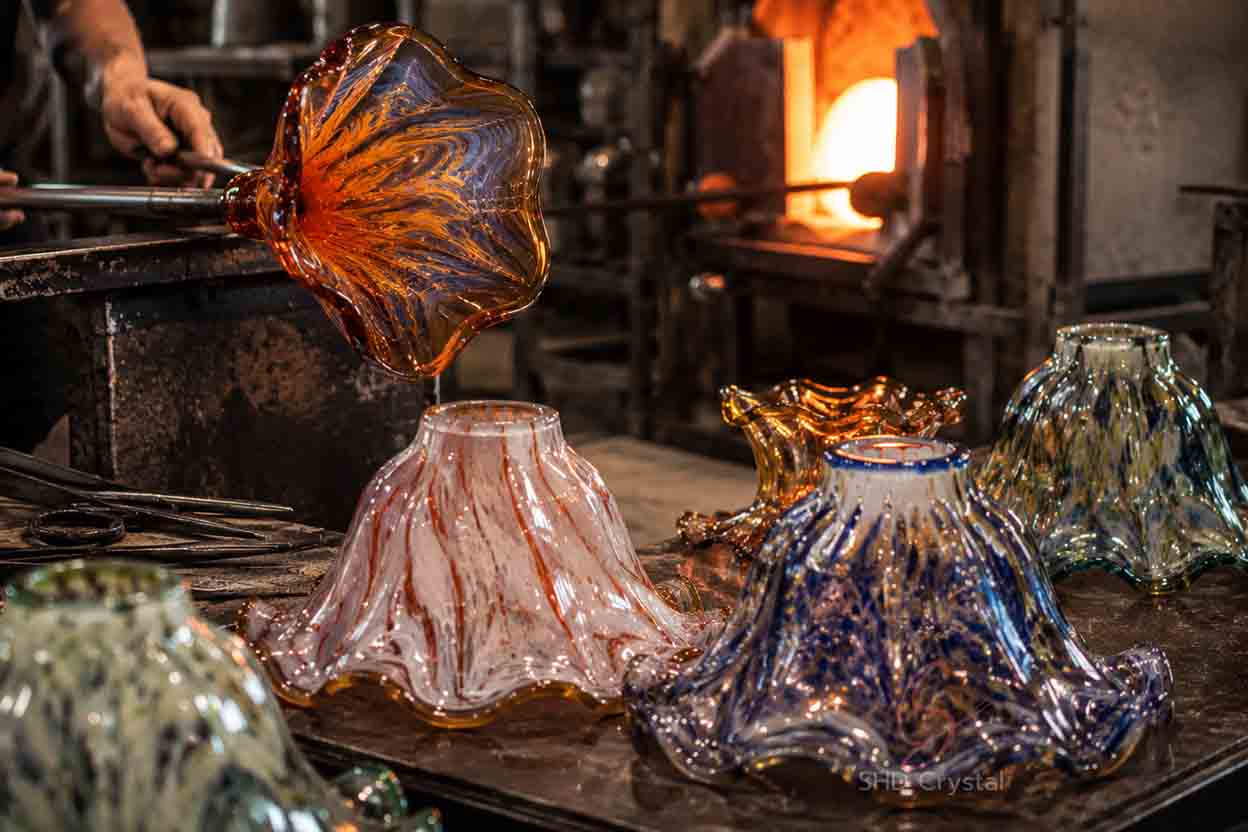
This is one reason Murano-inspired lighting remains closely associated with boutique hospitality, artistic interiors, heritage residences, and collectible decorative lighting programs.
Hand Blown Lighting Glass Creates Organic Optical Variation
One of the defining qualities of hand blown lighting glass is the absence of rigid mechanical uniformity. During hot forming, molten glass continuously responds to gravity, rotation speed, furnace temperature, and artisan movement. As a result, the finished lampshade often contains subtle wall transitions and optical shifts that would not appear in automated pressed production.
In Murano-style work, these variations become especially valuable because they help the light diffuse more naturally through the shade body. Thin areas may glow more brightly, while thicker regions create softer tonal density and layered reflections. This interaction between uneven glass thickness and illumination is central to the atmosphere associated with artistic Murano-inspired lighting.
Layered Color Fusion Produces Depth Rather Than Flat Decoration
Murano-inspired lighting rarely depends on surface paint alone. Many premium Murano-style artistic lampshade collections rely on layered color integration where pigments, frits, or colored glass gathers become embedded inside the molten glass during blowing. As the glass expands, the colors stretch organically through the form and create flowing transitions that feel painterly rather than graphic.
Common techniques may include:
-color overlay blowing
-internal swirl fusion
-clouded diffusion effects
-gold or silver leaf inclusion
-pulled color striping
-multi-layer transparent casing
These methods create optical depth that changes continuously under illumination. Because the color exists inside the material itself, the lampshade feels richer and more dimensional than coated decorative glass.
Sculptural Decorative Lighting Depends on Soft Contour Movement
Murano-style lighting often avoids sharp industrial geometry.Expanded floral openings, folded rims, flowing silhouettes, twisted neck transitions, and asymmetrical contour movement help the lampshade feel sculptural even when unlit. This softer shaping creates a more emotional visual effect than rigidly symmetrical lighting structures.
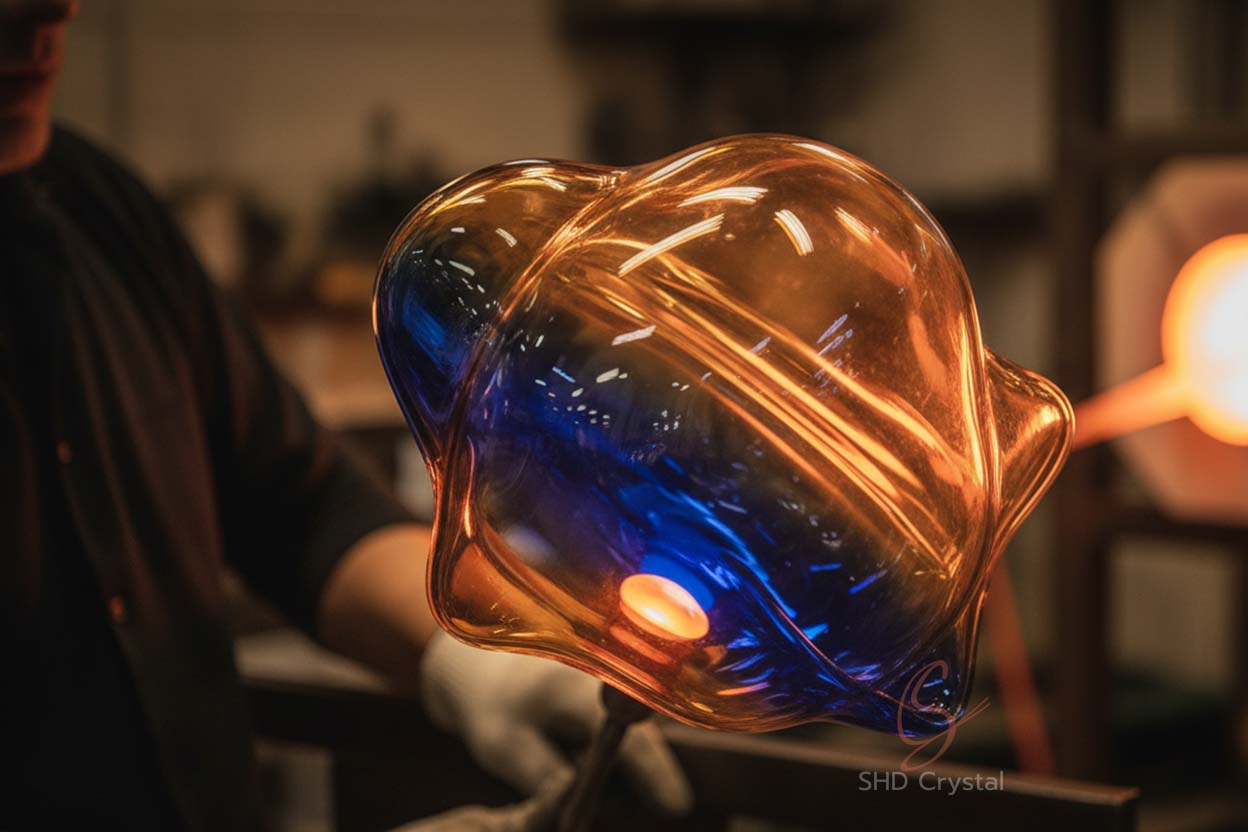
In many examples of sculptural decorative lighting, the glass behaves almost like fabric or flowing liquid once illuminated. Reflections move gradually across curved surfaces, helping the fixture appear lighter and more atmospheric within a space.
This sculptural softness is one reason Murano-inspired lighting pairs particularly well with hospitality interiors designed around layered ambiance rather than minimalism.
Surface Texture Alters How Light Travels Through the Glass
Texture plays an important role in Murano-style lighting.Smooth polished glass creates sharper reflections and cleaner transparency, while satin textures or internal diffusion soften the glow and spread light more gradually throughout the shade. Ribbing, optic molding, and hand-tooled surface movement can also increase visual depth once the fixture is illuminated.
Well-developed hand blown lighting glass balances these effects carefully. Excessive texture may weaken optical elegance, while overly flat surfaces can make the lampshade feel visually static. The most successful artistic shades usually maintain enough variation to activate the light without overwhelming the form itself.
Murano-Inspired Lighting Continues To Appeal in Hospitality Spaces
Despite changing design trends, Murano-style decorative lighting continues to remain commercially relevant because it creates atmosphere through craftsmanship rather than novelty.
Luxury restaurants, boutique hotels, cocktail lounges, and residential interiors often use artistic blown glass lighting to soften architectural rigidity and introduce warmth through layered reflection. The handmade character also gives the space a stronger sense of individuality compared with highly standardized decorative fixtures.
For this reason, many hospitality-focused lighting collections still incorporate Murano-inspired forms even when the surrounding interior style becomes more contemporary.
Conclusion
A refined Murano-style artistic lampshade combines hand-blown craftsmanship, layered color fusion, sculptural contour movement, and controlled optical variation to create lighting with stronger emotional and atmospheric presence. Through carefully developed hand blown lighting glass and expressive sculptural decorative lighting techniques, Murano-inspired lampshades continue shaping premium hospitality and decorative interiors through material artistry rather than industrial uniformity.
At SHD Crystal, artistic lighting glass production combines artisan hand blowing, layered color integration, hot-form sculpting, optical polishing, and decorative lighting refinement across custom hospitality and interior lighting collections. For brands developing premium Murano-style artistic lampshade programs, our team supports scalable handcrafted production while preserving the flowing visual character and optical depth associated with traditional artistic blown glass lighting.