
 > Blogs > Chinese Hand Blown Glass Factories: From Traditional Craftsmanship to OEM Production
Table of Contents
Chinese hand blown glass factories represent a unique combination of traditional craftsmanship and modern manufacturing capability. For brands developing distinctive glass products, hand blowing provides greater flexibility than standard industrial processes, especially when designs require irregular shapes, artistic details, or small-batch customization.
Unlike fully automated production methods that focus mainly on repeatability, handmade glass production relies on the skill of craftsmen to control temperature, movement, and shaping speed during forming. This allows designers to explore more expressive product structures while still achieving the consistency required for commercial projects.
Today, many international brands work with Chinese hand blown glass factories not only for craftsmanship but also for their ability to support product development, sampling, and customized production.
Why Brands Choose Chinese Hand Blown Glass Factories for Custom Projects
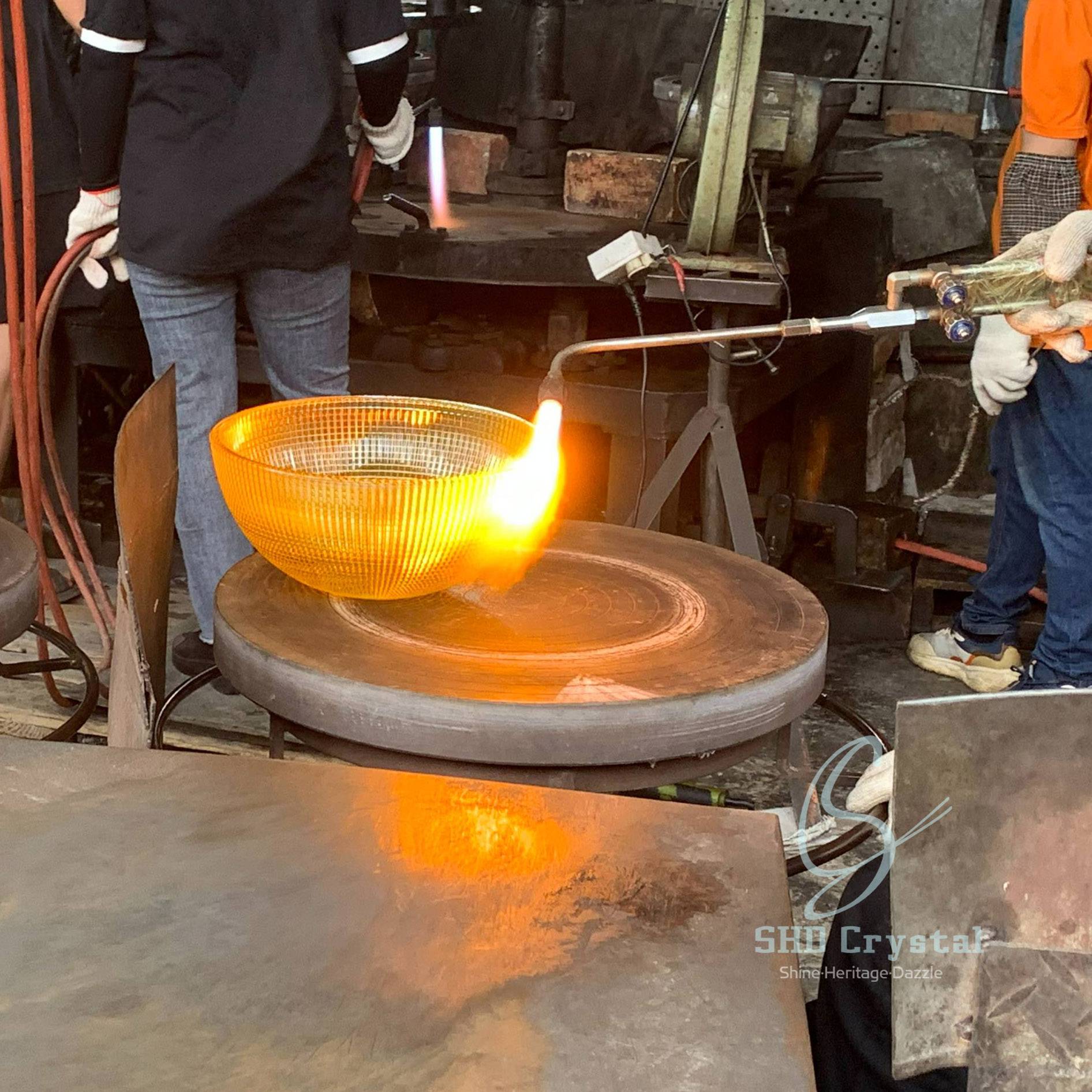
The value of hand blown glass lies in the relationship between design freedom and manufacturing experience.
Many glass products begin as simple concepts: a unique decorative object, a customized tableware collection, or a lighting piece with a special visual effect. Turning these ideas into finished products requires more than skilled glassblowers. It requires a manufacturing team that understands how a design can be transformed into a stable production process.
Professional factories evaluate important factors before production begins, including:
-Product proportions
-Glass thickness
-Structural balance
-Forming difficulty
-Cooling requirements
-Packaging protection
For brands seeking custom hand blown glass, these early evaluations help reduce unnecessary adjustments during sampling and ensure that creative designs remain practical for production.
How Hand Blown Glass Is Shaped from Molten Material
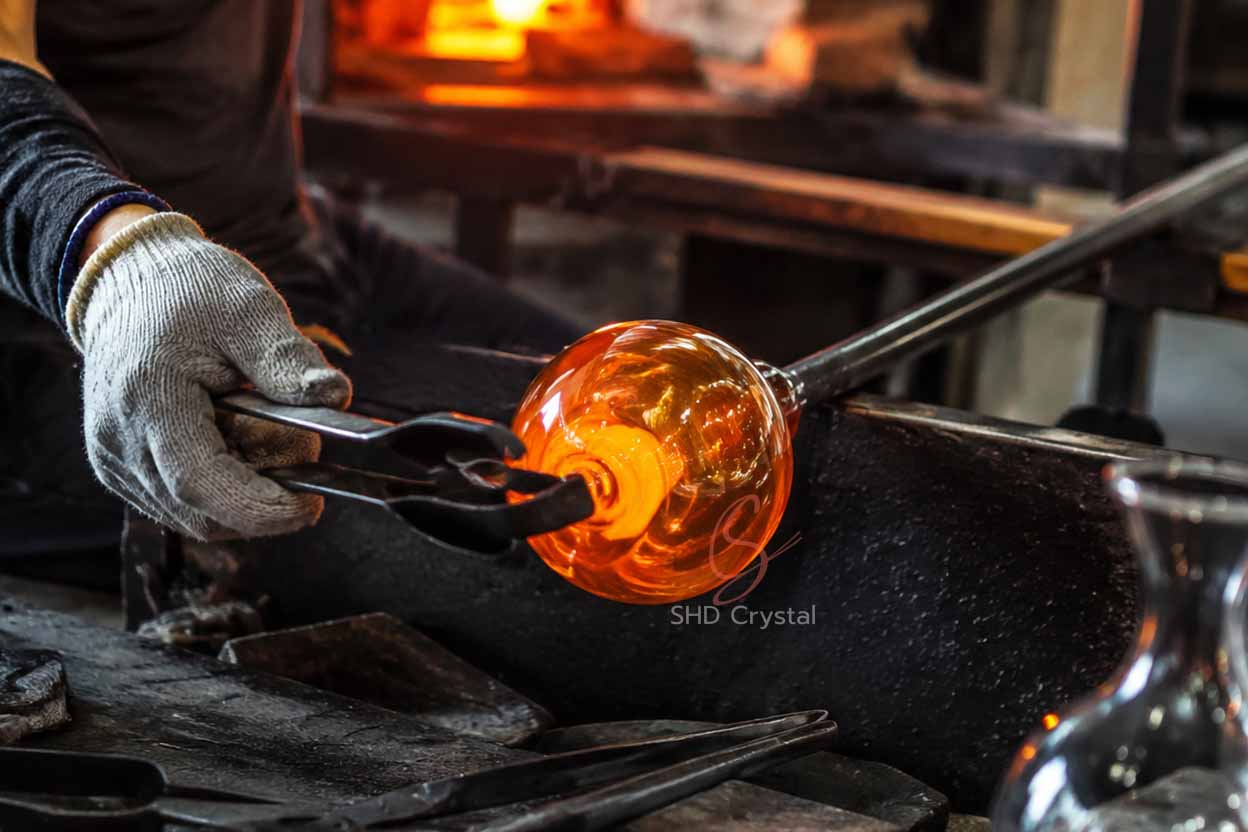
The production process begins when raw glass materials are melted at high temperatures until they become a workable molten state. A glassblower first collects a controlled amount of molten glass onto the blowpipe. The amount of material determines the potential size and weight of the final product. After gathering, air is introduced through the pipe to create an internal bubble. Continuous rotation helps maintain symmetry, while hand tools are used to adjust curves, openings, and surface details.
During this stage, craftsmen carefully control:
-Rotation speed
-Air pressure
-Heating frequency
-Tool pressure
-Working temperature
Unlike fixed industrial molding, hand blowing allows continuous adjustments during forming. This flexibility is particularly valuable for products with organic shapes or complex artistic structures.
The Difference Between Handmade Flexibility and Industrial Consistency
One common misunderstanding about handmade glass is that it cannot support commercial production. In reality, experienced hand blown glass manufacturers combine craftsmanship with structured quality control. Although every handmade piece may contain slight visual differences, professional production focuses on maintaining key specifications:
-Overall dimensions
-Product weight
-Functional performance
-Surface quality
-Structural stability
For OEM projects, the goal is not to remove every handmade characteristic. Instead, it is to control the elements that influence product quality while preserving the unique character created during the forming process.
A Custom Hand Blown Glass Project: From Concept to Finished Product
A typical example involved a client developing a series of decorative glass vessels with flowing curves and a lightweight appearance. The original design included several irregular transitions that could not be produced efficiently through standard molding. During the development stage, the production team reviewed the shape proportions, wall thickness, and forming sequence before creating samples. The first samples focused on:
- Overall silhouette
- Glass distribution
- Base stability
- Surface clarity
After adjustments to the shape and thickness, the final production method combined controlled hand blowing with finishing procedures to maintain consistency across the batch.
This type of project demonstrates why many designers choose Chinese hand blown glass factories when developing products that require both artistic expression and manufacturing support.
Combining Traditional Craftsmanship with Modern OEM Requirements
Traditional glass blowing alone is not enough for modern international projects. A reliable factory also needs experience in:
-Prototype development
-Production planning
-Quality inspection
-Surface finishing
-Export packaging
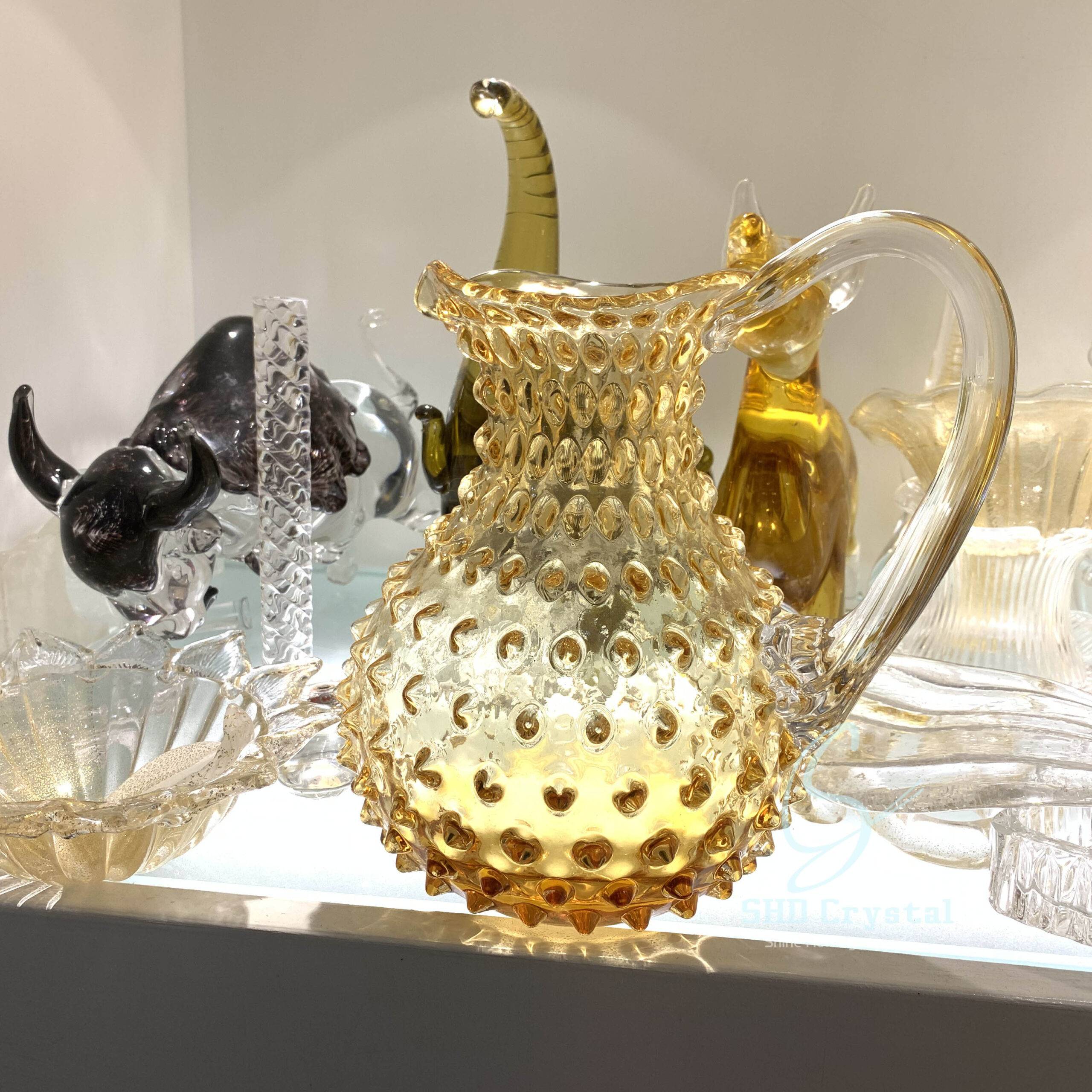
This combination allows handmade techniques to work within a professional OEM system. For brands, the advantage is not simply accessing traditional craftsmanship. It is gaining a production partner that understands how to balance design intention with practical manufacturing requirements.
Applications of Hand Blown Glass Production
Hand blown glass is commonly used for products where visual character and customization are important. Typical applications include:
Decorative Glass Objects Including:
-Sculptural ornaments
-Artistic vessels
-Collectible glass pieces
Custom Tableware Including:
-Wine glasses
-Specialty drinkware
-Unique serving pieces
Lighting Components Including:
-Decorative lampshades
-Artistic lighting covers
-Interior design elements
What to Consider When Selecting a Hand Blown Glass Manufacturer
Choosing the right partner requires evaluating more than production capacity. Important factors include:
- Craftsmanship Experience
Experienced craftsmen understand how different shapes respond during heating, blowing, and cooling.
- Development Capability
A capable factory should be able to review drawings, suggest improvements, and create practical samples.
- Quality Management
Even handmade products require inspection standards to ensure reliable results.
- Communication and Production Support
International OEM projects require clear communication throughout design confirmation, sampling, production, and shipment.
The Future of Chinese Hand Blown Glass Factories
The role of Chinese hand blown glass factories continues to evolve. While traditional craftsmanship remains the foundation, modern customers increasingly require a combination of creativity, engineering support, and reliable production management.
For brands looking for distinctive glass products, the ideal manufacturing partner is not only a supplier of handmade techniques but also a team capable of supporting the complete development process.
By combining skilled artisans with structured OEM experience, SHD Crystal continues to support customers developing unique glass products through flexible and customized manufacturing solutions.