
Blogpost keywords: 24 lead crystal content, crystal clarity, crystal glass craftsmanship
The 24 lead crystal content represents one of the most recognized standards in traditional crystal glass manufacturing. For decades, this composition has been associated with luxury drinkware, decorative objects, and premium table presentation because of the optical brilliance and weight it delivers.
Understanding the Value of 24 Lead Crystal Content in Crystal Glass
In classic crystal production, the percentage refers to the amount of lead oxide added to the glass formula. When glass contains 24 lead crystal content, the material achieves higher refractive properties compared with standard soda lime glass. This difference directly affects how light travels through the object.
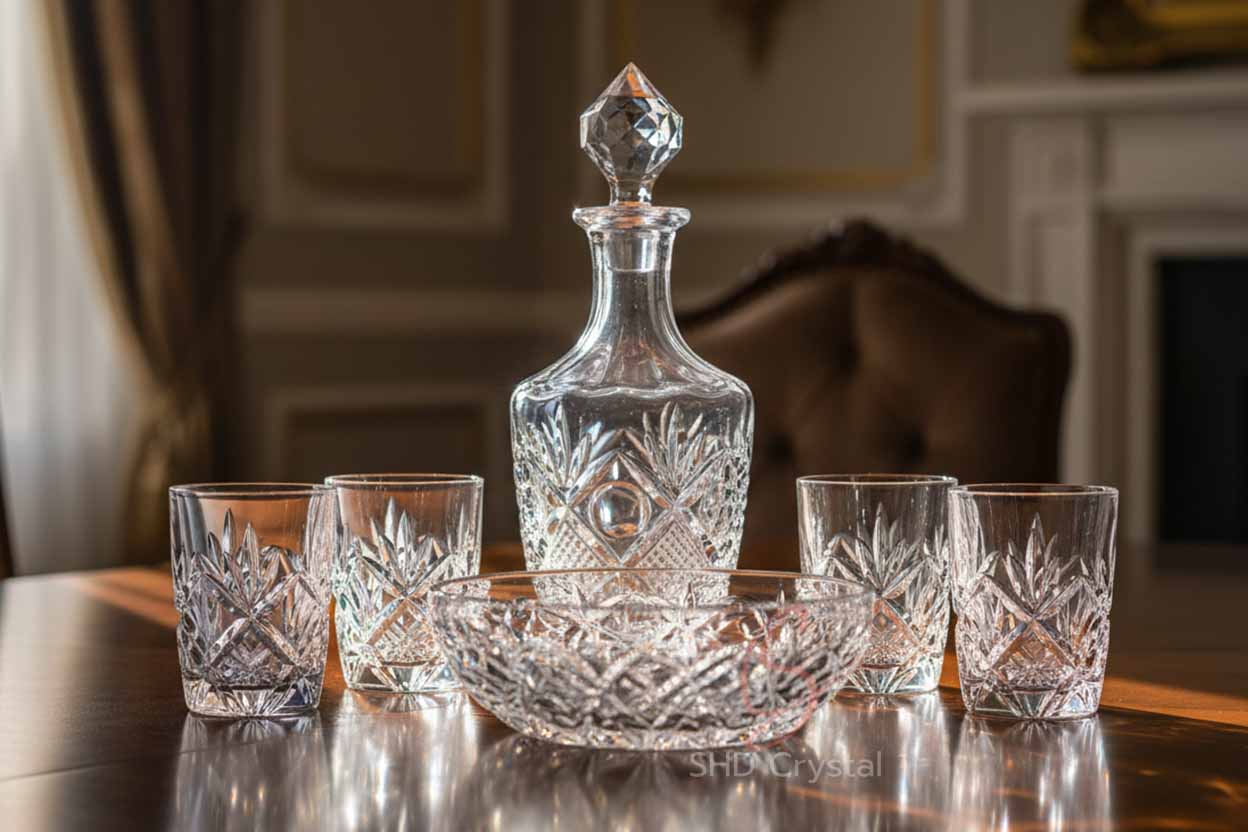
The result is enhanced crystal clarity and stronger light dispersion. Edges appear sharper, reflections become more dynamic, and the overall visual depth increases. These characteristics are particularly noticeable in cut glass patterns where facets interact with light from multiple directions.
Manufacturers that specialize in crystal glass craftsmanship carefully control furnace temperatures and cooling processes to maintain this level of optical performance.
Optical Characteristics and Visual Impact
One of the most noticeable effects of 24 lead crystal content is its ability to bend light. This property produces the signature sparkle often associated with high-end crystal.
Compared with conventional glass, the material also tends to feel heavier in hand. This added weight is not merely aesthetic; it contributes to a sense of substance and balance, particularly in drinkware such as whiskey tumblers or wine goblets.
When artisans apply traditional cutting techniques, crystal glass craftsmanship becomes even more evident. Precisely cut surfaces amplify crystal clarity, allowing light to travel across multiple planes of the object.
These visual qualities explain why 24 lead crystal content remains widely valued in luxury tableware and decorative pieces.
Typical Applications in Luxury Tableware
In hospitality and fine dining environments, items made with 24 lead crystal content are often reserved for premium service settings. Wine glasses, decanters, and barware benefit from the enhanced brilliance that crystal clarity provides under ambient lighting.
Decorative objects also take advantage of this material quality. Sculptural vases, bowls, and centerpieces produced through skilled crystal glass craftsmanship often rely on heavy bases and detailed cuts to maximize visual presence.
In interior styling, these objects frequently act as reflective accents. When placed near natural light sources or under directional lighting, their refractive surfaces contribute to layered visual texture.
Misconceptions Around Crystal Composition
A common misconception is that all crystal products share identical compositions. In reality, crystal formulas vary widely. The designation of 24 lead crystal content traditionally indicates a higher grade within classic European standards.
Another misunderstanding is that brilliance comes only from decorative cutting. While cutting enhances the effect, the underlying crystal clarity originates from the material composition itself. Without the correct formula and controlled cooling process, light dispersion would be significantly reduced.
For collectors and hospitality buyers, understanding these distinctions helps identify authentic examples of refined crystal glass craftsmanship.
Care and Handling Considerations
Because items containing 24 lead crystal content are often more delicate than standard glassware, gentle handling is recommended. Hand washing with mild detergent helps maintain surface brilliance and prevents micro-scratches.
Proper storage also plays a role in preserving crystal clarity. Avoid stacking pieces tightly, especially those with intricate cut surfaces. Soft separators or dedicated storage compartments help protect delicate edges created through crystal glass craftsmanship.
With appropriate care, these pieces can maintain their brilliance and structural integrity for many years.
Conclusion
The 24 lead crystal content continues to represent a hallmark of traditional crystal production, valued for its optical brilliance, weight, and ability to enhance crystal clarity. Combined with skilled crystal glass craftsmanship, this material composition supports some of the most visually striking forms in luxury glassware.
Custom Crystal Glass Production with SHD Crystal
For brands, designers, and distributors seeking premium crystal manufacturing, SHD Crystal provides specialized OEM development for high-end crystal glass products. With decades of experience in crystal glass craftsmanship, the company supports projects that require precise control of material composition, optical clarity, and finishing quality.
SHD Crystal offers OEM solutions for products developed with 24 lead crystal content, including decorative vases, drinkware, centerpieces, and custom tableware collections. From concept design and mold development to sample validation and large-scale production, the manufacturing process focuses on maintaining consistent crystal clarity and refined finishing standards.
By combining traditional glassmaking expertise with modern production capabilities, SHD Crystal works with international brands and hospitality projects that demand distinctive crystal products and reliable long-term manufacturing support.