
Blogpost keywords: crystal lead glassware, lead-free bowls, sustainable crystal glass
Crystal lead glassware has long been associated with brilliance, weight, and refined craftsmanship. For centuries, traditional crystals relied on lead oxide to achieve the optical sparkle and clarity that defined luxury glass objects. However, the story of glassmaking did not stop with traditional formulas. Over time, artisans, researchers, and manufacturers began developing alternatives that preserved the beauty of crystal while eliminating lead from the composition.
Today, the evolution of crystal lead glassware reflects a shift toward safer materials, improved sustainability, and broader design possibilities. Lead-free crystal technology now supports a wide range of products, from decorative pieces to functional tableware such as lead-free bowls used in modern dining environments.
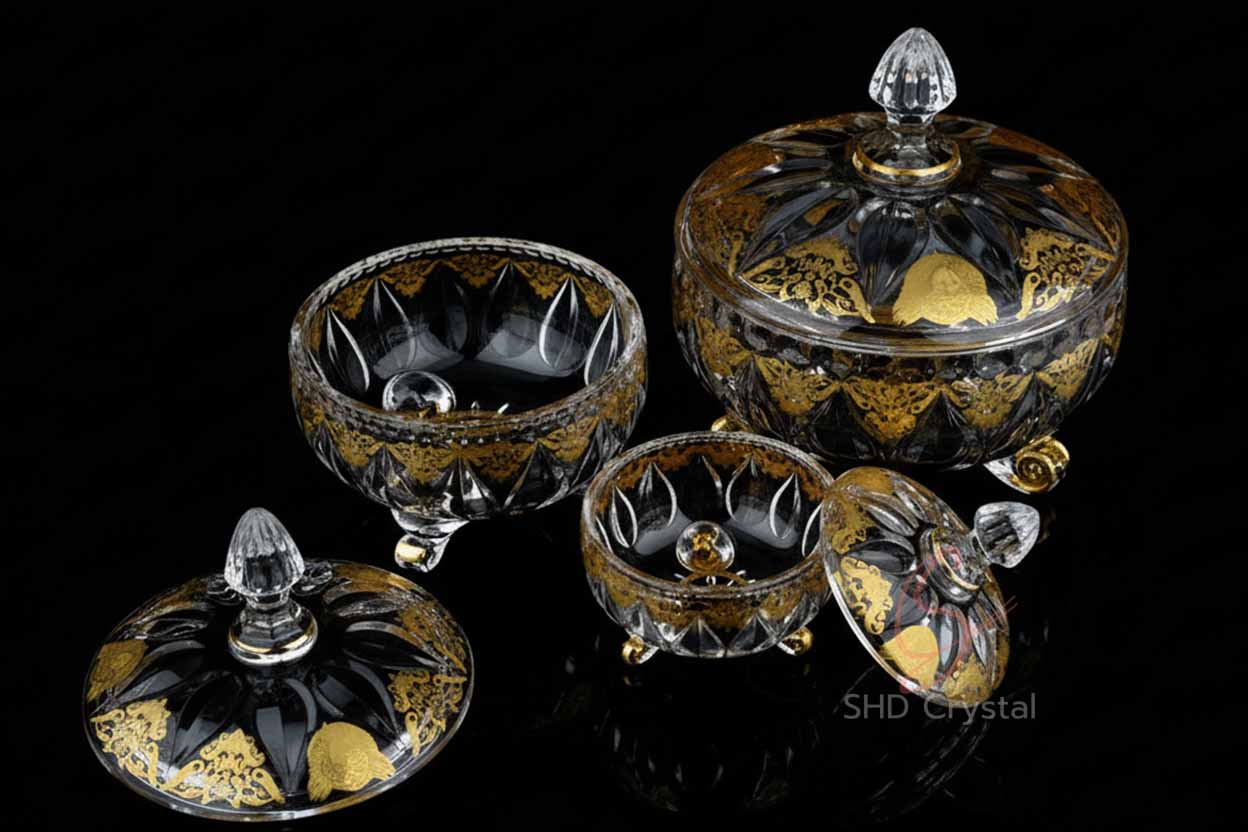
Early Origins of Crystal Lead Glassware and the Search for Alternatives
The origins of crystal lead glassware date back several centuries when glassmakers discovered that adding lead oxide to molten glass significantly improved brilliance and workability. Lead allowed artisans to cut sharper facets and produce the shimmering optical effects associated with classical crystal.
For a long time, this formula dominated the industry. Traditional crystal lead glassware became the standard for luxury drinkware, decorative vessels, and ceremonial tableware. However, as scientific understanding of materials improved during the twentieth century, researchers began exploring ways to achieve similar clarity without relying on lead.
The motivation behind these efforts was not purely regulatory. Many glassmakers were also interested in improving sustainability and production efficiency. Experiments with alternative mineral compositions eventually led to the development of modern lead-free crystal formulations.
These early innovations laid the foundation for products such as lead-free bowls and other forms of sustainable crystal glass designed for contemporary use.
Discovering Lead-Free Crystal Formulations
The development of lead-free crystal required careful experimentation with different mineral additives. Instead of lead oxide, glass technologists began incorporating elements such as barium oxide, zinc oxide, and potassium oxide to achieve comparable optical properties.
Achieving the right balance was not simple. Early prototypes often lacked the brilliance or cutting performance expected from crystal lead glassware. Over time, however, improvements in furnace temperature control and raw material purity allowed manufacturers to refine these formulas.
The result was a new generation of sustainable crystal glass capable of delivering impressive transparency, durability, and visual depth. These materials made it possible to produce elegant objects such as lead-free bowls that combined aesthetic refinement with safer material composition.
Comparing Traditional Crystal and Modern Lead-Free Designs
While traditional crystal lead glassware remains valued for its heritage and optical brilliance, modern lead-free crystal offers several practical advantages.
One key benefit is improved environmental compatibility. Sustainable crystal glass formulations avoid heavy metals while maintaining high transparency and strength. This makes them suitable for products intended for everyday use, including tableware and serving pieces.
Another advantage involves durability. Modern glass engineering techniques allow lead-free bowls and other crystal objects to maintain stable wall thickness and structural integrity. These improvements help reduce breakage during transportation or frequent handling.
In many cases, the visual differences between traditional crystal lead glassware and lead-free crystal are minimal. Advances in polishing, cutting, and molding techniques ensure that modern products retain the elegant appearance associated with crystal craftsmanship.
Applications in Contemporary Dining and Interior Design
Today, crystal lead glassware appears in a wide range of environments. Restaurants, hotels, and private residences all incorporate crystal pieces into table presentation and decorative styling.
Lead-free bowls have become particularly popular because they combine functionality with refined visual appeal. Large serving bowls made from sustainable crystal glass can display layered salads, fruits, or desserts while maintaining a sense of elegance on the dining table.
Decorative applications are equally important. Crystal vases, centerpieces, and sculptural vessels often rely on the reflective qualities of crystal lead glassware to interact with surrounding light. When placed near windows or under soft lighting, these pieces contribute subtle highlights and reflections that enhance interior spaces.
Client Applications and Project Examples
Hospitality projects frequently integrate crystal lead glassware into large-scale dining environments. For example, boutique hotels may use coordinated collections of sustainable crystal glass items such as lead-free bowls, beverage vessels, and serving trays to create a cohesive dining aesthetic.
Similarly, specialty retailers and design brands often develop custom tableware collections that emphasize clarity, weight, and minimal design language. These projects typically require reliable manufacturing partners capable of maintaining consistent material quality.
In such collaborations, crystal lead glassware becomes more than a functional object. It becomes part of the brand identity expressed through dining presentation and interior styling.
Conclusion
The evolution of crystal lead glassware reflects centuries of innovation within the glassmaking tradition. From early lead-based formulas to modern sustainable crystal glass technologies, artisans and manufacturers have continually refined the balance between beauty and practicality.
Today, products such as lead-free bowls demonstrate how contemporary glass design can preserve the elegance of crystal while meeting modern expectations for safety, durability, and environmental responsibility.
Developing Custom Crystal Glass Collections
For brands and designers seeking specialized crystal products, manufacturers such as SHD Crystal support OEM development of high-end crystal lead glassware collections. With extensive experience in crystal glass production, SHD Crystal collaborates with international clients to develop decorative vessels, tableware, and custom lead-free bowls tailored to specific design concepts.
From initial design consultation and mold development to sample validation and large-scale manufacturing, the company focuses on consistent optical quality and refined finishing. These capabilities allow brands to create distinctive sustainable crystal glass products suited for hospitality projects, retail collections, and premium interior applications.