
Blogpost keywords: custom glass bottle factory, product packaging development, wholesale glass containers
Custom glass bottle factory support helps product packaging development and wholesale glass containers serve retail-ready brands.
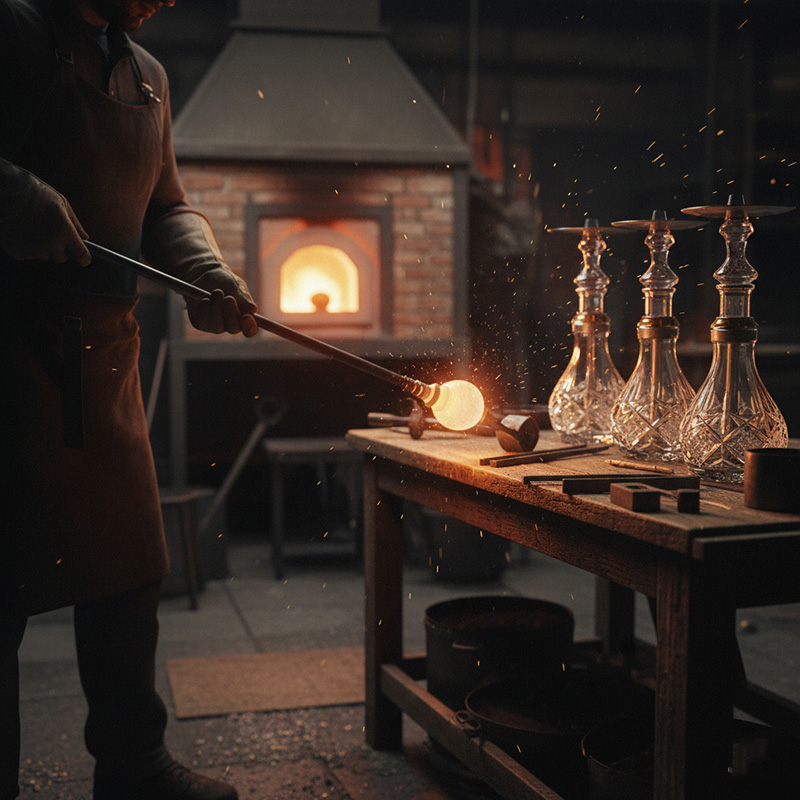
Custom Glass Bottle Factory Support Helps Brands Build Packaging From the Ground Up
Custom glass bottle factory cooperation is valuable for brands that need packaging to be more than a standard container. Glass bottles are used across perfume, beverage, candle, diffuser, cosmetic, food, and gift markets, but each category has different requirements for shape, closure, decoration, safety, and shipping. For B2B buyers, the right factory should help connect creative ideas with production limits, cost control, and repeat-order stability.
Custom Glass Bottle Factory Projects Begin With the Product, Not the Mold
A reliable custom glass bottle factory should first understand what the bottle will hold and how it will be sold. A perfume bottle may need a precise neck finish and spray pump compatibility, while a beverage bottle may require closure accuracy, filling-line suitability, and stronger carton planning. A candle jar needs heat-aware glass structure, and a diffuser bottle may need a stable base with a suitable mouth opening.
This is why product packaging development should begin with the real use case. Buyers should clarify whether the bottle is for retail shelves, e-commerce, hotel amenities, promotional gifts, or private label supply. Each channel creates different expectations for appearance, durability, and packaging protection.
Wholesale glass containers can be selected from existing molds or developed through deeper customization. Existing molds are often practical for faster launches, while custom molds are better for brands that need exclusive shapes or long-term product identity.
What Buyers Should Prepare Before Factory Discussion
Before contacting a custom glass bottle factory, buyers should prepare basic project details such as target capacity, bottle height, diameter, glass color, closure type, decoration method, expected quantity, and packing requirements. Reference images are useful, but they should not replace technical information.
A common mistake is asking for a custom bottle based only on a visual concept. A design may look attractive but become difficult to produce if the base is unstable, the neck is too narrow, the wall thickness is uneven, or the decoration area is too curved. Early technical discussion helps reduce unnecessary sampling revisions.
For product packaging development, buyers should also consider accessories. Caps, pumps, corks, lids, collars, labels, boxes, and inserts all affect the final package. A bottle that looks good alone may feel incomplete if the accessories do not match its style or function.
Customization Options That Add Practical Brand Value
A custom glass bottle factory can usually support multiple customization methods, including glass color adjustment, frosting, spraying, screen printing, hot stamping, decals, embossing, debossing, custom caps, and gift-ready packaging. The best choice depends on the product category, order quantity, budget, and desired brand image.
Wholesale glass containers do not always need dramatic changes to feel custom. A cleaner glass color, better cap match, subtle logo placement, or improved carton design can make the final product look more professional. For many brands, small improvements are easier to scale than overly complex design features.
Product packaging development should also include repeat-order planning. Keeping approved samples for glass color, decoration, closure fit, and packing method helps maintain consistency when the brand places future orders.
Quality Control and Export Packaging Matter
A professional custom glass bottle factory should provide clear communication about sampling, MOQ, production lead time, inspection points, and shipping protection. Quality checks should include glass clarity, surface defects, wall thickness, bottle mouth accuracy, base stability, closure fit, decoration position, and carton strength.
For wholesale glass containers shipped internationally, packaging is not a minor detail. Inner dividers, trays, protective wrapping, reinforced cartons, pallet loading, and container planning can help reduce breakage, scratches, and customer complaints.
Conclusion
Custom glass bottle factory support helps brands turn packaging ideas into practical, repeatable, and market-ready glass products. When buyers connect design goals with real product use, accessory matching, quality inspection, and export-safe packing, product packaging development and wholesale glass containers become easier to manage at commercial scale.
Build a More Reliable Glass Packaging Project
For brands planning a new bottle line, working with a custom glass bottle factory is most effective when creative direction and production details are shared together. Providing target use, capacity, bottle reference, closure preference, decoration needs, order volume, and packing standards can help the supplier recommend better solutions for product packaging development and wholesale glass containers.