
Blogpost keywords: custom ice cream glass cups, dessert serving glassware, commercial ice cream bowls
Custom ice cream glass cups are often viewed as simple serving containers, yet their influence extends far beyond holding a frozen dessert. In cafés, restaurants, hotels, and dessert boutiques, glassware shapes how customers perceive portion size, product quality, and overall presentation.
Two desserts made from the same ingredients can create entirely different impressions depending on how they are served. The choice of vessel affects visual appeal, handling comfort, menu consistency, and operational efficiency. For businesses seeking to create memorable dessert experiences, selecting appropriate glassware becomes part of the service strategy rather than a purely decorative decision.
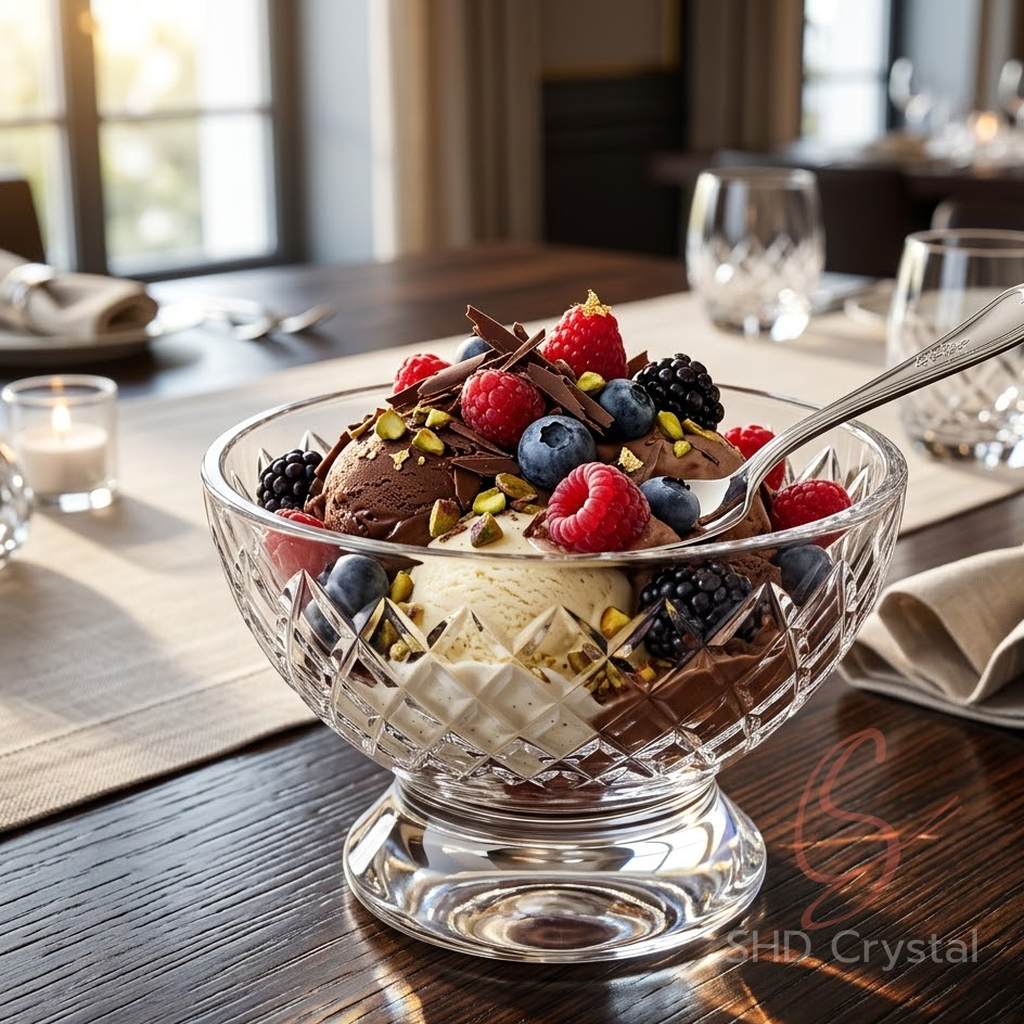
Why Custom Ice Cream Glass Cups Matter Beyond Appearance
The growing popularity of visually driven dining experiences has increased the importance of presentation-focused serving solutions. Customers frequently encounter desserts through photographs before they experience them in person, making presentation a significant part of product perception.
This is where custom ice cream glass cups play an important role. The shape, transparency, and proportions of the glass influence how layers, toppings, sauces, and textures are displayed.
Unlike opaque serving vessels, clear dessert serving glassware allows the product itself to become part of the presentation. Layered desserts, fruit inclusions, colorful sauces, and decorative elements remain visible from multiple angles, helping create a more engaging visual experience.
The most successful dessert glassware selections are rarely driven by appearance alone. Operators often evaluate how a vessel influences customer perception of portion size, how clearly it showcases the dessert itself, and how comfortably it performs during daily service. Practical concerns such as stability, durability, and storage efficiency become increasingly important in busy commercial environments, particularly when multiple locations require a consistent presentation standard. By balancing visual impact with operational requirements, businesses are more likely to select glassware that remains effective long after its initial aesthetic appeal.
How Shape Influences Customer Perception
The geometry of a serving vessel can significantly influence how a dessert is perceived. Tall custom ice cream glass cups often create the impression of generous portions while using relatively controlled ingredient quantities. Wide bowls encourage a more abundant visual presentation and provide greater surface area for toppings.
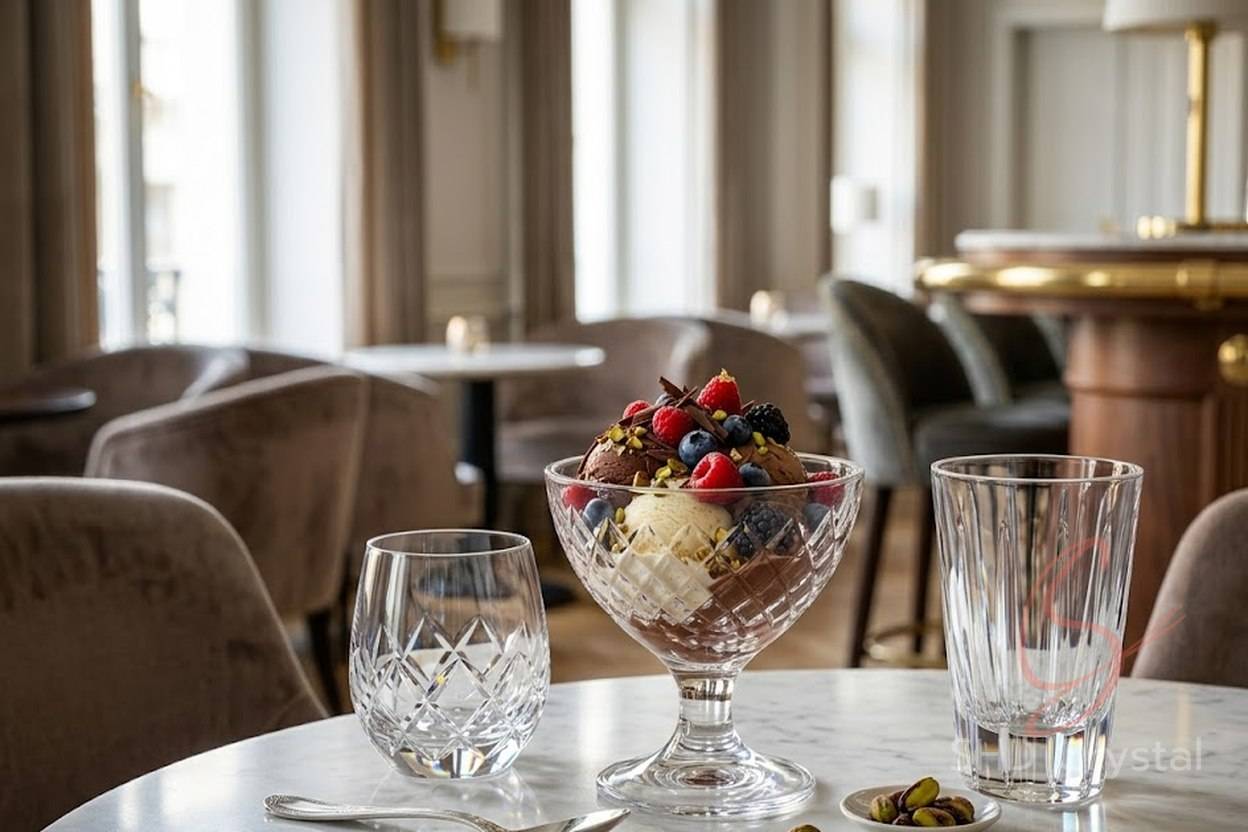
Footed dessert cups introduce elevation, helping desserts stand out within table settings. Layered glass designs emphasize visual depth and can transform simple ingredients into more premium-looking menu items. For hospitality businesses, these subtle differences contribute to customer perception before the first spoonful is served.
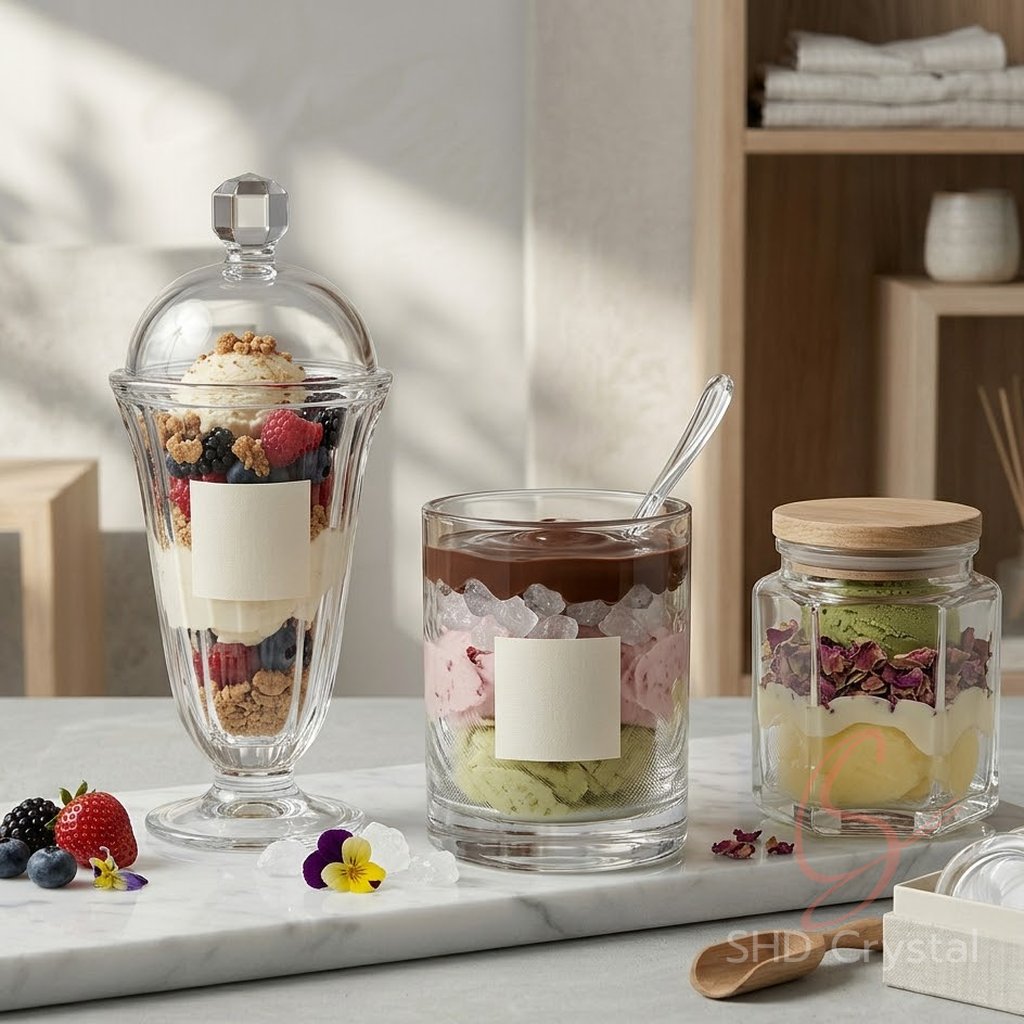
Why Commercial Operations Require Different Glassware Priorities
Consumer purchasing decisions and commercial purchasing decisions rarely follow the same criteria. In commercial environments, commercial ice cream bowls must withstand frequent handling, repeated washing cycles, and daily operational demands. Appearance remains important, but durability and workflow efficiency become equally valuable. Restaurant operators often evaluate factors such as:
- Ease of stacking
- Storage efficiency
- Dishwasher compatibility
- Replacement frequency
- Serving speed
- Consistency across multiple locations
A design that works well for occasional home use may not perform effectively within a high-volume commercial environment.
From Dessert Display To Daily Service
The best glassware solutions support both presentation and practical operation. For example, a visually attractive design may become less desirable if it slows service speed or occupies excessive storage space. Likewise, an elegant shape that is difficult to handle during busy service periods may create unnecessary operational challenges.
Well-designed dessert serving glassware balances visual impact with usability. Comfortable handling, stable placement, and practical cleaning requirements all contribute to a smoother service workflow. These considerations become increasingly important as businesses expand across multiple locations where consistency is expected from one venue to another.
Common Mistakes When Selecting Dessert Glassware
One of the most common mistakes is selecting glassware based solely on appearance.A visually impressive vessel may not align with actual menu requirements. Excessively large containers can create portion-control challenges, while highly specialized shapes may complicate storage and cleaning procedures.
Another frequent oversight involves failing to consider future operational growth. A design that functions well for a single location may become difficult to manage when inventory, replacement needs, and storage requirements increase.
When sourcing commercial ice cream bowls, considering both presentation goals and operational realities often leads to more sustainable long-term decisions.
Conclusion
Successful dessert presentation relies on more than ingredients alone. Custom ice cream glass cups influence how desserts are perceived, served, photographed, and experienced by customers. When presentation objectives, operational requirements, and customer expectations are considered together, glassware becomes an active contributor to both brand identity and service performance.
Supporting Customized Dessert Serving Solutions
For businesses developing new dessert concepts or refining existing menus, working with an experienced glassware manufacturer can simplify the process of aligning presentation goals with operational requirements. Custom ice cream glass cups often require careful consideration of serving style, durability expectations, storage efficiency, and brand consistency.
With experience in dessert serving glassware and commercial ice cream bowls, SHD Crystal supports projects ranging from design development and prototype evaluation to scalable production, helping businesses create glassware solutions that perform effectively in real service environments while maintaining a consistent visual identity.