
Custom brown medicine bottles are widely used because they combine a professional appearance with practical product protection, but the best packaging choice is never based on color alone. For healthcare, wellness, laboratory, and supplement buyers, the bottle must also suit the product, closure, filling method, labeling needs, and distribution plan. In real sourcing, a bottle that looks correct in a catalog still needs to perform correctly on a filling line and inside a shipping carton.
How Custom Brown Medicine Bottles Balance Material Protection And Automated Production
Brown glass is often chosen because it helps reduce light exposure compared with clear glass, which is why amber glass medicine bottles remain common for liquids, tablets, capsules, tinctures, and selected laboratory products. At the same time, pharmaceutical glass packaging is usually expected to look organized, stable, and easy to handle. That means buyers should evaluate the glass body, neck finish, cap system, and packing format together rather than treating them as separate details.
Standard Bottles Support High-Efficiency Automated Production
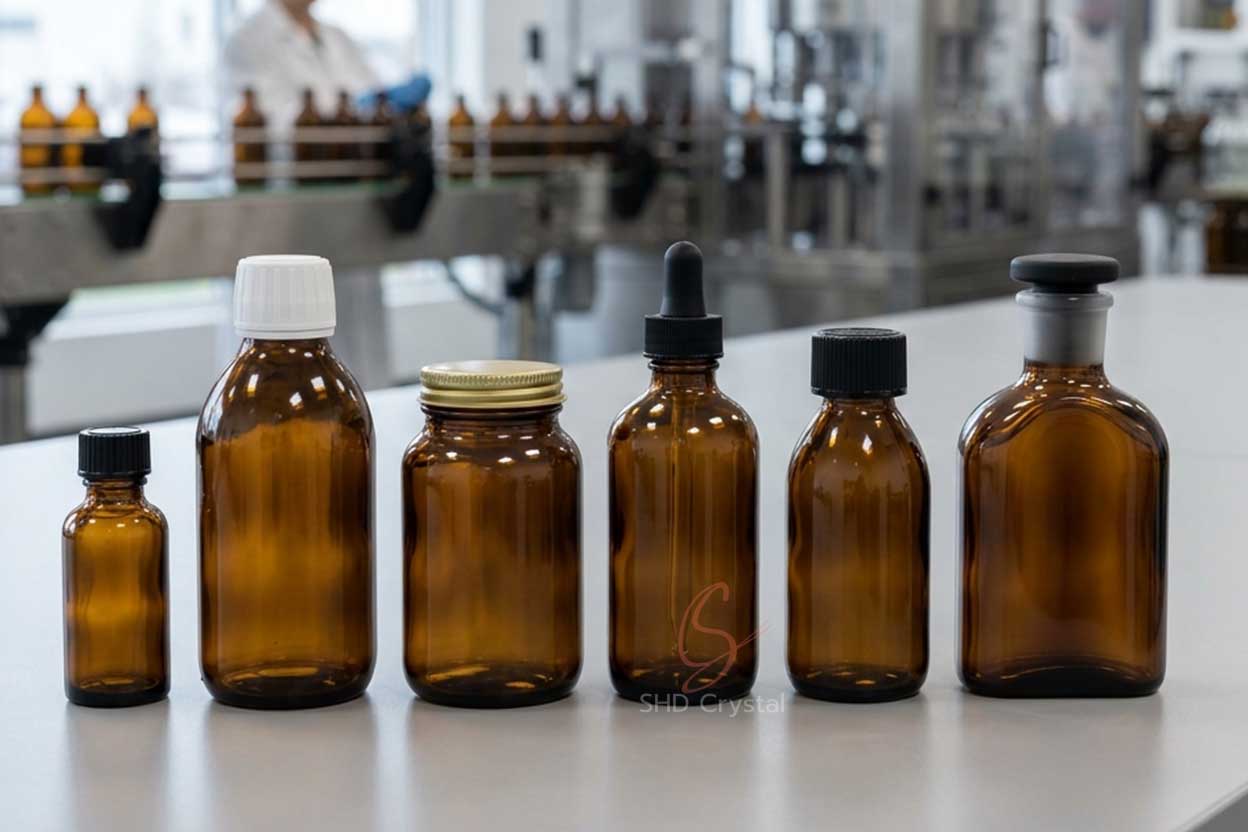
Many custom brown medicine bottles begin with standard bottle families such as Boston round bottles, syrup bottles, dropper bottles, and wide-mouth packer bottles. These standard formats are usually produced on automated molded-glass lines, which makes supply more efficient and repeatable. For buyers, this route often means shorter development time, easier closure matching, and more predictable packing.
Standard does not mean generic. Amber glass medicine bottles made from existing molds can still be differentiated through cap color, printed logos, label layout, carton design, or secondary packaging. This is often the most practical option when the priority is supply stability rather than dramatic shape innovation.
Nonstandard Designs Still Need Manufacturing Discipline
Some brands want a more distinctive bottle profile, a recessed label panel, a proprietary shoulder shape, or a special grip area. That is where nonstandard development begins. A new design may still run on automated production, but it requires more careful mold review and process adjustment.
In pharmaceutical glass packaging, unusual features can affect glass flow, wall thickness transition, neck accuracy, and bottom stability. If the shoulder is too sharp or the body is too narrow, the bottle may become harder to form consistently. A good custom brown medicine bottles project therefore starts with a practical question: how much design change is truly necessary, and what will it cost in tooling, inspection, and packing complexity?
The Closure System Matters As Much As The Bottle
A common mistake is to focus on the bottle body and assume the cap can be decided later. In reality, closure fit is critical. Amber glass medicine bottles may use screw caps, child-resistant caps, droppers, tamper-evident systems, or inner plugs. Each option requires accurate neck finish control.
This is why pharmaceutical glass packaging should always be reviewed as a container-and-closure system. Leakage, loose caps, and assembly problems often begin with small tolerance issues that are not obvious in photos. Buyers should confirm neck finish, closure type, seal requirement, filling method, and destination market before sampling begins.
Broad Applications Create Real Design Space
Custom brown medicine bottles are used across pharmaceuticals, nutraceuticals, herbal extracts, essential oils, veterinary products, laboratory storage, and healthcare retail packaging. That broad application range creates real design space. A liquid medicine bottle may need a narrow mouth and measuring cap. A tablet bottle may need a wider mouth and stronger counting efficiency. A tincture bottle may require a dropper format, while a laboratory bottle may prioritize clear labeling and compact storage.
Even so, decoration should remain practical. Screen printing, embossed marks, frosted finishes, or colored caps may support branding, but readability and inspection should never be reduced for the sake of appearance.
Choosing The Right Route For Reliable Supply
Custom brown medicine bottles work best when protection needs, closure fit, glass consistency, labeling space, and automated production logic are reviewed together. The right bottle is not simply the darkest or most attractive one. It is the one that protects the contents, supports filling efficiency, and remains stable across repeat orders.
Planning A Better Pharmaceutical Packaging Program
For buyers developing amber glass medicine bottles or broader pharmaceutical glass packaging lines, custom brown medicine bottles become easier to source when the product brief is clear from the beginning. Capacity, bottle style, neck finish, closure type, label size, order quantity, and packing method all help a manufacturer recommend whether a standard automated format or a more customized route is the better solution.
Read the original article on custom crystal glass manufacturing: https://shdcrystal.com/blogs/custom-brown-medicine-bottles/