
At SHD Crystal, crystal glass surface finishing is where formed glass begins to take on its final character. Shaping creates the structure, but finishing defines how the surface looks, feels, and performs in real use. A product may have the correct silhouette after forming, yet still require careful refinement before it delivers the clarity, edge quality, and visual consistency expected in premium glassware or decorative crystal.
Crystal Glass Surface Finishing Should Match Product Structure And Use
Not every product needs the same finishing route. A heavy crystal vase, a stemmed serving piece, a decorative ornament, and a hospitality item all place different demands on the surface. That is why crystal glass surface finishing should be planned according to product shape, wall thickness, intended use, and the areas customers touch or see most clearly.
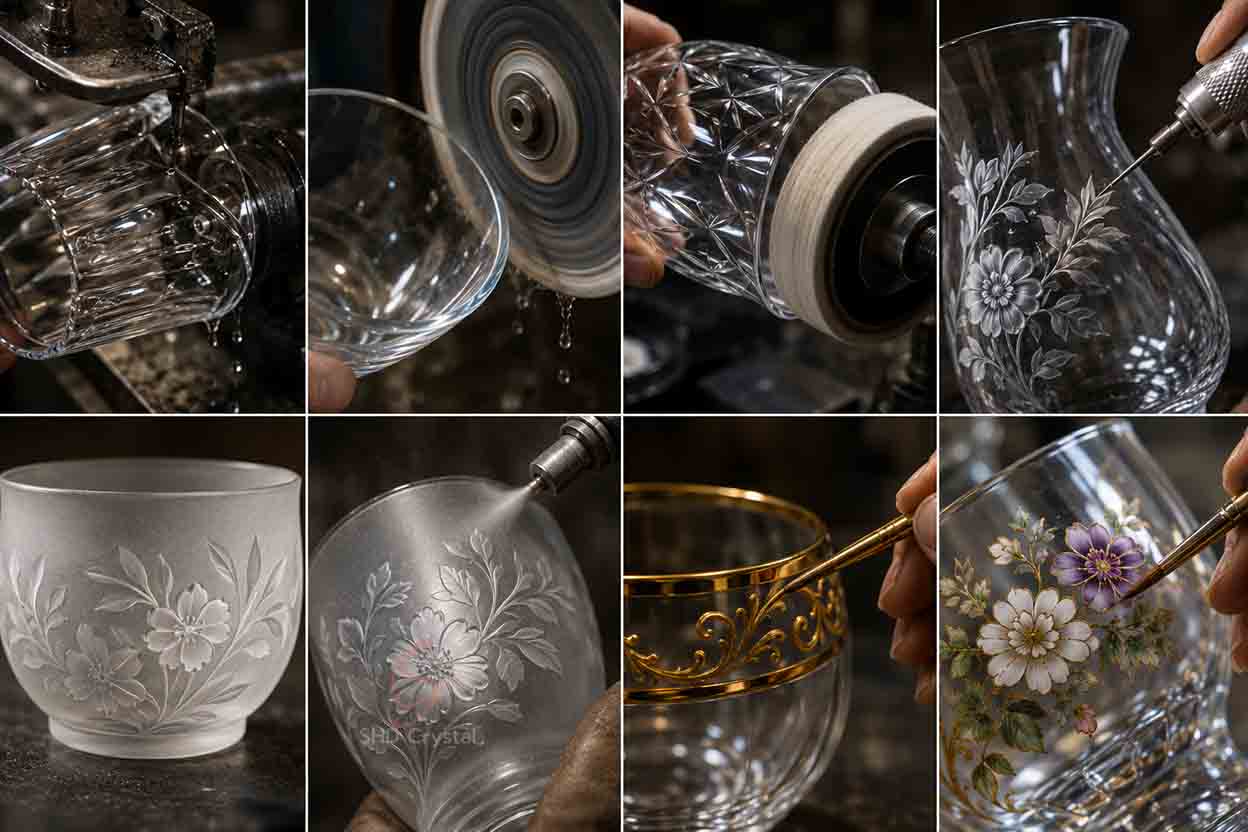
Some products require higher visual brilliance. Others need more attention on edge comfort, contact safety, or repeat handling. In our OEM work, we review whether the product will be mainly decorative, frequently handled, or exposed to stronger lighting, because these factors influence which crystal surface treatment methods are the most practical.
A common misconception when sourcing is the belief that transparent products inherently look cheap and low-end. In reality, surface quality depends on how well the finishing stage controls minor marks, edge smoothness, and reflection consistency.
Surface Quality Depends On Controlled Finishing Variables
Several production variables influence the final result. Wall thickness transition, polishing pressure, cooling stability, and manual finishing variation all affect how a surface responds during processing. If pressure is too aggressive, the product may develop uneven gloss or inconsistent optical effects. If finishing is too light, minor marks may remain visible, especially under display lighting.
This is why glass polishing techniques require more than visual judgment alone. Curved bowls, narrow openings, engraved sections, and detailed rims all respond differently during finishing. A flat area may polish evenly, while a tighter contour may require more careful handling to avoid inconsistent reflection or edge distortion.
At SHD Crystal, our team pays particular attention to areas where the design naturally creates finishing sensitivity. Deep cuts, curved shoulders, and detailed transitions often need more controlled processing than simple cylindrical or flat-walled products. Small adjustments during this stage can improve both the appearance and the consistency of the finished batch.
Glass Polishing Techniques Need To Balance Refinement And Production Stability
Premium appearance is important, but the best finishing plan also has to work reliably in production. Glass polishing techniques should improve clarity and touch without creating unnecessary instability, excessive labor variation, or avoidable cosmetic defects.
This is where engineering trade-offs become important. A highly refined finish may enhance brilliance, but it can also increase processing time and raise production cost. More complex designs may look impressive, yet they often reduce finishing efficiency compared with simpler surfaces. In custom projects, buyers should understand that the most visually ambitious finish is not always the most practical one for larger production volumes.
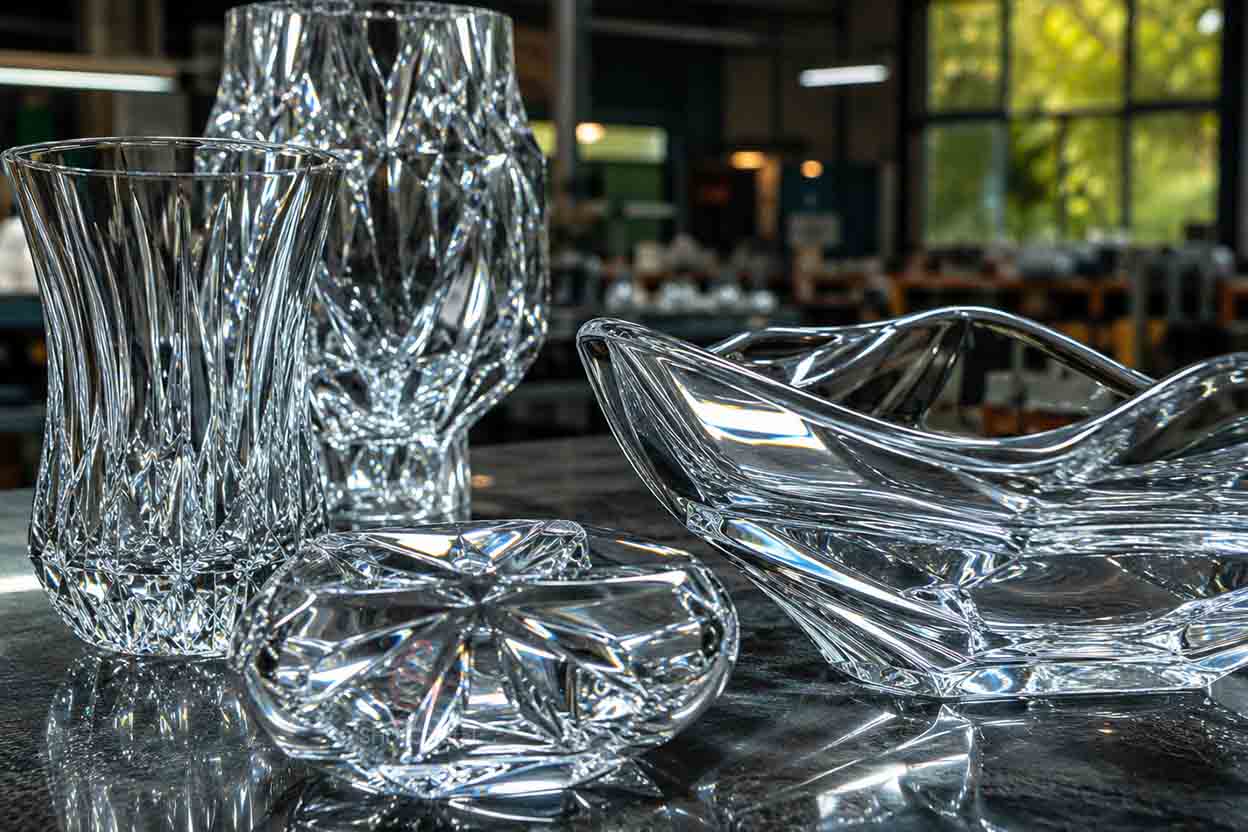
For hospitality or tableware projects, durability and batch consistency may matter more than extremely elaborate finishing. For decorative crystal, visual effect may carry more weight. The right balance depends on how the product will actually be used after delivery.
Crystal Surface Treatment Methods Should Be Considered Early In Development
Finishing should not be treated as an afterthought. When product development begins, the design team should already consider how the chosen geometry, thickness, and edge details will affect later processing. Delaying that discussion often leads to avoidable revisions once sampling starts.
In custom development, we usually review the product shape before recommending suitable crystal surface treatment methods. A thin ornament and a heavy sculptural piece may require different finishing priorities, even if both are made from clear crystal. Early review helps determine whether the design supports efficient processing and whether the expected surface result is realistic for volume production.
This is also an important buyer insight. Instead of asking only whether a surface can be polished, buyers should ask how repeatable the result will be across multiple production cycles. Stable finishing processes are essential for brands that expect sample-to-bulk consistency.
Batch Consistency Matters As Much As Sample Quality
An excellent sample does not guarantee a reliable production run. For larger orders, crystal glass surface finishing must remain consistent across repeated batches rather than producing one especially refined piece.
That is why we evaluate finishing not only by appearance, but also by process repeatability. Glass polishing techniques should deliver similar reflection, clarity, and edge quality from one batch to the next. Likewise, crystal surface treatment methods should be selected with realistic production control in mind, especially when the project includes multiple reorder cycles or coordinated product sets.
Buyers who confirm finishing expectations early usually avoid later disputes over gloss level, surface marks, or edge feel.
Conclusion
Crystal glass surface finishing connects technical processing with the final customer experience. When supported by suitable glass polishing techniques and properly selected crystal surface treatment methods, finishing improves clarity, touch, consistency, and overall product value. The strongest results come from balancing visual goals with product structure, manufacturing control, and realistic batch performance.
Developing Better Finishing Solutions For Custom Crystal Projects
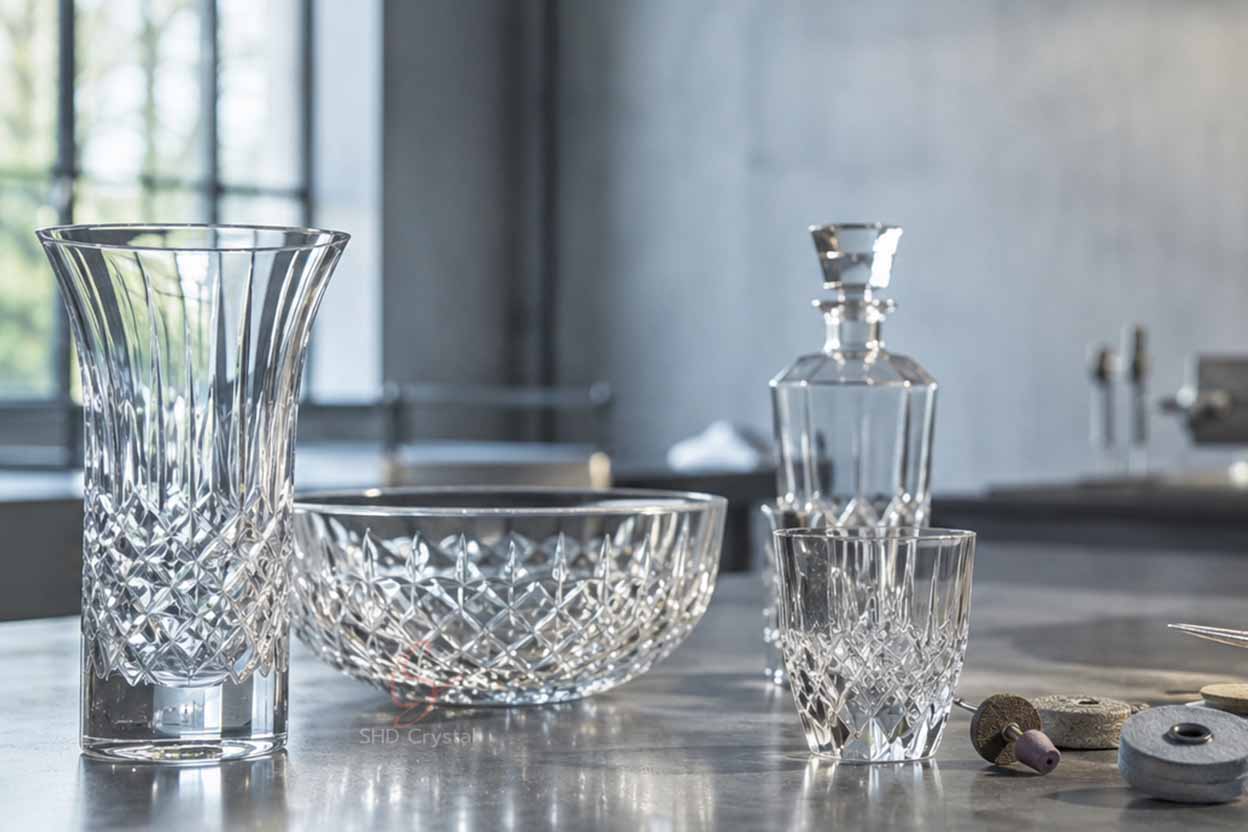
For brands and buyers developing custom crystal products, SHD Crystal can support crystal glass surface finishing planning from early design review through sampling and production evaluation. With practical experience in glass polishing techniques and crystal surface treatment methods, we help align finishing quality with product design, application needs, and repeat production requirements.
Read the original full version: https://shdcrystal.com/blogs/crystal-glass-surface-finishing/