
Why Custom Painted Glass Jars Require More Than Visual Approval
Custom painted glass jars are popular across gift packaging, home décor, kitchen storage, candle containers, and promotional programs. They look appealing in sample photos, but paint adhesion, color consistency, lid fit, and surface durability are what determine whether the product holds up on retail shelves, during shipping, and in the customer’s hands over time. We have worked on projects where the painted finish looked excellent in the initial sample but began chipping or peeling after light handling during packing. The issue was not the color — it was the surface preparation before painting and the curing conditions after.
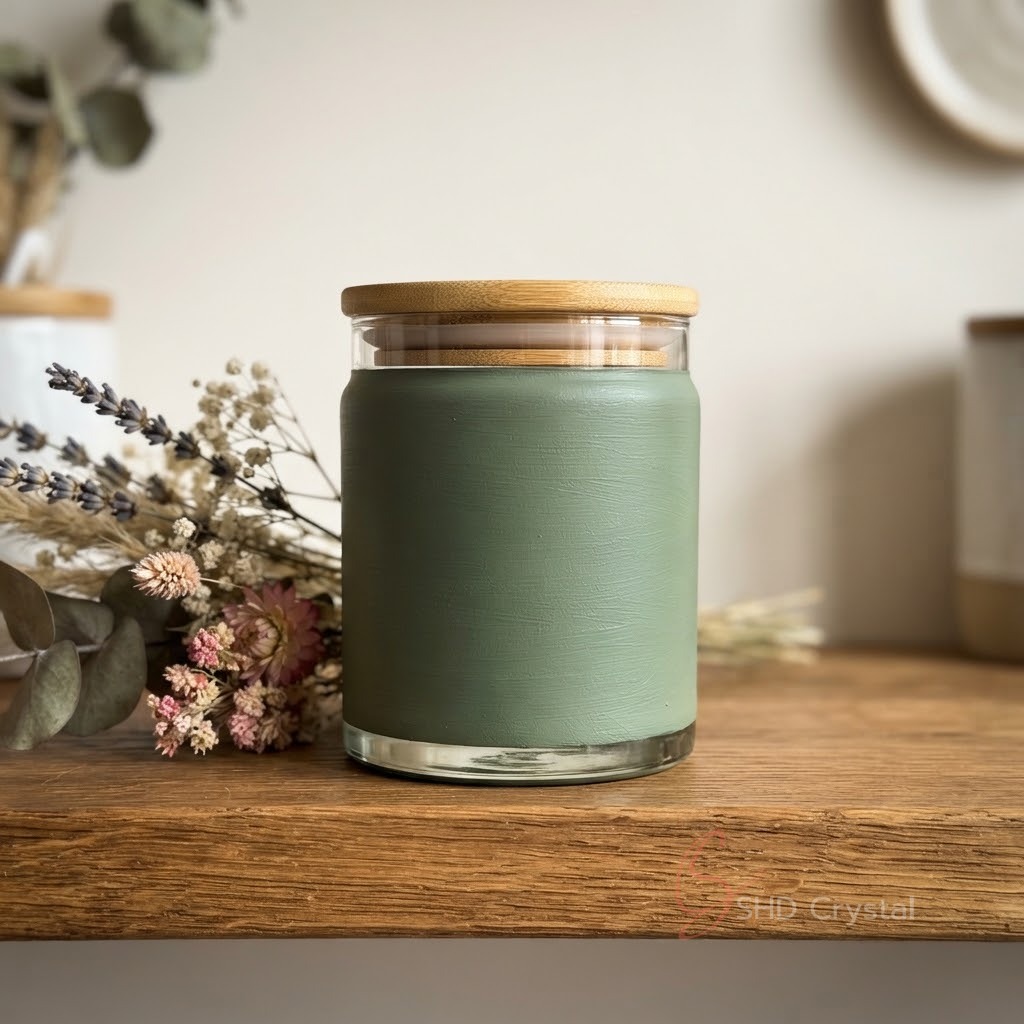
One buyer received a batch of 3,000 custom painted glass jars where roughly 15% showed visible paint lifting near the base. Investigation revealed that the glass had not been properly cleaned before the spray booth, and residual mold release agent prevented the paint from bonding correctly. A well-made decorative glass jar should survive normal retail handling without surface damage.
Paint Adhesion Depends on Surface Preparation and Curing
Glass is not a naturally paint-friendly surface. Without proper pre-treatment, paint layers can lift, scratch, or fade unevenly. For custom glass storage jars, the surface must be cleaned, sometimes etched or primed, and then painted under controlled conditions. The curing temperature and duration must match the paint chemistry.
| Factor | Well-Controlled Process | Weak Process |
|---|---|---|
| Surface Prep | Cleaned + primed before coating | Painted directly on raw glass |
| Curing | Oven-cured at specified temperature | Air-dried or under-cured |
| Durability | Resists scratching and light moisture | Chips or peels under handling |
| Batch Consistency | Stable across production runs | Variable between batches |
In practice, we recommend that buyers request test results for adhesion before approving bulk production. A simple tape-pull test or cross-hatch test can reveal whether the paint bonding is stable. This is especially important for a decorative glass jar that will be handled frequently or displayed in retail environments where customers may pick it up and examine it closely.
Color Consistency Across Batches Is a Real Challenge
Matching a specific Pantone color on glass is more difficult than on paper or plastic. Glass color, paint opacity, layer thickness, and curing conditions all influence the final appearance. A color that matches perfectly on one batch of custom painted glass jars may shift slightly on the next if any variable changes. We usually recommend accepting a defined color tolerance range rather than expecting exact Pantone matches across every piece.
For candle jar programs specifically, we have seen projects where the paint reacted with fragrance oils that migrated through the glass over time. Testing the complete product system — glass, paint, lid, and contents — before approving production is the most reliable way to catch these interaction issues early. Custom glass storage jars intended for food or cosmetics should also be tested for chemical compatibility with their contents.
Lid Fit and Seal Performance Matter for Storage Jars
For custom glass storage jars intended for food, spices, candles, or cosmetics, the lid-to-jar interface is critical. A painted rim can affect how tightly a metal, bamboo, or glass lid seats. If paint accumulates near the sealing edge, the fit may become inconsistent. We usually advise keeping the inner neck and rim area free of paint to maintain reliable lid performance.
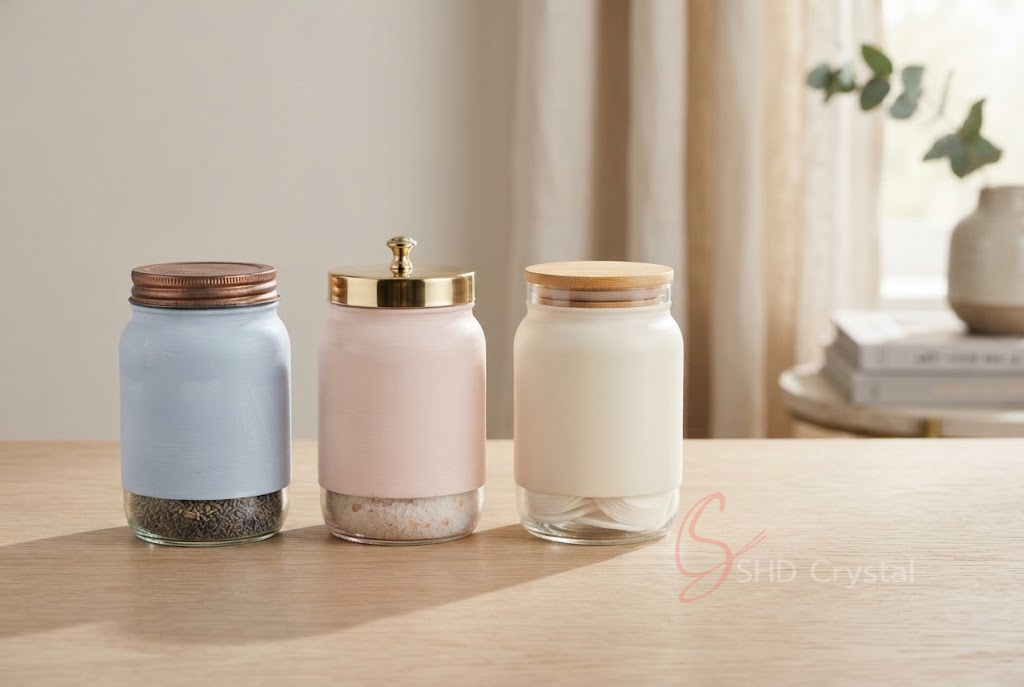
Another practical consideration is the paint finish near the base of the decorative glass jar. If the jar sits on a painted bottom surface, friction from sliding across tables or shelves can wear the paint over time. Adding a clear unpainted ring at the contact point reduces this risk without affecting the visual appearance.
Packaging Must Protect the Painted Surface
Painted glass jars are more vulnerable than plain glass during transit. Carton-to-carton contact, vibration, and temperature changes can cause surface marks if jars are not individually protected. Foam wraps, dividers, or individual polybags are often necessary. A common buyer mistake is to focus on the jar design and defer packaging planning. By the time packing issues appear during pre-shipment inspection, it is often too late to redesign the carton structure without delaying delivery. For custom painted glass jars destined for export, individual wrapping is especially important because longer transit times increase the risk of surface contact damage.
Frequently Asked Questions
What paint finish options are available for custom painted glass jars?
Common finishes for custom painted glass jars include matte, glossy, frosted, metallic, and gradient spray. Each finish has different durability characteristics. Matte finishes tend to show fingerprints less, while glossy finishes offer stronger visual impact but may scratch more easily.
Are decorative glass jar products safe for food contact?
Paint on the exterior of a decorative glass jar does not typically contact food if the interior is unpainted. However, buyers should confirm that the paint used is free of heavy metals and complies with relevant food-contact safety standards for their target market.
Can I get a custom shape with a painted finish for custom glass storage jars?
Yes. Custom mold shapes and painted finishes can be combined for custom glass storage jars. However, unusual shapes may require more careful masking during painting to ensure clean edges and even coverage across curved or angular surfaces.
Conclusion
Custom painted glass jars deliver strong visual impact when the finishing process is properly controlled. Buyers who evaluate paint adhesion, color tolerance, lid compatibility, and packaging protection during sampling create a more reliable path from approval to bulk production.
Plan Your Painted Glass Jar Project With SHD Crystal
For brands developing custom painted glass jars, SHD Crystal can support surface preparation review, paint adhesion testing, color matching, lid fit evaluation, and packaging planning. Early technical discussion helps reduce revision risk and improve batch consistency.
Interested in custom glassware or related products?
Contact our team to discuss your project requirements.