
A Vintage Medicine Bottles Manufacturer Must Understand Period Design Language
Vintage medicine bottles are experiencing strong demand across specialty beverage, home fragrance, cosmetics, and gift packaging markets. The appeal lies in their distinctive proportions — squat bodies, long necks, embossed panels, and pontil marks that evoke 19th-century apothecary aesthetics. But reproducing these details in modern production requires a this specialist producer that understands both the design language and the manufacturing constraints. That is the standard we hold every vintage medicine bottles manufacturer to. A reliable apothecary bottle supplier must control embossing depth and cork-fit tolerance.
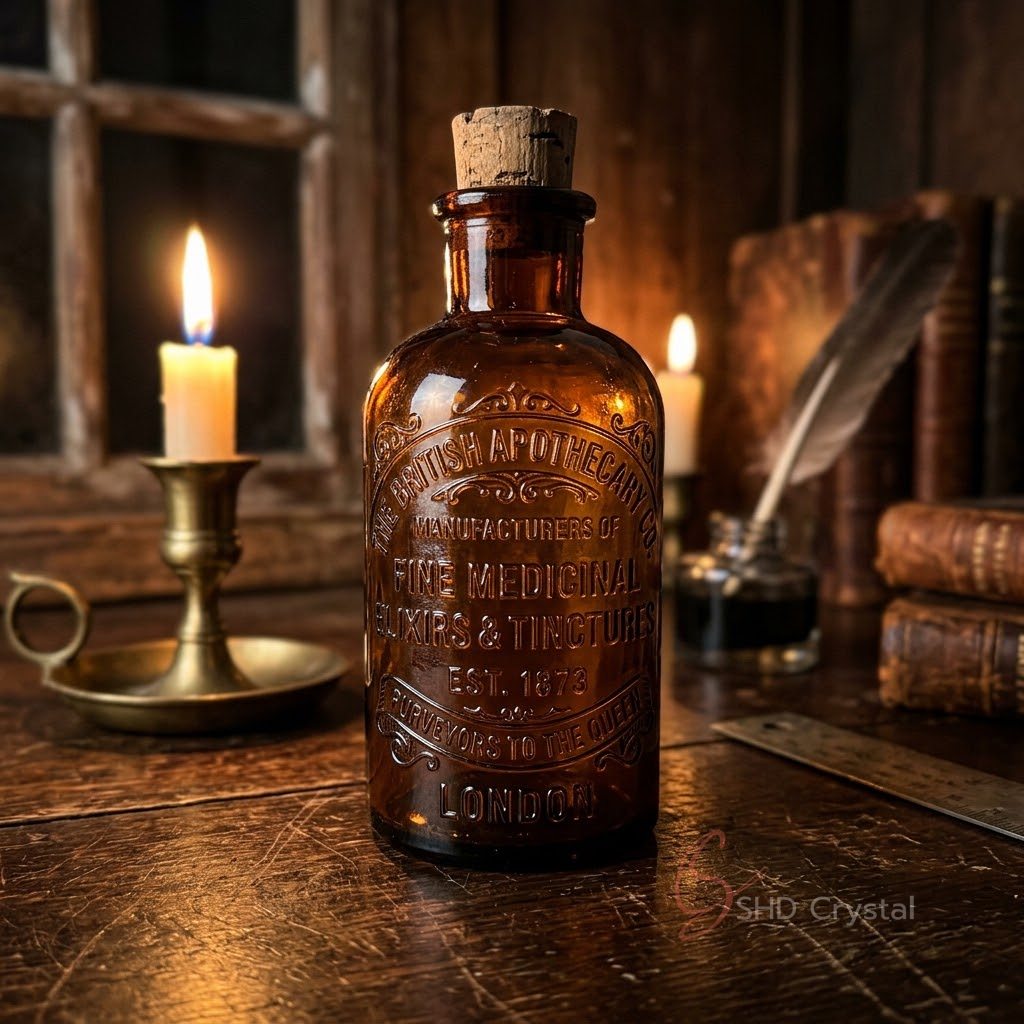
We have seen projects where the buyer provided a reference photo of an antique bottle, and the factory produced a shape that was technically accurate but felt wrong. The proportions were slightly off — the neck was a few millimeters too short, the shoulder curve was too modern, and the base lacked the subtle irregularity that gives antique bottles their character. Getting the vintage feel right requires attention to these subtle details. That consistency is what separates a reliable vintage medicine bottles manufacturer from a risky one.
Antique Style Glass Bottles Require Specific Forming Techniques
Modern glass production is optimized for precision and speed. Vintage aesthetics, by contrast, often require deliberate imperfection — slightly uneven walls, subtle surface texture, and soft edges that suggest handcraft. For antique style glass bottles, the factory must balance production efficiency with aesthetic authenticity.
| Detail | Modern Production | Vintage-Style Production |
|---|---|---|
| Wall Thickness | Highly uniform | Slight variation for handcrafted feel |
| Surface Texture | Smooth, polished | Light texture or seed marks optional |
| Neck Finish | Precision ground | Softer, fire-polished finish |
| Base | Flat, uniform | Slight irregularity or pontil mark effect |
An apothecary bottle supplier with experience in vintage reproductions will offer options for each of these details. The key is to define which vintage elements are essential for your market and which can be simplified for production efficiency.
Embossing and Surface Decoration
Many vintage medicine bottles feature embossed text, logos, or decorative panels. A this specialist producer should evaluate embossing quality under side lighting. Embossing requires a custom mold with raised lettering or patterns. The depth, sharpness, and placement of the embossing affect both the visual appeal and the mold cost. Deeper embossing looks more dramatic but increases mold complexity and may create stress points during cooling.
For antique style glass bottles with embossing, we recommend evaluating the embossing quality under side lighting during sampling. Top-down lighting can flatten the embossed details, making them appear less defined than they actually are. Ask the vintage medicine bottles manufacturer for photos of the embossed areas under different lighting conditions.
Closure Compatibility With Vintage Designs
Historical medicine bottles used cork stoppers, glass stoppers, or tin caps. Modern reproductions may use any of these, depending on the intended use. For a vintage medicine bottles manufacturer, the neck finish must be designed for the intended closure type. A cork-style neck requires a different tolerance than a screw-cap neck.
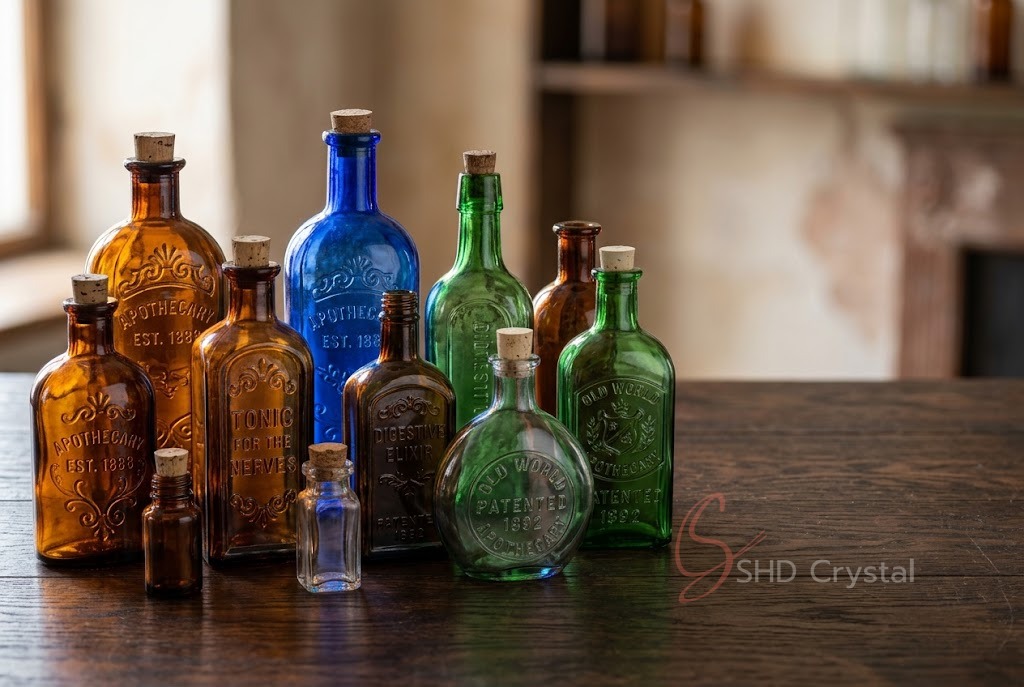
For apothecary bottle supplier programs targeting the gift or décor market, a glass stopper is often the preferred closure because it enhances the vintage aesthetic. However, glass stoppers require very tight neck tolerance — the stopper and neck must be ground to fit together precisely. This adds cost and production complexity.
Color Options for Vintage Medicine Bottles
Historical medicine bottles were commonly produced in amber, cobalt blue, green, and clear glass. Each color has different production characteristics and market associations. Amber suggests traditional pharmacy bottles. Cobalt blue evokes poison bottles from the Victorian era. Clear glass works for modern apothecary-inspired décor.
For a vintage medicine bottles manufacturer, the color choice affects forming parameters, annealing requirements, and decoration options. Discuss color feasibility early in the project to avoid surprises during sampling.
Frequently Asked Questions
What sizes are most popular for vintage medicine bottles?
Common sizes range from 50 ml to 500 ml. The 200 ml and 250 ml formats are the most versatile for both decorative and functional use. Smaller bottles (50–100 ml) work well for gift sets and collector items.
Can an apothecary bottle supplier produce bottles with custom embossing?
Yes. Custom embossing requires a dedicated mold with raised lettering or patterns. The mold cost depends on the complexity and depth of the embossing. Most apothecary bottle suppliers can accommodate custom embossing with a lead time of 5–8 weeks for mold development.
Are antique style glass bottles suitable for food or beverage use?
If the interior is unpainted and the glass meets food-contact standards, antique style glass bottles can be used for beverages, oils, or sauces. Confirm food-contact compliance with the manufacturer for your target market.
Conclusion
A vintage medicine bottles manufacturer must understand both period design language and modern production techniques. Buyers who define the essential vintage elements, evaluate embossing quality, and confirm closure compatibility during sampling create products that feel authentically retro while meeting commercial quality standards.
Develop Vintage Medicine Bottles With SHD Crystal
For brands exploring vintage medicine bottles manufacturer projects, SHD Crystal can support period-accurate design review, mold development, embossing evaluation, and closure compatibility testing. Share your reference design with us to discuss production feasibility.
Interested in custom glassware or related products?
Contact our team to discuss your project requirements.