
A Whiskey Bottle Manufacturer Must Understand Brand Positioning
A whiskey bottle is not just a container — it is a brand statement. The bottle’s shape, weight, clarity, and finishing communicate the whiskey’s positioning before the customer even opens it. A premium single malt demands a different bottle language than a blended whiskey at various price tiers. A the factory that understands this distinction can advise on design choices that support the brand’s market position rather than working against it. That is the standard we hold every whiskey bottle manufacturer to. Spirits bottle OEM orders require neck-finish precision that only calibrated molds deliver.
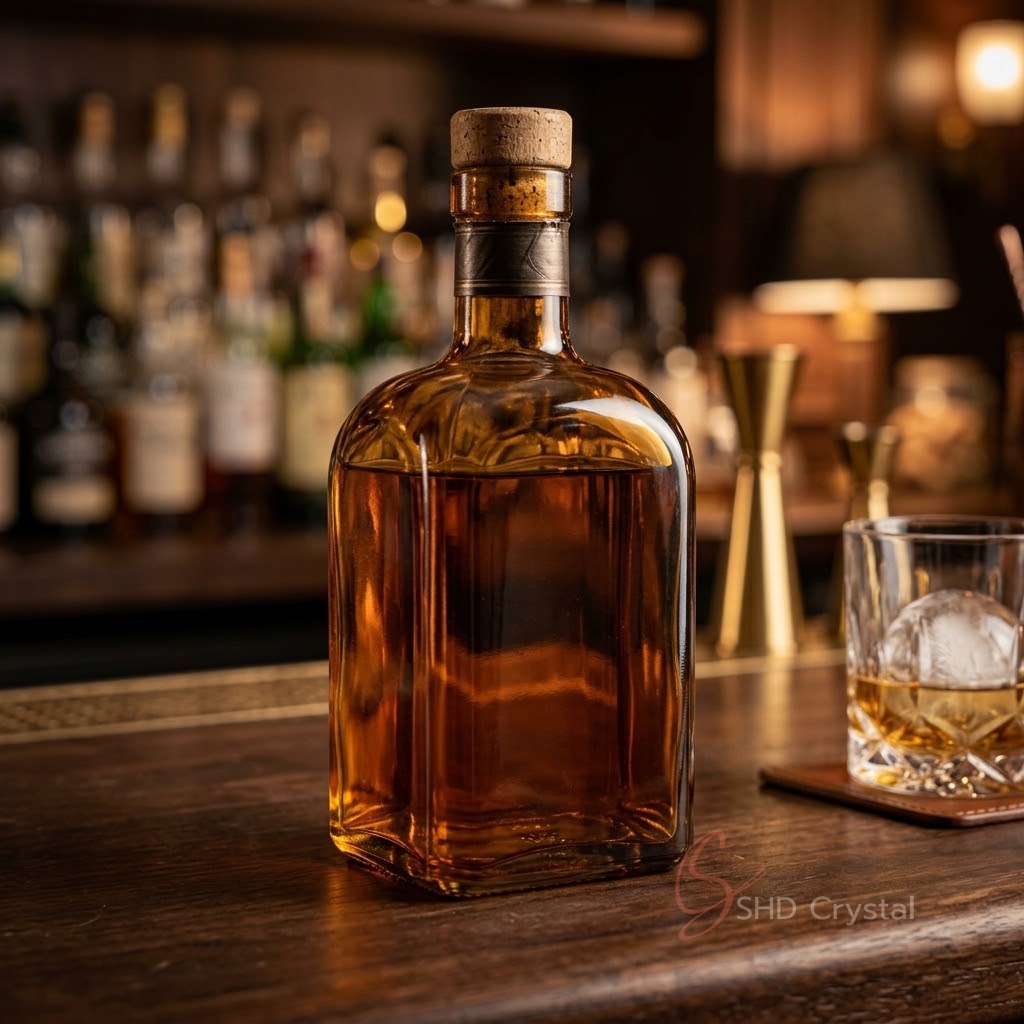
We have worked on projects where a this producer produced a design that looked sophisticated in isolation but did not match the whiskey’s price point or target audience. A heavy, deeply cut bottle for a mid-range blended whiskey created an expectation that the liquid inside could not deliver. The result was customer disappointment, not because the whiskey was poor, but because the packaging overpromised. Choosing the right whiskey bottle manufacturer means evaluating process capability, not just the sample.
Glass Whiskey Bottle Design: Shape, Weight, and Proportion
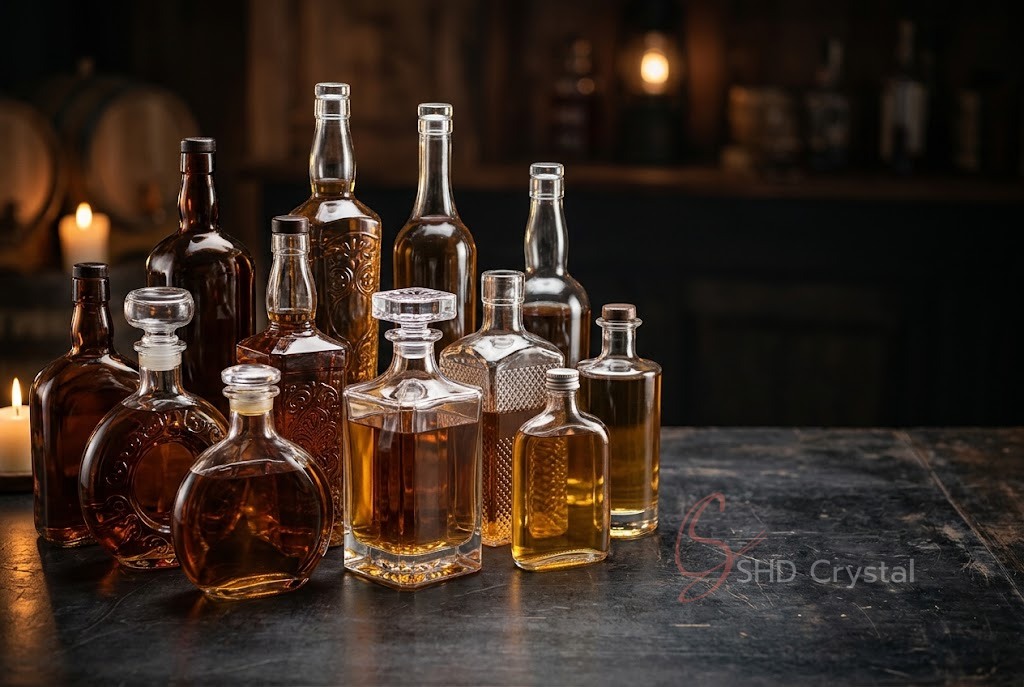
The most iconic whiskey bottle shapes — round shoulders, square bodies, tall slender profiles — each carry different brand associations. A glass whiskey bottle with a broad, flat body suggests tradition and strength. A tall, narrow profile suggests modernity and elegance. The weight of the bottle reinforces these signals — heavier bottles feel more premium but increase shipping cost.
| Design Element | Traditional Positioning | Modern Positioning |
|---|---|---|
| Body Shape | Broad shoulders, round base | Clean lines, geometric profile |
| Glass Weight | Heavy — substantial feel | Moderate — practical, sustainable |
| Neck Length | Standard, sturdy | Taller, more refined |
| Decoration | Deep cutting, embossing | Minimalist, screen print, label |
For a the factory, the design conversation should start with brand positioning, not shape alone. The factory should ask about the target market, price point, distribution channels, and competitive set before recommending a bottle direction.
Neck Tolerance and Closure Compatibility
Whiskey bottles use various closure types: cork, screw cap, bar-top stopper, and synthetic cork. Each requires a specific neck finish with tight tolerances. For spirits bottle OEM, the neck-to-closure interface is critical — a loose cork ruins the premium impression, and a too-tight screw cap causes handling problems.
We recommend providing the closure specification alongside the bottle design during sampling. A glass whiskey bottle with a beautiful body but a poorly fitting closure fails at the most important interaction point — the moment the customer opens it.
Decoration and Labeling for Whiskey Bottles
Whiskey bottles use a wide range of decoration: embossing, screen printing, hot stamping, frosting, and paper labels. The decoration should match the brand positioning. Deep embossing and metallic finishes suggest premium quality. Clean labels and minimal decoration suggest modern craft positioning.
For whiskey bottle manufacturer projects with complex decoration, discuss the production sequence early. Embossing must be built into the mold, while screen printing and hot stamping are applied after forming. The interaction between these methods must be planned — for example, screen printing over an embossed surface requires careful alignment.
Packaging and Shipping for Glass Whiskey Bottles
Whiskey bottles are heavy and fragile. A whiskey bottle manufacturer must ensure the packaging protects against breakage during warehousing, warehouse handling, and logistics. For spirits bottle OEM programs targeting export markets, the packaging must also account for container stacking pressure and vibration during ocean freight.
We recommend testing the packaging configuration with drop and vibration simulations before committing to the final carton design. A whiskey bottle manufacturer that treats packaging as an afterthought is a risk for brands shipping internationally. The factory visit should include a walkthrough of the annealing lehr, the cold-end inspection station, and the packing line. Each stage reveals a different aspect of quality control that cannot be assessed from a catalog or a single sample piece.
Frequently Asked Questions
What is the typical capacity for a glass whiskey bottle?
The standard capacity is 750 ml for most markets, with 700 ml common in Europe and 1 liter for certain distribution channels. Miniature bottles (50 ml) and larger formats (1 liter, 1.75 liters) are also available for specific programs.
Can a whiskey bottle manufacturer produce bottles in colored glass?
Yes. Amber is the most common color for whiskey bottles, offering UV protection for the spirit. Clear flint glass is also popular for premium whiskeys where the liquid color is part of the presentation. Green and cobalt blue are less common but available for specialty programs.
What should I look for in a spirits bottle OEM supplier?
Evaluate their neck tolerance control, optical clarity standards, decoration capabilities, batch consistency, and export packaging experience. A factory visit is the most effective way to assess these capabilities. Ask for references from existing spirits bottle OEM clients if possible.
Conclusion
A whiskey bottle manufacturer must balance brand expression with production precision. Buyers who start with brand positioning, evaluate design choices against the target market, and confirm closure compatibility during sampling build more successful whiskey bottle programs.
Develop Your Whiskey Bottle With SHD Crystal
For brands seeking a whiskey bottle manufacturer, SHD Crystal can support design review, forming evaluation, decoration planning, closure compatibility testing, and export packaging development. Share your brand concept with us to discuss the most suitable glass whiskey bottle direction.
Interested in custom glassware or related products?
Contact our team to discuss your project requirements.