
Vintage Medicine Bottles OEM Must Balance Heritage and Manufacturability
this production program appeals to brands in specialty beverages, home fragrance, cosmetics, and gift packaging. The aesthetic is unmistakable — heavy glass, soft edges, embossed details, and colors that evoke historical pharmacies. But translating a vintage reference into a commercially viable production run requires careful planning. The details that make antique bottles charming — uneven walls, pontil marks, hand-finished rims — are often the same details that increase cost and rejection rates in modern production. That is the standard we hold every vintage medicine bottles OEM to.
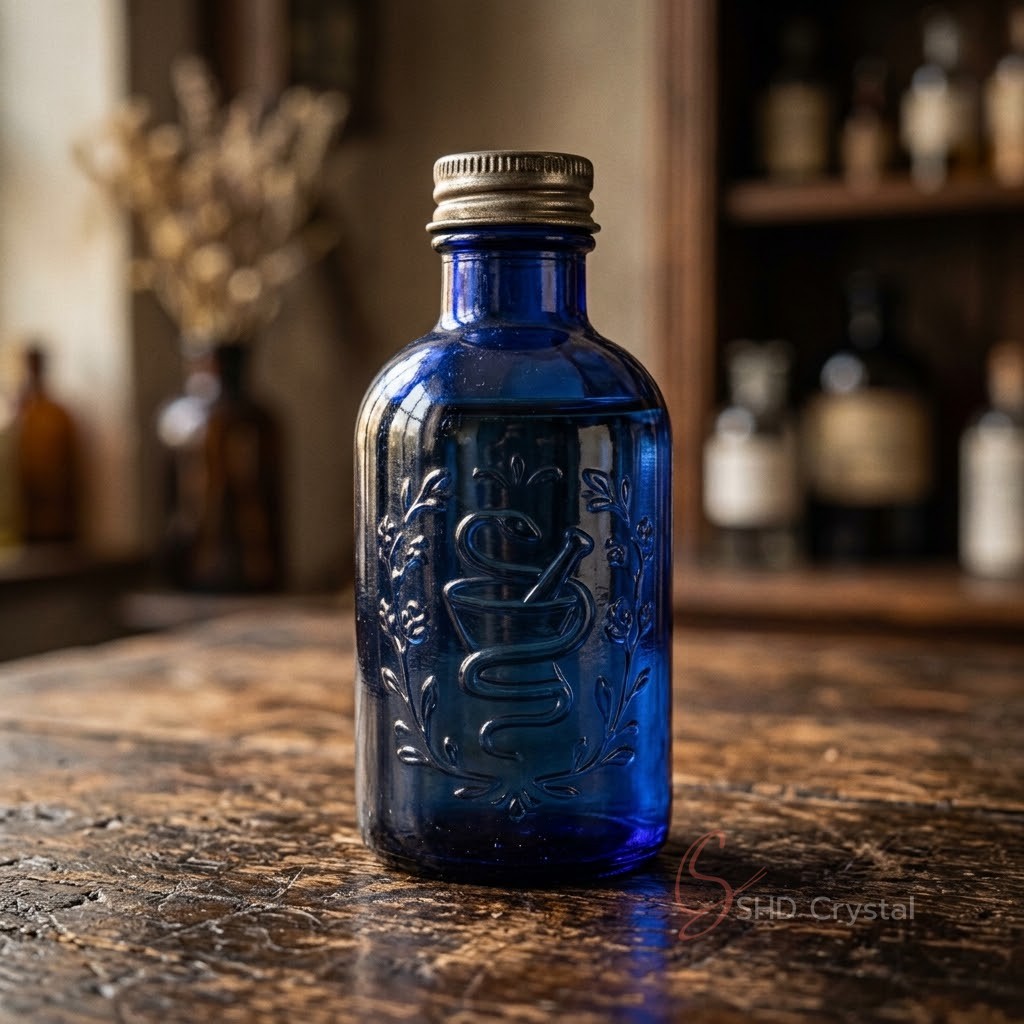
For vintage medicine bottles OEM, we recommend that buyers define which vintage elements are essential for their market and which can be simplified. For antique style glass bottles targeting the gift market, embossing and color may be the most important elements. For beverage applications, neck tolerance and closure compatibility may take priority. Apothecary bottle production that tries to replicate every antique detail often becomes commercially impractical.
Mold Development for Vintage Shapes
The mold for a vintage medicine bottles OEM project is more complex than for a standard bottle. Embossed panels, unusual neck profiles, and deliberate surface textures all require additional mold engineering. For this type of program, the mold development phase is where most design decisions are finalized.
We recommend providing the factory with multiple reference images from different angles, along with dimensional specifications for the critical features: height, diameter, neck finish, and embossing placement. For antique style glass bottles, a 3D rendering or physical prototype helps the factory understand the intended proportions more accurately than a flat drawing. A capable vintage medicine bottles OEM partner will share batch records and retained samples without hesitation.
Color Selection and Batch Control
Historical medicine bottles were produced in amber, cobalt blue, forest green, and clear glass. Each color has different production characteristics. Amber is the most forgiving — it is widely available and relatively easy to match across batches. Cobalt blue requires more precise batch control because the colorant is more sensitive to temperature variation.
| Color | Production Difficulty | Batch Consistency | Market Association |
|---|---|---|---|
| Amber | Standard | Good — well-established formulas | Traditional pharmacy, spirits |
| Cobalt Blue | Moderate to high | Requires tight furnace control | Victorian poison bottles, luxury |
| Forest Green | Moderate | Good with documented formulas | Apothecary, herbal products |
| Clear | Standard | Excellent | Modern apothecary, décor |
For apothecary bottle production in colored glass, we recommend defining an acceptable color range rather than a single reference. Physical color samples help the factory understand the target more accurately than digital swatches.
Embossing Quality and Placement
Embossing is one of the defining features of vintage medicine bottles OEM. The embossed text or pattern must be legible, well-defined, and positioned correctly on the bottle surface. Deeper embossing creates a stronger visual impact but increases mold cost and may create stress points during cooling.
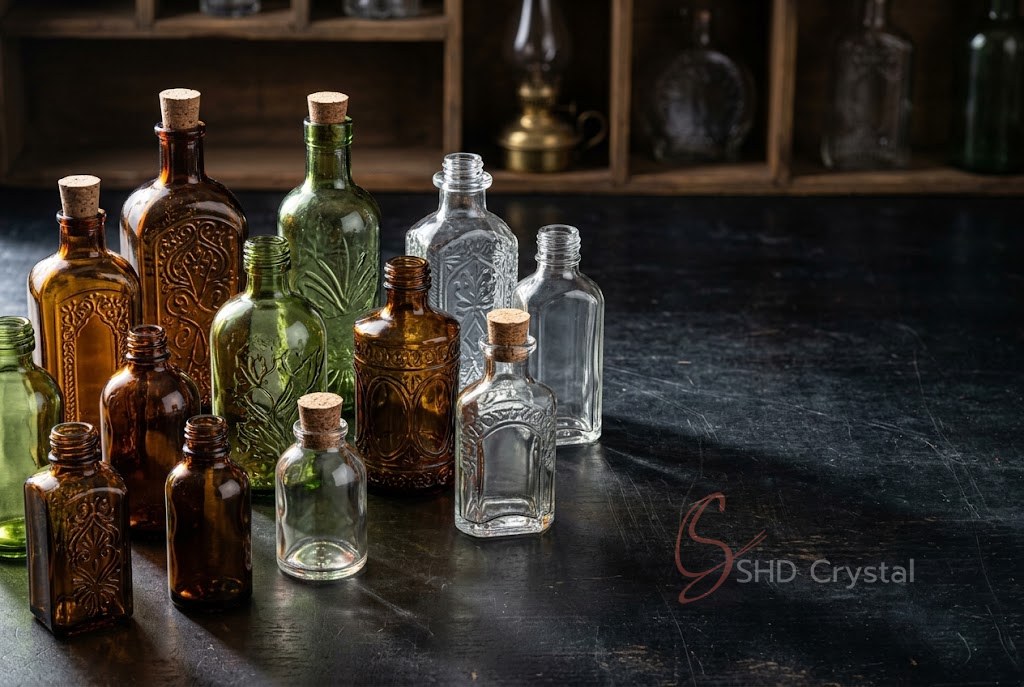
For antique style glass bottles with embossing, the letter height, depth, and style should be specified clearly during mold development. We recommend requesting a mold trial with the embossed details before approving full production. This allows the buyer to evaluate embossing quality, sharpness, and placement under different lighting conditions.
Closure Systems for Vintage Bottles
The closure system must match the vintage aesthetic. Cork stoppers, glass stoppers, and vintage-style metal caps all work well. For apothecary bottle production targeting the gift or décor market, a glass stopper with a ground-glass fit is the most premium option but requires tight neck tolerance. Cork is more forgiving and works well for beverage applications. Export packing for vintage-style glass requires individual cell dividers and foam caps on each bottle neck. Standard carton configurations designed for modern smooth-sided bottles will not protect embossed surfaces during transit.
Inspect the closure thread under magnification before approving the tool.
Frequently Asked Questions
What is the typical lead time for vintage medicine bottles OEM?
Lead time depends on the complexity. Stock shapes with standard colors may ship in 25–35 days. Custom molds with embossing and specific color matching typically require 45–65 days.
Can I combine embossing with other decoration methods for antique style glass bottles?
Yes. Screen printing, hot stamping, and frosting can be combined with embossed details on antique style glass bottles. However, the decoration should complement the embossing, not compete with it. Test the combined effect on production samples.
What is the minimum order quantity for apothecary bottle production?
For stock shapes, MOQs typically start at 1,000 pieces. For custom molds with embossing and color matching, MOQs usually start at 3,000–5,000 pieces depending on the factory and the complexity of the design.
Conclusion
Vintage medicine bottles OEM delivers strong market appeal when authenticity is balanced with commercial practicality. Brands that define essential vintage elements, plan mold development carefully, and evaluate closure compatibility during sampling create products that resonate with buyers while maintaining production reliability.
Plan Your Vintage Medicine Bottles With SHD Crystal
For brands developing vintage medicine bottles OEM projects, SHD Crystal can support design review, mold development, color matching, embossing evaluation, and closure testing. Share your reference design with us to discuss the most practical apothecary bottle production route.
Interested in custom glassware or related products?
Contact our team to discuss your project requirements.