
Custom glass product development helps brands transform early concepts into workable products through a process that combines design thinking, engineering review, and manufacturing planning. Whether the project involves decorative objects, drinkware, packaging, or functional glass components, a successful result depends on more than visual appeal. The product must also match the realities of material behavior, forming limitations, finishing options, and repeatable production quality.
Custom Glass Product Development Bridges Creative Vision and Manufacturing Logic
In many projects, the first design concept looks promising on paper but still requires technical refinement before production begins. Designers may focus on silhouette, texture, and brand identity, while factories must evaluate forming feasibility, wall thickness transition, cooling behavior, and tooling structure. This is where glass design services become valuable.
During the early stage, glass design services can support drawing review, sample evaluation, size adjustment, mold planning, and finishing recommendations. These steps help identify whether a concept is suitable for pressing, blowing, molding, or mixed production methods. They also reduce the risk of moving too quickly from visual concept to production order.
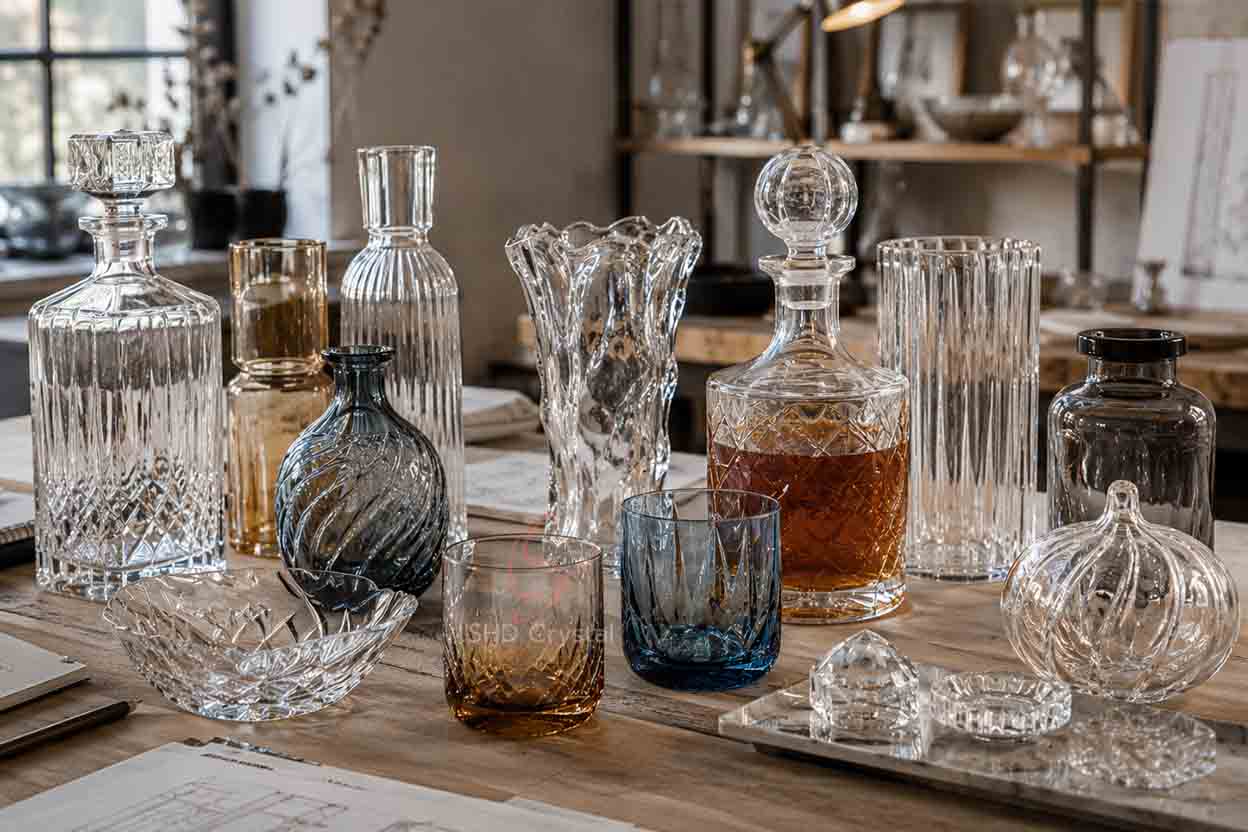
One common mistake in custom glass product development is assuming that an attractive rendering can move directly into manufacturing. In practice, sharp curves, heavy bases, narrow necks, or uneven structural transitions may require adjustment. Without technical review, the project can face delays, repeated sampling, or avoidable cost increases.
Engineering Details Shape the Final Product
A glass product is often judged first by appearance, but long-term project success depends on structural and process control. OEM glass manufacturing requires more than simply reproducing a shape. It also requires stable production conditions so that the final product remains consistent from sample stage to repeat order.
For example, mold tolerance affects dimensional accuracy, while wall thickness transition can influence both durability and visual balance. Cooling stress and annealing behavior also matter, especially in products with heavy bases, asymmetrical geometry, or decorative features. If these variables are not controlled, even a beautiful sample may become difficult to reproduce reliably.
Different methods bring different strengths. OEM glass manufacturing based on pressed or mold-formed production can offer strong repeatability and clearer dimensional control, while hand-blown work may offer greater flexibility for expressive forms or artistic collections. Choosing the right route depends on the intended use, order volume, and quality expectations.
At the same time, glass design services often extend beyond shape alone. Surface treatment, color effects, engraving, polishing, and component matching can all influence the production route. A glass lid, metal fitting, pump, or decorative attachment may introduce extra tolerance and assembly considerations that should be reviewed early.
Different Product Categories Need Different Development Priorities
Not all projects follow the same path. Decorative glass may emphasize form, texture, and light interaction. Daily-use products may require more attention to grip, stability, and repeated handling. Packaging items may need accurate closure fit, label space, and transport protection.
This is why custom glass product development should begin with the final application rather than with appearance alone. A product intended for hospitality use, gift retail, fragrance packaging, or home decoration will each place different demands on structure, finishing, and production scale.
For brands without in-house manufacturing capability, OEM glass manufacturing provides a practical route to market. It allows companies to develop products to their own specifications while relying on external experience for tooling, sampling, finishing, inspection, and delivery coordination.
Conclusion
Effective custom glass product development combines creative direction with realistic engineering judgment. Products that look distinctive and perform well in production are usually the result of early technical review, clear communication, and careful process selection. When glass design services and OEM glass manufacturing are aligned from the beginning, brands are more likely to achieve reliable results with fewer revisions and stronger long-term production value.
Moving New Glass Concepts Toward Production
Brands developing new collections can benefit from partners that combine practical glass design services with dependable OEM glass manufacturing support. A collaborative development process makes it easier to turn sketches, references, and initial concepts into finished glass products that are visually clear, structurally realistic, and better prepared for commercial production.
Read the original full version: https://shdcrystal.com/blogs/custom-glass-product-development/