
A tumbler may look bright under showroom lighting yet reveal a noticeable tint beside an approved sample. For brands and hospitality buyers, a glass transparency comparison should separate transmitted light, color, haze, and visual distortion. The useful result is a repeatable acceptance decision: whether the finished glassware delivers the appearance required for its intended use.
Glass Transparency Comparison Starts with Separate Properties
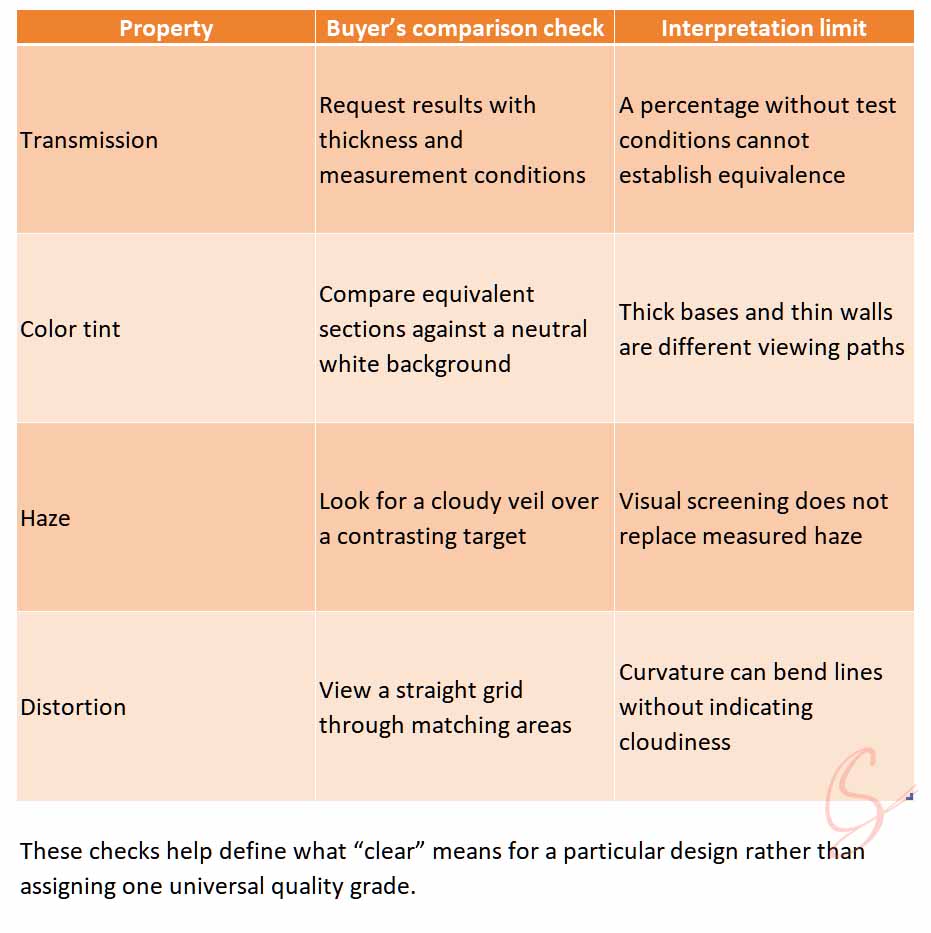
Glass light transmission describes how much incident light passes through a sample under specified conditions. Haze describes the proportion of transmitted light scattered beyond a defined angle; a bright sample can still scatter light and obscure details. Neither measurement alone describes every aspect of clarity. Use these checks as a practical starting point:
Compare Thickness Before Comparing Materials
A heavy decanter base and a thin drinking-glass wall are poor substitutes for matched samples. Thickness changes the distance light travels through the material. SCHOTT’ s technical guidance also distinguishes internal transmittance from total transmittance, which includes surface reflection losses.
For material selection, ask suppliers to identify the actual glass composition and provide comparable specimens where feasible. Do not rank soda-lime glass, borosilicate glass, or crystal solely by their names. A material label is not a measured transparency result.
Where designs differ, assess both comparable material specimens and finished products. The first helps isolate material behavior; the second shows the combined effect of shape, thickness, and finishing.
Turn Sample Review into an Acceptance Procedure
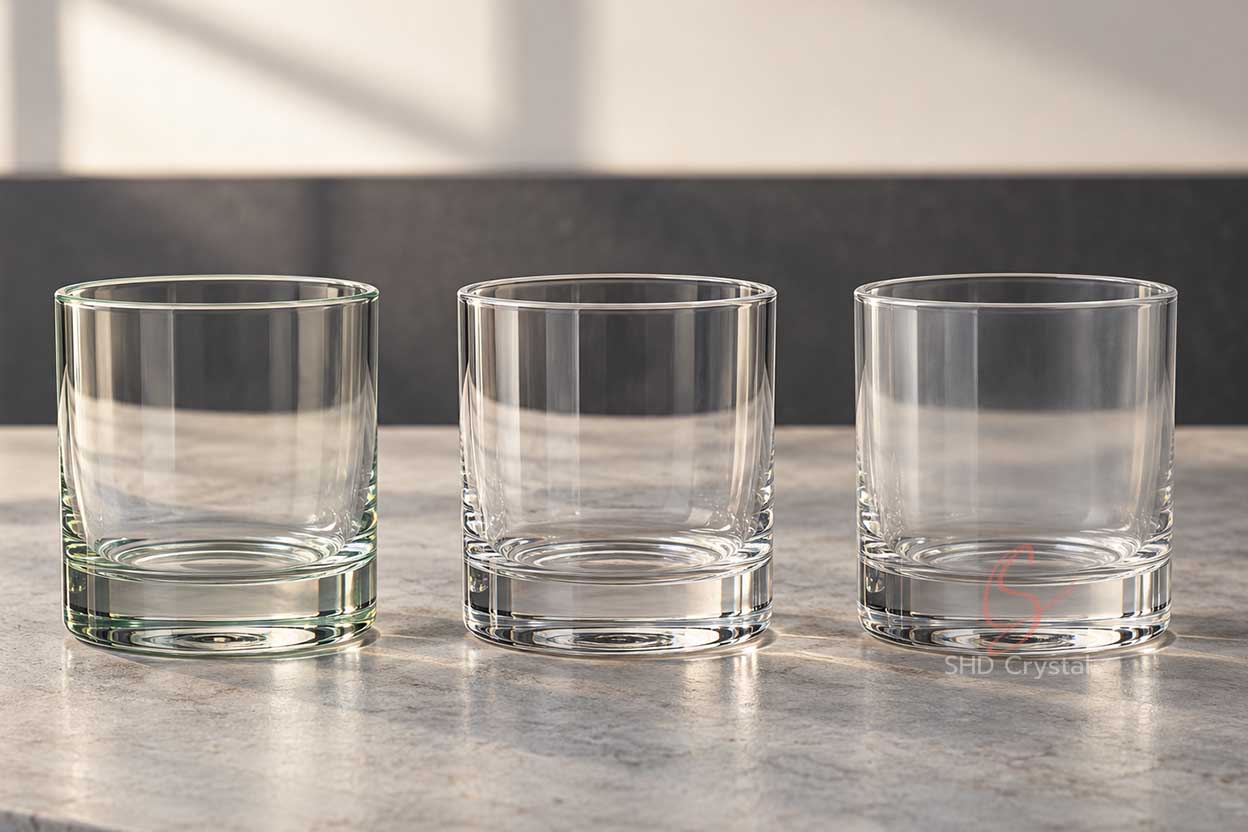
For initial glass clarity testing, clean and dry each sample, label it, and place it beside the approved reference. Keep the light source, background, viewing distance, and inspection position consistent. Rotate each piece to inspect the wall, rim, and base separately.
Record localized bubbles or inclusions separately from an overall cloudy appearance. Agree which viewing areas matter most: the broad wall of a display vase may deserve different attention from its concealed underside.
If numerical verification is necessary, agree the method with the laboratory before submitting samples. Ask how curved vessels will be positioned and whether results describe a flat specimen or the finished item. Report glass light transmission and haze separately instead of combining them into an unexplained “clarity score.” Instrumental measurements can detect differences that are not visually apparent.
A useful glass transparency comparison ends with an approved reference, recorded conditions, and agreed acceptance limits.
FAQs
-1. Does greater transparency prove that glassware is suitable for food contact?
No. Appearance and optical measurements do not establish chemical safety. Food-contact assessment should address the material, decoration, intended use, and destination market, including relevant migration testing.
-2. Should a frosted lampshade meet the same clarity target as a drinking glass?
Not necessarily. A lampshade may intentionally diffuse light. Specify the required lighting effect and assess it with the intended light source; maximum see-through clarity may conflict with the design goal.
-3. Can photographs replace physical samples for final approval?
Photographs help document appearance, but exposure, white balance, and screens can change the apparent tint. Request consistent images for preliminary review and use physical reference samples when subtle color differences affect approval.
Develop Your Custom Glassware with SHD Crystal
At SHD Crystal, we help brands, hospitality buyers, and distributors evaluate custom glassware through material selection, forming review, sampling, and production planning. Our custom glass development service can begin with a concept, drawing, or reference sample.
Share your dimensions, intended use, quantity, and appearance reference with us. We can discuss glass clarity testing needs during sample planning and help turn your glass transparency comparison into practical specifications for an OEM project.