
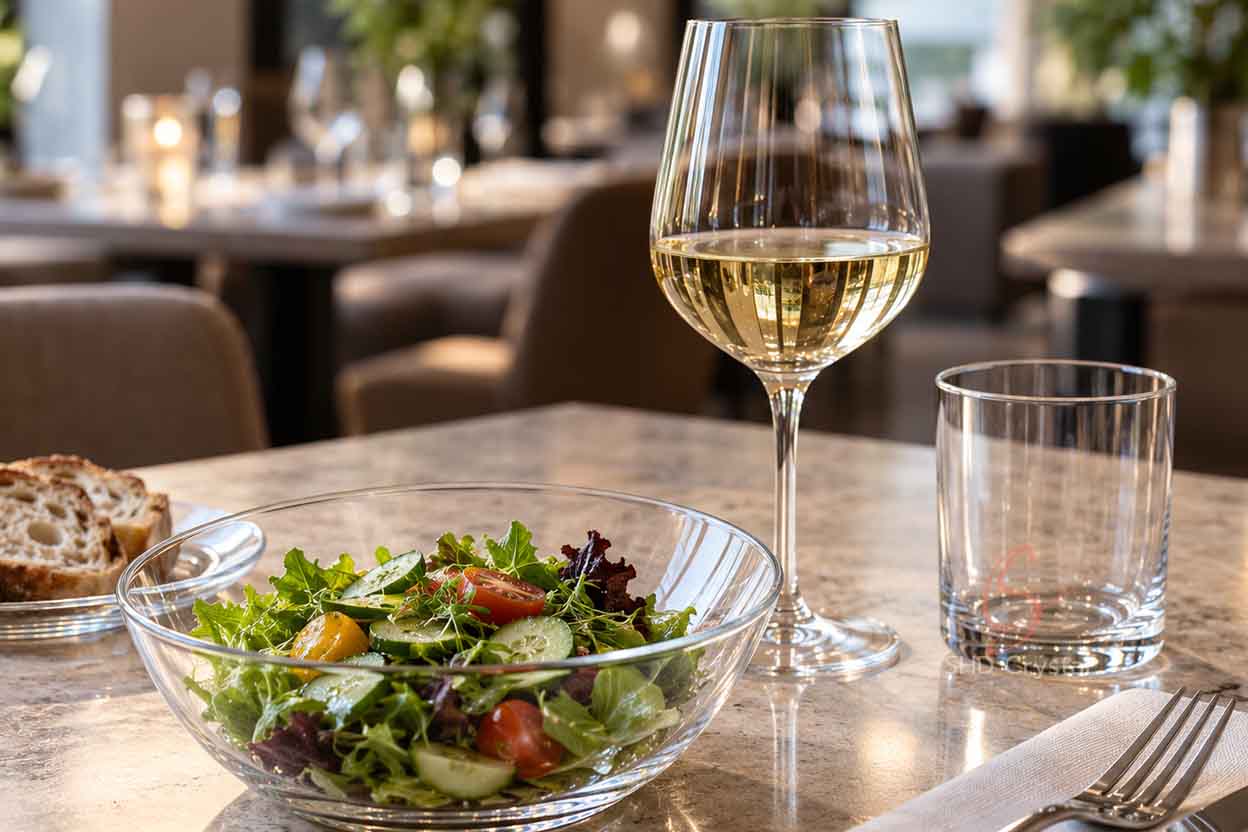
A restaurant bowl touches salad dressing, while a wine glass touches both the drink and the guest’s lips. Choosing food grade glass material therefore involves more than selecting a clear, attractive glass body. For brands and hospitality buyers, the practical question is whether the finished article suits the food, beverage, and service conditions planned for it.
Food Grade Glass Material Starts with Actual Contact
For procurement purposes, treat this phrase as a requirement for suitability under defined food-contact conditions. Material composition matters, but so do applied colors, coatings, and the areas they cover. FDA information explains that food-contact safety assessments consider migration into food and exposure arising from the intended use.
Soda-lime glass, borosilicate glass, and lead-free crystal identify material choices; their names alone do not demonstrate that every finished product is suitable. Ask suppliers to identify the proposed composition and explain how the completed item will be assessed.
Follow the Food—and the Lips
Start a food contact glassware specification by mapping the surfaces that will actually be used:
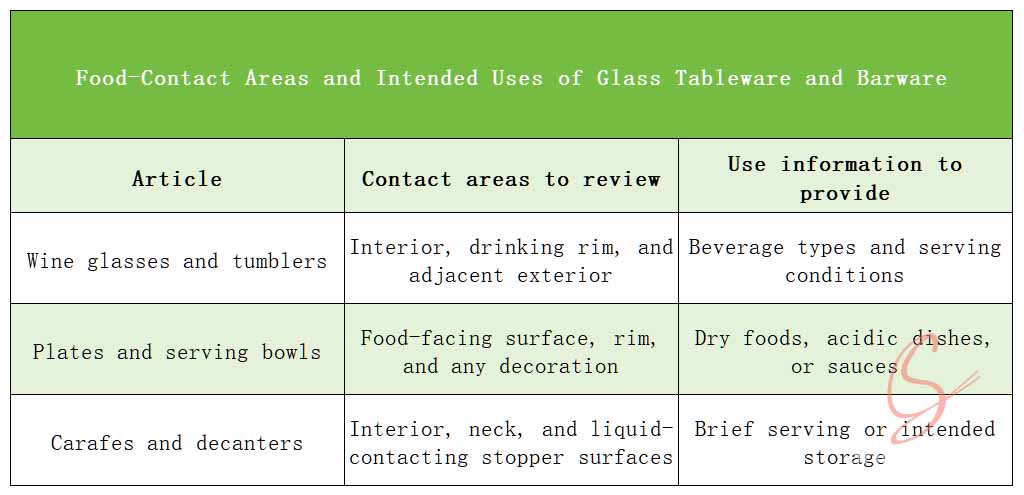
This contact map helps the project team decide where decoration belongs and which areas need assessment. It also prevents an attractive exterior from distracting attention from the drinking edge or food-facing surface.
Decoration Changes What Needs Checking
A gold band, printed motif, or colored coating becomes part of the finished design. Ask what the decoration contains, where it is applied, and whether the assessment covers that exact finish. Canada, for example, has specific lead and cadmium release requirements for exterior decorative patterns near drinking rims.
When sourcing lead-free drinking glasses, confirm both the glass-body specification and the decoration details. A report for an undecorated blank does not establish the suitability of a subsequently decorated version. For custom projects, agree the artwork position before sampling. Moving a logo lower on a tumbler may reduce direct lip contact, but placement alone does not prove compliance.
Request Evidence That Matches the Order
Ask for documentation identifying the tested article, material, decoration, applicable method, results, and assessment criteria. Confirm that the sample represents the product being ordered and that the test conditions address its intended use.
For food contact glassware sold internationally, specify the destination market early. The European Commission sets out general food-contact safety requirements and explains that national provisions may apply where specific EU measures are absent. A generic “food safe” statement cannot resolve every market’s requirements.
A sound food grade glass material decision connects the finished sample, intended use, and relevant evidence before production approval.
FAQs About Food Grade Glass Material
Can lead crystal decanters be used for long-term drink storage?
Health Canada recommends against storing food or beverages in lead crystalware. Specify storage separately from brief serving, and evaluate an appropriate alternative for the intended contents and duration.
Does food-contact suitability also mean dishwasher or microwave safety?
No. These are separate performance questions. Confirm cleaning instructions, heat-related limitations, and decoration durability for the specific finished item before making dishwasher-safe or microwave-safe claims.
Should small chips around a drinking rim be accepted?
No. Reject chipped or cracked rims during incoming inspection and remove damaged pieces from service. A satisfactory chemical test report does not make a damaged drinking edge acceptable.
The link to this article is managed and owned by SHD Crystal. Please cite the source if reposting. Thank you for your cooperation.