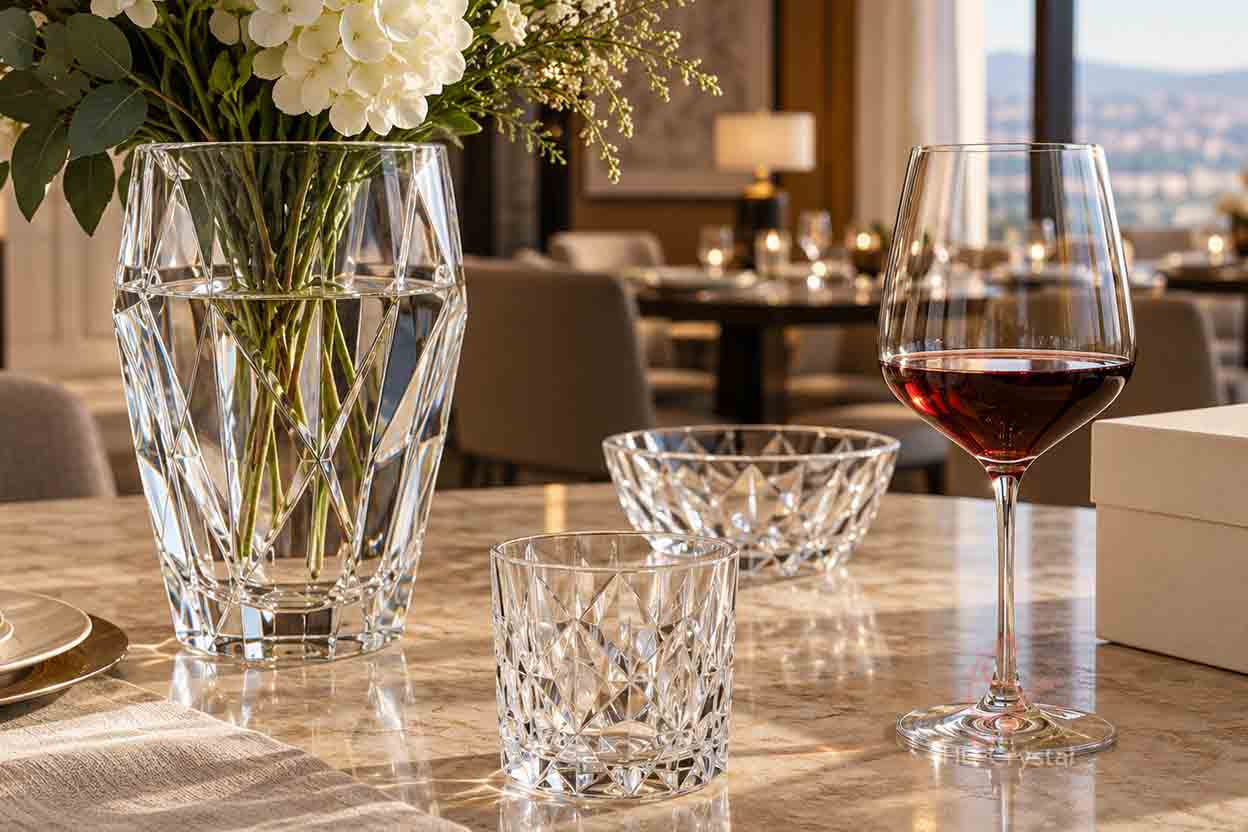
A finely cut vase and a delicate restaurant wine glass can both communicate luxury, although they ask different things of the glassmaker. Selecting premium crystal material starts with that distinction. In Western dining, gifting, and interior projects, its appeal can be understood through presentation, craftsmanship, and the experience of handling a finished object.
Premium Crystal Material Requires a Defined Composition
Crystal glass composition influences optical behavior, density, and manufacturing choices. Established UK descriptions distinguish “lead crystal 24%” from “full lead crystal 30%,” with the percentages referring to lead oxide content. These descriptions are material-specific; “premium” alone provides no comparable specification.
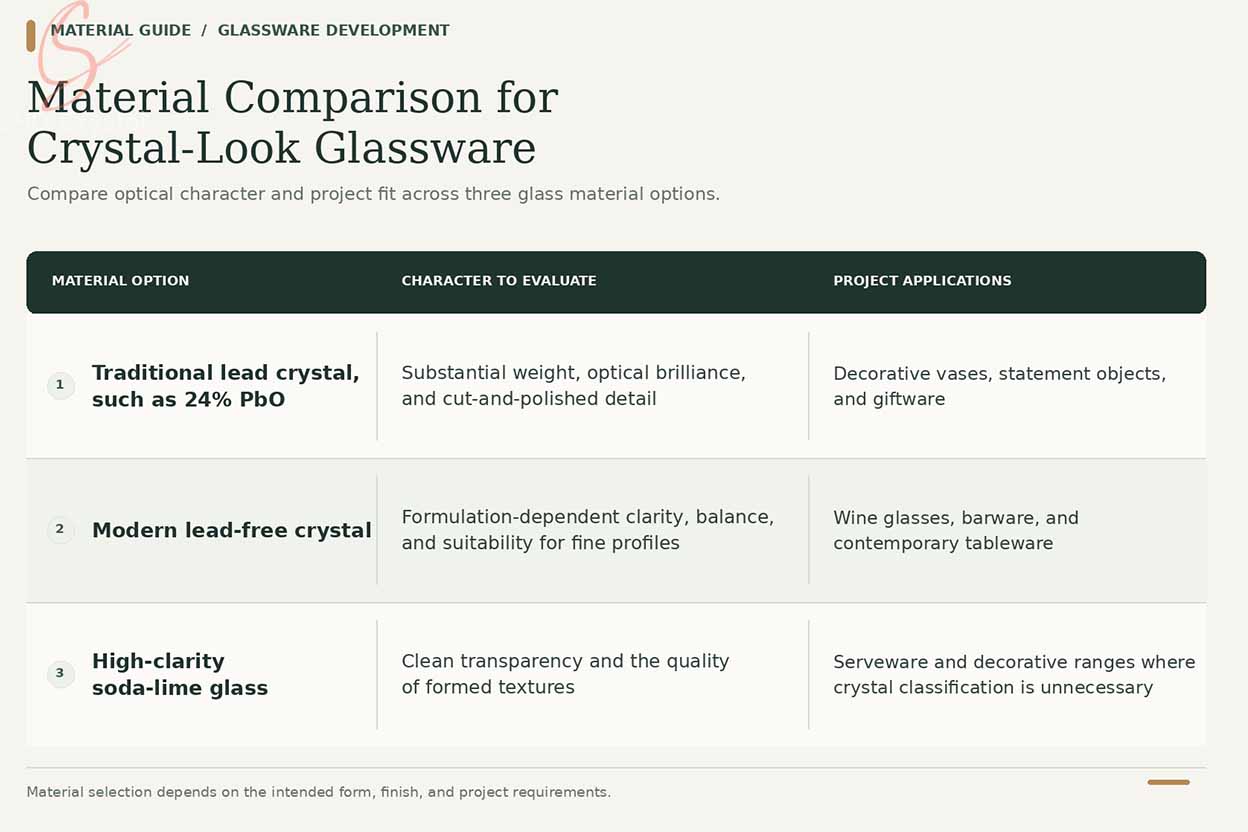
Compare finished samples at similar dimensions. A thick base can add weight regardless of composition, while a polished surface can improve appearance without changing the underlying material category.
Why Crystal Appeals in Western Dining and Gifting
Wine and cocktail presentation creates a practical role for clarity. Transparent bowls reveal drink color, while refined rims, balanced stems, and comfortable proportions contribute to the serving experience. For restaurant and bar projects, the purchasing decision therefore extends beyond sparkle to how the glass feels during use.
Giftware makes craftsmanship visible. A cut vase, engraved bowl, or commemorative object gives the recipient something to display and keep. Facets, polished edges, and personalized details provide concrete ways to distinguish a special-occasion piece from an ordinary household vessel.
Interiors reward interaction with light. A faceted centerpiece can create changing highlights under daylight or directional illumination. A smooth, sculptural vessel offers a quieter visual effect. These different applications help explain why both substantial decorative crystal and delicate contemporary glassware have a place in premium collections.
For project planning, define whether luxury should mean visual weight, intricate finishing, or lightness in the hand.
How Luxury Glassware Trends Affect Specifications
European consumer-goods trend reporting for 2026 highlights precise craftsmanship, material performance, and lasting quality. For crystal projects, these themes translate into three useful development priorities:
A deliberate design direction: Compare deep-cut decorative surfaces with cleaner, thinner profiles. Choose the construction that supports the collection’s identity.
Performance suited to use: Hospitality glassware needs agreed washing and handling criteria. Decorative pieces may place more emphasis on polishing, engraving, and display presence.
Specific environmental information: Ask what recycled content means, which production stage is covered, and what evidence supports the claim. Recycled content and access to local recycling are separate questions. These priorities connect luxury glassware trends with decisions that a buyer can review during sampling. For OEM projects, premium crystal material should be selected through documented composition, finishing quality, and intended use.
FAQ
Can an existing design switch to a different glass composition?
It needs a feasibility review. A material change may affect forming, finishing, weight, and cooling requirements. Confirm the production route and approve a new sample before assuming the existing tooling will deliver the same result.
Can a ringing sound confirm the material‘s lead content?
No. A sound demonstration cannot establish chemical composition. Request a material specification or appropriate analytical evidence when lead content matters.
Can crystal drinkware go into ordinary bottle recycling?
Check local collection rules. UK household guidance excludes drinking glasses from bottle-and-jar collections. A material’s recyclability does not guarantee acceptance in that collection stream.
Specify Your Crystal Project with SHD Crystal
At SHD Crystal, we help brands, hospitality buyers, and distributors assess material options for custom vases, barware, serveware, and decorative products. Our bespoke crystal glass manufacturing service covers feasibility review, forming selection, sampling, and finishing development.
Send us your drawings or reference samples, dimensions, intended use, and quantity. We can discuss crystal glass composition and help translate your premium crystal material requirements into a production plan suited to the design.