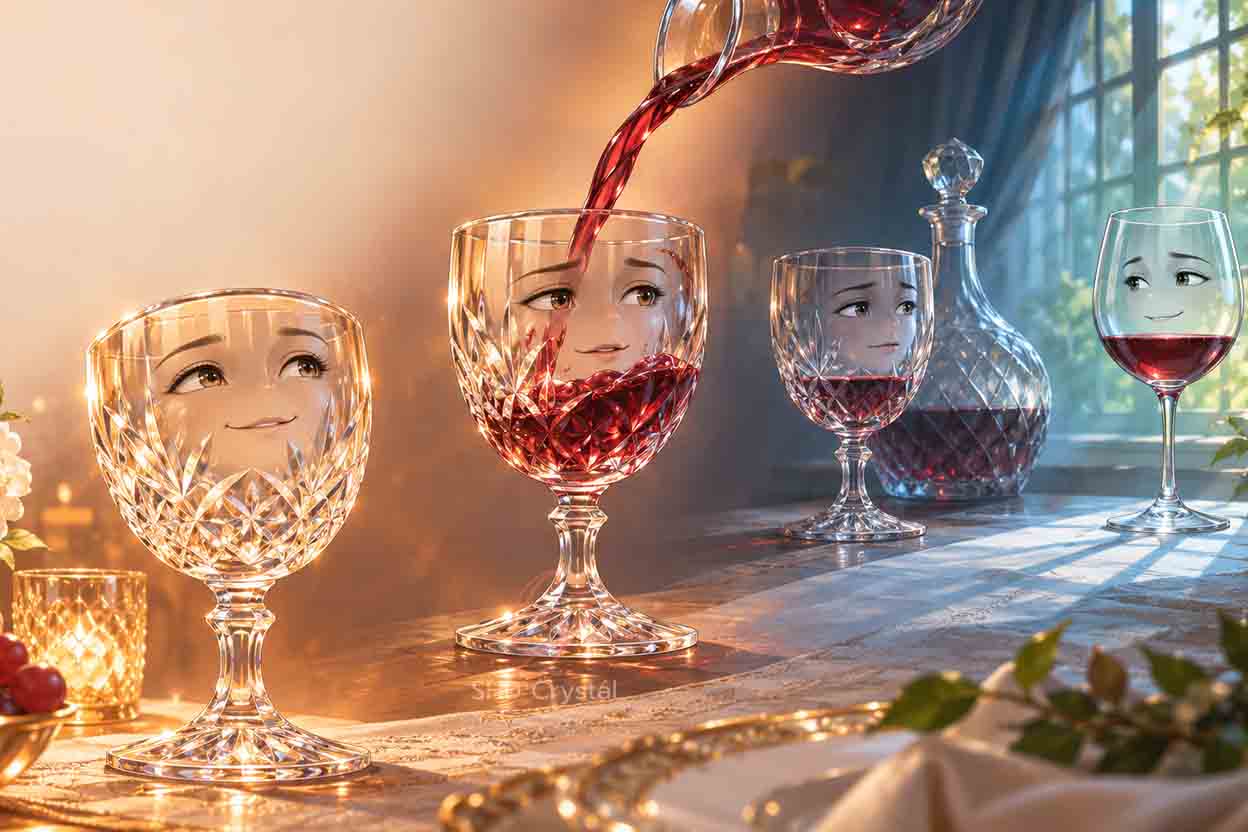
A beautiful crystal wine glass sits on a dining table, its polished facets sparkling under the lights. Someone pours red wine into it, raises a toast, and takes a sip. Nothing unusual happens. Yet an invisible chemical interaction may have already begun.
This is where the question “Is it safe to drink from lead crystal?” becomes more interesting than it first appears. Lead crystal has a long history in fine drinking glasses, but its appearance cannot tell us how much lead might enter a beverage. To understand the risk, follow one crystal glass through a few ordinary moments.
What Happens When We Ask: Is It Safe to Drink from Lead Crystal?
First Stop: A Beautiful Glass Meets Its First Drink
Our glass begins its journey at a dinner party. Its brilliance comes partly from the traditional lead-crystal composition. In European classification, lead crystal contains at least 24% lead oxide (PbO), while full-lead crystal contains at least 30%. Lead oxide contributes to the density and optical qualities that make these glasses attractive. However, it also introduces a question about chemical stability when the surface comes into contact with liquids.
When wine enters the glass, small amounts of lead may migrate from the glass into the drink. This process is known as lead crystal leaching. The glass does not need to crack, lose its shine, or show visible damage for this to happen. The change is invisible, which is why visual inspection alone cannot establish drinking safety.
Second Stop: The Clock Starts Running
Our crystal glass remains on the dining table for the evening. Does a short serving period carry the same risk as leaving wine in the glass overnight?
Not necessarily. Health Canada explains that lead transfer is generally lower during brief serving than during extended storage. The type of beverage also matters. Acidic liquids, including wine and fruit juice, can encourage greater lead migration.
A 2024 study published in Food Additives & Contaminants: Part A examined lead release from crystal glass into different test liquids. In a 0.5% citric acid solution after 24 hours, two tested crystal glasses released approximately 52 and 76 micrograms of lead per liter, respectively. These results are specific to the tested samples and laboratory conditions. They are not universal values for all lead-crystal glasses.
The important lesson is simple: contact time and liquid chemistry can change the amount of lead released.
Interested in custom glassware or related products?
Contact our team to discuss your project requirements.
Third Stop: The Glass Is Forgotten Overnight
The dinner ends, but imagine that some wine remains in the crystal vessel until the next morning. The contact time has now increased considerably. This is where lead crystal leaching becomes a more serious concern. Longer exposure gives additional opportunity for lead to migrate into the liquid.
The situation becomes more concerning when traditional crystal decanters are used to store spirits or wine for days or weeks. Health Canada advises against storing beverages in lead-crystal containers. The California Department of Public Health also warns that prolonged contact increases the possibility of lead entering the drink.
A beautifully decorated crystal decanter may be an attractive display piece, but it should not be treated as an ordinary long-term beverage storage container.
Fourth Stop: What Happens Inside the Human Body?
Lead becomes a health concern when it enters the body. Unlike nutrients that the body needs, lead has no beneficial biological role. Exposure can affect the nervous system, kidneys, cardiovascular system, and other organs. The World Health Organization states that no level of lead exposure is known to be without harmful effects.
Children are especially vulnerable because their nervous systems are still developing. Exposure during pregnancy is also a serious concern. This does not mean that one brief use of a lead-crystal glass will necessarily cause lead poisoning. It means that unnecessary exposure is best avoided, particularly when safer alternatives are available.
Fifth Stop: A Different Glass Joins the Table
The next evening, a similar-looking glass appears on the table. It has a polished rim, an elegant shape, and attractive reflections. However, it is made from a lead-free formulation. This is where lead-free crystal glassware offers a practical alternative.
Modern lead-free crystal can provide the clarity and decorative appearance expected from premium drinkware without intentionally incorporating lead oxide into the glass formulation. However, the term “crystal” alone does not confirm whether a product contains lead. Buyers should verify the material composition and relevant food-contact documentation. For everyday beverage service, selecting appropriately tested lead-free drinkware is a sensible way to reduce avoidable lead exposure.
Conclusion
So, is it safe to drink from lead crystal? The answer is not determined by beauty, age, or whether a glass looks perfectly clean. Lead migration depends on the material, beverage, and duration of contact, while individual exposure risks also matter.
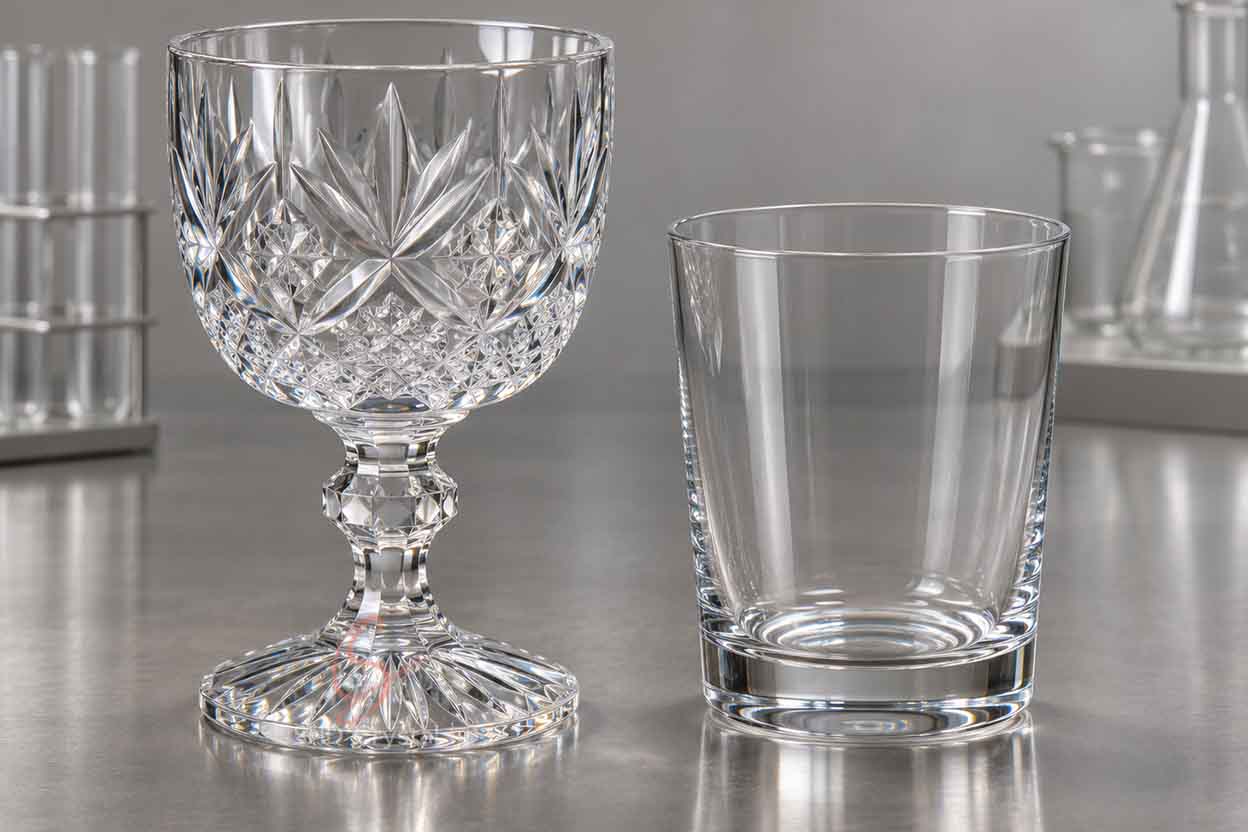
Traditional lead crystal retains its historical and decorative appeal. For everyday drinking, however, appropriately tested lead-free alternatives offer a more prudent choice.
The real lesson of our crystal glass’s journey is that a beautiful drinking vessel should be understood not only by how it looks, but also by what happens when it is used.
Understanding Crystal Glassware with SHD Crystal
For buyers researching whether it is safe to drink from lead crystal, SHD Crystal recognizes the importance of material identification, intended use, and destination-market food-contact requirements. We welcome customer-led crystal glassware projects involving traditional decorative compositions and suitable lead-free drinkware, with material specifications and applicable testing requirements reviewed during development.
https://shdcrystal.com/blogs/safe-to-drink-from-lead-crystal/
The link to this article is managed and owned by SHD Crystal. Please cite the source if reposting. Thank you for your cooperation.