
A milky white glass vase may appear simple, but achieving consistent opacity, color depth, shape, and surface quality requires careful manufacturing decisions. For homeware brands, glassware wholesalers, hospitality suppliers, and interior product developers, the main challenge is turning a visual reference into a repeatable product.
At SHD Crystal, we evaluate the vase structure, glass appearance, forming process, wall thickness, base weight, and finishing method before sampling. Defining these details early helps reduce unnecessary revisions and improves consistency between the approved sample and mass production.
What Is a Milky White Glass Vase?
A milky white glass vase is a decorative glass vessel with a soft white, opaque, or semi-translucent appearance. The effect may be produced with opaque white glass material, surface coating, frosting, or a layered glass structure. It is not always the same as a traditional milk glass vase. Milk glass normally refers to opaque white glass in which the white appearance comes from the glass composition itself. By contrast, a milky white appearance may also be achieved through secondary surface treatments.
For B2B buyers, this distinction matters because each production route affects appearance, cost, durability, and color consistency differently.
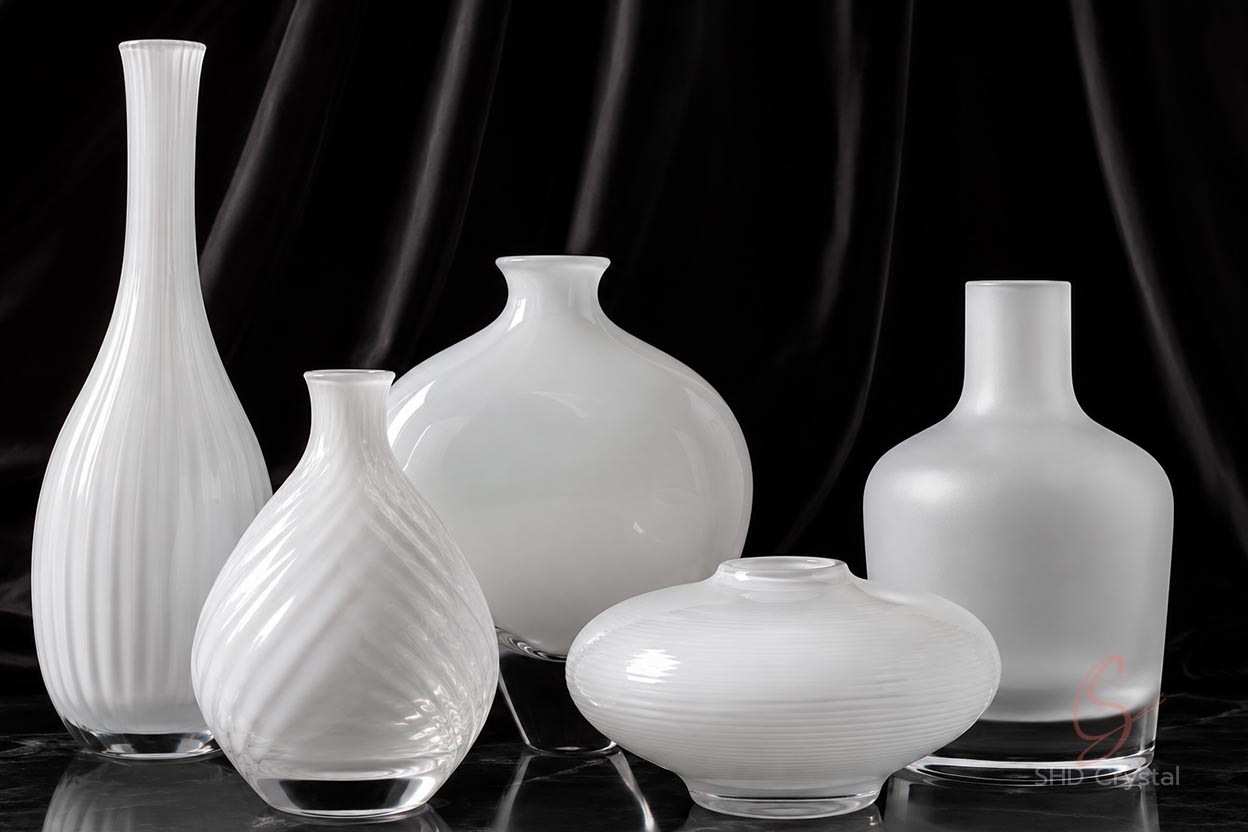
How Is the Milky White Effect Produced?
There are several practical ways to manufacture a custom white glass vase.
method 1: Opaque White Glass Material
Opaque white glass creates the color within the glass body. It usually provides greater visual depth and a more integrated white appearance. However, the visible tone may still change according to wall thickness and glass distribution.
method 2: White Surface Coating
A transparent glass vase can be formed first and then finished with a white coating. This method offers flexible color adjustment and can produce matte or glossy surfaces. Coating adhesion, scratch resistance, and color stability should be checked before production approval.
method 3: Frosted Transparent Glass
Frosting can soften light and create a pale white appearance while retaining some translucency. This option is suitable when the buyer wants a lighter visual effect rather than complete opacity.
The correct method should be selected according to the target appearance rather than relying only on a color name.
Choosing the Right Forming Method
The forming method depends on the design, order quantity, required consistency, and acceptable handmade variation.
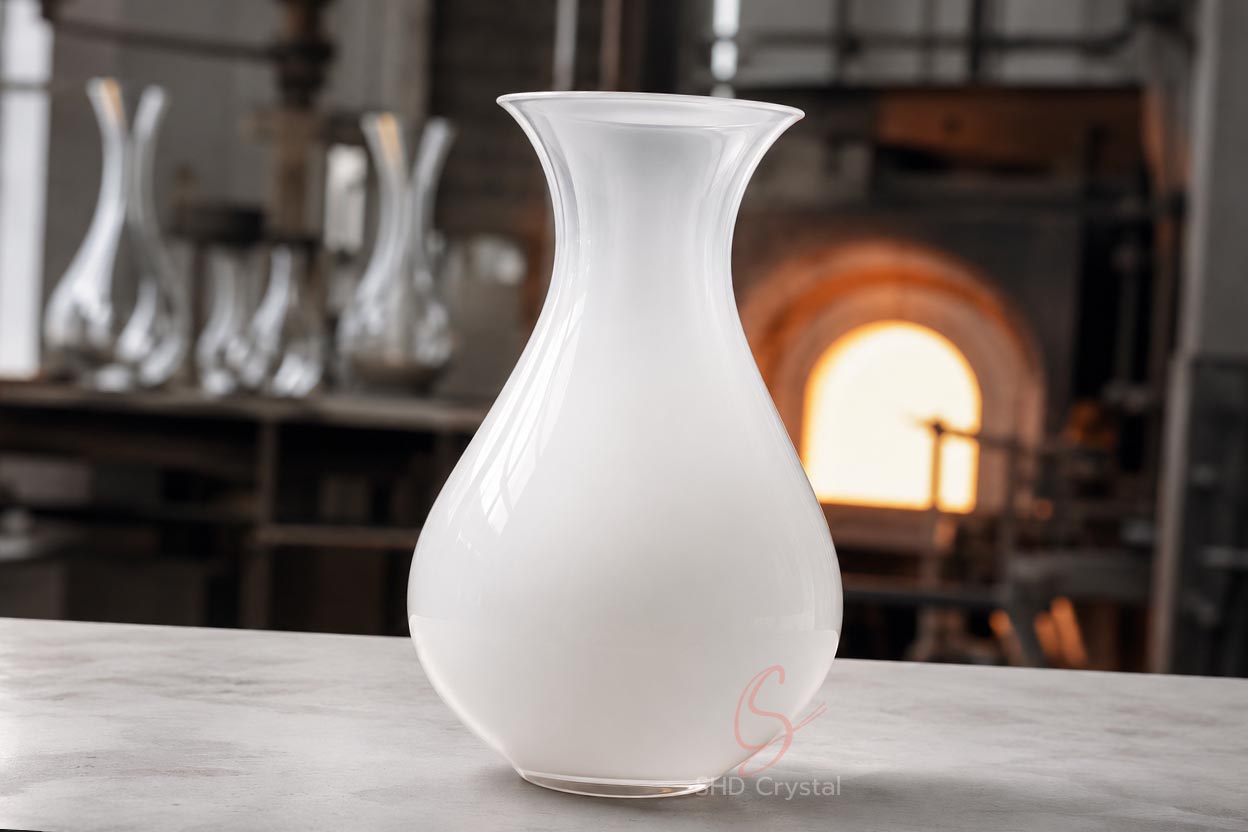
Hand-blown production works well for sculptural shapes, artistic curves, and designs that allow subtle differences between pieces. Mold-blown production offers better dimensional repeatability for branded collections. Pressed glass may be suitable for shorter, wider, or heavier decorative forms. The vase structure also affects its white appearance. A thick base may look denser than the upper body, while a narrow neck or thin wall may transmit more light. These differences should be evaluated during sampling rather than treated automatically as defects.
As an opaque glass vase manufacturer, SHD Crystal considers both the visual design and the practical movement of glass during forming.
Key Quality Checks During Production
Milky white glass often reveals manufacturing differences more clearly than dark or strongly colored glass. Important inspection points include:
-White tone and opacity consistency
-Even glass distribution in visible areas
-Correct dimensions and overall balance
-Stable base contact
-Smooth rim cutting and polishing
-Surface coating adhesion when applicable
-Proper annealing to reduce internal stress
Lighting conditions should also be considered. A milky white glass vase that appears uniform under factory lighting may show stronger variations near a window or under directional light. For this reason, sample approval should consider the environment in which the product will eventually be displayed.
What Should Buyers Confirm Before Sampling?
A clear development brief helps the factory recommend a suitable production route. Buyers should provide:
- Target dimensions and approximate weight
- Reference shape or technical drawing
- Desired level of opacity
- Warm white, bright white, or soft milky white tone
- Matte, glossy, or frosted surface
- Logo and decoration requirements
- Estimated order quantity
- Packaging and drop-test requirements
A physical reference sample is especially useful when the desired white tone is difficult to describe accurately through photographs.
Questions and Answers You May Have About Milky White Glass Vases
Q-01: Is a Milky White Glass Vase Always Fully Opaque?
A-01: No. It may be fully opaque, semi-translucent, frosted, coated, or layered. The exact appearance should be confirmed with an approved sample.
Q-02: Why Can the White Tone Look Uneven?
A-02: Wall thickness, glass distribution, lighting, and surface finish can affect the visible color density. Thick sections often appear more opaque than thin sections.
Q-03: Is Hand-Blown or Mold-Blown Production Better?
A-03: Neither method is universally better. Hand-blown production suits artistic forms, while mold-blown production provides closer dimensional consistency. The best option depends on the design and order requirements.
Q-04: Can SHD Crystal Match a Reference Vase?
A-04: Yes. SHD Crystal can evaluate a physical sample, drawing, or reference image. However, the material, color, finish, dimensions, and acceptable tolerances should be confirmed before formal production.
Conclusion
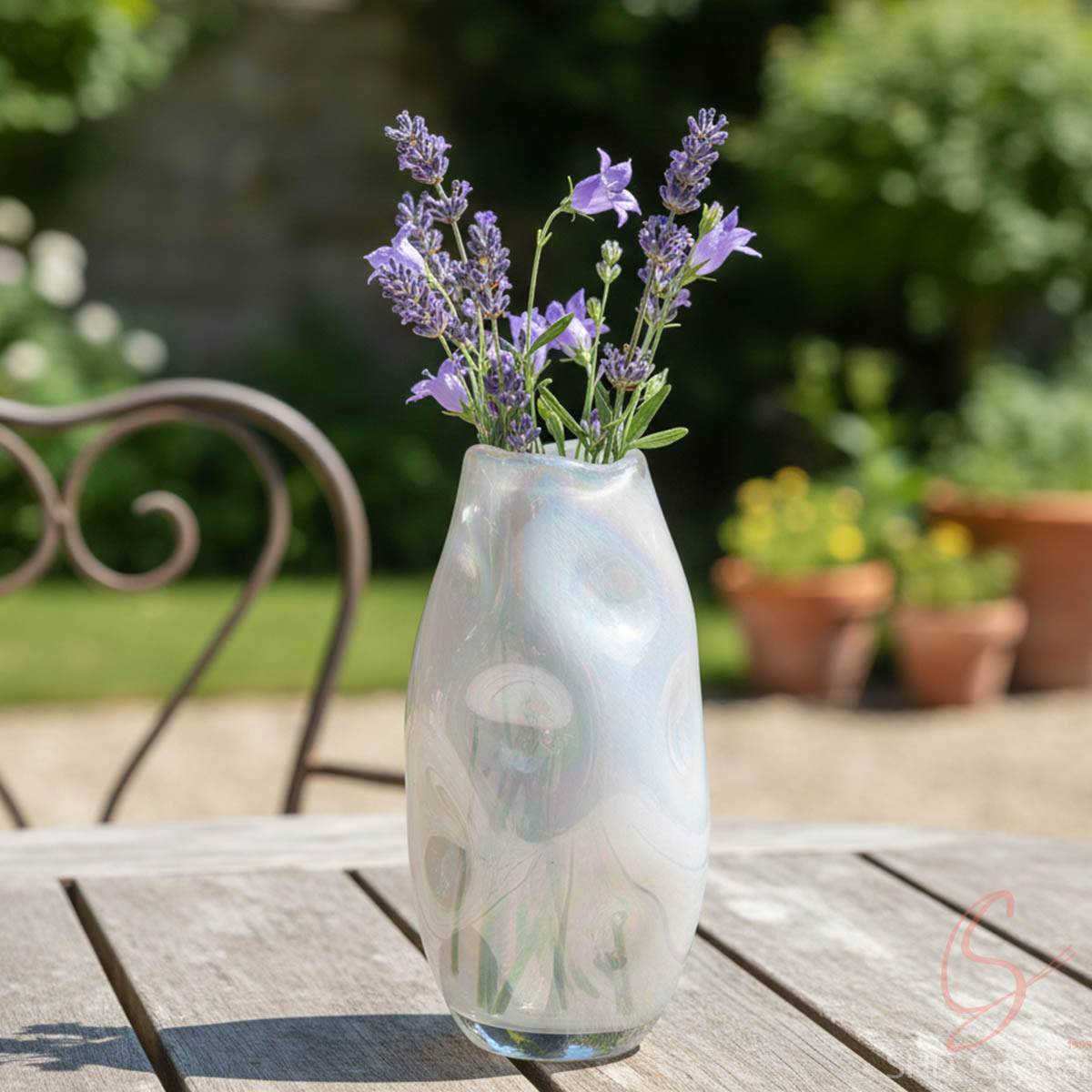
A milky white glass vase combines a clean decorative appearance with several manufacturing variables. Reliable production depends on choosing the correct glass effect, forming method, wall structure, surface finish, and inspection standard. SHD Crystal provides custom white glass vase development for homeware brands, wholesalers, designers, and hospitality projects. As an experienced opaque glass vase manufacturer, we can review your design and recommend a practical manufacturing route before sampling.
Develop Your Milky White Glass Vase with SHD Crystal
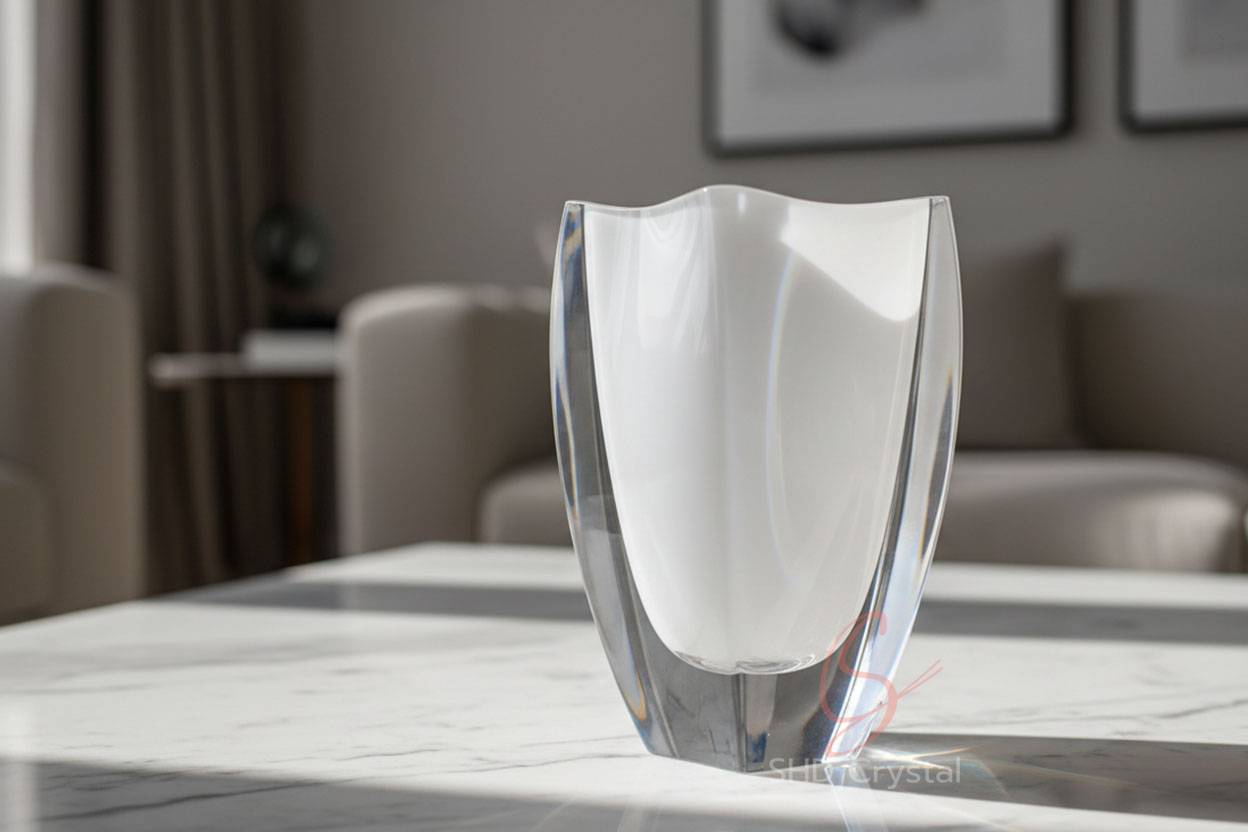
Send SHD Crystal your drawing, reference image, target dimensions, preferred white appearance, and order requirements. Our team will evaluate the material, forming process, finishing method, and quality standards needed to turn your milky white glass vase concept into a production-ready product.
Read the original full version:
https://shdcrystal.com/blogs/milky-white-glass-vase/